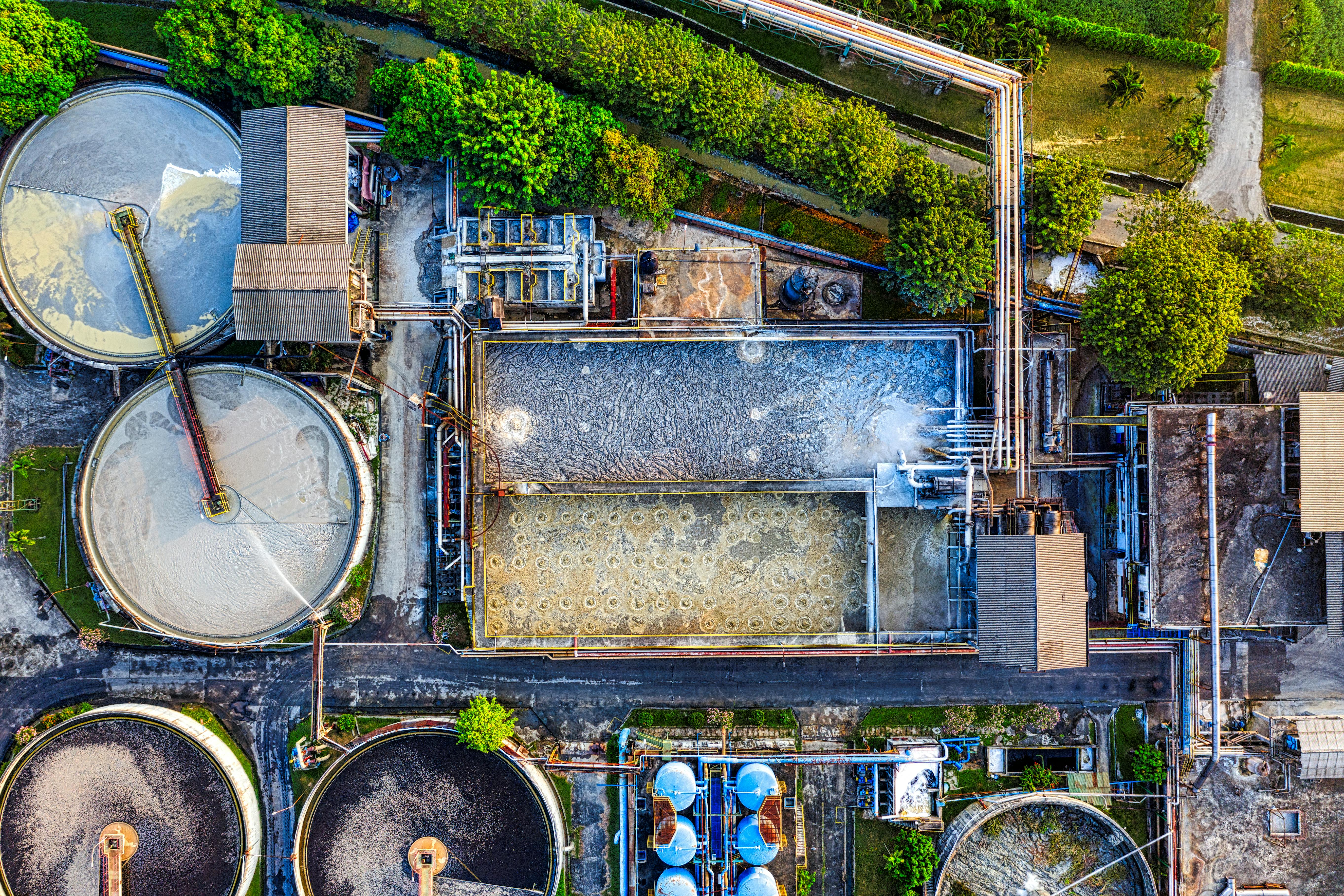
Sewage Treatment Plant Online Monitoring System Solution
The online monitoring system of the sewage treatment plant covers key process nodes such as the inlet pump station, biological treatment tanks, secondary sedimentation tanks, and outlet points. It deploys electromagnetic flow meters to measure the inflow and outflow in real time and is equipped with multi-parameter water quality online analyzers to monitor water quality indicators such as COD, ammonia nitrogen, total phosphorus, pH, dissolved oxygen, turbidity, and sludge concentration. Data is uploaded via industrial gateways to the plant-level SCADA system and environmental regulatory platforms, enabling automated monitoring of the entire sewage treatment process, process optimization, and ensuring compliance with discharge standards.
Overview
Summary
The online monitoring system of the sewage treatment plant covers key process nodes such as the inlet pump station, biological treatment tanks, secondary sedimentation tanks, and outlet points. It deploys electromagnetic flow meters to measure the inflow and outflow in real time and is equipped with multi-parameter water quality online analyzers to monitor water quality indicators such as COD, ammonia nitrogen, total phosphorus, pH, dissolved oxygen, turbidity, and sludge concentration. Data is uploaded via industrial gateways to the plant-level SCADA system and environmental regulatory platforms, enabling automated monitoring of the entire sewage treatment process, process optimization, and ensuring compliance with discharge standards.
Key Advantages
Challenges
- The fluctuation in influent and effluent water quality is significant, and the frequency of manual sampling and testing is low (typically once every 4 hours), making it difficult to promptly detect water quality abnormalities.
- Dissolved oxygen control in biochemical tanks relies on experience, with aeration energy consumption accounting for over 50% of the plant's electricity costs, yet precise regulation methods are lacking.
- Exceeding discharge standards carries the risk of high fines and production suspension, requiring real-time alerts rather than post-event accountability.
- The environmental protection department requires that discharge outlets install online monitoring equipment and connect the data to the network. Falsifying data will result in criminal liability.
Results
- A city wastewater treatment plant upgrade project: 12 sets of electromagnetic flowmeters and 18 sets of online water quality analyzers were deployed, reducing the effluent COD from 35 mg/L to a stable level below 25 mg/L, meeting the Class A standard.
- Intelligent Upgrading of a Wastewater Treatment Center in an Industrial Park: Achieving Precise Aeration Control Based on Real-Time Dissolved Oxygen and Ammonia Nitrogen Data, Resulting in Annual Electricity Savings of 420,000 kWh and Cost Reductions of Approximately 300,000 Yuan.
- Automation upgrade at a county-level wastewater treatment plant: Transitioning from manual chemical dosing to an automatic dosing system based on online water quality data, resulting in a 25% reduction in chemical costs and an increase in effluent compliance rate from 92% to 99.8%.
Solution Details
Wastewater Treatment Plant Online Monitoring System Solution
The wastewater treatment plant online monitoring system, centered on electromagnetic flow meters and multi-parameter water quality online analyzers, covers real-time monitoring of flow and water quality parameters across the entire process from influent to effluent. It provides precise data support for the plant's compliance discharge, process optimization, and energy conservation, while simultaneously meeting the requirements for online monitoring data networking with environmental protection departments.
Construction Background for the Online Monitoring System
With increasingly stringent environmental regulations, the effluent standards for wastewater treatment plants have been upgraded from Level B to Level A, or even quasi-Class IV water standards, placing higher demands on the accuracy and real-time capability of water quality monitoring. The "Regulations on the Management of Pollutant Discharge Permits" clearly stipulate that key pollutant-discharging units must install online monitoring equipment and connect it to environmental protection departments' networks. Data falsification will be subject to criminal liability.
Simultaneously, under the "Dual Carbon" background, wastewater treatment plants face pressure to conserve energy and reduce consumption. The energy consumption of aeration systems accounts for 50-70% of the plant's total electricity usage, creating an urgent need for precise aeration control based on online water quality data to lower operational costs.
Monitoring Points and Parameters
Influent Pumping Station
Electromagnetic flow meters measure influent flow; pH meters and turbidity meters monitor influent water quality, allowing for timely understanding of incoming water quality fluctuations and providing foresight for process adjustments.
Biological Treatment Tank
Dissolved oxygen electrodes monitor DO concentration in the aerobic zone (controlled at 2-4 mg/L); ORP electrodes monitor oxidation-reduction potential in anaerobic/anoxic zones; sludge concentration meters monitor MLSS, guiding the adjustment of aeration volume and recirculation ratio.
Secondary Sedimentation Tank
Submersible turbidity sensors monitor effluent turbidity and sludge blanket height; ultrasonic level gauges monitor tank water level, helping to prevent sludge bulking and sludge washout incidents.
Effluent Outlet
Electromagnetic flow meters measure effluent flow; online residual chlorine analyzers monitor disinfection effectiveness; multi-parameter water quality analyzers monitor pH/turbidity/dissolved oxygen, ensuring compliant discharge. Data is interfaced in real-time with the environmental protection monitoring platform.
Recommended Product Configuration
| Monitoring Location | Recommended Product | Purpose |
|---|---|---|
| Inlet/Outlet Pipeline | LGF Electromagnetic Flowmeter (Integrated/Separate Type) | Flow measurement, accuracy 0.5% |
| Biochemical Tank | Dissolved Oxygen Electrode + Sludge Concentration Meter | Aeration control and sludge management |
| Inlet/Outlet | pH/ORP Meter + Turbidity Meter | Basic water quality parameter monitoring |
| Effluent Disinfection | Online Residual Chlorine Analyzer | Disinfection effectiveness monitoring |
| Secondary Sedimentation Tank | Ultrasonic Level Gauge + Submersible Turbidity Meter | Liquid level and sludge interface monitoring |
| Integrated Monitoring | Small Water Quality Monitoring Station | Integrated multi-parameter monitoring |
Solution Advantages
- Full Process Coverage: Monitoring at every process stage from inlet to outlet, eliminating data blind spots.
- Energy Saving & Consumption Reduction: Precise aeration based on online DO data, saving 20-30% electricity, reducing costs by hundreds of thousands annually.
- Compliance Assurance: Data integration with environmental monitoring platforms, meeting online monitoring requirements for discharge permits.
- Comprehensive Product Range: One-stop supply of flowmeters + water quality instruments + level gauges, reducing multi-vendor coordination costs.
Key Features of the Online Monitoring System
Accurate Inflow and Outflow Flow Measurement
The LGF electromagnetic flow meter measures inflow and outflow flow with an accuracy of 0.5%, unaffected by suspended solids and grease in wastewater.
Multi-parameter Water Quality Online Monitoring
Real-time online monitoring of parameters such as pH, dissolved oxygen, turbidity, sludge concentration, residual chlorine, etc., with a data refresh cycle of 5-15 minutes.
Biochemical Tank Process Optimization
Automatic Adjustment of Aeration Volume Based on Online Dissolved Oxygen and ORP Data, Achieving Precise Aeration and Energy Savings of 20–30%.
Effluent Exceedance Warning
Automatic alarm triggered when effluent water quality parameters exceed discharge standard thresholds, allowing reserved response time for process adjustments.
Environmental Data Networking Compliance
Data connection to national/provincial pollution source online monitoring platforms (HJ 212 protocol), meeting the requirements of the pollutant discharge permit.
Remote Operation and Fault Diagnosis
The platform remotely monitors the online status and calibration cycles of each instrument, with automatic alerts for sensor anomalies requiring replacement.
Approach
How we implement intelligence into your infrastructure step by step.
Process Analysis & Monitoring Design
Map the complete treatment process (pretreatment→biological→sedimentation→discharge) and determine key monitoring parameters at each stage
Instrument Selection & Installation
Select corrosion-resistant electromagnetic flowmeters, water quality analyzers, and level sensors; complete explosion-proof installation
Data Collection & SCADA Integration
Implement multi-parameter data collection via RTU terminals with seamless SCADA system integration for centralized monitoring
Compliance & Smart Alerts
Configure discharge standard threshold alerts and establish rapid response mechanisms for abnormal conditions

Ready to Optimize Your Business?
Contact us, and our professional team will provide customized solutions to help your business achieve digital transformation.
Get In Touch