Conductivity Meter
This conductivity meter is widely used in thermal power, chemical fertilizer, metallurgy, environmental protection, pharmaceutical, biochemical, food,...
Key Features
Performance Metrics
| RS485 Output | Isolated, Modbus-RTU communication protocol |
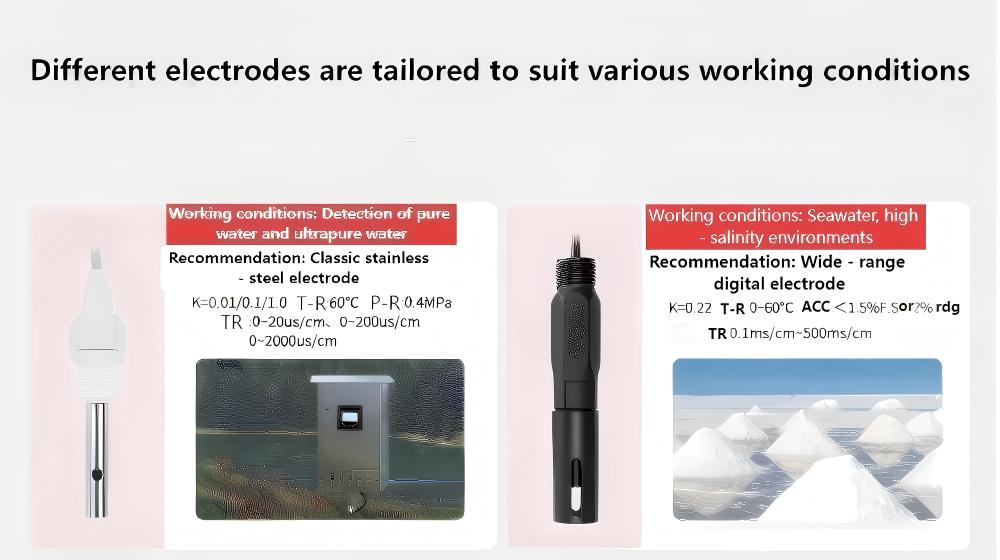
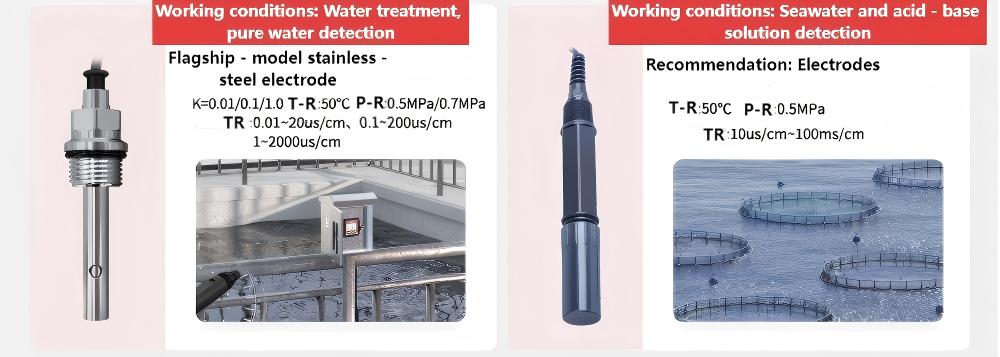
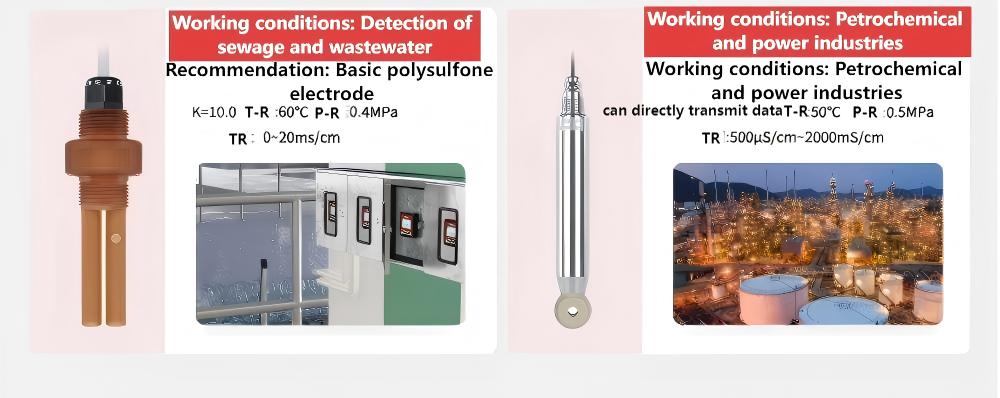
| Measuring Range | Controller Range: (Not recommended for pure water below 1μS/cm) 0.01 Cell: (0 ~ 20.00)μS/cm or (0.05 ~ 20.00)MΩ·cm; 0.1 Cell: (0.20 ~ 200.0)μS/cm; 1.0 Cell: (2.00 ~ 2000)μS/cm, up to 20000μS/cm; 10.0 Cell: (0.02 ~ 20.00)mS/cm. Temperature Range: (-10 ~ 130)°C |
| Temperature Compensation | NTC10K/PT1000 automatic or manual temperature compensation |
| Electronic Unit Basic Error | EC/TDS/ER: ±1%FS; NTC10K: ±0.3°C; PT1000: ±0.3°C |
Key Features
Conductivity Meter for Industrial Online Monitoring
The Conductivity Meter is a precision analytical instrument designed for industrial online continuous monitoring, measuring the electrical conductivity of a solution. It integrates advanced signal processing and communication technologies to ensure long-term stable operation and data reliability in complex industrial environments, making it essential for process control and quality assurance.
Core Functions of the Conductivity Meter
The primary function of this conductivity meter is to precisely determine a solution's ability to conduct electric current, with results typically displayed in Siemens per centimeter (S/cm) or its derived units like mS/cm or μS/cm. Measuring conductivity provides crucial insight into the relative concentration of ions in the solution.
Advanced conductivity meters can also measure related parameters such as Total Dissolved Solids (TDS), reflecting the content of all dissolved solids. Using an empirical conversion relationship, the instrument can indirectly provide TDS values. Additionally, it measures solution temperature to facilitate accurate temperature compensation, as temperature significantly affects conductivity readings.
Key Product Features & Specifications
Output & Communication
Isolated (4~20)mA transmitter output and isolated RS485 communication supporting Modbus-RTU protocol for easy system integration.
Temperature Compensation
Manual/Automatic temperature compensation function, configurable for NTC10K or PT1000 sensors for high accuracy.
Alarm & Control
High and low alarm functions with configurable hysteresis, plus configurable buzzer alarm and LCD backlight switch.
| Parameter | Specification |
|---|---|
| Accuracy Class | 2.0 |
| Analog Output | Isolated (4~20)mA |
| Communication | Isolated RS485, Modbus-RTU |
| Temperature Sensor | Configurable for NTC10K or PT1000 |
Working Principle of the Conductivity Meter
Based on Ohm's law, the conductivity meter places electrodes in the solution and applies an AC voltage. Ions move directionally under the electric field, forming a current. Conductivity (κ) is calculated using the formula κ = K / R, where R is the measured solution resistance and K is the cell constant.
The cell constant depends on the electrode's geometry and spacing, with different constants for different electrodes. To avoid measurement errors from electrode polarization, conductivity meters use an AC power source as the excitation signal, ensuring stable and reliable readings for industrial online monitoring.
Structural Components for Reliable Measurement
Measuring Electrode Design
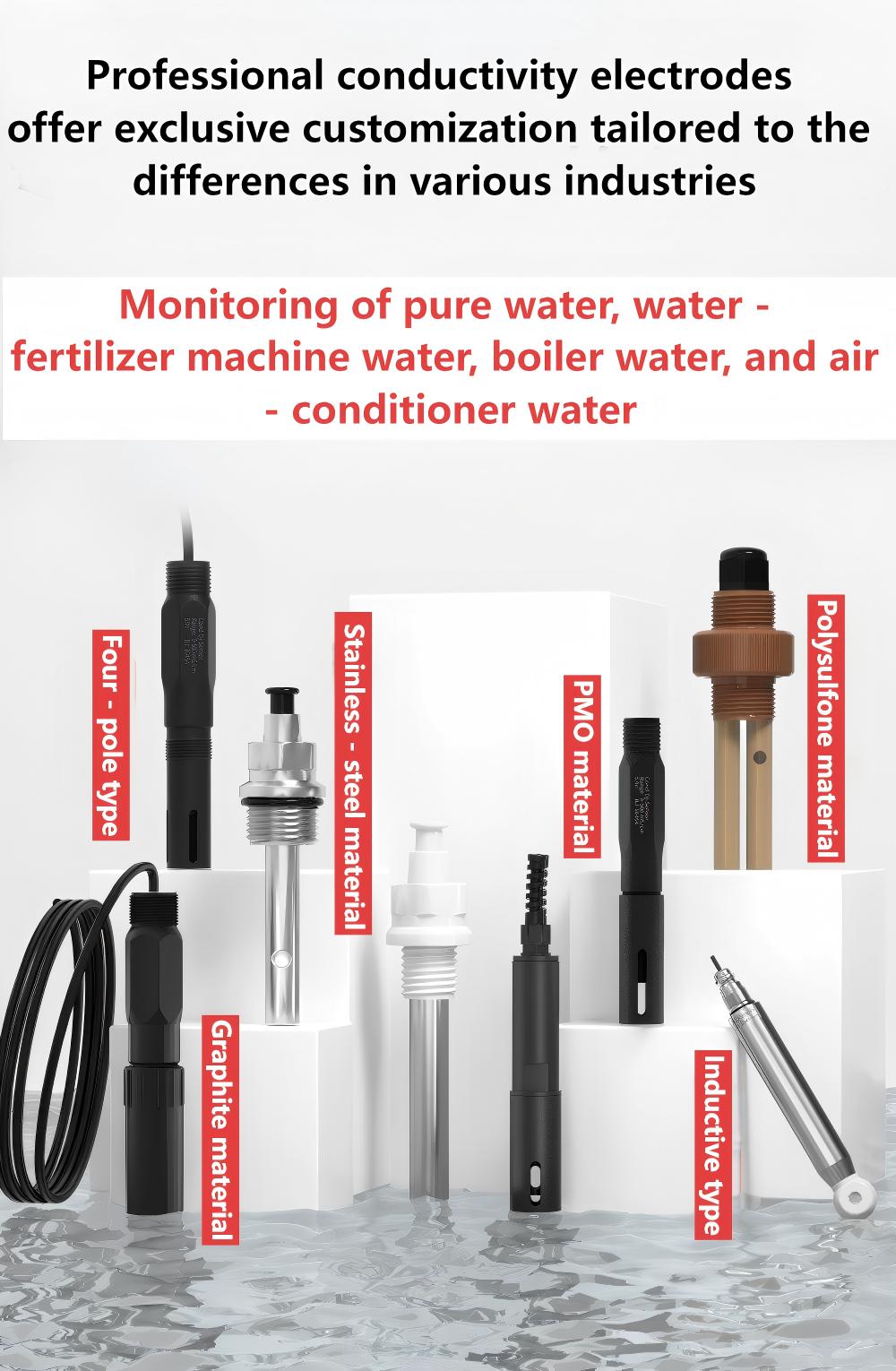
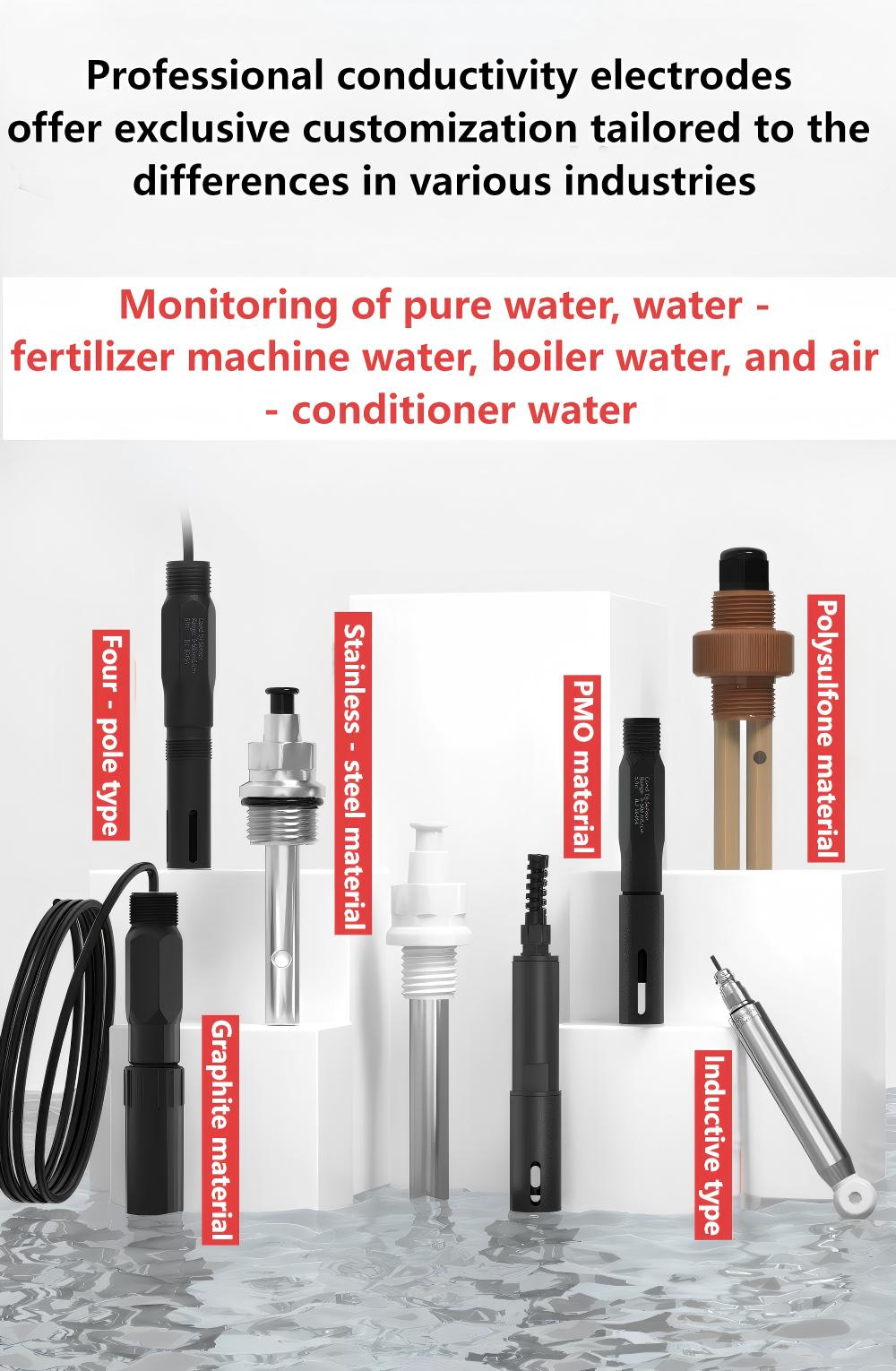
The measuring electrode is the part in direct contact with the solution. Common types include two-electrode and four-electrode configurations. The two-electrode type has a simple structure suitable for general measurements, while the four-electrode type effectively eliminates errors from polarization and solution non-uniformity for high-precision applications.
Electrode materials are often corrosion-resistant metals like platinum or stainless steel to ensure stability and durability in various industrial solution environments, supporting long-term online monitoring.
Signal Generator and Circuit
The signal generator produces a stable AC voltage signal applied to the electrodes, with adjustable frequency and amplitude to adapt to different conductivity ranges. This provides the electric field driving force for accurate ion conduction measurement.
The measurement circuit detects the current, converts it into a voltage signal, and performs amplification and filtering. It includes a temperature sensor for real-time measurement, providing essential data for the instrument's automatic temperature compensation function.
Display and Data Processing Unit
This unit displays processed conductivity data in an intuitive digital form. High-end conductivity meters feature data storage, recording multiple measurements for review and analysis. The unit also executes data processing, such as correcting values via temperature compensation algorithms.
Equipped with communication interfaces like RS485, the meter enables data transmission to computers or control systems, facilitating seamless integration and data management in industrial automation environments.
Industrial Production Applications
In industries like chemicals, pharmaceuticals, and electronics, this conductivity meter is vital for monitoring solution concentration and purity during production. For example, in chemical synthesis, monitoring reaction solution conductivity helps control reaction progress and optimize yield.
In the pharmaceutical industry, it tests the purity of water for injection (WFI) and purified water to ensure compliance with stringent pharmacopeia standards. In electronic chip manufacturing, real-time monitoring of cleaning and etching solution conductivity is critical for ensuring final product quality and reliability.
Wide-Ranging Application Scenarios
Environmental Monitoring Solutions
Conductivity meters are extensively used to monitor water pollution levels. Changes in the conductivity of natural water bodies reflect the content of dissolved minerals, salts, and other substances, serving as a key water quality indicator.
When water is polluted by industrial or domestic wastewater, its conductivity changes significantly. Long-term online monitoring of rivers, lakes, and oceans helps detect anomalies promptly, providing a reliable basis for environmental protection and management decisions.
Laboratory Research and Analysis
In scientific research fields such as chemistry, biology, and materials science, conductivity meters are common analytical tools. They are used to study the properties of electrolyte solutions, chemical reaction kinetics, and the ionic conductivity of novel materials.
In biological experiments, measuring the conductivity of biological fluids and cell culture media helps researchers understand physiological states and metabolic activities. The instrument's precision and connectivity features make it valuable for both benchtop and integrated lab systems.
Engineered for Industrial Reliability
This conductivity meter is specifically engineered for demanding industrial online continuous monitoring. Its isolated (4~20)mA output and RS485 communication provide strong anti-interference capability, ensuring signal integrity in electrically noisy environments.
With features like configurable alarms, temperature compensation, and a robust enclosure, it delivers stable, reliable measurement and data reliability for long-term operation in complex industrial settings, from chemical plants to water treatment facilities.
Contact Us
Need a custom solution? Our engineers are ready to help you design the perfect system.
Get In Touch