Flow-Through Turbidity Meter
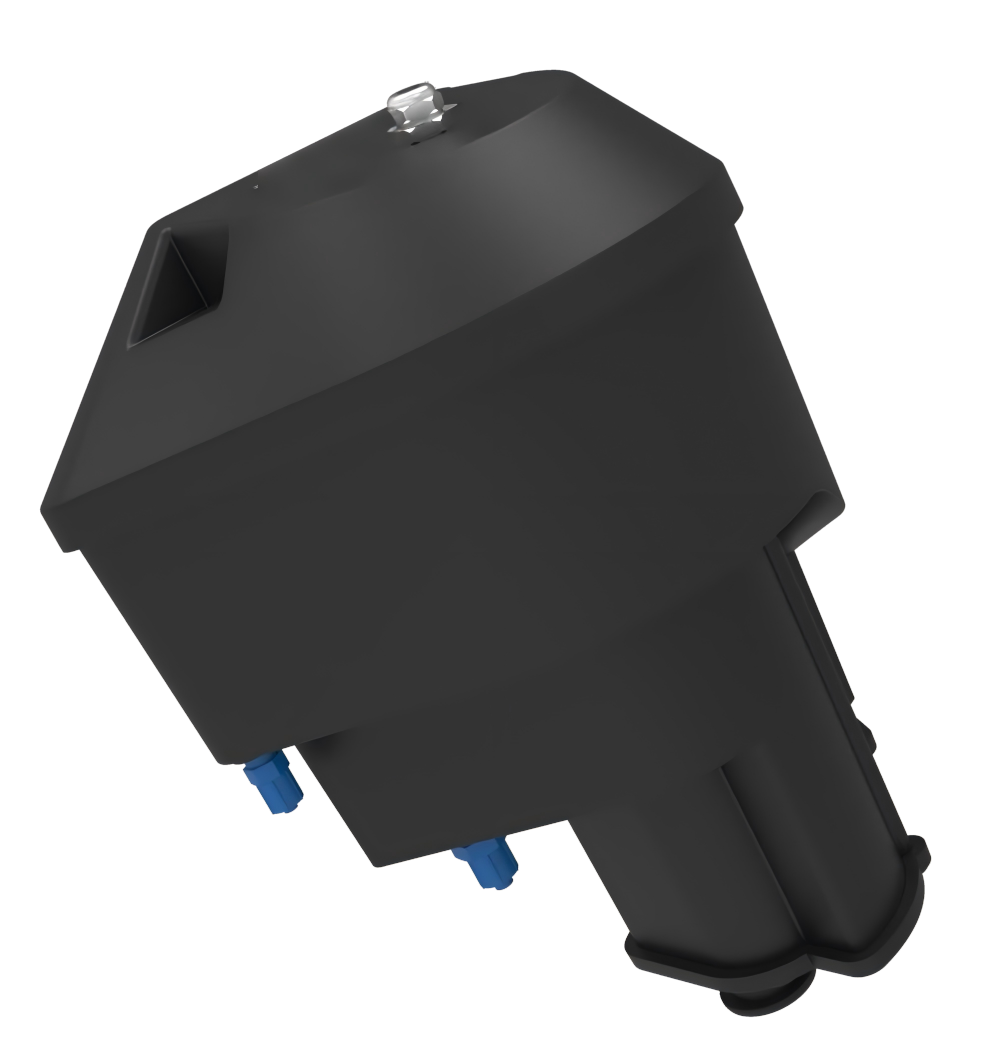
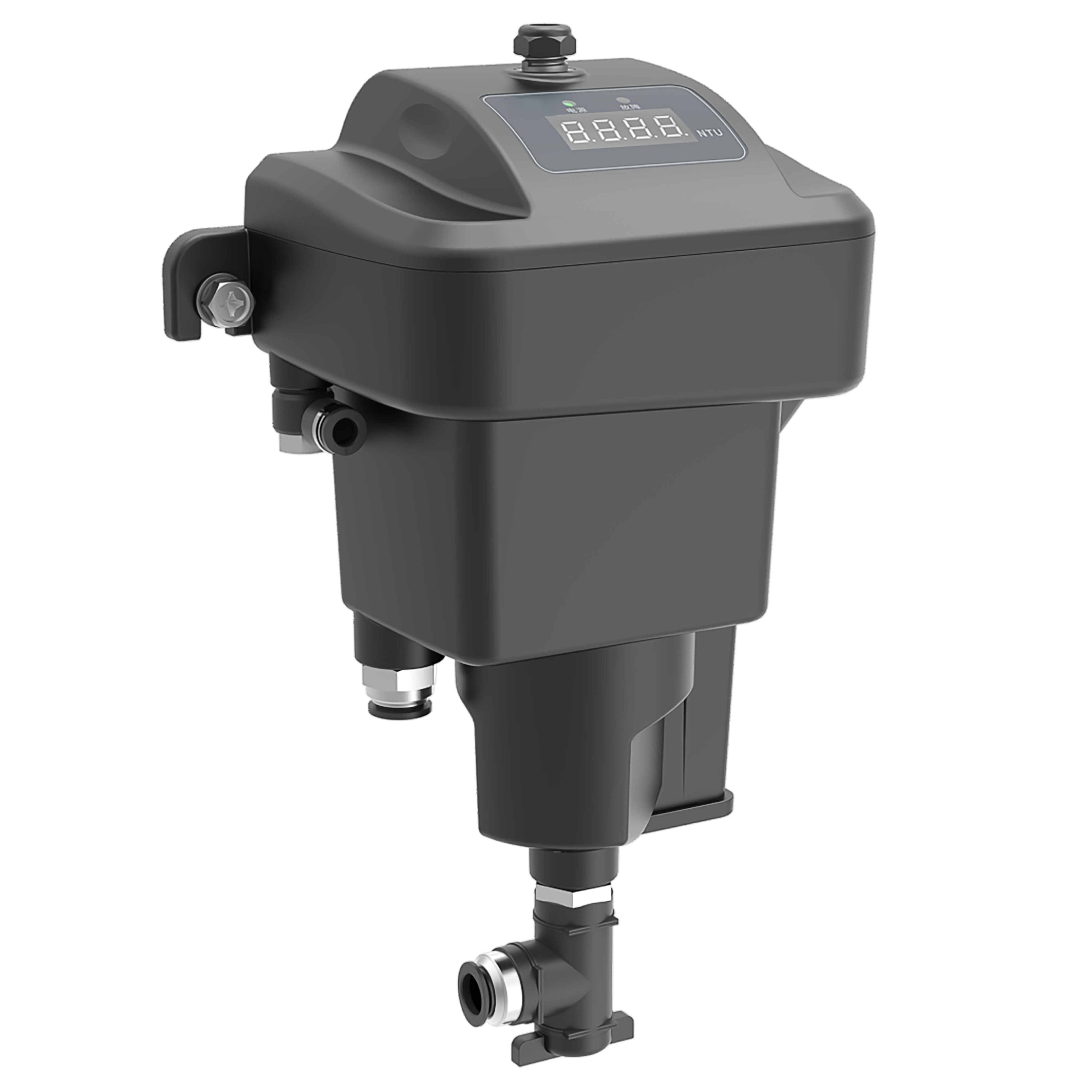
The Flow-Through Turbidity Meter is an intelligent online chemical analyzer widely used in industries such as thermal power, chemical fertilizer, meta...
Key Features
Performance Metrics
| Measurement Unit | NTU |
| Storage Temperature | -20°C ~ 60°C |
| Weight | 4.5Kg |
| Zero Point Drift | ≤±0.015NTU |
Key Features
Flow-Through Turbidity Meter
The Flow-Through Turbidity Meter is a professional instrument designed for precise, real-time continuous measurement of liquid turbidity. It is widely applied in industrial production, environmental monitoring, and water quality testing, providing critical data support for process control and water quality safety assurance in water treatment plants, chemical production, and the food and beverage industry.
How the Flow-Through Turbidity Meter Works
The Flow-Through Turbidity Meter operates on the principle of optical scattering. When a beam of light illuminates the liquid flowing through the measurement chamber, suspended particles cause the light to scatter.
The instrument detects the intensity of this scattered light, compares it with the incident light intensity, and converts the optical signal into a precise turbidity value using advanced algorithms. Higher concentrations of suspended particles typically result in greater scattered light intensity and a higher measured NTU value.
Key Features & Technical Advantages
High Accuracy & Resolution
Typical accuracy of ±2% FS or ±0.3NTU with a resolution of 0.01NTU for low turbidity and 0.1NTU for high turbidity measurements.
Real-Time Continuous Monitoring
The flow-through design enables uninterrupted, real-time turbidity monitoring with a fast response time of 30 seconds to 2 minutes.
Robust & Reliable
Features a compact, corrosion-resistant enclosure and operates reliably in a wide temperature range (0°C - 50°C) and up to 90% RH non-condensing.
Easy Integration & Output
Equipped with multiple interface outputs including analog (4-20mA) and digital (RS485, USB) for seamless connection to control systems.
Smart Functions
Includes data logging, multi-parameter display, and an alarm function that triggers when turbidity values exceed user-defined thresholds.
Simple Maintenance
Designed for easy disassembly and assembly of components, ensuring low maintenance costs and simple operation for users.
Core Components for Precise Measurement
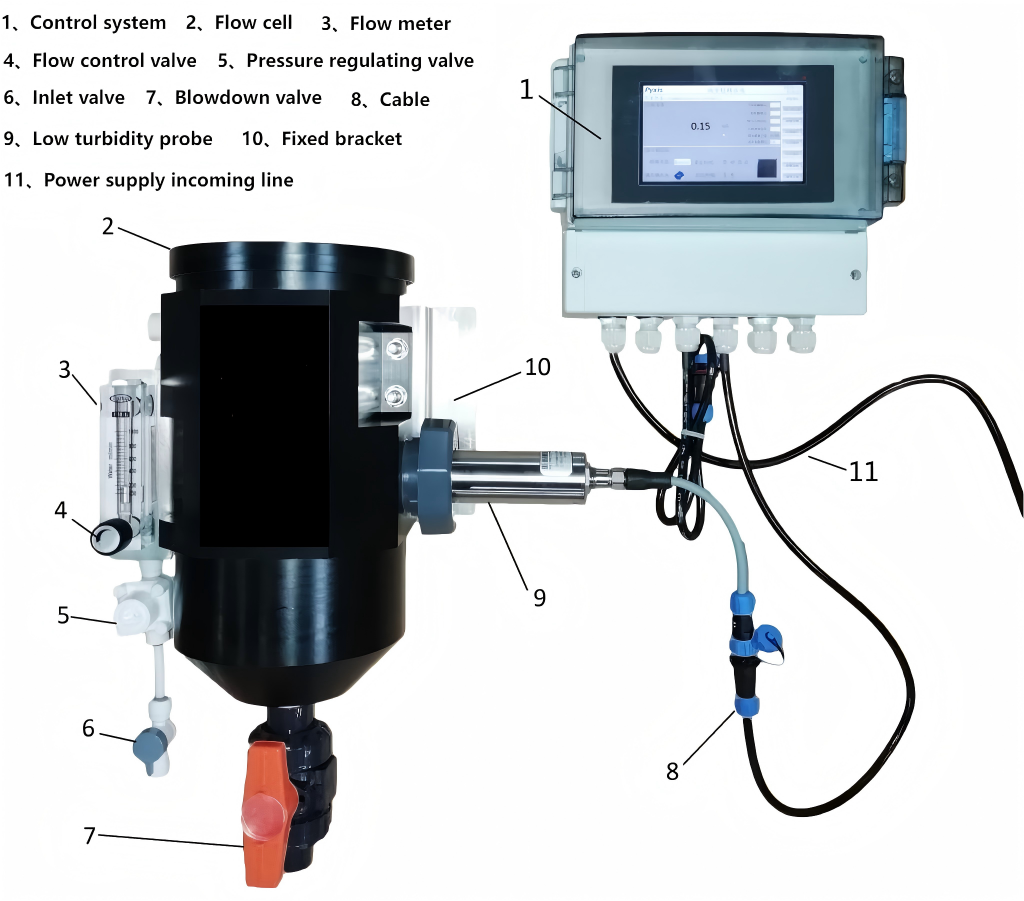
The Flow Cell is the core component, providing a stable, controlled space for liquid flow. Made from corrosion-resistant glass or plastic with excellent optical properties, it ensures uniform flow without turbulence for maximum accuracy.
The high-precision Optical System utilizes stable LEDs or laser sources and sensitive photodetectors to capture scattered light signals. The Signal Processing Unit then converts these signals into intuitive turbidity values displayed on a clear screen.
Detailed Product Structure and Operation
Integrated Flow Control and Connectivity
A dedicated Flow Control System, comprising a flow meter and control valve, ensures a stable flow rate through the measurement chamber, which is critical for repeatable and high-precision turbidity measurement results.
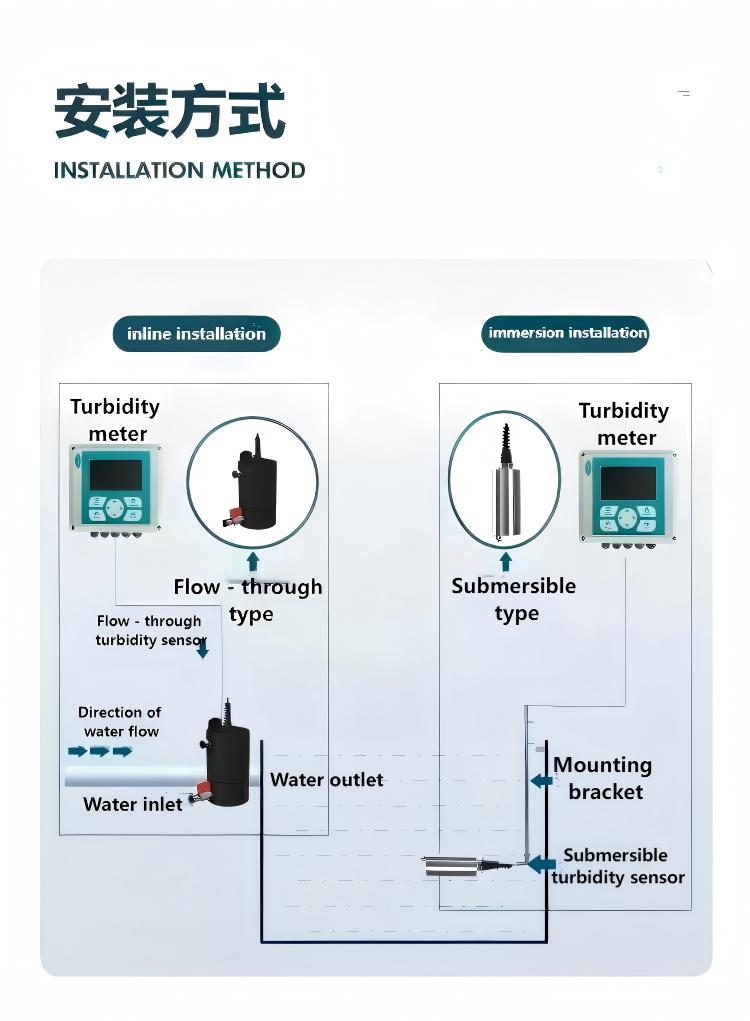
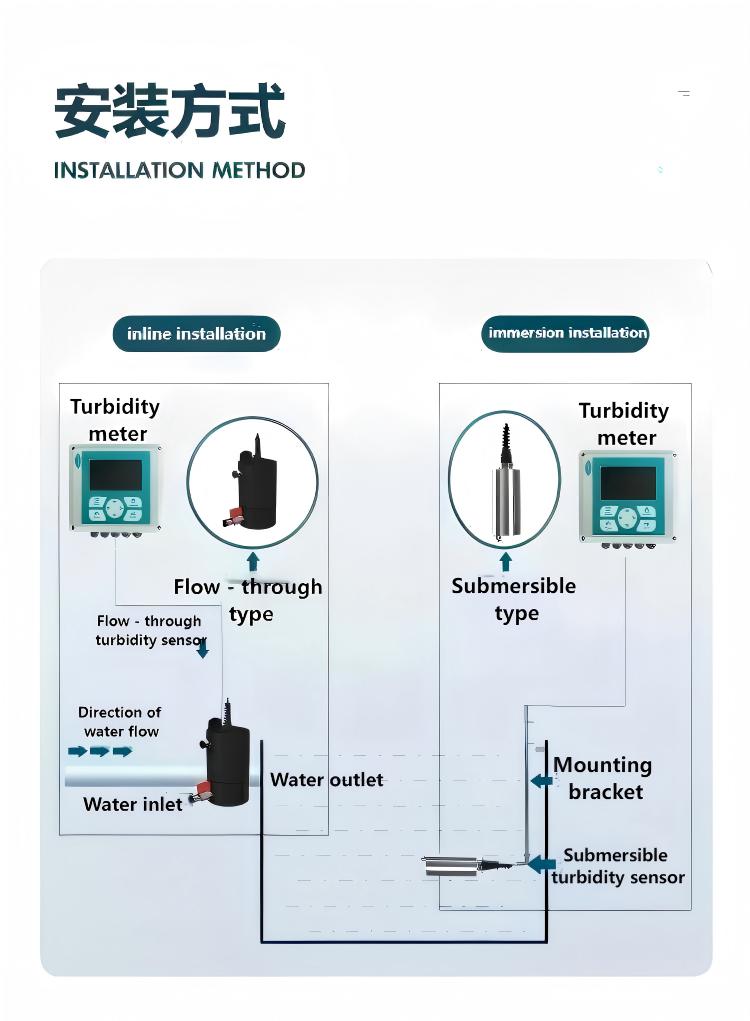
The inlet and outlet use quick-connect or threaded fittings for fast, leak-proof connection to external pipelines. The sturdy enclosure and versatile mounting bracket allow for flexible installation on walls, benches, or directly on pipelines.
Primary Application Fields for Water Quality Monitoring
Drinking Water and Wastewater Treatment
In drinking water treatment plants, this meter provides real-time turbidity monitoring from raw water to finished water, ensuring compliance with safety standards. For wastewater treatment applications, it helps operators monitor influent and effluent to optimize process parameters and ensure compliant discharge.
Industrial and Environmental Monitoring
The instrument is vital for industrial process control in chemical, pharmaceutical, and food & beverage production, where it monitors process water turbidity to guarantee product quality. Its strong adaptability also makes it ideal for long-term environmental monitoring of rivers, lakes, and oceans, providing essential data for water resource protection.
Technical Specifications
| Parameter | Specification |
|---|---|
| Measurement Principle | Optical Scattering |
| Accuracy | Typical ±2% FS or ±0.3NTU |
| Resolution | 0.01NTU (Low), 0.1NTU (High) |
| Repeatability | Error ≤ 1% |
| Response Time | 30 seconds - 2 minutes |
| Operating Temperature | 0°C to 50°C (or wider range) |
| Operating Humidity | ≤ 90% RH (non-condensing) |
| Output Interfaces | Analog (4-20mA), Digital (RS485, USB) |
| Key Features | Flow-Through Design, Data Logging, Alarm Function, Multi-Parameter Display, Chemical Resistance |
Contact Us
Need a custom solution? Our engineers are ready to help you design the perfect system.
Get In Touch