Submersible Turbidity Sensor Electrode
This product is widely used for online turbidity monitoring in water treatment plants (e.g., inlet, sedimentation tank), wastewater treatment plants, ...
Key Features
Performance Metrics
| Calibration | Standard solution calibration, water sample calibration |
| Operating Temperature | 0~45℃ (non-freezing) |
| Power Supply | 9~36VDC |
| Resolution | 0.01NTU, 0.1NTU, depending on range |
Key Features
Submersible Turbidity Sensor Electrode
The Submersible Turbidity Sensor Electrode is a precision instrument designed to measure the cloudiness or turbidity of a liquid by quantifying the degree of light scattering or absorption caused by suspended particles. This sensor is essential for ensuring water quality and process control across various industries.
How the Turbidity Sensor Works
The operation of a turbidity sensor is based on fundamental optical principles to assess liquid clarity. The two primary methods are the scattering principle and the transmission principle, each suited for different measurement scenarios.
Scattering Principle
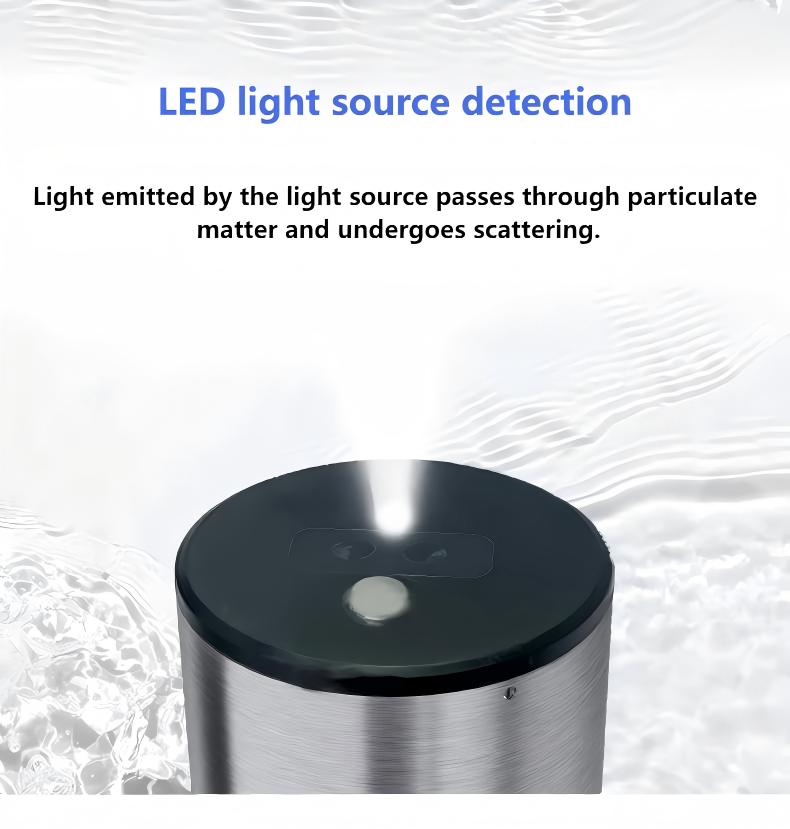
This method commonly utilizes infrared light scattering when it encounters suspended particles. A photodetector measures the scattered light intensity at a specific angle, which correlates directly to the turbidity value. For instance, in drinking water testing, this principle detects tiny suspended impurities.
Transmission Principle
Here, a beam of light is passed through the sample. Suspended particles absorb and scatter the light, weakening its intensity. Turbidity is calculated by comparing the incident and transmitted light intensities, a method often applied in wastewater treatment plant monitoring.
Key Components of the Sensor
Light Source
Typically uses LEDs emitting specific wavelengths like infrared light. The chosen wavelength interacts effectively with suspended particles to optimize detection accuracy for the target application.
Detection Chamber
This is where the sample liquid flows, allowing interaction with light. Its design ensures uniform light passage and minimizes interference from factors like internal reflections.
Photodetector
Components like photodiodes receive the scattered or transmitted light and convert it into an electrical signal. Their sensitivity and speed are critical for the sensor's overall performance.
Signal Processing Circuit
This circuit amplifies, filters, and processes the electrical signal, removes noise, and outputs a stable digital or analog signal corresponding to the turbidity value for easy data analysis.
Primary Application Fields for Water Quality Monitoring
The Submersible Turbidity Sensor Electrode is vital for ensuring safety and compliance in water-related processes. Its robust design makes it suitable for continuous, long-term monitoring in diverse environments.
Drinking Water Safety
It monitors the turbidity of both raw and finished water at treatment plants. Real-time data helps control purification processes, ensuring the water supply meets strict hygiene and clarity standards.
Wastewater Treatment Process
By monitoring turbidity at different treatment stages, operators can assess process effectiveness. For example, in activated sludge systems, turbidity changes reflect microbial activity and treatment progress.
Industrial and Environmental Monitoring Uses
Industrial Process Control
In chemical production, controlling reaction liquid turbidity is crucial for product quality. For instance, in paint manufacturing, it affects the final product's uniformity and transparency.
The food and beverage industry relies on turbidity sensors to monitor liquids at various production stages. In beer production, detecting turbidity helps determine fermentation completion and the presence of impurities.
Environmental Water Monitoring
These sensors are deployed in rivers, lakes, and oceans to assess pollution levels and ecological health. Monitoring turbidity is a key indicator in studies of phenomena like lake eutrophication and algal blooms.
Submersible Turbidity Sensor Electrode Features & Specifications
Core Technical Specifications
- Measurement Principle
- 90° scattered light principle, compliant with ISO7027 international standard.
- Accuracy
- Typically ±5% or 0.3NTU (whichever is greater).
- Measurement Range
- Standard: 0.1-1000NTU. Extendable to 0.1-4000NTU for various needs.
- Communication
- RS485 digital interface supporting MODBUS protocol for easy PLC/DTU integration.
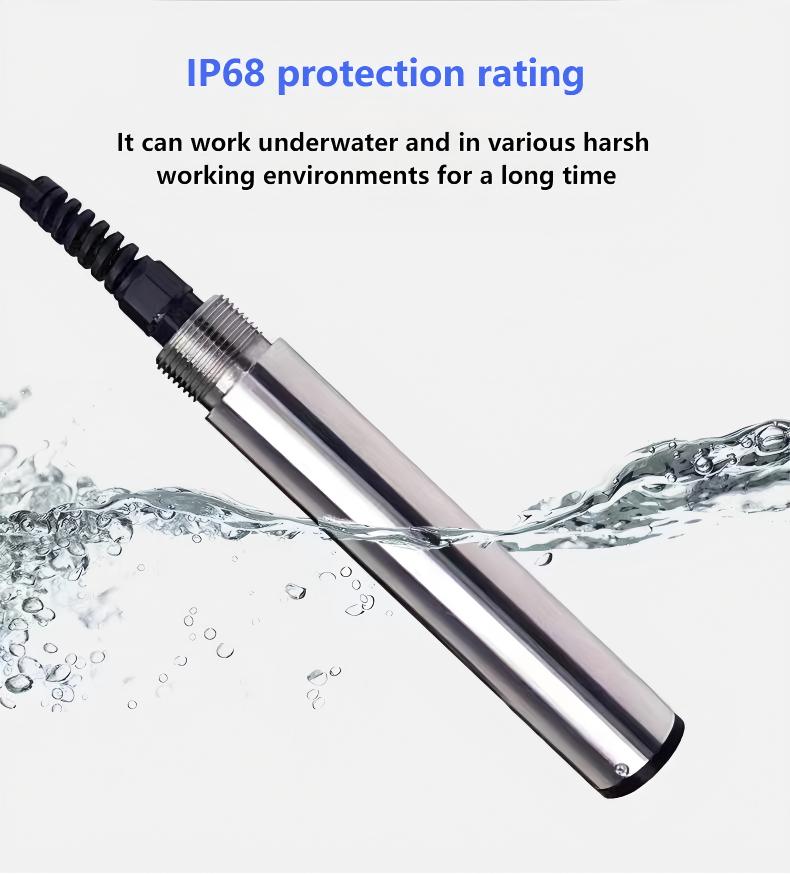
- Protection Rating
- IP68, suitable for long-term submersion.
- Max Operating Pressure
- Up to 3 bar.
Advanced Anti-Interference Capability
As a digital smart sensor with MODBUS protocol, it offers strong resistance to signal transmission interference. This design ensures high data accuracy and reliable integration with control systems like PLCs.
Premium Optical Components
The sensor utilizes custom sapphire optical components and specialized filters. This construction makes it highly resistant to ambient light and color interference, guaranteeing stable and reliable measurements under varying conditions.
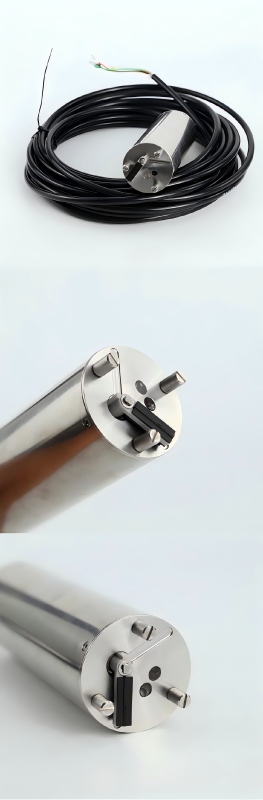
Self-Cleaning Function for Low Maintenance
An optional automatic cleaning brush is available. Users can set the cleaning frequency to automatically remove bubbles, fouling, and solids from the optical window, significantly extending maintenance intervals and reducing long-term operational costs.
Easy Installation and Deployment
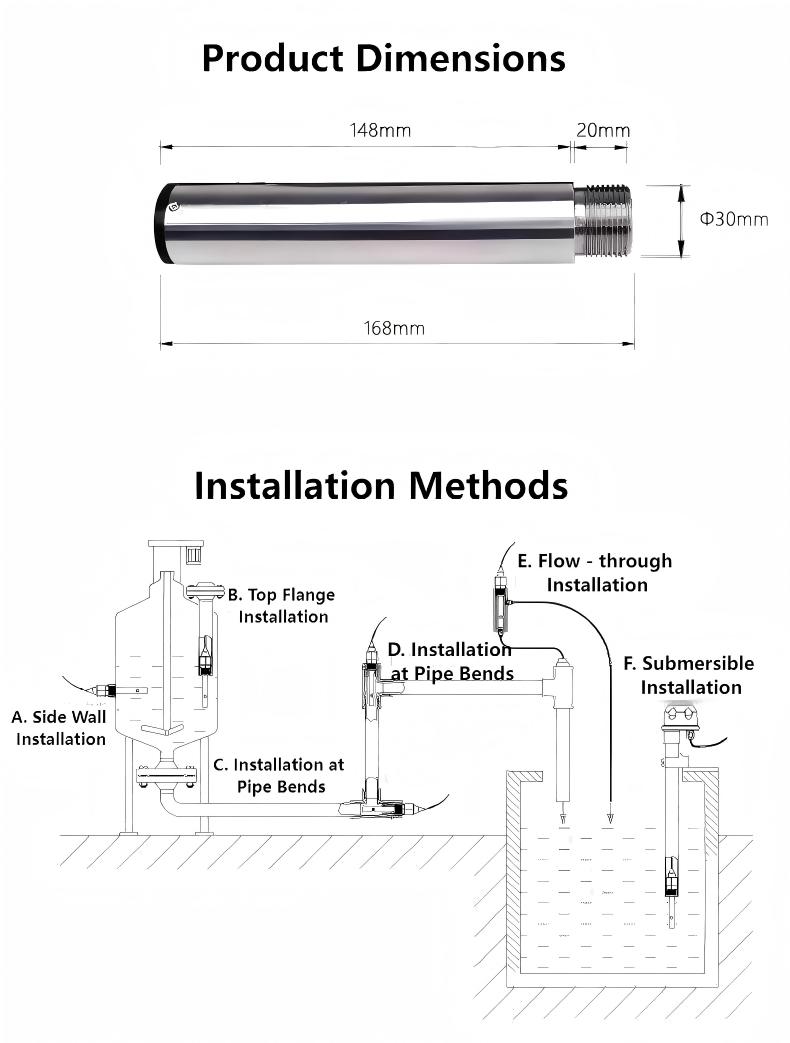
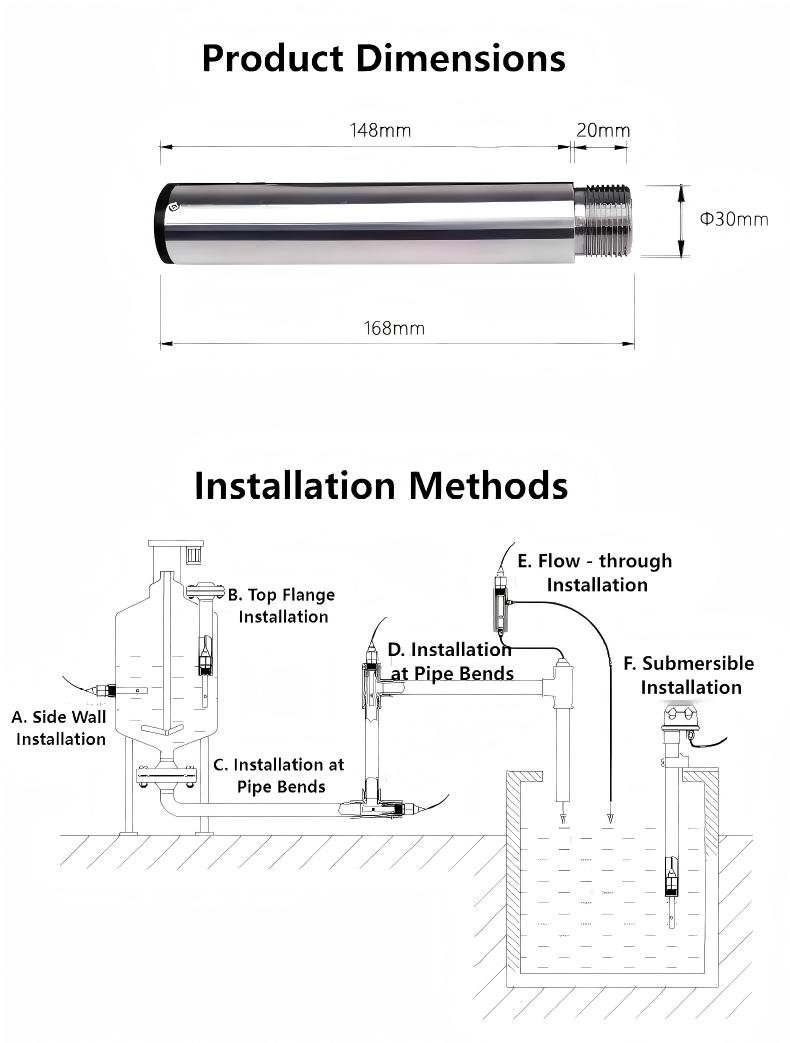
Designed for convenience, this compact turbidity sensor features an NPT3/4 thread for simple submersible installation. It can be directly immersed into tanks, pipelines, or open bodies of water.
The probe cable length is customizable, providing flexibility for different installation scenarios and making it an ideal solution for diverse water quality measurement needs in both industrial and environmental settings.
Contact Us
Need a custom solution? Our engineers are ready to help you design the perfect system.
Get In Touch