Home / Products / Online Residual Chlorine Analyzer
Back to Products
Online Residual Chlorine Analyzer
Water quality instruments

Online Residual Chlorine Analyzer

The Residual Chlorine Analyzer is a specialized instrument for detecting residual chlorine concentration in water. It is widely used in water plants, ...

Key Features

Intelligent Operation: Microcomputer control system supports touch keypad or menu operation. Some models feature automatic zeroing and 1-5 point automatic calibration for easy operation.
High Detection Accuracy: Utilizes high-precision principles like DPD colorimetry, capable of filtering interference factors such as pH value. Detection deviation can be controlled within ±2% of full scale, with a minimum detection limit of 0.01mg/L.
Long-life Light Source: Employs semiconductor light emitters with a lifespan of tens of thousands of hours, significantly longer than traditional incandescent lamps (approx. 350 hours).
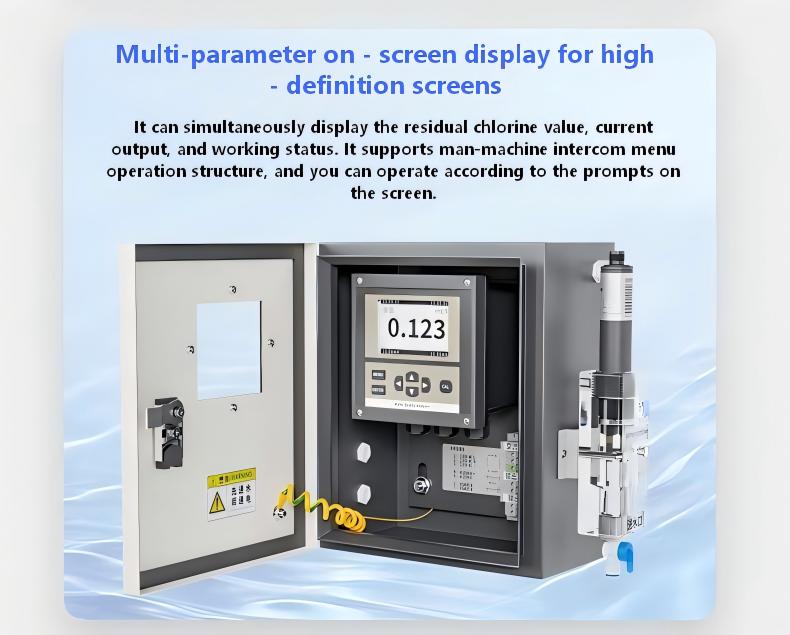
User-friendly Operation: Equipped with a high-definition LCD display supporting Chinese/English interfaces, displaying residual chlorine values and other information. Features automatic calibration and supports data storage and export.
Multi-parameter Monitoring: Online models can simultaneously measure residual chlorine and temperature; some also support pH detection.
Rich Data Functions: Capable of storing multiple standard curves and measurement data. Some models feature a USB interface for connecting to a computer to export or print data.

Performance Metrics

Electrical Interface PG9 waterproof cable gland
Measurement Accuracy Better than ±1% or ±0.01mg/L (whichever is greater)
Protection Rating IP43
Temperature Compensation NTC10K

Key Features

Intelligent Operation: Microcomputer control system supports touch keypad or menu operation. Some models feature automatic zeroing and 1-5 point automatic calibration for easy operation.
High Detection Accuracy: Utilizes high-precision principles like DPD colorimetry, capable of filtering interference factors such as pH value. Detection deviation can be controlled within ±2% of full scale, with a minimum detection limit of 0.01mg/L.
Long-life Light Source: Employs semiconductor light emitters with a lifespan of tens of thousands of hours, significantly longer than traditional incandescent lamps (approx. 350 hours).
User-friendly Operation: Equipped with a high-definition LCD display supporting Chinese/English interfaces, displaying residual chlorine values and other information. Features automatic calibration and supports data storage and export.
Multi-parameter Monitoring: Online models can simultaneously measure residual chlorine and temperature; some also support pH detection.
Rich Data Functions: Capable of storing multiple standard curves and measurement data. Some models feature a USB interface for connecting to a computer to export or print data.
High Stability: Built-in watchdog function ensures continuous stable instrument operation. Online models feature isolated current output for strong anti-interference capability.

Online Residual Chlorine Analyzer

The Online Residual Chlorine Analyzer is an essential automated analytical device designed for real-time, continuous monitoring of residual chlorine content in various water bodies. This instrument is crucial for ensuring water quality compliance and effective disinfection control across multiple industries.

Online Residual Chlorine Analyzer monitoring system

Core Working Principles of the Analyzer

The analyzer employs several advanced detection methods to ensure accurate measurement. The Constant Voltage Method (Membrane/Polarographic Method) uses a sensor with a working and reference electrode to generate a current proportional to chlorine concentration.

For high-precision applications, the DPD Spectrophotometric Method periodically draws a sample, reacts it with DPD reagent, and measures the absorbance of the resulting colored compound. Some models also utilize a Reagent-Free Colorimetric Method based on UV light absorption characteristics.

Key Features & Advantages

Real-time Monitoring

Capable of 24/7 uninterrupted monitoring with rapid response to capture concentration changes promptly.

High Detection Accuracy

Utilizes high-precision principles, controlling deviation within ±2% FS with a detection limit of 0.01mg/L.

Intelligent Operation

Microcomputer control supports touch operation, automatic zeroing, and 1-5 point automatic calibration.

Multi-parameter Monitoring

Online models can simultaneously measure residual chlorine and temperature; some also support pH detection.

High Stability

Built-in watchdog function and isolated current output ensure continuous, stable operation with strong anti-interference.

Long-life Components

Employs semiconductor light emitters with a lifespan of tens of thousands of hours, far exceeding traditional lamps.

Structural components of the Online Residual Chlorine Analyzer

Structural Composition & System Design

The core of the system is the sensor module, which includes the primary residual chlorine sensor and auxiliary sensors for pH, temperature, and turbidity to correct measurement data. The signal is processed by a dedicated transmitter and analog-to-digital converter (ADC).

A Central Processing Unit (CPU) runs embedded software for data acquisition and processing, supported by a storage module for historical data. The intelligent control module can trigger alarms or linkage controls based on set thresholds via multiple output interfaces.

User interaction is facilitated through a Human-Machine Interface (HMI), typically an LCD or OLED display with buttons or a touchscreen. The entire system is powered by a stable supply with protection features and housed in a dustproof and waterproof enclosure.

Technical Specifications & Data Functions

Parameter Specification / Capability
Detection Principle Constant Voltage (Polarographic), DPD Spectrophotometry, UV Colorimetry
Measurement Accuracy Deviation within ±2% of full scale
Detection Limit 0.01 mg/L
Light Source Lifespan Tens of thousands of hours (Semiconductor emitter)
Multi-parameter Support Residual Chlorine, Temperature, (optional pH)
Data Storage & Interface Stores curves & data, USB interface for export, Isolated current output
Display & Operation HD LCD, Chinese/English interface, Touch keypad/Menu, Auto-calibration
Online Residual Chlorine Analyzer in a water treatment application

Primary Application Fields for Water Quality Monitoring

This analyzer is widely used for disinfection process control in water treatment plants and for monitoring disinfection efficacy in wastewater treatment plant effluent. It is essential for verifying disinfection effectiveness in food & beverage production water.

Other critical applications include controlling disinfection in industrial circulating water systems and ensuring water quality compliance in the pharmaceutical industry. Its primary role is to prevent microbial growth by maintaining optimal residual chlorine levels.

Installation, Operation & Maintenance

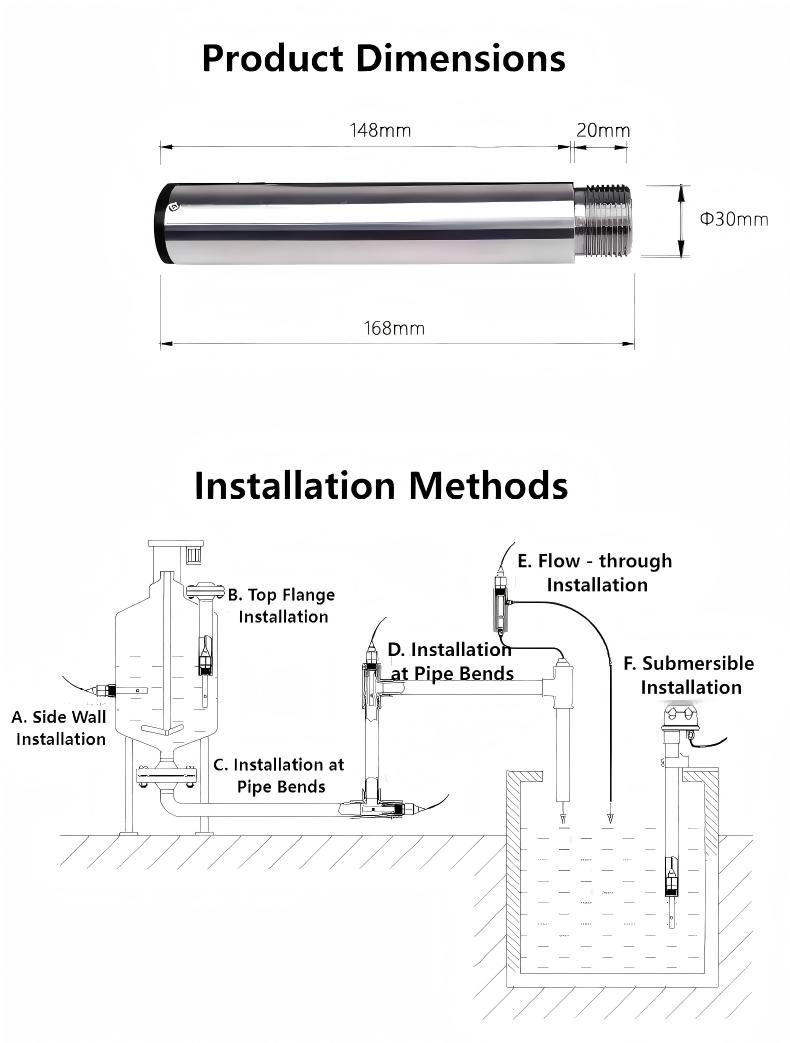
Installation setup for the Online Residual Chlorine Analyzer

Proper Installation Guidelines

For accurate readings, the analyzer should be installed away from strong electromagnetic interference sources. A filter must be installed before the sample inlet to protect the sensor.

For pipeline installation, ensure the pipe is completely full of water. For wall-mounted units, the typical recommended installation height is between 1.2 to 1.5 meters for easy access and operation.

Maintenance and calibration of the Residual Chlorine Analyzer

Routine Maintenance Procedures

New equipment requires an initial polarization process upon first use. For daily operation, regular calibration with standard solution is necessary to maintain measurement accuracy.

The electrode should be cleaned every 3 to 6 months, depending on water quality. The intuitive HMI and simple maintenance procedures make the analyzer user-friendly and operable without the constant need for specialized personnel.

Functional Expandability & System Integration

The Online Residual Chlorine Analyzer supports multiple signal outputs (4-20mA, RS485, etc.) for seamless integration with broader water quality monitoring platforms and automated chemical dosing systems. This expandability significantly enhances the intelligence level of modern water quality management.

Embedded software handles local data processing, while optional cloud platform connectivity enables powerful remote monitoring and control capabilities, making it a cornerstone of industrial water treatment automation.

Contact Us

Need a custom solution? Our engineers are ready to help you design the perfect system.

Get In Touch
Downloads

onlineresidualchlorineanalyzer instruction.pdf
PDF • 250.3 KB

Related Questions

View All
What is Urban Lifeline Safety Engineering? Which sensors are needed for drainage, water supply, and gas pipeline monitoring?
View Answer
<p>Urban Lifeline Safety Engineering is the systematic real-time monitoring and intelligent early warning of critical urban infrastructure — water supply, drainage, gas, heating, and bridges — to prevent public safety incidents.</p><p><strong>Drainage Monitoring:</strong> Radar level meters (manhole water level) + Doppler radar flowmeters (pipe velocity/flow) + rain gauges (precipitation), with EC32 RTU for real-time urban flood warning and CSO (Combined Sewer Overflow) monitoring.</p><p><strong>Water Supply Monitoring:</strong> Electromagnetic flowmeters (DMA zoning) + pressure transmitters (network pressure) + online water quality analyzers (residual chlorine/turbidity/pH) for leak localization and water quality assurance.</p><p><strong>Gas Pipeline Monitoring:</strong> Pressure transmitters + gas leak detectors + intelligent cathodic protection monitoring via explosion-proof RTU terminals.</p><p>CSSOC focuses on the "water" component of urban lifelines, providing end-to-end solutions from sensor to cloud, with 120+ monitoring points deployed across multiple cities in China.</p>
Which flow meter suits reclaimed water pipelines? Is the LGF-PA66 right for recycled-water duty?
View Answer
<p>Reclaimed water is aggressive: residual chlorine, suspended solids, algae, elevated conductivity and often flocculant carry-over. Metering it demands corrosion resistance, fouling tolerance and stable accuracy at the same time.</p> <p>Why the LGF-PA66 fits:</p> <ul> <li><strong>Corrosion</strong>: the aviation-grade PA66 composite body is chemically stable in weak acids, alkalis and chlorinated water — it suffers none of the chloride pitting that kills 304/316L stainless bodies, the dominant failure mode in reclaimed-water service.</li> <li><strong>Fouling</strong>: no moving parts, no cavities where sludge collects; light electrode coatings are compensated by the excitation scheme, which keeps the zero stable. Specify a PTFE liner with 316L or Hastelloy electrodes matched to the water chemistry.</li> <li><strong>Accuracy</strong>: ±0.5% covers internal reclaimed-water accounting; use the ±0.2% version at custody-transfer points with reuse customers, verified periodically under JJG 1033.</li> </ul> <p>Typical deployment: LGF-PA66 (DN50–DN300) at the reclamation plant outlet and at each industrial offtake for billing; at park branch points the meter feeds an EC32 RTU that uploads instantaneous and totalized flow plus pressure to the reuse-management platform for quota control and leakage screening. In valve pits, order the IP68 submerged configuration with the split converter and RTU in a pit-side cabinet.</p> <p>For more details, please visit our product page or contact our technical team.</p>
What are the essential maintenance practices for electromagnetic flowmeter and radar level sensor electrodes?
View Answer
<p><strong>Sensor electrode maintenance</strong> is fundamental for ensuring long-term stable operation of flow measurement systems. <strong>LGF electromagnetic flowmeter electrodes</strong> require focus on surface condition and insulation performance, while <strong>radar level sensor antennas</strong> need clean surfaces and stable signal transmission.</p><ul><li><strong>Daily inspection</strong>: Weekly visual checks for foreign matter adhesion or corrosion on electrode surfaces</li><li><strong>Insulation testing</strong>: Monthly megohmmeter testing of electrode-to-ground resistance, should exceed 20MΩ</li><li><strong>Signal monitoring</strong>: Track 4-20mA output stability and EC32/EC60 RTU communication status</li><li><strong>Environmental protection</strong>: Inspect sensor seal integrity to prevent moisture ingress</li><li><strong>Grounding system</strong>: Ensure proper grounding with resistance <10Ω</li></ul><p>For <strong>HZ-KSLF radar flowmeters</strong>, regularly clean antenna covers and verify FMCW signal quality. With 316L stainless steel or Hastelloy electrodes, avoid chlorine-based cleaners. Maintain detailed service records to track electrode performance trends over time.</p>
How do I choose the electrode material for the LGF-PA66 electromagnetic flow meter — 316L, Hastelloy, or titanium?
View Answer
<p>Electrodes are the parts of an electromagnetic flow meter in direct contact with the medium, so their selection follows the medium composition, not the pipe material. The PA66 body of the LGF-PA66 is inherently corrosion-resistant, but a wrong electrode choice will still fail — the two must be evaluated separately.</p><ul><li><strong>316L stainless steel:</strong> for weakly corrosive media — municipal supply, raw water, domestic sewage. Stable below ~200 mg/L chloride; the standard choice for DMA district metering points.</li><li><strong>Hastelloy (HC/HB):</strong> for high-chloride media — seawater, salt-lake water, high-TDS groundwater — and dilute sulfuric/hydrochloric chemical streams. The default for seawater aquaculture and coastal power-plant cooling water.</li><li><strong>Titanium:</strong> outstanding resistance to chlorine and hypochlorite; suited to chlorinated tap water and loops dosed with sodium hypochlorite. Avoid it in concentrated hydrochloric or sulfuric acid.</li></ul><p>Provide the medium's main ions, concentration, temperature, and pH, and our engineers match it against corrosion tables. All LGF-PA66 sizes (DN15–DN3000) accept all three electrode types; accuracy stays at ±0.5%(DN50-100) regardless of electrode material. With an EC32 RTU on telemetry, electrode polarization or empty-pipe faults surface promptly on the platform.</p><p>For more details, please visit our product pages or contact our technical team.</p>