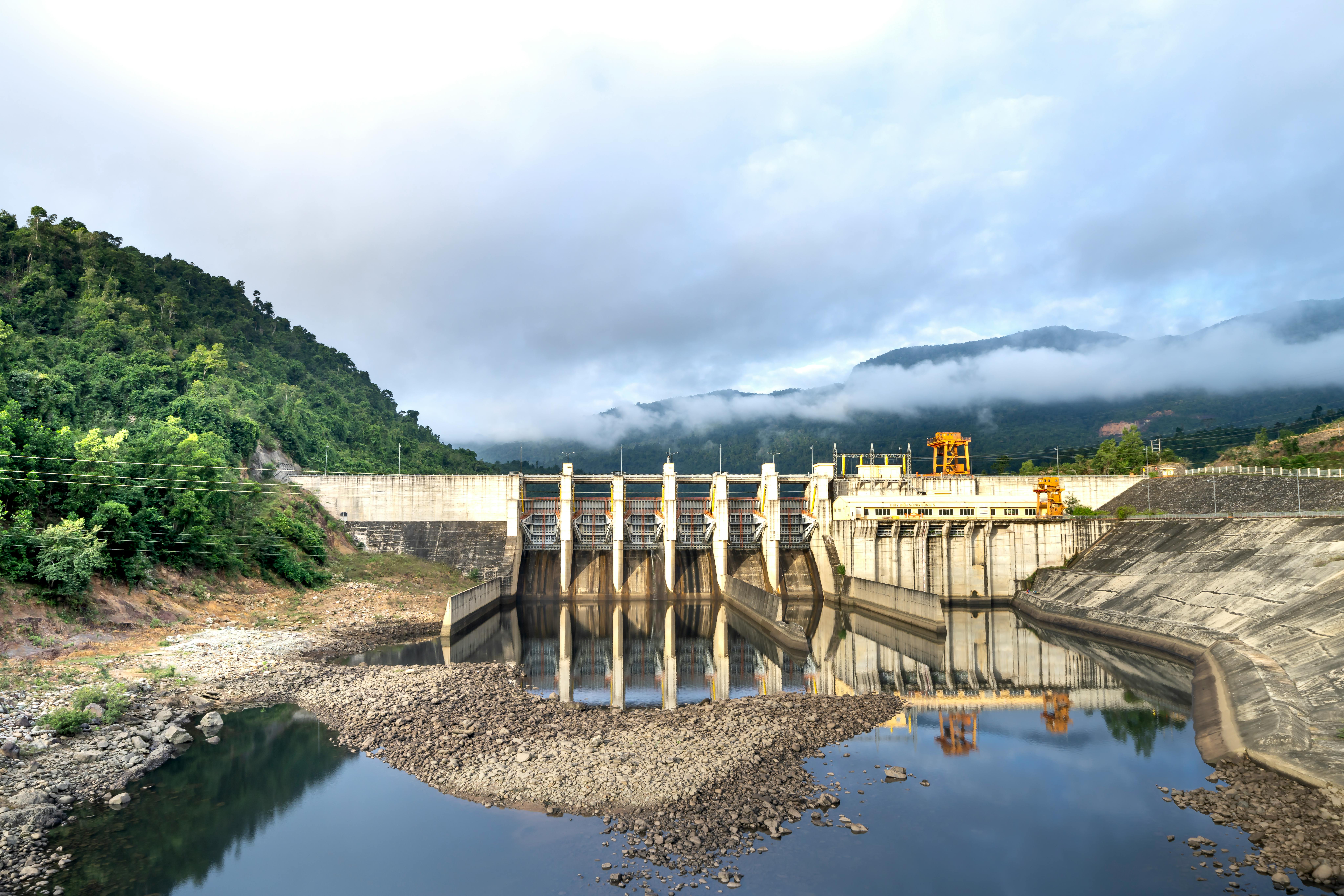
Hydropower Station Ecological Flow Monitoring System Solution
The ecological flow monitoring system for hydropower stations addresses the regulatory needs of water resources and environmental protection authorities regarding the minimum ecological discharge from hydropower stations. By deploying Doppler radar flow meters and radar water level gauges at the discharge outlets of hydropower stations, along with visual monitoring cameras, the system monitors the discharge flow in real time and compares it with the approved minimum ecological flow value. Data is automatically reported to the provincial regulatory platform via RTU terminals. The system supports automatic alerts for insufficient flow, video evidence collection of the discharge process, and statistical analysis of historical data, ensuring that hydropower stations release ecological flow in compliance with laws and regulations to maintain the health of river ecosystems.
Overview
Summary
The ecological flow monitoring system for hydropower stations addresses the regulatory needs of water resources and environmental protection authorities regarding the minimum ecological discharge from hydropower stations. By deploying Doppler radar flow meters and radar water level gauges at the discharge outlets of hydropower stations, along with visual monitoring cameras, the system monitors the discharge flow in real time and compares it with the approved minimum ecological flow value. Data is automatically reported to the provincial regulatory platform via RTU terminals. The system supports automatic alerts for insufficient flow, video evidence collection of the discharge process, and statistical analysis of historical data, ensuring that hydropower stations release ecological flow in compliance with laws and regulations to maintain the health of river ecosystems.
Key Advantages
Challenges
- Among the 47,000 small hydropower stations nationwide, a significant number experience reduced water flow or complete diversion, leading to downstream river channels drying up and severely impacting the ecological environment.
- Traditional manual flow measurement methods are inefficient, costly, and difficult to achieve continuous, all-weather monitoring.
- Some hydropower stations engage in the practice of surreptitiously reducing discharge flow during nighttime or dry seasons, and there is a lack of effective technical supervision measures.
- The water conservancy and environmental protection departments require real-time online data integration, as traditional offline monitoring cannot meet the data reporting requirements of the regulatory platform.
Results
- A Provincial Small Hydropower Ecological Flow Monitoring Project: Installed radar flow meters and video surveillance for 386 hydropower stations, increasing the real-time platform compliance rate from 62% to 97%, and restoring perennial flow to 56 water-reduced river sections.
- A water power station rectification project in a national-level nature reserve: 12 diversion-type power stations have been equipped with non-contact monitoring devices, with 24-hour video playback capability at discharge outlets. The compliance rate for ecological flow has reached 100%, and the project has successfully passed the environmental inspection and acceptance.
- Interconnected Supervision of Hydropower Stations in a River Basin: Covers 78 power stations across 3 rivers, with data uniformly integrated into the river basin management bureau's platform, enabling cross-regional ecological flow coordination and dispatch.
Solution Details
Hydropower Station Ecological Flow Monitoring System Solution
The hydropower station ecological flow monitoring system solution utilizes Doppler radar flow meters, radar water level gauges, and visual monitoring equipment to achieve non-contact continuous monitoring and video evidence collection of discharge flow at the hydropower station outlet. Data is reported in real-time to water resources and environmental protection regulatory platforms, providing technical assurance for the compliant management of ecological flow at hydropower stations and the protection of river ecosystems.
Policy Background for Ecological Flow Monitoring
The "Yangtze River Protection Law of the People's Republic of China" and the "Yellow River Protection Law" explicitly stipulate that hydropower stations must ensure the release of ecological flow. The Ministry of Water Resources issued the "Notice on Strengthening Ecological Flow Supervision of Small Hydropower Stations in the Yangtze River Economic Belt," requiring all small hydropower stations to install online ecological flow monitoring facilities, with data connected to provincial-level regulatory platforms.
Among the 47,000 small hydropower stations nationwide, a significant portion faces issues of reduced water flow or flow interruption, leading to downstream river channel drying up and degradation of aquatic ecosystems. Central environmental protection inspections have listed the ecological flow issue of small hydropower as a key task for supervision, and provinces have initiated large-scale rectification projects.
System Architecture of the Monitoring Solution
- Flow Monitoring: Doppler radar flow meter measures surface velocity at the outlet, calculating flow rate combined with cross-section parameters.
- Water Level Monitoring: Radar water level gauge monitors downstream river water level for cross-validation with stage-discharge curves.
- Video Surveillance: Visual radar high-definition camera provides 24-hour live recording of the outlet, with data overlaid on the video feed.
- Data Reporting: RTU terminal transmits via 4G/BeiDou, reporting to regulatory platforms using dual SZY206/HJ 212 protocols.
Core Functions of the Ecological Flow System
Non-contact Flow Monitoring
The multi-band Doppler radar flow meter is installed on a beam or bracket above the discharge outlet. It emits microwave signals to the water surface to measure surface velocity distribution and calculates instantaneous and cumulative flow rates based on known cross-section parameters (width, depth). No in-water installation is required, ensuring no interference with the discharge channel.
Real-time Compliance Assessment & Alarm
The system has built-in the approved minimum ecological flow value for each station and automatically compares it with measured flow every 5 minutes. An alarm is triggered if the flow remains below the minimum for 30 consecutive minutes, simultaneously sending SMS notifications to station managers and regulatory departments. Non-compliance periods are recorded as assessment evidence.
Video Evidence & Playback
The visual radar water level gauge has a built-in high-definition camera, providing 24/7 uninterrupted recording of the outlet. Flow and water level data are overlaid on the video feed in real-time, forming a dual "data + video" evidence chain, supporting video playback for any time period.
Multi-station Networked Supervision
Supports unified data aggregation from hundreds of stations within a river basin. The regulatory platform displays real-time compliance status and daily/monthly/annual discharge statistics for each station, supporting one-click generation of supervision reports. Cross-regional stations can be managed by river basin or river group.
Recommended Product Configuration
Discharge Flow
Multi-band Doppler Radar Flow Meter
Non-contact flow measurement, integrates water level/velocity/flow/camera
Water Level Monitoring
Visual Radar Water Level Gauge
Radar + HD camera, water level and video on the same screen
Auxiliary Water Level
Radar Level Gauge
Supplementary measurement point for downstream river channel
Data Transmission
Hero V9 RTU (EC32 Hydrology Edition)
Dual SZY206+HJ 212 protocols, BeiDou+4G
Key Product Features
- Non-contact Flow Monitoring: The Doppler radar flowmeter is installed above the discharge outlet, without entering or obstructing the water, with a measurement accuracy of ±5%, and maintenance-free.
- Radar Water Level Auxiliary Verification: The radar water level gauge synchronously monitors the downstream river water level, cross-validates the water level–discharge relationship curve, and enhances data reliability.
- Visual Leakage Forensics: High-definition cameras record 24-hour live footage of discharge outlets, with water level/flow data overlaid on the video feed, serving as evidence for regulatory enforcement.
- Real-time Compliance Determination: The system automatically compares the measured flow with the approved minimum ecological flow. If it falls below the threshold, an alarm is triggered immediately, and non-compliant periods are recorded.
- Multi-standard protocol integration: Supports both water conservancy SZY206 and environmental protection HJ/T 212 dual protocols, enabling a single set of equipment to simultaneously report to the Water Resources Department and the Environmental Protection Department.
- Solar-Powered Independent Supply: Remote mountainous area stations adopt a solar + battery power supply solution, paired with ultra-low-power RTUs, eliminating the need for external power sources.
Solution Advantages
✓ Compliance Assurance
Meets dual regulatory requirements of the Ministry of Water Resources and the Ministry of Ecology and Environment, dual SZY206+HJ 212 standards
✓ Complete Evidence Chain
Dual evidence of flow data + video footage, meeting requirements for environmental inspections and law enforcement checks
✓ Easy Installation
Non-contact installation does not affect discharge facilities, no need for flow interruption construction, deployment completed in 1 day
✓ Adapts to Harsh Environments
IP68 protection, operating temperature -40~70°C, suitable for mountainous areas with high temperature differences and humidity
Approach
How we implement intelligence into your infrastructure step by step.
Ecological Flow Requirements Assessment
Determine minimum ecological flow discharge standards based on upstream/downstream environmental needs and regulatory requirements
Non-contact Monitoring Deployment
Install Doppler radar flowmeters and visual radar level sensors at discharge points for non-contact synchronized monitoring
Remote Monitoring Platform Setup
Enable real-time data upload via 4G/5G RTU and establish platform integration with water authority supervision systems
Compliance Assurance & Evidence Recording
Configure automatic low-flow alerts and video documentation to ensure ecological flow compliance with evidence retention

Ready to Optimize Your Business?
Contact us, and our professional team will provide customized solutions to help your business achieve digital transformation.
Get In Touch