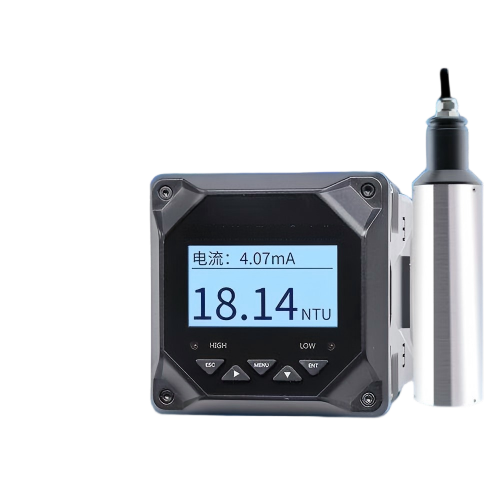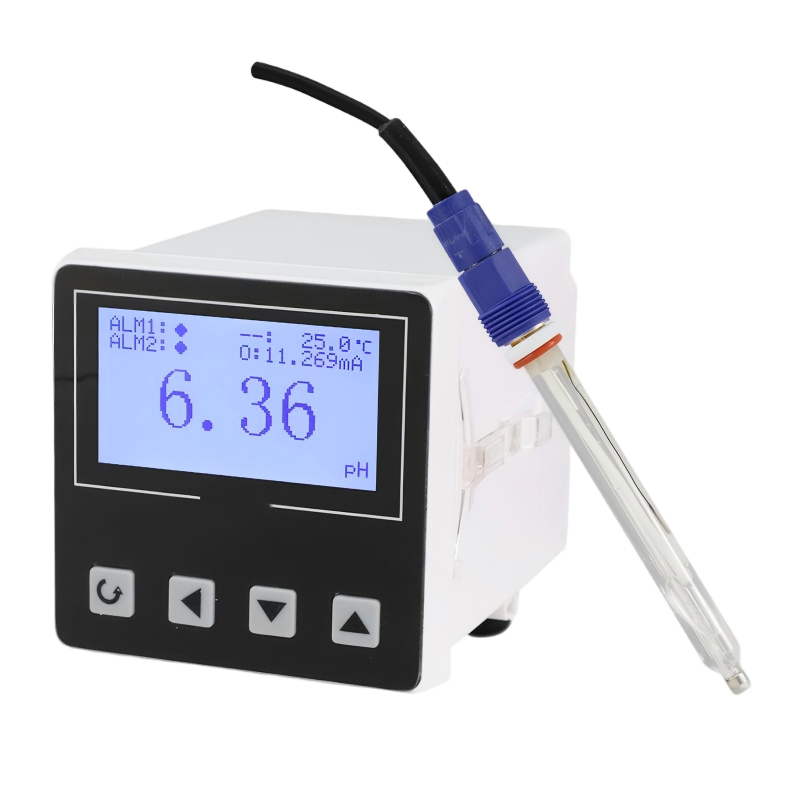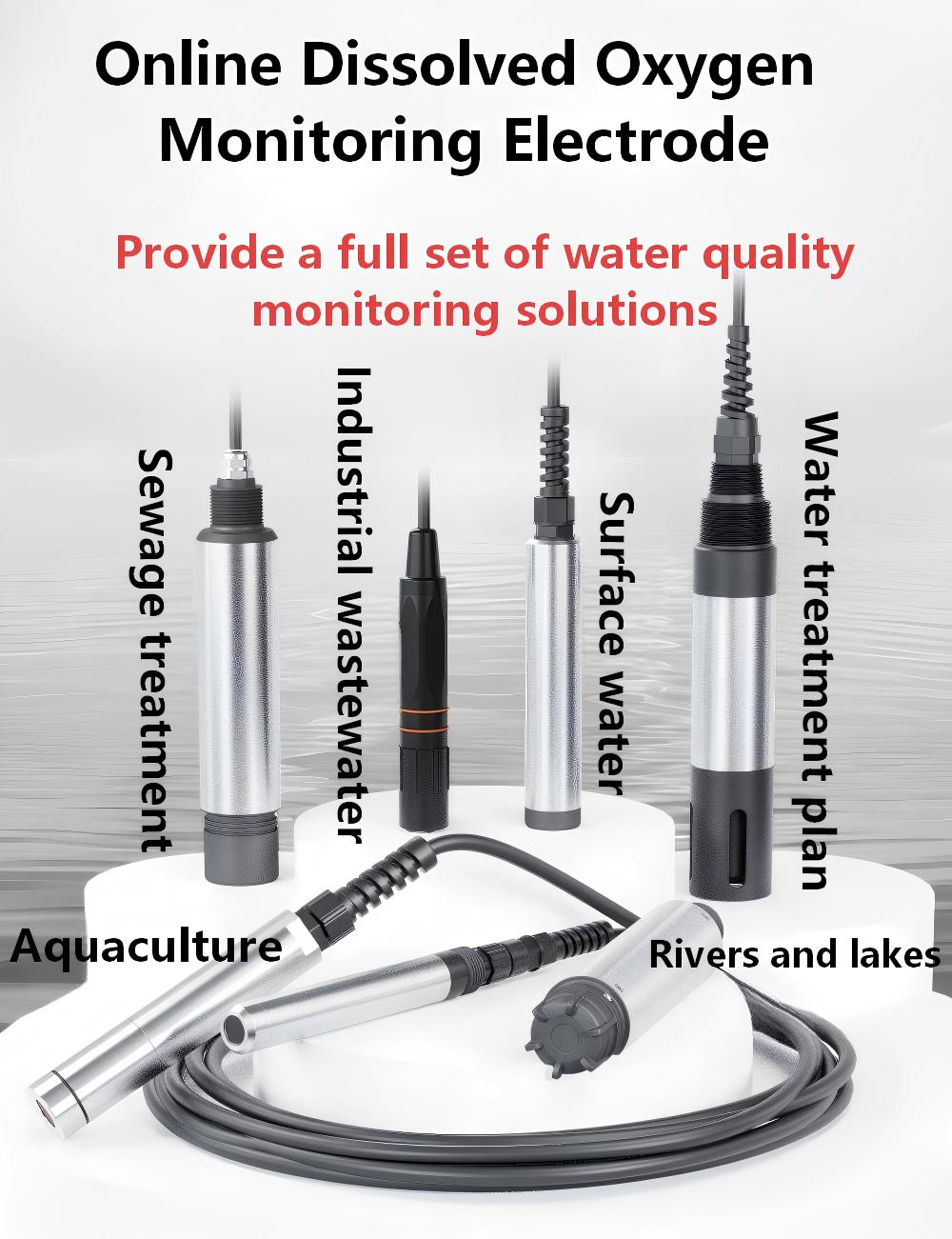
Dissolved Oxygen Electrode (Multiple Options Available)
The Dissolved Oxygen Online Analyzer is an intelligent online optical analysis instrument, widely used for continuous monitoring of dissolved oxygen, ...
Key Features
Performance Metrics
| Measured Variables | Dissolved Oxygen, Saturation |
| Dimensions | Overall: 100mm * 100mm * 150mm, Cutout: 92.5mm*92.5mm |
| Contact Output | 2 independent configurable NO/NC contacts, contact rating AC250V/3A |
| Temperature Accuracy | ±0.5℃ |
Key Features
Dissolved Oxygen Electrode (Multiple Options Available)
A dissolved oxygen electrode is a critical sensor for analytical instruments, designed to measure the dissolved oxygen content in solutions. It plays a vital role in water quality monitoring, wastewater treatment, aquaculture, and industrial production processes, providing essential data for environmental assessment and process control.
Dissolved Oxygen Electrode Measurement Principle
Dissolved oxygen electrodes operate on two primary principles: the Polarographic Method and the Fluorescence Method. The choice of principle defines the sensor's technology, response time, and maintenance requirements.
Polarographic Method
This type of electrode applies a specific voltage between a cathode and an anode. Dissolved oxygen undergoes a reduction reaction at the cathode, generating a diffusion current proportional to its concentration. Measuring this current determines the dissolved oxygen content.
Fluorescence Method
Based on fluorescence quenching, a fluorescent substance on the sensor is excited by light. When dissolved oxygen contacts the substance, it causes the fluorescence intensity to weaken. The oxygen concentration is calculated based on this change in intensity.
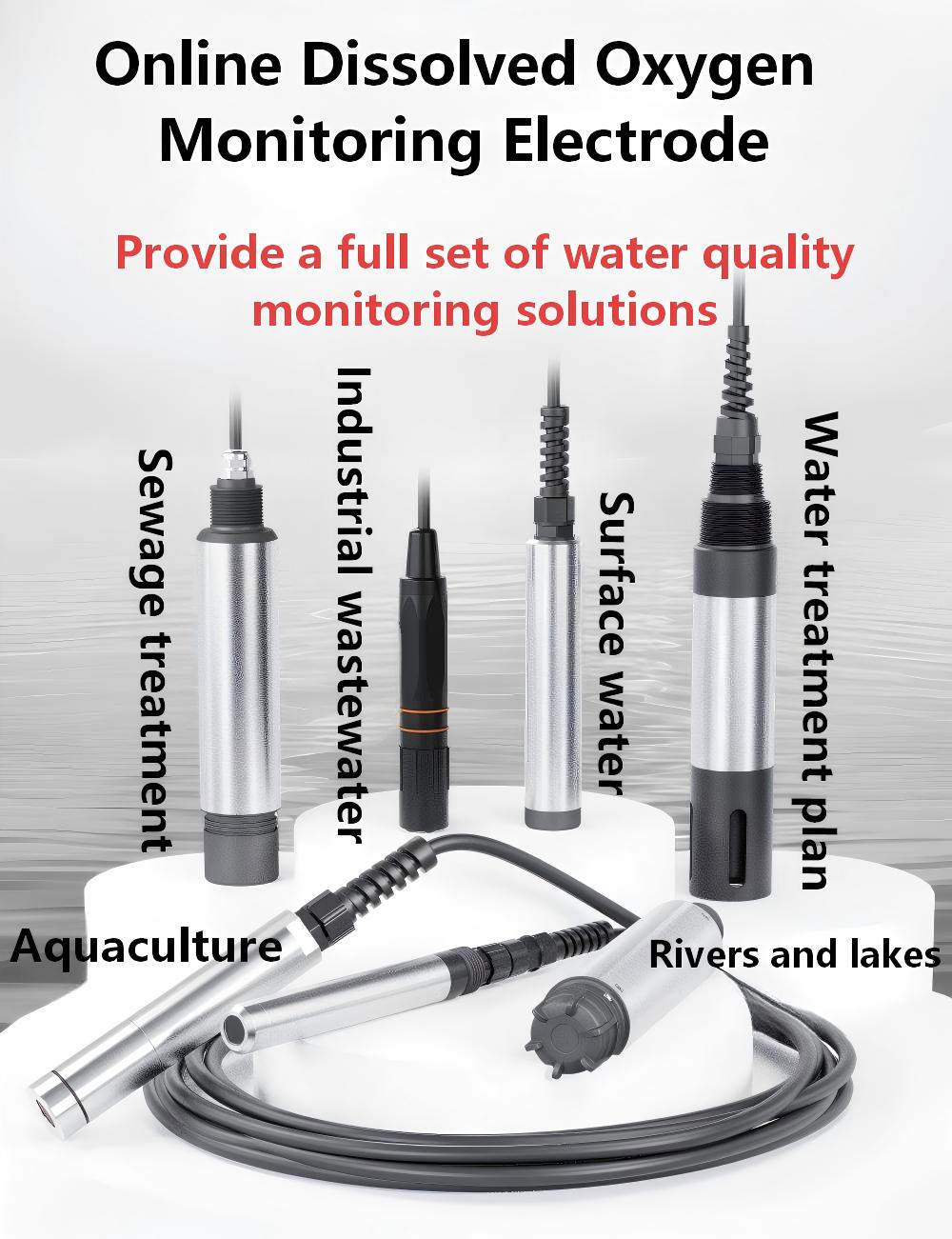
Dissolved Oxygen Sensor Structure and Components
The internal structure varies significantly between polarographic and optical fluorescence dissolved oxygen electrodes. Each component is engineered for precise and stable measurement.
Polarographic Electrode Structure
Key components include a precious metal cathode (e.g., platinum), a metal anode (e.g., silver), an electrolyte for ion conduction, and a permeable membrane that allows oxygen to diffuse in while blocking impurities.
Fluorescence Method Electrode Structure
The core is a fluorescent sensing cap. It works with a light source (like an LED) to excite the fluorophore and a photodetector to measure intensity changes. A signal processing circuit then calculates and outputs the final dissolved oxygen value.
Dissolved Oxygen Electrode Types and Classification
By Measurement Principle
Polarographic DO Electrodes: Feature mature, long-established technology with a proven track record in various applications.
Fluorescence Method DO Electrodes: Offer fast response times and simpler maintenance, as they have no membranes or electrolytes to replace regularly.
By Application Scenario
Online Dissolved Oxygen Electrodes: Designed for fixed installation in processes or monitoring stations for continuous, real-time dissolved oxygen monitoring.
Portable Dissolved Oxygen Electrodes: Lightweight and convenient for field measurements, multi-point sampling, and mobile water quality assessment tasks.
Key Features and Performance of DO Electrodes
High Accuracy & Stability
These electrodes provide precise measurements for reliable water quality assessment and process control. They maintain stable performance, though polarographic types require periodic membrane and electrolyte maintenance.
Fast Response & Wide Adaptability
Fluorescence-based sensors respond particularly quickly to concentration changes. The electrodes adapt to various temperature and pH conditions, though extreme environments may require specialized models or compensation.
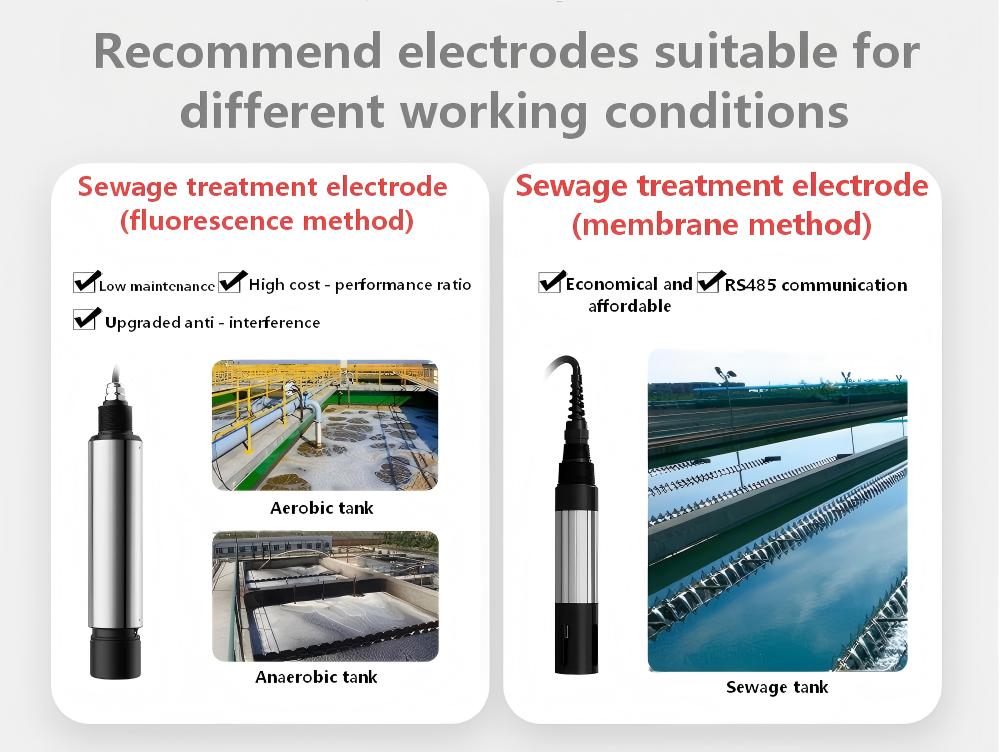
Primary Application Scenarios for Oxygen Sensors
Dissolved oxygen electrodes are indispensable tools across environmental and industrial sectors where oxygen levels are critical.
Water Quality & Wastewater Treatment
Used in rivers, lakes, oceans, and at discharge points to assess health and pollution. In wastewater plants, they monitor aeration and anaerobic tanks to optimize treatment and microbial activity.
Aquaculture & Industrial Production
Ensure optimal survival conditions for aquatic life by preventing hypoxia. In chemical, pharmaceutical, and food production, they control dissolved oxygen to ensure product quality, safety, and fermentation efficiency.
Advanced Product Features and Specifications
Our dissolved oxygen electrodes and transmitters are equipped with intelligent features for reliable, user-friendly operation in demanding environments.
Measurement Capabilities
Dissolved Oxygen, Saturation, Temperature
Calibration & Compensation
Air Calibration, Automatic Temperature Compensation
Output & Communication
Isolated Transmitter Output, Isolated RS485
Alarms & Interface
Configurable Hi/Lo Alarms, Buzzer, LCD Backlight
System Features
Modular Design, Multi-language, Multi-installation
Intelligence & Data
Self-diagnosis, Data Storage, History Query
| Feature Category | Specification |
|---|---|
| Design | Modular circuit design |
| Output | Isolated transmitter output for reduced interference |
| Communication | Isolated RS485 communication |
| Measurement Parameters | Dissolved oxygen, saturation, and temperature |
| Calibration | Supports air calibration |
| Alarms | Configurable high/low alarms with hysteresis |
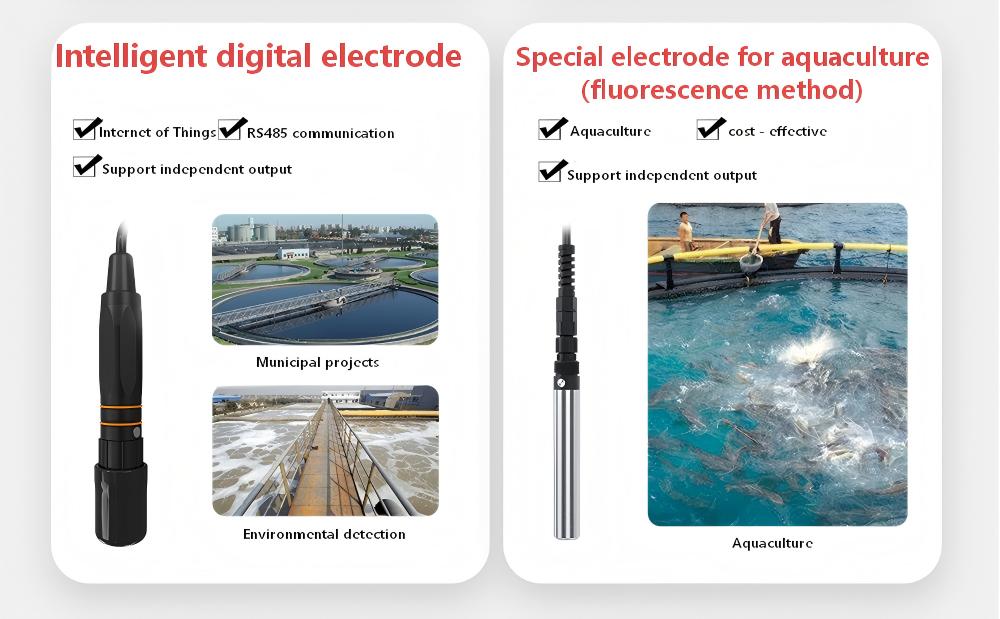
Smart Functionality for Reliable Monitoring
The integrated transmitter unit enhances the dissolved oxygen measurement system with robust connectivity and user-centric controls for simplified operation and maintenance.
Features like selectable language interfaces (Chinese/English), configurable buzzer and LCD settings, and multiple installation methods provide flexibility for different field requirements. The intelligent self-diagnosis and data logging functions ensure system reliability and facilitate traceability.
This combination of advanced sensor technology and smart features makes it an ideal solution for continuous dissolved oxygen monitoring in critical water and process applications.
Contact Us
Need a custom solution? Our engineers are ready to help you design the perfect system.
Get In Touch