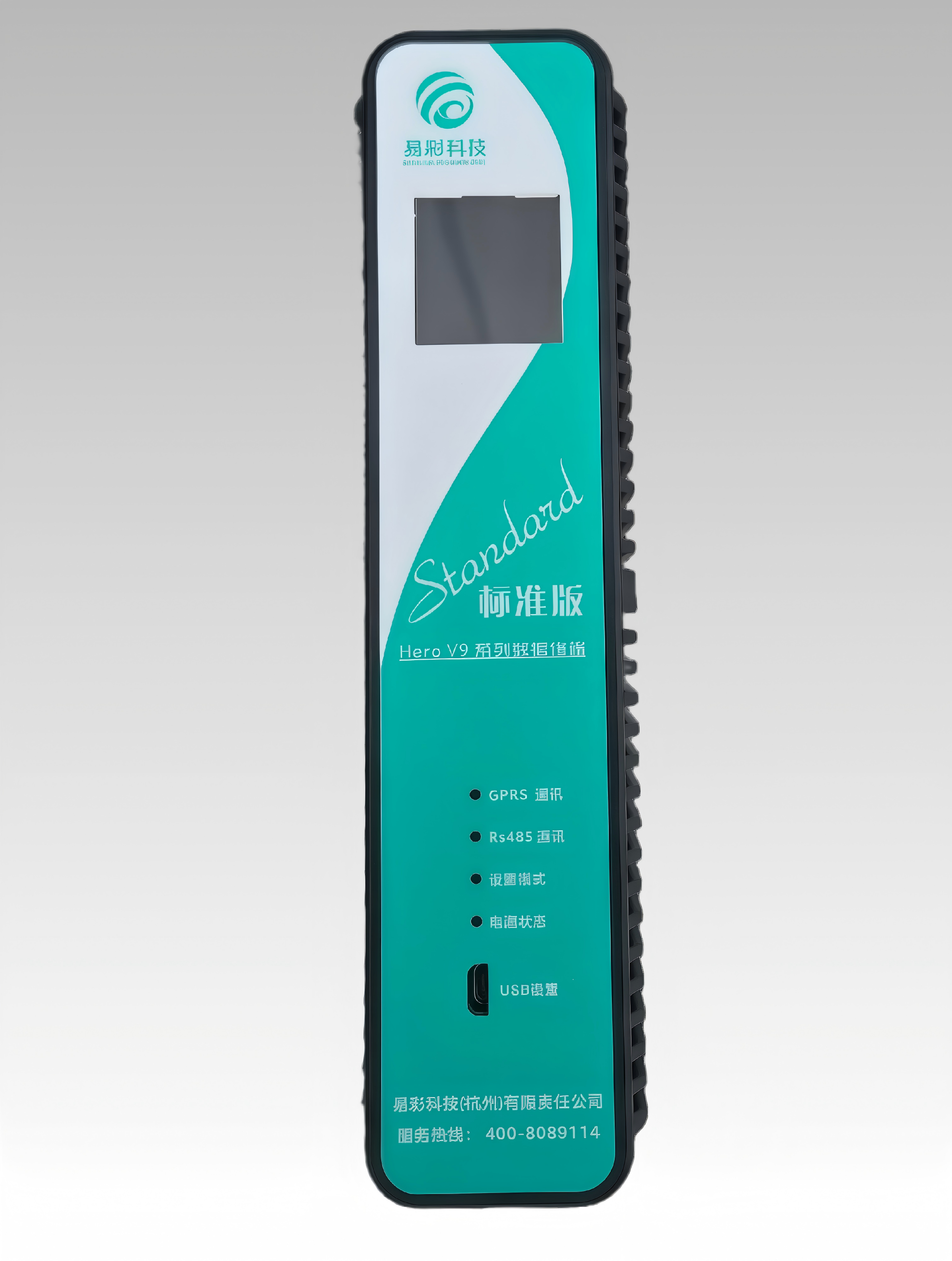
Home / Products / HERO V9-EC32 Hydrology RTU | Remote Terminal Unit
Back to Products
HERO V9-EC32 Hydrology RTU | Remote Terminal Unit
Remote Terminal Unit

HERO V9-EC32 Hydrology RTU | Remote Terminal Unit

This product has the functions of remote data collection, control and communication. It can receive operation instructions from the host computer and ...

Key Features

It has passed the type inspection in accordance with the "SZY206 - 2016 Specification for Transmission of Water Resources Monitoring Data"
It has an explosion - proof certification (explosion - proof grade: T6)
It has passed the reliability verification with a Mean Time Between Failures (MTBF) of not less than 50,000 hours
It is equipped with a color liquid - crystal display screen, which can display the collected content and the device status in real - time.
It boasts a powerful external expansion capability, enabling connection to a wide range of professional measuring instruments and sensors, such as rain gauges, water level gauges, current meters, and flow meters
This product features advanced functions, integrating remote program updates, precise reverse control of devices such as pumps, valves, and gates, one - to - multiple data transmission with intelligent reporting of key information, and immediate alarm when monitored data exceeds the preset range

Performance Metrics

Analog input Two channels (4 - 20mA or 0 - 5V); The interface functions for relay, pulse, and analog quantity can be expanded.
Communication method 4G/NB
Display method Color liquid crystal screen
Operating voltage Operating voltage: 9~24VDC / 220VAC (typical: 12V)

Key Features

It has passed the type inspection in accordance with the "SZY206 - 2016 Specification for Transmission of Water Resources Monitoring Data"
It has an explosion - proof certification (explosion - proof grade: T6)
It has passed the reliability verification with a Mean Time Between Failures (MTBF) of not less than 50,000 hours
It is equipped with a color liquid - crystal display screen, which can display the collected content and the device status in real - time.
It boasts a powerful external expansion capability, enabling connection to a wide range of professional measuring instruments and sensors, such as rain gauges, water level gauges, current meters, and flow meters
This product features advanced functions, integrating remote program updates, precise reverse control of devices such as pumps, valves, and gates, one - to - multiple data transmission with intelligent reporting of key information, and immediate alarm when monitored data exceeds the preset range
Through SL/T 427 - 2021 "Code for Transmission of Water Resources Monitoring Data

HERO V9-EC32 Hydrology RTU Overview

The HERO V9-EC32 hydrology RTU from Ecolor Technology is a remote terminal unit that combines remote data collection, control and communication in one device for water affairs, water conservancy, steam, gas and electricity projects. This hydrology RTU rapidly and accurately receives operation instructions issued by the host computer and controls the actions of end-execution mechanisms such as pumps, valves and gates, providing a solid guarantee for the stable operation of the whole system. It has passed type inspection in accordance with the SZY206-2016 Specification for Transmission of Water Resources Monitoring Data and also conforms to SL/T 427-2021 Code for Transmission of Water Resources Monitoring Data, holds explosion-proof certification with a rating of T6, and has passed reliability verification with a Mean Time Between Failures of not less than 50,000 hours.

The hydrology RTU is equipped with a color liquid crystal display screen that shows the collected content and the device status in real time, and it can be externally connected to various types of instruments and sensors, including rain gauges, water level gauges, current meters and flow meters.

Working Principle of the HERO V9-EC32 Remote Terminal Unit

As the field-side node of a remote monitoring system, the hydrology RTU connects external instruments and sensors, collects their measurement data, and reports it to the host computer or monitoring center. It can receive operation instructions from the host computer and then methodically control the end-execution mechanism, enabling flawless execution of various complex actions. The HERO V9-EC32 integrates remote program updates, precise reverse control of devices such as pumps, valves and gates, one-to-multiple data transmission with intelligent reporting of key information, and an immediate alarm when monitored data exceeds the preset range. A built-in color liquid crystal display screen shows the collected content and the device status in real time, so operators on site can read parameters and operating indicators at a glance without complex operations.

Key Features of the Hydrology RTU

The HERO V9-EC32 hydrology RTU is designed as an open platform with powerful external expansion capability and full standards compliance:

  • Passed type inspection per the SZY206-2016 Specification for Transmission of Water Resources Monitoring Data, and compliant with SL/T 427-2021 Code for Transmission of Water Resources Monitoring Data.
  • Explosion-proof certification with an explosion-proof grade of T6 for hazardous environments.
  • Verified reliability with a Mean Time Between Failures (MTBF) of not less than 50,000 hours.
  • High-resolution color LCD display presenting collected data and device status in real time through vivid icons and text.
  • Powerful external expansion: connects rain gauges, water level gauges, current meters, flow meters and other professional instruments and sensors.
  • Remote program updates, precise reverse control of pumps, valves and gates, one-to-multiple data transmission with intelligent reporting of key information, and immediate alarm when monitored data exceeds the preset range.

Technical Specifications of the HERO V9-EC32

Product Type

Measurement & Control Terminal

Series

Hero V9 Series - EC32

Functions

Remote Data Collection, Control & Communication

Display

High-Resolution Color LCD

Sensor Interfaces

Rain Gauges, Water Level Gauges, Current Meters, Flow Meters

Control

End-Execution Mechanism Control; Precise Reverse Control

Data Transmission

One-to-Multiple with Intelligent Reporting

Alarm

Immediate Alarm on Exceeding Preset Range

Remote Maintenance

Remote Program Updates

Standards

SZY206-2016 & SL/T 427-2021

Explosion-Proof Grade

T6

Reliability

MTBF ≥ 50,000 Hours

Applications of the Hydrology RTU

In the water affairs industry, the hydrology RTU helps achieve remote monitoring and intelligent regulation of water supply and drainage systems, ensuring the rational allocation and efficient utilization of water resources. In the water conservancy field, the HERO V9-EC32 collects key data such as water levels and flows in real time, providing a reliable basis for flood control and drought-relief decision making. In the steam and gas industries, this RTU accurately measures usage and implements effective control, realizing refined energy management. In the power industry, it remotely monitors and manages power grid equipment, helping ensure the stable and safe supply of electricity. Across these scenarios, the hydrology RTU supports projects that require remote monitoring, measurement management, usage control and equipment control.

Installation and Selection Points for the HERO V9-EC32

When configuring a HERO V9-EC32 hydrology RTU, the first step is to define the instruments that must be connected, for example rain gauges, water level gauges, current meters or flow meters, because the device's powerful external expansion capability lets it adapt seamlessly to different monitoring requirements. Sites in hazardous locations benefit from the T6 explosion-proof certification, while long unattended deployments benefit from the verified MTBF of not less than 50,000 hours and the remote program update function, which reduces site visits. For projects governed by water resources monitoring rules, the hydrology RTU follows SZY206-2016 and SL/T 427-2021 from data collection format to transmission protocol, ensuring the accuracy, integrity and reliability of transmitted data and laying a solid foundation for data interaction and sharing across the system.

? Reference Sources

  • SZY206-2016 Specification for Transmission of Water Resources Monitoring Data
  • SL/T 427-2021 Code for Transmission of Water Resources Monitoring Data

Contact Us

Need a custom solution? Our engineers are ready to help you design the perfect system.

Get In Touch

Downloads

Monitoring and Control Terminal (Hero V9 series - EC32).pdf
PDF • 1496.8 KB

Related Questions

View All
What is RTU Remote Terminal Unit? How does RTU work in water monitoring systems?
View Answer
<p><strong>RTU (Remote Terminal Unit)</strong> is a microprocessor-controlled electronic device that serves as the critical interface between physical field equipment and centralized SCADA (Supervisory Control and Data Acquisition) or telemetry systems. In water monitoring systems, an RTU collects real-time data from field sensors—including flow meters, pressure transmitters, water level gauges, and water quality analyzers—and transmits this information to a central control center via wireless or wired communication networks.</p> <p><strong>How RTU Works in Water Monitoring Systems:</strong></p> <ul> <li><strong>Data Acquisition</strong>: The RTU continuously polls connected sensors through multiple I/O interfaces including analog inputs (4–20mA, 0–10V), digital inputs (pulse, status), and serial communication ports (RS-232/RS-485). For water monitoring, typical sensor inputs include flow rate from electromagnetic or ultrasonic flowmeters, water level from radar or submersible level sensors, pressure from transmitters, and water quality parameters such as pH, turbidity, and dissolved oxygen.</li> <li><strong>Signal Processing & Logging</strong>: Raw sensor signals are filtered, linearized, and converted to engineering units. The RTU performs local data logging with time-stamped records stored in non-volatile memory, ensuring zero data loss during communication outages. Typical storage capacity supports 10,000+ records with configurable logging intervals from 1 second to 24 hours.</li> <li><strong>Communication & Telemetry</strong>: RTUs support multiple communication protocols and transport layers. At the field level, <strong>Modbus RTU</strong> (over RS-485) is the most widely adopted protocol for sensor integration, while <strong>Modbus TCP</strong> enables Ethernet-based networking. For long-range telemetry, modern RTUs integrate multi-mode wireless options including <strong>4G LTE, NB-IoT, LoRa/LoRaWAN</strong>, and satellite communication, allowing deployments in remote watersheds, mountain reservoirs, and underground monitoring wells where traditional wired infrastructure is unavailable.</li> <li><strong>Control & Automation</strong>: Beyond data collection, RTUs execute local control logic—triggering alarms when water levels exceed thresholds, automatically starting or stopping pumps based on tank levels, controlling valve positions for flow regulation, and implementing PID control loops for pressure management in water distribution networks.</li> <li><strong>Power Management</strong>: For remote sites without grid power, RTUs feature ultra-low-power designs with sleep-mode current consumption as low as 50μA, enabling months of autonomous operation on battery power supplemented by small solar panels (typically 10–50W). Advanced power scheduling wakes the RTU on configurable intervals or upon sensor-triggered events.</li> </ul> <p><strong>RTU vs PLC — Key Differences:</strong></p> <p>While both RTUs and PLCs (Programmable Logic Controllers) perform industrial control functions, they are optimized for different deployment scenarios. RTUs are purpose-built for <strong>geographically distributed, remote, and environmentally harsh installations</strong> with emphasis on wide-area communication, ultra-low power consumption, and extended temperature ranges (-40°C to +70°C). PLCs excel in <strong>centralized factory-floor automation</strong> with high-speed deterministic control, extensive I/O density, and complex sequential logic. In water monitoring, RTUs are the preferred choice for river basin telemetry networks, reservoir monitoring stations, irrigation canal gate control, and urban drainage monitoring—applications where sites may be tens or hundreds of kilometers apart with limited power and no permanent communication infrastructure.</p> <p><strong>Typical Deployment Architecture:</strong></p> <p>A typical RTU-based water monitoring system follows a three-tier architecture. At the <strong>field layer</strong>, sensors (flowmeters, level gauges, rain gauges, water quality probes) connect to the RTU via wired interfaces within a monitoring station enclosure. The RTU aggregates and pre-processes data locally. At the <strong>communication layer</strong>, data is transmitted via 4G/NB-IoT/LoRa to a central data server or cloud IoT platform using protocols such as MQTT, HTTP, or the hydrological standard <strong>SL651-2014 / SZY206</strong>. At the <strong>application layer</strong>, SCADA software, water resource management platforms, and mobile dashboards visualize real-time and historical data, generate reports, and issue alarms—enabling water authorities to make informed operational decisions.</p> <p><strong>Ecolor Technology RTU Solutions:</strong></p> <p>Ecolor Technology's <strong>Hero V9 Series</strong> offers two primary RTU configurations for water monitoring applications:</p> <ul> <li><strong><a href="/EN/products/hero-v9-ec32-measurement-control-terminal">EC32 — Measurement and Control Terminal</a></strong>: A versatile industrial RTU with rich I/O interfaces, Modbus RTU/TCP support, 4G/LoRa/NB-IoT communication, and ultra-low-power design suitable for general water resource monitoring, pump station control, and irrigation automation. Features local data storage, remote firmware upgrade, and wide operating temperature range.</li> <li><strong><a href="/EN/products/hero-v9-ec60-data-acquisition-terminal">EC60 — Compact Data Acquisition Terminal</a></strong>: A cost-optimized, compact RTU designed for high-density sensor deployments with streamlined I/O, embedded 4G communication, and simplified installation—ideal for large-scale river monitoring networks and smart city drainage monitoring projects where cost per monitoring point is critical.</li> </ul> <p>Both models feature solar-ready power input, IP65+ environmental protection, and compatibility with Ecolor's cloud-based water monitoring platform for seamless data integration and visualization.</p>
Can the LGF-PA66 be installed on rural PE plastic pipelines? How is grounding handled?
View Answer
<p>Yes — PE pipelines are exactly where the LGF-PA66 shows its structural advantage. An electromagnetic meter needs a return path for its measuring signal; a conventional stainless-body meter relies on the conductive pipe wall, so on insulating PE pipe it requires external grounding rings or electrodes. Skip them and the zero drifts — the most common failure in rural water retrofit projects.</p> <p>The LGF-PA66 body is itself made of insulating PA66 composite and integrates a grounding-electrode arrangement, so the signal loop closes inside the meter. No external grounding ring is needed on plastic pipe: two fewer installation steps and two fewer potential leak points.</p> <ul> <li><strong>Mechanical connection</strong>: electrofusion flange adapters or mating flanges per GB/T 9119, ANSI or DIN. Give us the PE pipe OD (dn110, dn160…) when ordering.</li> <li><strong>Support</strong>: PE pipe is flexible — add rigid supports on both sides of the meter and never mount a valve directly behind it; closing a valve can create suction that lifts the liner.</li> <li><strong>Full-pipe operation</strong>: pick a flooded location (low point or rising leg). The IP68-rated LGF-PA66 can sit in a meter pit with the split converter in a box above ground.</li> <li><strong>Off-grid sites</strong>: pair the meter with a solar panel and an EC32 RTU (4G/NB-IoT) for a low-power telemetry package feeding rural water supervision platforms.</li> </ul> <p>For more details, please visit our product page or contact our technical team.</p>
What are the features of EC32 RTU series? Ecolor EC32 remote terminal specifications and advantages
View Answer
<p><strong>EC32 RTU series</strong> represents Ecolor Technology's latest generation remote terminal units, specifically engineered for water monitoring and industrial automation applications. This product line delivers exceptional technical advantages and innovative features for modern SCADA systems.</p><p><strong>Key features of EC32 RTU series</strong>:</p><ul><li><strong>Ultra-low power consumption</strong>: Static current <1mA, supports solar panel + lithium battery power systems</li><li><strong>Multiple communication options</strong>: Built-in 4G full-network module supporting GPRS/3G/4G/NB-IoT</li><li><strong>Comprehensive I/O configuration</strong>: 8-channel AI analog inputs, 4-channel DI digital inputs, 2-channel relay outputs</li><li><strong>Industrial-grade reliability</strong>: IP68 protection rating, operating temperature -40℃~+70℃</li><li><strong>Intelligent data management</strong>: Local storage for 100,000 records with offline data buffering</li><li><strong>Remote maintenance capabilities</strong>: Supports remote configuration, firmware updates, and diagnostic functions</li></ul><p><strong>EC32 RTU</strong> integrates seamlessly with LGF electromagnetic flow meters, HZ-KSLF radar flow meters, creating comprehensive water IoT monitoring solutions for global markets.</p>
How to select the right RTU remote terminal unit? What's the difference between EC32 and EC60 series RTU selection?
View Answer
<p>Selecting the appropriate <strong>RTU remote terminal unit</strong> requires careful consideration of communication requirements, power consumption, and environmental conditions. Ecolor Technology's <strong>EC32 and EC60 series RTU</strong> offer distinct advantages for different application scenarios.</p><p>Key selection criteria include:</p><ul><li><strong>Channel capacity</strong>: EC32 series suits small monitoring sites, while EC60 supports more sensor connections</li><li><strong>Communication protocols</strong>: Choose between 4G/NB-IoT/LoRa based on network infrastructure availability</li><li><strong>Power supply options</strong>: Solar power systems require matching local solar irradiance with power consumption</li><li><strong>Protection rating</strong>: Outdoor installations need IP65+ protection, harsh environments recommend IP68</li><li><strong>Operating temperature</strong>: -40℃~+85℃ wide range accommodates various climate conditions</li></ul><p>Consider your project's <strong>monitoring point quantity, data transmission frequency, and site power conditions</strong> to determine the optimal RTU model for reliable remote monitoring performance.</p>
How to deploy low-cost water monitoring in developing countries or remote areas? What off-grid, wireless solutions are available?
View Answer
<p>For developing countries and remote areas with limited grid power, weak telecom infrastructure, and constrained budgets, CSSOC offers a "Three-Free" low-cost water monitoring solution:</p><p><strong>1. Grid-Free Power:</strong> All equipment supports solar + lithium battery. EC32 RTU has built-in 38Ah battery — with a 40W solar panel it runs maintenance-free year-round. Battery-powered LGF electromagnetic flowmeters operate 3-5 years without replacement.</p><p><strong>2. Wire-Free Communication:</strong> NB-IoT/4G direct-to-cloud bypasses the traditional RTU→DTU→fiber→server multi-layer architecture. Sensors connect to RTU via RS485; RTU transmits directly to cloud via 4G. Communication infrastructure cost reduced by 60%+.</p><p><strong>3. Shelter-Free Installation:</strong> Integrated outdoor enclosure (IP67 rated). No dedicated monitoring station building needed. Plug-and-play, single-point deployment ≤4 hours.</p><p><strong>Typical Cost:</strong> A standard monitoring point with electromagnetic flowmeter + radar level meter + EC32 RTU + solar power: $2,000-5,000 USD hardware cost, <$100/year O&M.</p>
Can LGF-PA66 and EC32 RTU provide solar-powered remote metering where irrigation pipelines have no mains electricity?
View Answer
<p>Most irrigation pipe metering points sit out in the fields with no mains power and no wired network. The LGF-PA66 draws very little power, and together with the low-power mode of the Hero V9 EC32 RTU and a solar supply it becomes a fully off-grid remote metering terminal that reports over 4G or NB-IoT.</p><p>System layout: the solar panel charges the battery through the EC32 RTU's built-in charge controller, and the RTU samples the LGF-PA66's 4-20 mA or RS485 (Modbus RTU) signals at a set interval, uploading instantaneous and totalized flow. Size the panel and battery from local solar irradiance and the longest expected run of overcast days; for off-grid sites choose a low-power RTU such as the EC32. Keep the controller and battery in a weatherproof enclosure and use low-temperature batteries in northern winters.</p><p>Installation notes:<ul><li>Check 4G coverage at the site first; in weak-signal areas switch to NB-IoT or fit an external antenna.</li><li>The LGF-PA66 sensor and converter are both IP68-rated, so the meter can live in a field valve pit — just seal the cable gland properly.</li><li>Accuracy matches mains-powered sites: ±0.5%(DN50-100) of reading, with the platform comparing daily totals and alarming on missing reports.</li></ul></p><p>The same arrangement suits volumetric water charging, water-rights trading and irrigation fee billing — no site visits for meter reading. For more information, please visit our product page or contact our technical team.</p>