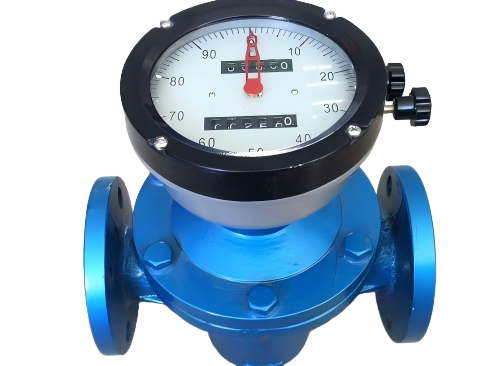
Oval Gear Flow Meter
The oval gear flow meter is a typical positive displacement flow meter used to measure the flow rate of liquids filling a pipeline under certain press...
Key Features
Performance Metrics
| Product Standard | JJG667-2010 'Liquid Positive Displacement Flow Meters' |
| Explosion-proof Rating | Exdb II CT6 Gb; Extb III CT85℃ Db |
| Applicable Media | High and low viscosity liquids such as crude oil, diesel, gasoline |
| Installation Method | Flange connection |
Key Features
Oval Gear Flow Meter: High-Precision Positive Displacement Liquid Measurement
The Oval Gear Flow Meter is a light-duty positive displacement flow instrument designed for precise liquid flow control across various industrial applications. It is ideal for measuring a wide range of liquids including crude oil, diesel, and gasoline, offering significant advantages such as a wide measurement range, high accuracy, and ease of use and maintenance.
Working Principle of the Oval Gear Flow Meter
The measurement process begins when fluid enters the flow meter. The pressure difference between the inlet and outlet drives a pair of oval gears to rotate.
As they turn, the fixed crescent-shaped volume between the gears and the housing is sequentially filled and emptied. Each complete rotation discharges a precise, fixed volume of fluid, enabling highly accurate volumetric flow measurement.
Key Features and Advantages
High Accuracy & Reliability
Delivers exceptional measurement accuracy up to 0.5%-0.2%, with a simple, robust design for reliable, long-term operation.
Versatile Material & Media Options
Housing and rotors are available in cast iron, cast steel, or stainless steel, providing excellent measurement capability even for high-viscosity media.
Easy Installation & Use
Features simple installation with no special pipeline flow field requirements. Options include local mechanical display or remote transmission.
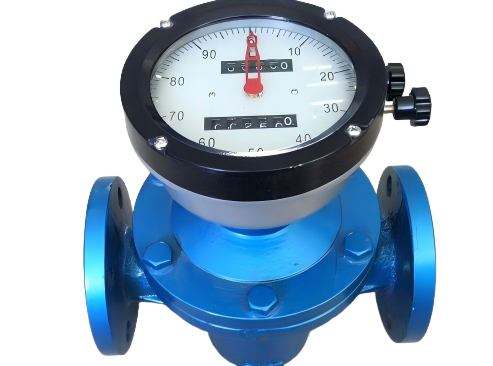
Wide Industrial Application of Oval Gear Meters
By selecting appropriate manufacturing materials, this oval gear flow meter can meet diverse liquid flow measurement needs. Its wide flow range makes it suitable for various liquids.
It is widely used across critical sectors including petroleum, chemical, pharmaceutical, food, metallurgy, electric power, and transportation for effective liquid flow control.
Technical Specifications & Standards
| Parameter | Specification / Detail |
|---|---|
| Measurement Principle | Positive Displacement (Oval Gear) |
| Accuracy Class | High accuracy, up to 0.5% - 0.2% |
| Primary Materials | Cast Iron, Cast Steel, Stainless Steel (for housing and rotors) |
| Display & Output | Pointer display, cumulative counter with digit wheels, reset device. Optional mechanical or remote transmission. |
| Compliance Standard | JJG667-2010 "Liquid Positive Displacement Flow Meters" (People's Republic of China Professional Standard) |
| Explosion-Proof Rating (Remote Unit) | Exdb II CT6 Gb; Extb III CT85℃ Db |
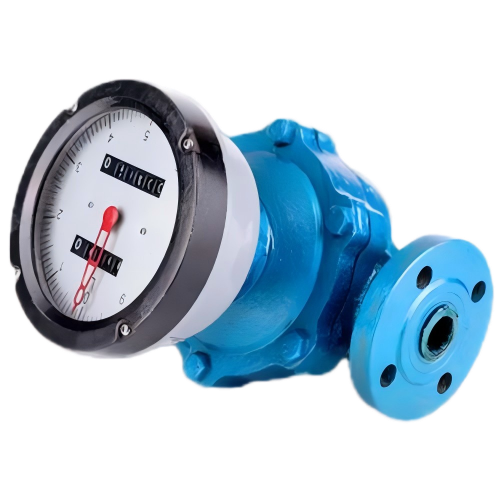
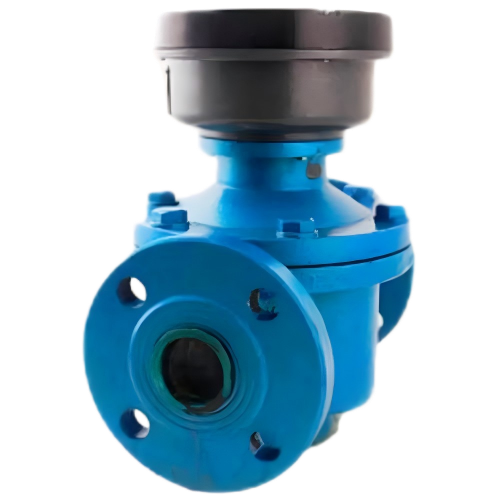
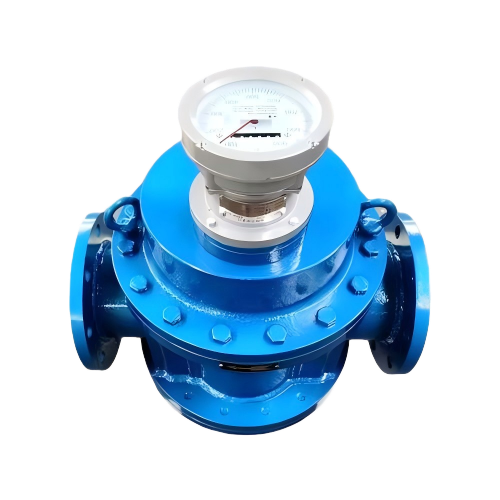
Robust design for reliable flow measurement in demanding environments.
Ideal for Liquid Flow Control and Measurement
This oval gear flow meter is an essential instrument for industries requiring dependable and precise liquid flow measurement. Its combination of a wide range, high accuracy, and simple maintenance makes it a cost-effective solution.
Whether for batching, process control, or transfer operations involving oils, fuels, or chemicals, the oval gear meter provides the reliability needed for effective industrial liquid flow management.
Contact Us
Need a custom solution? Our engineers are ready to help you design the perfect system.
Get In Touch