Home / Products / LGF Integrated Electromagnetic Flowmeter
Back to Products
LGF Integrated Electromagnetic Flowmeter
Flow Meters

LGF Integrated Electromagnetic Flowmeter

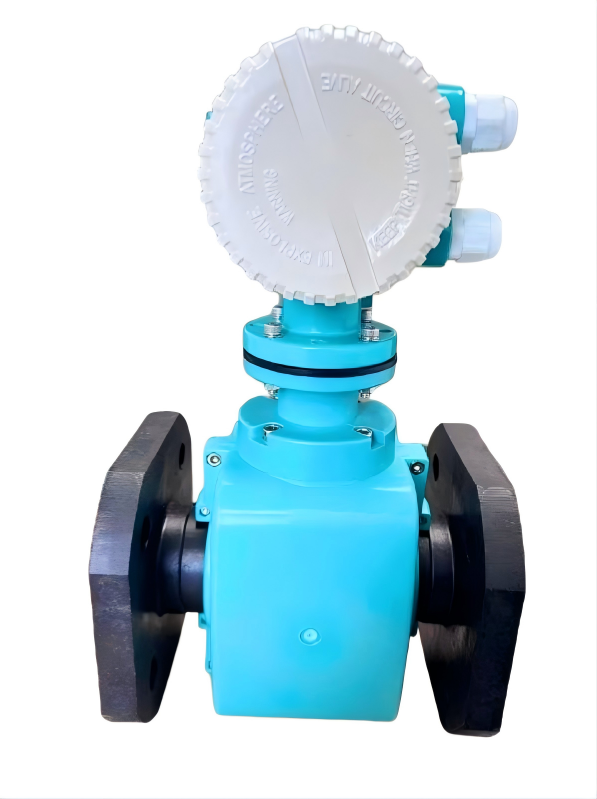
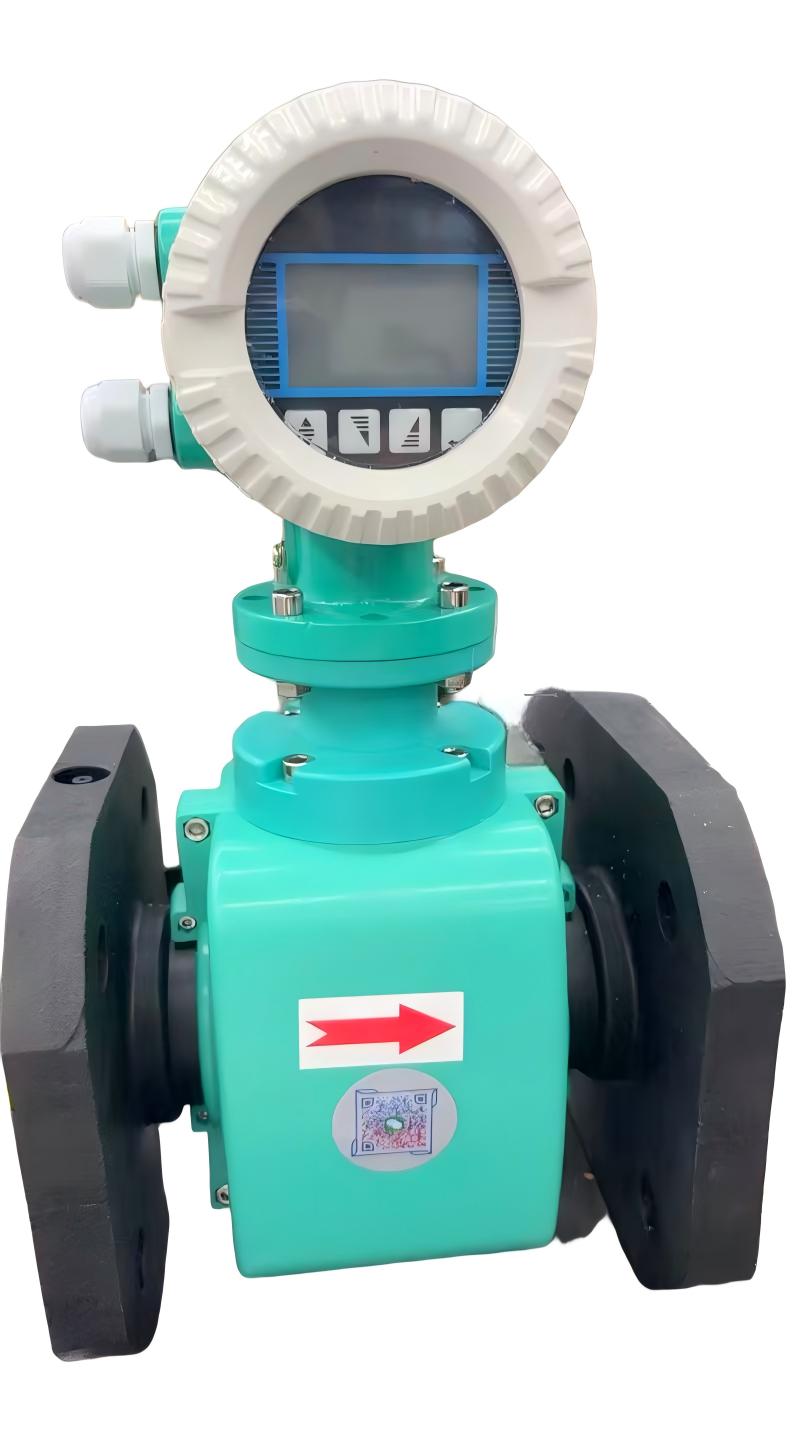
Ecolor's self-developed aerospace polymer material electromagnetic flowmeter is suitable for flow measurement and control in industrial and agricultur...

Key Features

Measuring section made of LGF-aerospace-grade reinforced composite material (customizable material selection) in one-shot injection molding
No welding process, avoiding magnetic interference introduced by metal pipe sections
Injection-molded implanted electrodes offer excellent waterproof and corrosion-resistant performance
Excitation coil adopts modular design, effectively reducing deviation during coil laying and ensuring product consistency
Flowmeter head is fully self-developed, meeting high-grade standards with high measurement accuracy, stable repeatability and linearity
Sensor and measuring section integrated structure, no connection gaps, eliminating leakage risks

Key Features

Measuring section made of LGF-aerospace-grade reinforced composite material (customizable material selection) in one-shot injection molding
No welding process, avoiding magnetic interference introduced by metal pipe sections
Injection-molded implanted electrodes offer excellent waterproof and corrosion-resistant performance
Excitation coil adopts modular design, effectively reducing deviation during coil laying and ensuring product consistency
Integrated IP67 waterproof rating
Flowmeter head is fully self-developed, meeting high-grade standards with high measurement accuracy, stable repeatability and linearity
Sensor and measuring section integrated structure, no connection gaps, eliminating leakage risks
Coil modular design supports quick replacement, easy maintenance, effectively saving later operation and maintenance costs
Self-developed head algorithm is advanced, responsive, and adapts to various complex working conditions
Lightweight, strong corrosion resistance, short production cycle, high delivery efficiency, and outstanding cost-effectiveness

Integrated Electromagnetic Flowmeter

The Integrated Electromagnetic Flowmeter is a high-performance instrument for measuring the volumetric flow rate of conductive liquids based on the principle of electromagnetic induction. It is widely used in chemical, water treatment, metallurgy, and other industrial fields, offering a reliable and efficient flow monitoring solution.

Integrated Electromagnetic Flowmeter product overview

Core Innovations of the Electromagnetic Flowmeter

Our electromagnetic flowmeter leads the industry with two core innovations. The first is the use of LGF-PA66 aerospace-grade reinforced composite material to construct the measuring tube section, providing excellent waterproof and anti-corrosion performance for harsh environments.

The second innovation is the integrated mold-casting process for the sensor. Measuring electrodes are directly embedded during injection molding, and the coil excitation part is a standardized module. This fully modular production process reduces error accumulation and improves measurement accuracy.

Key Advantages & Product Features

High Accuracy & Stability

Advanced self-developed meter head algorithm ensures accurate, stable data with ±0.5% (DN50-100) accuracy, unaffected by fluid property changes.

Robust & Corrosion Resistant

LGF composite material and IP67 waterproof rating enable stable operation in humid, high-pressure, and corrosive environments.

Easy Maintenance & Cost-Effective

Modular coil design allows for quick replacement, saving on operational costs. Lightweight design also facilitates installation.

Superior Design for Reliable Flow Measurement

The integrated sensor and measuring section structure has no connection gaps, completely eliminating leakage risks and ensuring more reliable long-term equipment operation. The innovative one-shot injection molding process with implanted electrodes offers excellent waterproof and corrosion-resistant performance.

The modular excitation coil design effectively reduces deviation during coil laying, ensuring excellent product consistency and minimal performance fluctuation during batch use. This reduces the need for on-site calibration for customers.

Integrated Electromagnetic Flowmeter installation and application

Wide Application in Industrial Scenarios

This electromagnetic flowmeter is widely adaptable to multi-domain needs. In the environmental protection industry, it assists in sewage and industrial wastewater flow monitoring and discharge control.

In industrial scenarios such as chemical and food processing, it precisely measures fluids to optimize production. In urban pipeline networks, it provides real-time monitoring of water supply and drainage flow, offering reliable data support for operation and maintenance.

Technical Specifications and Performance

The flowmeter features an LCD backlit display on the converter, easy to read under direct sunlight or in dark rooms. The converter includes self-diagnostic alarm output, no-load detection, flow upper/lower limit alarms, and batch control functions.

Measurement Principle Electromagnetic Induction
Primary Material LGF-PA66 Aerospace-Grade Reinforced Composite
Accuracy ±0.5% (DN50-100)
Ingress Protection IP67
Pressure Loss None (No obstructing flow components)
Key Process Integrated Mold-Casting, CNC Integrated Forging
Electromagnetic Flowmeter cross-section display and internal structure

Durable Construction for Harsh Environments

With its IP67 top-level waterproof design and CNC integrated forging process, this flowmeter can operate stably in humid or water-immersed conditions while withstanding long-term exposure to high pressure and corrosive media.

The dual waterproof sealing structure combined with precision assembly not only provides outstanding waterproof performance but also achieves the high measurement accuracy of ±0.5% (DN50-100), perfectly balancing durability and precision for industrial site applications.

Operational Benefits and Cost Efficiency

While ensuring high performance, the manufacturing costs of this integrated electromagnetic flowmeter are significantly optimized, offering extremely high cost-effectiveness. The production cycle is short, and delivery efficiency is high, enabling quick response to large-volume order demands.

Compared to traditional metal flowmeters, it is lighter in weight and has stronger corrosion resistance, making it widely suitable for chemical, water treatment, food, and other industries. It provides outstanding comprehensive usage benefits for flow monitoring and control.

Integrated Electromagnetic Flowmeter close-up detail Electromagnetic Flowmeter in an industrial setting

Contact Us

Need a custom solution? Our engineers are ready to help you design the perfect system.

Get In Touch
Downloads

Parameters of Electromagnetic Flowmeter.pdf
PDF • 602.2 KB
LGF Smart Electromagnetic Flowmeter Operation Manual.pdf
PDF • 705.8 KB

Related Questions

View All
What is the empty pipe detection function in electromagnetic flowmeters and how does it work?
View Answer
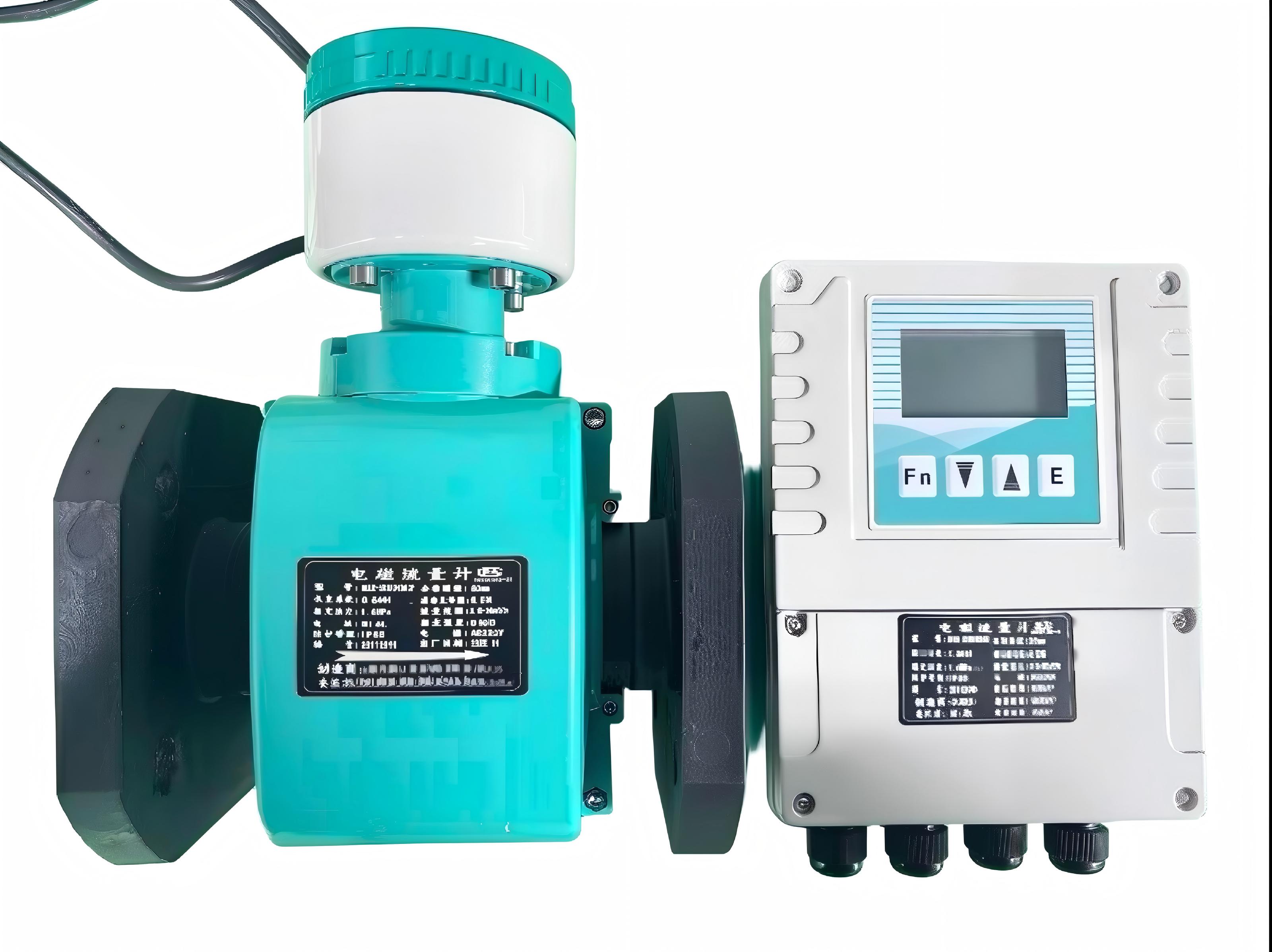
<p><strong>Empty pipe detection in electromagnetic flowmeters</strong> is a critical diagnostic function that continuously monitors whether the flow sensor's measuring tube is completely filled with conductive liquid. When a pipe runs partially full or completely empty, the electromagnetic flowmeter can produce grossly inaccurate readings—often registering non-zero flow when no actual flow exists, or producing wildly fluctuating values that corrupt flow totalization records and trigger false alarms in downstream control systems.</p> <p><strong>How Empty Pipe Detection Works:</strong></p> <p>The detection mechanism relies on the fundamental operating principle of electromagnetic flowmeters. Under normal conditions, when the measuring tube is filled with conductive fluid (typically > 5 μS/cm conductivity), the impedance between the measuring electrodes and the ground/reference electrode remains within a predictable, relatively low range because the conductive fluid provides a stable electrical path. When the pipe becomes empty or partially filled, the fluid path is broken, and the electrode-to-ground impedance increases dramatically—typically by several orders of magnitude—from hundreds of ohms to megaohms or an open circuit.</p> <ul> <li><strong>Conductivity-Based Detection</strong>: The most common method. The flowmeter's transmitter continuously injects a small, high-frequency AC excitation signal (typically 50–200 Hz) through the electrodes and measures the resulting impedance. When impedance exceeds a configurable threshold (calibrated for the specific fluid conductivity), an "empty pipe" condition is declared. This method is reliable for most water and wastewater applications where conductivity is moderate to high.</li> <li><strong>Capacitance-Based Detection</strong>: An alternative method using a separate dedicated empty-pipe electrode or capacitive sensor element embedded in the liner. This method detects changes in dielectric properties when the sensor transitions from liquid-immersed to air-exposed. Capacitance-based detection is especially valuable for <strong>ultra-pure water, deionized water, and low-conductivity fluids</strong> where conductivity-based methods may have insufficient signal-to-noise ratio, as the dielectric contrast between water (εᵣ ≈ 80) and air (εᵣ ≈ 1) remains large regardless of conductivity.</li> </ul> <p><strong>Engineering Significance and Benefits:</strong></p> <ul> <li><strong>Electrode Protection</strong>: When electrodes are exposed to air in a partially filled pipe while the excitation current continues to flow, electrochemical corrosion accelerates dramatically—particularly for electrodes made of Hastelloy, titanium, or tantalum in aggressive media. Empty pipe detection cuts off excitation to prevent unnecessary electrode degradation, extending sensor service life.</li> <li><strong>Measurement Accuracy Preservation</strong>: Without empty pipe detection, a partially filled pipe will produce false flow readings because the electromagnetic flowmeter's measurement principle assumes a completely full, axially symmetric flow profile. Any deviation leads to errors that can exceed 50% of actual flow, corrupting billing records, leakage calculations, and process control decisions.</li> <li><strong>Flow Totalization Integrity</strong>: Empty pipe detection automatically freezes or marks invalid the flow totalizer and pulse output, preventing erroneous volume accumulation from entering billing systems, SCADA databases, or regulatory compliance reports.</li> <li><strong>Alarm and Interlock Functions</strong>: The detection status outputs to supervisory systems via relay contacts, digital outputs, or fieldbus status bits (HART, Modbus, Profibus), enabling automatic pump shutdown, valve closure, or operator alerts. The 4–20mA analog output can be configured to hold last good value, drop to 0mA/2mA, or drive to 22mA (NAMUR NE43 fault indication) to signal the empty pipe condition unambiguously.</li> </ul> <p><strong>Installation Best Practices:</strong></p> <ul> <li><strong>Pipe Orientation</strong>: Install electromagnetic flowmeters in vertical pipes with upward flow wherever possible. This ensures the measuring tube remains full even at low flow rates or pump stop conditions. In horizontal installations, position the flowmeter in the lowest section of the pipe run to maintain back-pressure and prevent draining.</li> <li><strong>Straight Run Requirements</strong>: Maintain minimum upstream (5–10D) and downstream (2–3D) straight pipe lengths to establish a stable, fully developed flow profile. Avoid installing immediately downstream of elbows, tees, valves, or pumps where flow separation and air entrainment are likely.</li> <li><strong>Electrical Grounding</strong>: Proper grounding is essential for reliable empty pipe detection. Install grounding rings or use electrodes with integrated grounding tips, and ensure low-impedance bonding between the sensor body, process piping, and the transmitter's ground reference to minimize common-mode noise that could cause false empty-pipe triggering.</li> </ul> <p><strong>Ecolor Technology Electromagnetic Flowmeter Solutions:</strong></p> <p>Ecolor Technology offers two configurations of electromagnetic flowmeters with advanced empty pipe detection and diagnostic capabilities:</p> <ul> <li><strong><a href="/EN/products/electromagnetic-flow-meter">Split-Type Electromagnetic Flowmeter</a></strong>: Separates the sensor and transmitter for flexible installation in confined spaces or harsh environments. Features adjustable empty pipe detection sensitivity with configurable threshold and response time, multi-language HART/Modbus communication, and ATEX-certified options for hazardous area deployment. Accuracy: ±0.5% of reading.</li> <li><strong><a href="/EN/products/integrated-electromagnetic-flow-meter">Integrated Electromagnetic Flowmeter</a></strong>: Combines sensor and transmitter in a single compact housing for space-constrained installations and cost-sensitive applications. Offers the same advanced empty pipe detection algorithm with simplified commissioning, local LCD display with diagnostic status indicators, and IP68 submersible options for flooded chamber installations.</li> </ul> <p>Both series support empty pipe detection across fluid conductivities from 5 μS/cm to 50,000 μS/cm, ensuring reliable protection in applications ranging from ultrapure water to concentrated brine and slurry measurement.</p>
How to implement channel flow measurement and gate automation control in irrigation district information management systems?
View Answer
<p><strong>Irrigation district information management systems</strong> achieve precision irrigation and optimal water resource allocation through intelligent equipment. Ecolor Technology provides comprehensive irrigation automation solutions:</p><ul><li><strong>Ultrasonic Flow Meter Series</strong>: In-line and clamp-on installation options for various irrigation channel flow measurement with low maintenance costs</li><li><strong>LGF Integrated Electromagnetic Flowmeters</strong>: Installed at key nodes of main and branch canals for real-time irrigation water consumption monitoring</li><li><strong>Radar Level Sensors</strong>: Monitor channel water level changes to provide data support for gate control operations</li><li><strong>EC32 RTU Series</strong>: Ultra-low power design with solar power and 4G communication, connecting gate actuators for remote control</li></ul><p>The integrated system enables irrigation planning, water usage statistics, remote gate control and other functions, improving irrigation efficiency and achieving water-saving and yield-increasing goals. Compatible with upper-level water management platforms.</p>
PA66 Aviation-Grade Electromagnetic Flow Meter LGF-PA66 vs. Traditional Stainless Steel: Which Should I Choose?
View Answer
<p>The core difference between the LGF-PA66 and conventional stainless steel electromagnetic flow meters lies in the body material and manufacturing process. The LGF-PA66 uses aviation-grade PA66 composite with an injection-molded, one-piece body — no welded seams, no magnetic interference from welding stress, and corrosion resistance that comes from the material itself rather than from linings or exotic electrode alloys.</p><p>Selection guidance:</p><ul><li><strong>Corrosive media (seawater, chemical effluent, high-chloride water):</strong> choose the LGF-PA66. PA66 resists corrosion inherently and does not suffer the pitting or crevice corrosion that 304/316L stainless steel faces in chloride environments.</li><li><strong>High-pressure / high-temperature lines:</strong> above 120 °C medium temperature or 4.0 MPa line pressure, check the LGF-PA66 pressure-temperature derating curve; stainless bodies tolerate a wider envelope.</li><li><strong>Cost-sensitive large-bore projects:</strong> at DN100–DN1000 the LGF-PA66 offers clear weight and cost advantages and needs no heavy lifting equipment during installation.</li></ul><p>Measurement accuracy matches the stainless steel series at ±0.5%(DN50-100) (±0.5% optional), with IP68 protection for long-term immersion. For municipal DMA district metering, seawater aquaculture, and chemical effluent applications, the LGF-PA66 delivers the better cost-performance ratio.</p><p>For more details, please visit our product pages or contact our technical team.</p>
What are the key technical specifications of the LGF-PA66 aviation-grade electromagnetic flow meter — accuracy, sizes, and protection rating?
View Answer
<p>The LGF-PA66 is Hangzhou Ecolor's electromagnetic flow meter built with aviation-grade PA66 composite. Key technical parameters:</p><ul><li><strong>Accuracy:</strong> ±0.5%(DN50-100) of reading (±0.5% optional), repeatability 0.1%;</li><li><strong>Size range:</strong> DN15–DN3000, covering dosing lines through large transmission mains;</li><li><strong>Body material:</strong> aviation-grade PA66 composite, one-piece injection molding, no welds;</li><li><strong>Protection:</strong> IP68 for both sensor and transmitter, rated for long-term immersion;</li><li><strong>Media:</strong> conductive liquids ≥5 μS/cm — raw water, wastewater, seawater, acid/alkali/salt solutions;</li><li><strong>Outputs:</strong> 4–20 mA, pulse, RS485 (Modbus RTU), HART optional;</li><li><strong>Medium temperature:</strong> −20 °C to +120 °C (high-temperature versions on request);</li><li><strong>Pressure rating:</strong> 1.6 MPa / 4.0 MPa depending on size.</li></ul><p>The series is widely deployed in municipal DMA district metering, chemical effluent metering, and seawater aquaculture. Paired with the Hero V9 EC32 RTU, it supports 4G/NB-IoT wireless telemetry into smart-water platforms.</p><p>For more details, please visit our product pages or contact our technical team.</p>
What should I watch out for when installing the LGF-PA66 electromagnetic flow meter? Straight-run and grounding requirements
View Answer
<p>The LGF-PA66 measures by Faraday's law of electromagnetic induction, so installation must guarantee a stable flow profile and reliable grounding — otherwise accuracy degrades noticeably.</p><ul><li><strong>Straight runs:</strong> at least 5D upstream and 2D downstream (D = nominal diameter). After elbows, valves, or reducers, extend the upstream run to 10D or add a flow conditioner.</li><li><strong>Flooded pipe:</strong> never mount at the high point of the line where air collects; on vertical pipes, flow should run bottom-up so the measuring tube stays full.</li><li><strong>Grounding:</strong> the PA66 body is electrically insulating, so the pipe wall cannot serve as ground. Use the supplied grounding ring/electrodes with grounding resistance ≤10 Ω — otherwise stray currents in the network cause drifting readings.</li><li><strong>Signal cable:</strong> use the supplied shielded cable, ground the shield at one end only, and route it away from power lines.</li><li><strong>Zero calibration:</strong> after installation, run a zero calibration with the pipe flooded and flow stopped before commissioning.</li></ul><p>For submerged installations (IP68 service), cable joints must be sealed accordingly. Pairing the meter with an EC32 RTU lets you monitor instrument health remotely and catch empty-pipe or low-conductivity faults early.</p><p>For more details, please visit our product pages or contact our technical team.</p>
How does the lifecycle cost of the LGF-PA66 composite electromagnetic flow meter compare with a stainless steel one?
View Answer
<p>On purchase price alone the two are close at the same size — the real gap opens up over a 10-year operating cycle.</p><ul><li><strong>Purchase:</strong> at DN300 and larger, the LGF-PA66 is usually cheaper; its weight is roughly one-third of the stainless steel version, cutting transport and rigging costs.</li><li><strong>Installation:</strong> small and mid-size PA66 meters are handled by hand — no crane rental, and installation time is typically halved.</li><li><strong>Maintenance:</strong> stainless bodies rely on linings and exotic electrode alloys for corrosion protection; linings age and peel, electrodes corrode in aggressive media, and shutdown inspections or replacements are typically needed every 3–5 years. PA66's corrosion resistance is the body itself — design life reaches 15+ years in seawater and chemical effluent, with virtually no corrosion-related maintenance.</li><li><strong>Downtime:</strong> a failed body means shutting the line; in continuous processes, one day of downtime can cost more than the meter.</li></ul><p>For a typical municipal DMA point at DN200, our estimates put the 10-year total cost of ownership of the LGF-PA66 roughly 30%–40% below a 316L stainless steel meter. See our technical documentation for the detailed calculation worksheet.</p><p>For more details, please visit our product pages or contact our technical team.</p>