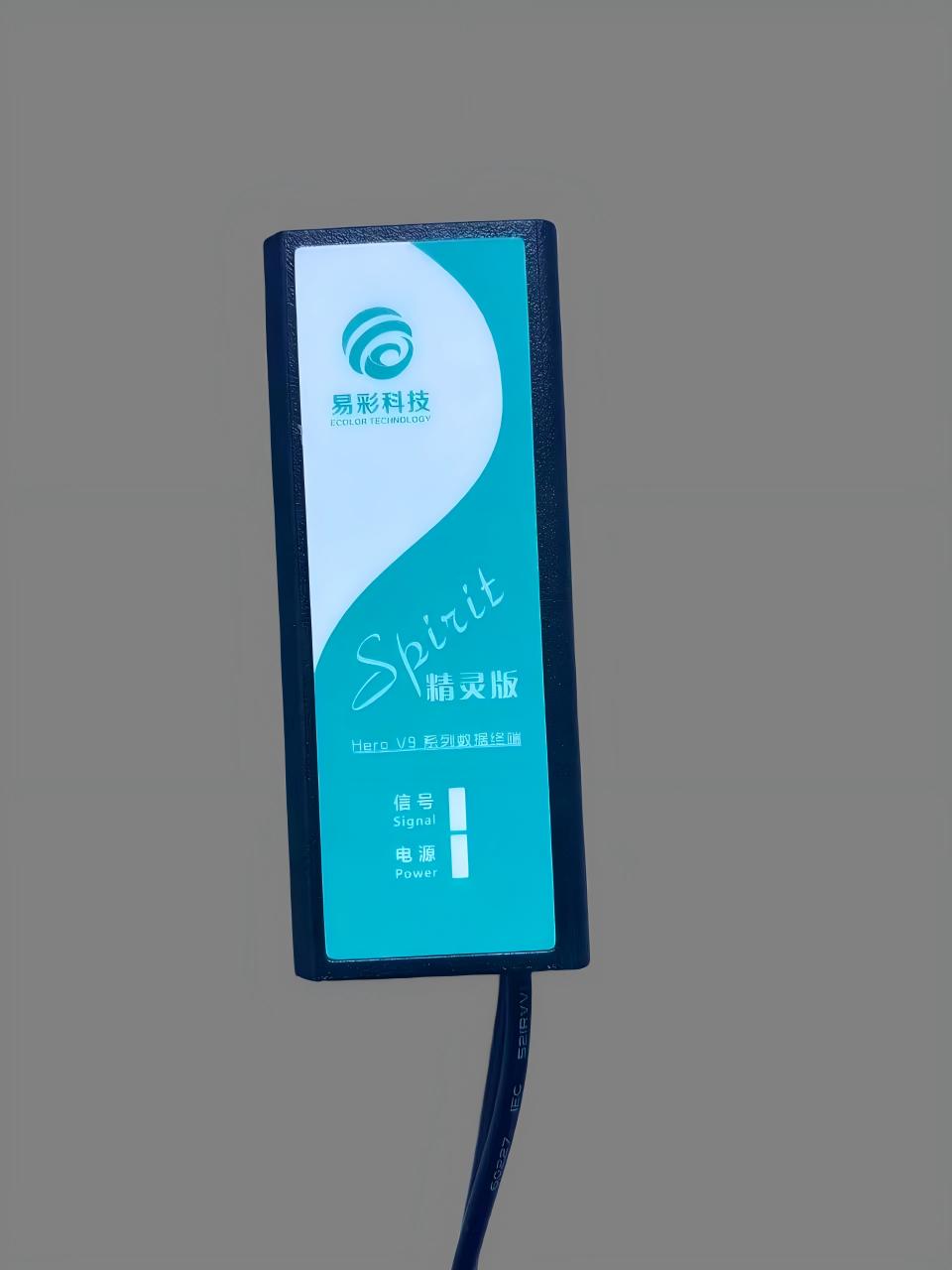
Home / Products / Measurement and Control Terminal (Hero V9 Series - EC60)
Back to Products
Measurement and Control Terminal (Hero V9 Series - EC60)
Remote Terminal Units (RTU)

Measurement and Control Terminal (Hero V9 Series - EC60)

The Measurement and Control Terminal (Hero V9 Series - EC60) is a meticulously developed terminal product integrating data acquisition and wireless co...

Key Features

Complies with "SZY206-2016 Water Resources Monitoring Data Transmission Protocol"
Passed type inspection per "SZY206-2016 Water Resources Monitoring Data Transmission Protocol"
Possesses explosion-proof certification (Explosion-proof rating: T6)
Reliability verified with MTBF ≥ 50,000 hours
Supports dual-mode wireless communication: GSM SMS/GPRS
Ultra-low power consumption design, suitable for field or remote areas
Supports remote data viewing and parameter setting via mobile phone and computer
Modbus RS485 standard interface with strong compatibility

Measurement and Control Terminal (Hero V9 Series - EC60)

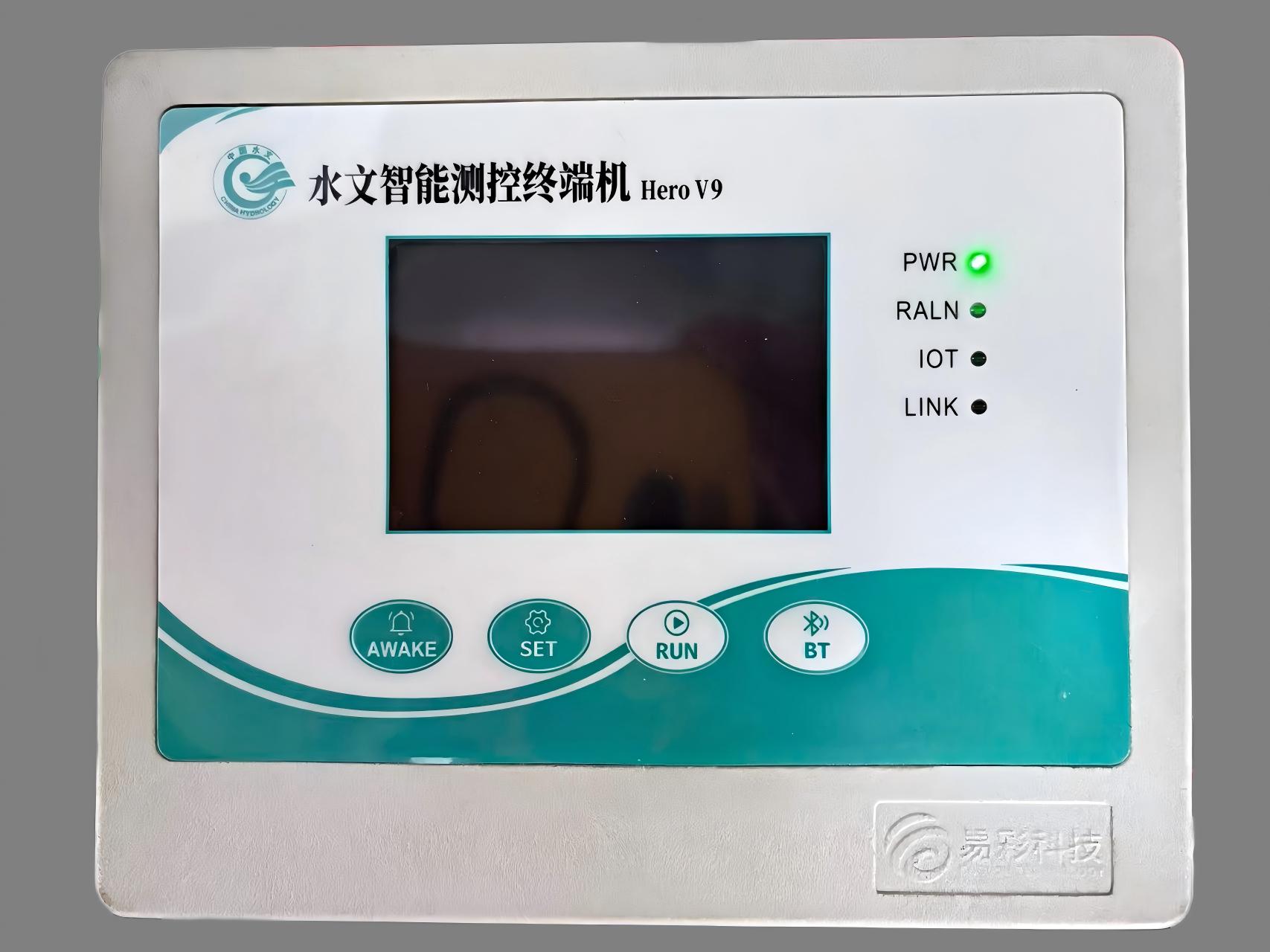
The Measurement and Control Terminal Hero Edition (Hero V9 Series - EC60), developed by Ecolor Technology, is a versatile data acquisition and wireless communication device. It efficiently uploads real-time monitoring data to a designated platform using GSM SMS or GPRS, enabling remote access and control for users on mobile or computer devices.

Hero V9 Series EC60 Measurement and Control Terminal product overview

Core Advantages of the EC60 Measurement Terminal

The Hero V9 Series EC60 terminal is designed for stability and reliability in diverse field conditions. Its communication platform is unrestricted by geography, ensuring consistent data transmission from remote monitoring locations.

With its extremely low power consumption, this measurement and control terminal is ideal for long-term deployment in areas without reliable power infrastructure. This makes it a perfect solution for environmental protection and resource monitoring applications.

Key Features & Technical Specifications

Communication

Dual-mode: GSM SMS / GPRS

Reliability

MTBF ≥ 50,000 hours

Explosion-Proof

Certified with T6 rating

Interface

Modbus RS485 standard

Protocol Compliance and Data Transmission

This measurement and control terminal strictly adheres to the "SZY206 - 2016 Water Resources Monitoring Data Transmission Protocol" and has passed the corresponding type inspection. This ensures standardized and reliable data exchange for water resource management systems.

The Modbus RS485 interface offers strong compatibility with a wide range of real-time monitoring devices, facilitating seamless integration into existing industrial control and data acquisition networks.

EC60 Terminal remote data viewing and parameter setting interface

Remote Access and Control Capabilities

Users can conveniently view collected data and related parameters from any location using mobile devices or computers. The platform provides clear visualization of the information detected by the EC60 terminal.

Key product information, such as installation location, can be easily queried and configured remotely via a mobile phone. This feature significantly reduces the need for on-site visits, lowering operational costs for water conservancy and agricultural monitoring.

Wide-Ranging Application Scenarios

The Hero V9 Series EC60 has an extremely wide range of applications, performing excellently in industries such as water supply, water conservancy, agriculture, geology, and environmental protection. Its robust design suits various challenging field conditions.

Hero EC60 Terminal application in carbon emission monitoring

Critical Role in Carbon Emission Monitoring

This product has been extensively applied in the field of carbon emission monitoring. Its precise data acquisition is fundamental for accurate emissions tracking and reporting.

Leveraging its stable wireless communication capabilities, the EC60 terminal effectively supports the efficient execution of carbon emission monitoring programs. It contributes significant power to addressing climate change and promoting green, sustainable development initiatives.

Product Characteristics Summary

  • Complies with "SZY206-2016 Water Resources Monitoring Data Transmission Protocol".
  • Passed type inspection per "SZY206-2016 Water Resources Monitoring Data Transmission Protocol".
  • Possesses explosion-proof certification (Explosion-proof rating: T6).
  • Reliability verified with MTBF ≥ 50,000 hours.
  • Supports dual-mode wireless communication: GSM SMS/GPRS.
  • Ultra-low power consumption design, suitable for field or remote areas.
  • Supports remote data viewing and parameter setting via mobile phone and computer.
  • Modbus RS485 standard interface with strong compatibility.

Contact Us

Need a custom solution? Our engineers are ready to help you design the perfect system.

Get In Touch
Downloads

Monitoring and Control Terminal (Elf Edition, Hero V9 series - EC60).pdf
PDF • 903.2 KB

Related Questions

View All
What is RTU Remote Terminal Unit? How does RTU work in water monitoring systems?
View Answer
<p><strong>RTU (Remote Terminal Unit)</strong> is a microprocessor-controlled electronic device that serves as the critical interface between physical field equipment and centralized SCADA (Supervisory Control and Data Acquisition) or telemetry systems. In water monitoring systems, an RTU collects real-time data from field sensors—including flow meters, pressure transmitters, water level gauges, and water quality analyzers—and transmits this information to a central control center via wireless or wired communication networks.</p> <p><strong>How RTU Works in Water Monitoring Systems:</strong></p> <ul> <li><strong>Data Acquisition</strong>: The RTU continuously polls connected sensors through multiple I/O interfaces including analog inputs (4–20mA, 0–10V), digital inputs (pulse, status), and serial communication ports (RS-232/RS-485). For water monitoring, typical sensor inputs include flow rate from electromagnetic or ultrasonic flowmeters, water level from radar or submersible level sensors, pressure from transmitters, and water quality parameters such as pH, turbidity, and dissolved oxygen.</li> <li><strong>Signal Processing & Logging</strong>: Raw sensor signals are filtered, linearized, and converted to engineering units. The RTU performs local data logging with time-stamped records stored in non-volatile memory, ensuring zero data loss during communication outages. Typical storage capacity supports 10,000+ records with configurable logging intervals from 1 second to 24 hours.</li> <li><strong>Communication & Telemetry</strong>: RTUs support multiple communication protocols and transport layers. At the field level, <strong>Modbus RTU</strong> (over RS-485) is the most widely adopted protocol for sensor integration, while <strong>Modbus TCP</strong> enables Ethernet-based networking. For long-range telemetry, modern RTUs integrate multi-mode wireless options including <strong>4G LTE, NB-IoT, LoRa/LoRaWAN</strong>, and satellite communication, allowing deployments in remote watersheds, mountain reservoirs, and underground monitoring wells where traditional wired infrastructure is unavailable.</li> <li><strong>Control & Automation</strong>: Beyond data collection, RTUs execute local control logic—triggering alarms when water levels exceed thresholds, automatically starting or stopping pumps based on tank levels, controlling valve positions for flow regulation, and implementing PID control loops for pressure management in water distribution networks.</li> <li><strong>Power Management</strong>: For remote sites without grid power, RTUs feature ultra-low-power designs with sleep-mode current consumption as low as 50μA, enabling months of autonomous operation on battery power supplemented by small solar panels (typically 10–50W). Advanced power scheduling wakes the RTU on configurable intervals or upon sensor-triggered events.</li> </ul> <p><strong>RTU vs PLC — Key Differences:</strong></p> <p>While both RTUs and PLCs (Programmable Logic Controllers) perform industrial control functions, they are optimized for different deployment scenarios. RTUs are purpose-built for <strong>geographically distributed, remote, and environmentally harsh installations</strong> with emphasis on wide-area communication, ultra-low power consumption, and extended temperature ranges (-40°C to +70°C). PLCs excel in <strong>centralized factory-floor automation</strong> with high-speed deterministic control, extensive I/O density, and complex sequential logic. In water monitoring, RTUs are the preferred choice for river basin telemetry networks, reservoir monitoring stations, irrigation canal gate control, and urban drainage monitoring—applications where sites may be tens or hundreds of kilometers apart with limited power and no permanent communication infrastructure.</p> <p><strong>Typical Deployment Architecture:</strong></p> <p>A typical RTU-based water monitoring system follows a three-tier architecture. At the <strong>field layer</strong>, sensors (flowmeters, level gauges, rain gauges, water quality probes) connect to the RTU via wired interfaces within a monitoring station enclosure. The RTU aggregates and pre-processes data locally. At the <strong>communication layer</strong>, data is transmitted via 4G/NB-IoT/LoRa to a central data server or cloud IoT platform using protocols such as MQTT, HTTP, or the hydrological standard <strong>SL651-2014 / SZY206</strong>. At the <strong>application layer</strong>, SCADA software, water resource management platforms, and mobile dashboards visualize real-time and historical data, generate reports, and issue alarms—enabling water authorities to make informed operational decisions.</p> <p><strong>Ecolor Technology RTU Solutions:</strong></p> <p>Ecolor Technology's <strong>Hero V9 Series</strong> offers two primary RTU configurations for water monitoring applications:</p> <ul> <li><strong><a href="/EN/products/hero-v9-ec32-measurement-control-terminal">EC32 — Measurement and Control Terminal</a></strong>: A versatile industrial RTU with rich I/O interfaces, Modbus RTU/TCP support, 4G/LoRa/NB-IoT communication, and ultra-low-power design suitable for general water resource monitoring, pump station control, and irrigation automation. Features local data storage, remote firmware upgrade, and wide operating temperature range.</li> <li><strong><a href="/EN/products/hero-v9-ec60-data-acquisition-terminal">EC60 — Compact Data Acquisition Terminal</a></strong>: A cost-optimized, compact RTU designed for high-density sensor deployments with streamlined I/O, embedded 4G communication, and simplified installation—ideal for large-scale river monitoring networks and smart city drainage monitoring projects where cost per monitoring point is critical.</li> </ul> <p>Both models feature solar-ready power input, IP65+ environmental protection, and compatibility with Ecolor's cloud-based water monitoring platform for seamless data integration and visualization.</p>
How does Doppler radar flowmeter achieve real-time monitoring and early warning in flood prevention systems?
View Answer
<p><strong>Doppler radar flowmeter</strong> plays a crucial role in <strong>flood prevention warning systems</strong> by continuously monitoring river flow changes and providing accurate data support for flood control decisions. Ecolor Technology's <strong>HZ-KSLF Doppler radar flowmeter</strong> uses non-contact measurement technology, ensuring stable operation even under severe weather conditions.</p><p>Flood warning application features: <ul><li>24/7 continuous monitoring with real-time flow data acquisition</li><li>Integration with EC32/EC60 RTU series supporting 4G wireless transmission</li><li>Solar power supply system ensuring operation during power outages</li><li>Multi-level warning thresholds with automatic alarm mechanisms</li><li>Combined use with water level gauges for dual flow and level monitoring</li></ul></p><p>The system provides data visualization through <strong>remote monitoring platforms</strong>. When flow exceeds preset safety values, automatic warning messages are sent to relevant departments, providing valuable time for flood scheduling, gate control, and personnel evacuation. Particularly suitable for flow monitoring at critical flood control nodes including rivers, reservoirs, and urban drainage systems.</p>
How does Doppler radar flowmeter integrate with RTU terminals for remote monitoring in flash flood warning systems?
View Answer
<p>In <strong>flash flood warning systems</strong>, the integration of Doppler radar flowmeters with RTU terminals is crucial for real-time monitoring and early warning capabilities. Ecolor Technology's <strong>HZ-KSLF Doppler radar flowmeter</strong> seamlessly integrates with <strong>EC32/EC60 RTU series</strong> to create a comprehensive flash flood monitoring and warning solution.</p><p>System integration features:</p><ul><li>HZ-KSLF radar flowmeter provides non-contact flow measurement suitable for complex mountain river environments</li><li>EC32/EC60 RTU offers ultra-low power data acquisition and 4G wireless transmission</li><li>Solar power system ensures long-term stable operation in remote mountainous areas</li><li>Multiple communication protocol support for integration with national flood control systems</li><li>Local data storage and offline data recovery ensure data integrity</li><li>Configurable multi-level alarm thresholds enable graduated warning responses</li></ul><p>In <strong>flash flood warning system integration</strong> applications, this solution provides real-time river flow monitoring, automatically triggering alerts when flow exceeds preset thresholds, delivering timely and accurate decision support for flood control authorities.</p>
What data acquisition frequency can be set for radar level meters and how to adjust measurement intervals?
View Answer
<p><strong>Radar level meter data acquisition frequency</strong> can be flexibly configured according to application requirements. Ecolor Technology's <strong>visual fusion radar level meter</strong> supports configurable time intervals from 1 second to 24 hours, with remote parameter adjustment capability through EC32/EC60 series RTU systems.</p><ul><li><strong>High-frequency monitoring</strong>: 1-10 second intervals for flood warning and gate control real-time applications</li><li><strong>Regular monitoring</strong>: 1-15 minute intervals for routine river and reservoir water level monitoring</li><li><strong>Energy-saving mode</strong>: 30 minutes to 24-hour intervals for slow-changing scenarios like groundwater and storage tanks</li><li><strong>Event-triggered</strong>: Supports threshold-based triggering for high-frequency acquisition mode</li></ul><p>The system supports <strong>4G communication</strong> for real-time data transmission and local storage modes. Shorter <strong>measurement intervals</strong> provide higher data accuracy but increase power consumption accordingly. It's recommended to configure acquisition frequency based on specific application scenarios and power supply conditions to balance measurement accuracy with system power consumption.</p>
How do radar level meters integrate with RTU remote terminals for wireless network monitoring systems?
View Answer
<p><strong>Radar level meters</strong> integrate seamlessly with <strong>RTU remote terminals</strong> to create comprehensive wireless water level monitoring networks. Our <strong>EC32/EC60 series RTU</strong> systems feature ultra-low power consumption design, solar power capability, and 4G wireless communication for reliable remote data transmission in radar level meter networks.</p><p>Network integration components include:</p><ul><li><strong>Data acquisition</strong>: Radar level meters transmit measurement data via RS485/4-20mA interfaces to RTU units</li><li><strong>Wireless transmission</strong>: EC32 RTU systems upload data through 4G networks to cloud servers or monitoring centers</li><li><strong>Solar power supply</strong>: RTU equipped with solar panels and battery backup ensures long-term field operation</li><li><strong>Multi-point networking</strong>: Single RTU connects multiple radar level meters for regional water level monitoring</li><li><strong>Alarm functions</strong>: Supports level threshold, equipment fault, and communication failure alerts</li><li><strong>Remote configuration</strong>: RTU enables remote parameter adjustment and system diagnostics</li></ul><p>This solution finds extensive application in river level monitoring, reservoir management, urban flood warning systems, and industrial water management. <strong>HZ-KSLF Doppler radar flow meters</strong> can also integrate with RTU systems for comprehensive water level and flow monitoring solutions.</p>
What are the key features and applications of Ecolor EC60 Compact RTU Remote Terminal Unit?
View Answer
<p>The <strong>EC60 Compact RTU Remote Terminal Unit</strong> by Ecolor Technology represents cutting-edge innovation in industrial IoT data acquisition and transmission. This advanced RTU system delivers exceptional performance through:</p><ul><li><strong>Ultra-low Power Consumption</strong>: ARM Cortex-M4 core with standby current as low as 5μA, enabling solar-powered autonomous operation</li><li><strong>Multi-interface Compatibility</strong>: Supports RS485, 4-20mA, pulse, and digital I/O signals for seamless integration with electromagnetic flowmeters, radar level sensors, and various field instruments</li><li><strong>4G Cellular Connectivity</strong>: Built-in industrial-grade 4G modem ensuring reliable data transmission across multiple carrier networks</li><li><strong>Rugged Industrial Design</strong>: IP65 protection rating, operating temperature range -40°C to +85°C for harsh environmental conditions</li></ul><p>Widely deployed in water management systems, environmental monitoring networks, precision agriculture, and industrial automation applications requiring remote data collection and SCADA integration.</p>