Home / Products / Visual Fusion Multi-band Doppler Radar Flow Meter
Back to Products
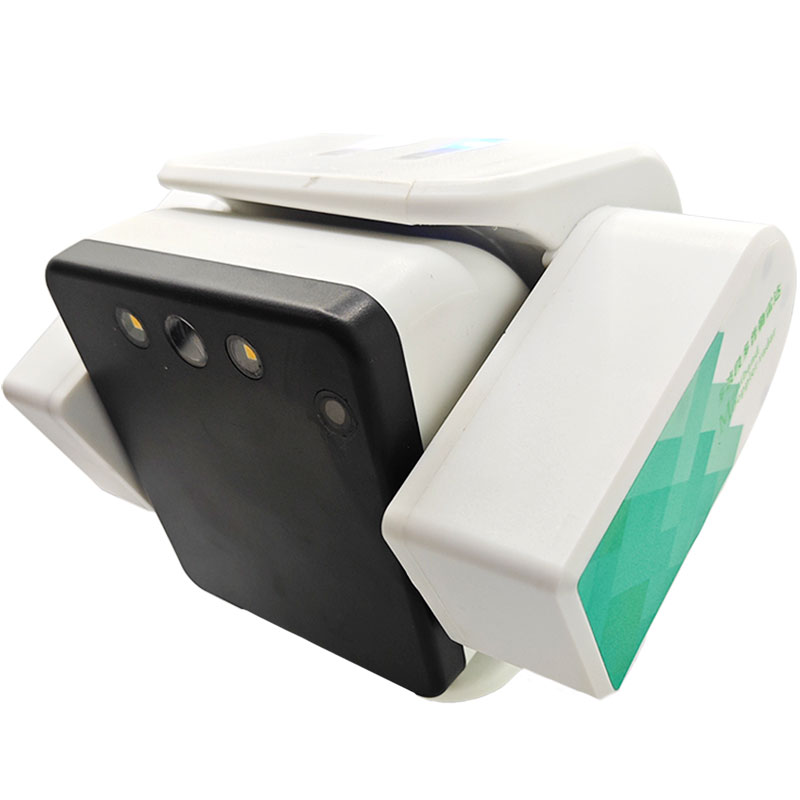
Visual Fusion Multi-band Doppler Radar Flow Meter
Flow Instrument

Visual Fusion Multi-band Doppler Radar Flow Meter

The Multi-band Doppler Radar Flowmeter is an independently developed and innovated non-contact fluid flow measurement device by Ecolor. Adopting the p...

Key Features

It integrates the liquid level gauge, flowmeter and camera into one unit.
High-resolution capture capability
Equipped with a built-in motor, the device allows flexible adjustment of the radar’s irradiation angle to ensure optimal detection.
The device maintains stable operation and remains immune to interference caused by dirt accumulation at the well bottom.

Performance Metrics

Angle-adjustable 15°~75°
Direction Recognition Bidirectional Automatic Recognition
Pixel 5 Megapixels
Standby Time Built-in Battery: 10 Days; External Battery: 2 Years

Key Features

It integrates the liquid level gauge, flowmeter and camera into one unit.
High-resolution capture capability
Users can customize the daily shooting frequency via the background system, and initiate real-time capture of on-site scenarios whenever necessary.
Non-contact Type, Easy Installation
Equipped with a built-in motor, the device allows flexible adjustment of the radar’s irradiation angle to ensure optimal detection.
The device maintains stable operation and remains immune to interference caused by dirt accumulation at the well bottom.
The device is compatible with external water quality sensors, enabling the expansion of water quality monitoring capability.
The device has a protection class of IP68.

Multi-band Doppler Radar Flow Meter Overview

The multi-band Doppler radar flow meter, independently developed and innovated by Ecolor, is a non-contact fluid flow measurement device that integrates a liquid level gauge, a flow meter and a high-resolution camera into one compact unit. Adopting proprietary multi-band radar frequency shift technology, the Doppler radar flow meter performs continuous data sampling based on the Doppler principle and relies on the SITUMAN Water Conservancy COSP Model to calculate the water level, flow velocity and flow rate parameters of the measured fluid accurately. The built-in camera provides real-time feedback on on-site working conditions, addressing the industry-wide pain point of focusing solely on data while ignoring on-site situations. With IP68 protection, simple non-contact installation and expandable water quality monitoring, this Doppler radar flow meter serves urban underground pipe network monitoring, ecological flow monitoring and smart agriculture monitoring.

Working Principle of the Doppler Radar Flow Meter

The Doppler radar flow meter transmits radar signals toward the water surface and evaluates the signals reflected from the moving flow. Based on the Doppler principle, the frequency shift of the reflected signal is related to the motion of the water, and the proprietary multi-band radar frequency shift technology enables continuous data sampling across multiple bands for robust, ongoing detection. The SITUMAN Water Conservancy COSP hydraulic model then processes the sampled data to accurately calculate the water level, flow velocity and flow rate of the measured fluid, so one device delivers all three parameters at the same time. Because the measurement is completely non-contact, the Doppler radar flow meter stays clear of the water, sediment and debris inside the well, and its operation remains immune to interference caused by dirt accumulation at the well bottom. The integrated camera complements the radar data with visual evidence of actual site conditions whenever it is needed.

Key Features of the Multi-band Doppler Radar Flow Meter

The multi-band Doppler radar flow meter offers ultra-high integration for all-in-one monitoring, easy installation and convenient operation and maintenance:

  • 3-in-1 integration of liquid level gauge, flow meter and camera in a single unit, simplifying system design and data acquisition.
  • High-resolution capture capability; users can customize the daily shooting frequency via the background system and initiate real-time capture of on-site scenarios whenever necessary.
  • A built-in motor allows flexible adjustment of the radar irradiation angle to ensure optimal detection and make device commissioning simple and easy.
  • Stable operation: the device remains free from obstruction by dirt at the bottom of the well, ensuring high working reliability.
  • Compatible with external water quality sensors, enabling the expansion of water quality monitoring capability.
  • Protection class of IP68 for reliable operation in harsh underground environments.

Technical Specifications of the Radar Flow Meter

Measurement Type

Non-contact fluid flow

Radar Technology

Multi-band frequency shift, Doppler

Hydraulic Model

SITUMAN COSP

Integration

Level gauge + flow meter + camera

Camera

High-res, configurable capture

Protection

IP68

  • Measurement type: non-contact fluid flow measurement
  • Radar technology: proprietary multi-band radar frequency shift, Doppler principle
  • Hydraulic model: SITUMAN Water Conservancy COSP, calculating water level, flow velocity and flow rate
  • Integration: liquid level gauge, flow meter and camera in one unit
  • Camera: high-resolution capture; background-configurable daily shooting frequency; real-time capture supported
  • Angle adjustment: built-in motor for flexible adjustment of the radar irradiation angle
  • Expansion: external water quality sensors supported
  • Protection class: IP68

Applications of the Doppler Radar Flow Meter

The Doppler radar flow meter is mainly applicable to urban underground pipe network monitoring, where it measures water level, flow velocity and flow rate in manholes and pipe sections without any contact with the medium. It is equally suited to ecological flow monitoring, helping authorities supervise river and channel flows, and to smart agriculture monitoring, where irrigation and drainage channels need continuous fluid measurement and supervision. These scenarios can all meet the fluid measurement and supervision needs of different fields with one device platform. The combination of radar measurement and on-site photography lets operators verify actual working conditions remotely, which is valuable in locations that are difficult or unsafe to visit regularly, and the high-resolution capture capability preserves a clear visual record of each site. Because the multi-band Doppler radar flow meter can also connect external water quality sensors, a single installation can grow from basic flow monitoring into a more complete monitoring point for pipe networks and open channels.

Installation and Maintenance of the Radar Flow Meter

Installation of the Doppler radar flow meter requires only one set of poles and expansion bolts. Personnel mount the bracket on the well wall and hang the device from above without going down into the well, so the water flow and toxic gases at the bottom of the well have almost no impact on installation. The work takes a short time and causes little impact on on-site traffic or the surrounding environment. During commissioning, the built-in motor makes adjustment of the radar irradiation angle simple and easy, ensuring optimal detection. For operation and maintenance, abnormal conditions can be checked in real time through the camera to view on-site status, and if the device malfunctions it can be replaced easily without personnel going down the well, keeping long-term maintenance effort low.

? Reference Sources

  • Ecolor Product Documentation – Multi-band Doppler Radar Flow Meter Specifications
  • SITUMAN Water Conservancy COSP Model Technical White Paper
  • Industry Standards for Non-contact Flow Measurement in Urban Drainage Networks

Contact Us

Need a custom solution? Our engineers are ready to help you design the perfect system.

Get In Touch

Downloads

Multi - band Doppler radar (flowmeter).pdf
PDF • 1538.5 KB

Related Questions

View All
What is non-contact radar flow monitoring and why is it ideal for sewer applications?
View Answer
<p>Non-contact radar flow monitoring uses radar sensors mounted above the flow to measure surface velocity and water level, calculating flow rate without contacting the wastewater. Sensors install at manhole tops or above pipes.</p><p>Five key reasons it excels in sewers: 1) Non-contact — no contact with corrosive sewage, no clogging, zero maintenance; 2) All-weather — unaffected by fog, foam, or floating debris with multi-band radar; 3) No-flow interruption installation — deploy without shutdown; 4) Wide range — measures trickle flow to full pipe; 5) Battery + solar powered — operates years without grid power.</p><p>CSSOC HZ-KSLF multi-band Doppler radar flow meters have proven long-term reliability (MTBF >5 years) in urban drainage projects across Zhejiang Province.</p>
How many sensors can one RTU handle simultaneously? What types of flow meters and level sensors are supported?
View Answer
<p>The <strong>EC32 RTU series</strong> supports up to 32 analog inputs and 16 digital inputs, while the <strong>EC60 RTU series</strong> can handle up to 60 mixed signal channels for large-scale monitoring stations. Supported sensor types include:</p><ul><li><strong>Electromagnetic flow meters</strong>: LGF series integral/remote types with 4-20mA or pulse signal inputs</li><li><strong>Ultrasonic flow meters</strong>: Clamp-on, inline, insertion, and ultrasonic water meter configurations</li><li><strong>Radar flow meters</strong>: HZ-KSLF multi-band Doppler radar for non-contact measurement</li><li><strong>Level sensors</strong>: Visualized radar level meters, ultrasonic level sensors, submersible pressure transducers</li><li><strong>Water quality sensors</strong>: pH, dissolved oxygen, turbidity, conductivity parameters</li></ul><p>The RTU features <strong>multi-protocol conversion</strong> capabilities, simultaneously handling Modbus, Hart, 4-20mA interfaces. Built-in intelligent algorithms provide data preprocessing, anomaly detection, and edge computing to optimize cloud data transmission efficiency for water treatment and industrial monitoring applications.</p>
How often should LGF electromagnetic flowmeters and radar flow meters be maintained for optimal performance?
View Answer
<p><strong>Maintenance intervals for industrial flow meters</strong> depend on operating conditions and media characteristics. For <strong>LGF series electromagnetic flowmeters</strong>, routine maintenance every 3-6 months is recommended, including electrode cleaning, wiring inspection, and zero-point calibration. The <strong>HZ-KSLF Doppler radar flowmeter</strong>, utilizing non-contact measurement technology, can extend maintenance intervals to 6-12 months.</p><ul><li>Clean water applications: 6-month intervals</li><li>Industrial wastewater: 3-4 month intervals</li><li>Highly corrosive media: 1-2 month intervals</li><li>Radar level sensor antenna cleaning: Monthly inspection</li></ul><p><strong>EC32/EC60 RTU systems</strong> with solar power require quarterly communication and battery voltage checks. Regular maintenance ensures measurement accuracy within ±0.5% and extends instrument lifespan significantly.</p>
How to select the right industrial flow meter: Complete guide for different media and pipe sizes?
View Answer
<p><strong>Flow meter selection</strong> requires careful consideration of fluid properties, pipe diameter, accuracy requirements, and installation constraints. <strong>Electromagnetic flow meters</strong> like Ecolor's LGF series excel for conductive liquids with ±0.5% accuracy across DN10-DN2000 range, ideal for wastewater and chemical applications. <strong>Ultrasonic flow meters</strong> offer versatility for both conductive and non-conductive fluids with flexible installation options.</p><ul><li><strong>Conductive liquids</strong>: Electromagnetic flow meters provide zero pressure drop and high accuracy</li><li><strong>Non-conductive fluids</strong>: Ultrasonic or vortex flow meters are preferred</li><li><strong>Open channel measurement</strong>: Doppler radar flow meter HZ-KSLF offers non-contact solution</li><li><strong>Large diameter pipes</strong>: Clamp-on ultrasonic meters provide cost-effective solution</li><li><strong>High precision applications</strong>: In-line ultrasonic or electromagnetic meters recommended</li></ul><p>Consider temperature, pressure, and corrosivity factors during selection process.</p>
Which flow meter is best for measuring slurry and wastewater with solid particles - electromagnetic or ultrasonic?
View Answer
<p>For <strong>solid particle-laden media</strong> flow measurement, <strong>electromagnetic flow meters</strong> are the optimal choice. Ecolor Technology's <strong>LGF series electromagnetic flow meters</strong> are specifically designed for such applications, achieving ±0.5% accuracy even in challenging conditions.</p><ul><li><strong>Electromagnetic advantages</strong>: No moving parts, unaffected by particles, ideal for slurry, sewage, and pulp applications</li><li><strong>Ultrasonic limitations</strong>: Solid particles scatter ultrasonic signals, causing measurement errors or signal loss</li><li><strong>Radar flow meter applications</strong>: HZ-KSLF Doppler radar suitable for non-contact open channel measurements with particles</li><li><strong>Selection guidelines</strong>: Choose LGF electromagnetic for pipe flow, HZ-KSLF radar for open channel applications</li></ul><p>Electromagnetic flow meters operate on Faraday's law of electromagnetic induction, requiring only conductive media. Solid particle content doesn't affect measurement accuracy, making them ideal for industrial wastewater and slurry applications.</p>
Should I choose electromagnetic or ultrasonic flow meters for urban drainage monitoring?
View Answer
<p>For urban drainage monitoring, the choice between electromagnetic and ultrasonic flow meters depends on your specific application. For full-pipe pressurized flows (pump station outlets, trunk mains), LGF electromagnetic flow meters deliver ±0.5% accuracy for high-precision metering. For partially filled pipes with sediment and debris, HZ-KSLF Doppler radar flow meters offer non-contact measurement unaffected by water quality.</p><p>Key factors: 1) Pipe fullness — full pipe use electromagnetic, partial pipe use radar; 2) Water quality — radar tolerates high sediment better; 3) Installation — electromagnetic requires shutdown, radar allows hot-tap; 4) Maintenance — non-contact radar is maintenance-free.</p><p>CSSOC provides complete solutions: LGF electromagnetic (DN10-DN2000) + HZ radar flow meters with EC32/EC60 RTU systems for network-wide monitoring.</p>