Home / Products / Submersible Level Transmitter
Back to Products
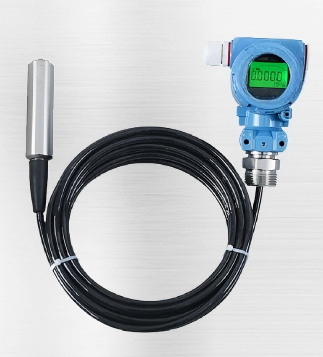
Submersible Level Transmitter
Level Instruments

Submersible Level Transmitter

The submersible level transmitter operates on the principle that the static pressure of a liquid is proportional to its height. It is manufactured usi...

Key Features

Utilizes imported diffusion silicon pressure sensing elements and advanced diaphragm isolation technology
Cable connection, direct submersion on-site, easy installation
Amplifier circuit employs integrated chips with wide voltage supply
Anti-clogging and anti-fouling design
Lightning protection, frequency interference suppression, and strong anti-interference capability
Excellent stability and fast response speed

Performance Metrics

Cable Material Polyethylene, Polyurethane, PTFE (Corrosion-resistant type)
Sealing Material Fluorine Rubber, Nitrile Rubber
Ambient Temperature -40℃ to +85℃
Temperature Drift ≤±0.02%FS/℃

Key Features

Utilizes imported diffusion silicon pressure sensing elements and advanced diaphragm isolation technology
Cable connection, direct submersion on-site, easy installation
Amplifier circuit employs integrated chips with wide voltage supply
Anti-clogging and anti-fouling design
Lightning protection, frequency interference suppression, and strong anti-interference capability
Reverse wiring, overvoltage protection, and current limiting protection
Excellent stability and fast response speed
Based on hydrostatic measurement principle for accurate and reliable readings
Multiple output signal options for strong compatibility
Suitable for a wide range of liquid media and applications
Submersible Level Transmitter product overview

Submersible Level Transmitter

The Submersible Level Transmitter is a highly reliable liquid level measurement instrument designed for continuous monitoring of liquid depth in tanks, wells, and reservoirs. It operates on the proven hydrostatic pressure measurement principle, ensuring accurate and dependable readings for a wide range of industrial and environmental applications.

By measuring the static pressure exerted by the liquid column, this level sensor directly calculates the liquid level height, making it an essential tool for process control and inventory management.

Core Advantages & Working Principle

Submersible Level Transmitter working principle diagram

Hydrostatic Pressure Measurement Principle

The core working principle of this submersible level sensor is based on the fundamental physics of hydrostatic pressure. When the sensor is submerged in the measured liquid, the pressure (P) on its liquid-facing diaphragm is defined by the formula P = ρgh + Po, where ρ is the liquid density, g is gravitational acceleration, h is the liquid level height, and Po is atmospheric pressure.

A key feature is the integrated venting device, which introduces atmospheric pressure into the sensor's negative pressure chamber. This ingenious design allows the transmitter to measure only the pressure component ρgh, directly yielding the precise liquid level depth, independent of atmospheric pressure changes.

Key Features & Technical Specifications

Superior Sensing & Stability

Utilizes high-quality imported diffusion silicon pressure sensing elements paired with advanced diaphragm isolation technology. This combination ensures excellent long-term stability and a fast response speed for dynamic level monitoring.

Robust Protection & Safety

Engineered with comprehensive protection features including lightning protection, frequency interference suppression, reverse wiring protection, overvoltage protection, and current limiting. This guarantees strong anti-interference capability and safe operation in harsh electrical environments.

Easy Installation & Versatility

Features a convenient cable connection for direct submersion on-site, making installation straightforward. Its anti-clogging and anti-fouling design, along with compatibility with multiple output signals, offers strong adaptability for various liquid media and challenging applications.

Reliable Performance

The amplifier circuit employs integrated chips with a wide voltage supply range, enhancing reliability. Based on the direct hydrostatic measurement principle, it delivers accurate and reliable level readings crucial for process control.

Submersible Level Transmitter in a water tank application

Wide Application Scenarios

This submersible liquid level transmitter is suitable for a wide range of media including water, oil, and various chemical liquids. Its robust design makes it ideal for continuous level measurement in water and wastewater treatment plants, industrial process tanks, reservoirs, and groundwater monitoring wells.

The instrument's versatility and strong compatibility with different control systems make it a preferred choice for engineers seeking a dependable solution for liquid inventory management and process automation.

Installation & Operational Benefits

Installation of a Submersible Level Transmitter in an industrial setting Close-up detail of Submersible Level Transmitter sensor and cable

The design prioritizes ease of use and maintenance. The direct submersion installation via its integral cable eliminates the need for complex mounting hardware, significantly reducing setup time and cost. This is particularly beneficial for deep well monitoring or applications in confined spaces.

Furthermore, the anti-clogging design ensures consistent performance even in liquids containing suspended solids or prone to biological growth, minimizing downtime for cleaning and maintenance. This reliability is key for uninterrupted 24/7 operations in critical monitoring points.

With multiple output signal options such as 4-20mA, 0-5V, or 0-10V, this level transmitter offers strong compatibility with PLCs, SCADA systems, and data loggers, providing seamless integration into both new and existing industrial automation infrastructures.

Contact Us

Need a custom solution? Our engineers are ready to help you design the perfect system.

Get In Touch
Downloads

Immersion Type Liquid Level Transmitter Series.pdf
PDF • 1105.9 KB

Related Questions

View All
What is RTU Remote Terminal Unit? How does RTU work in water monitoring systems?
View Answer
<p><strong>RTU (Remote Terminal Unit)</strong> is a microprocessor-controlled electronic device that serves as the critical interface between physical field equipment and centralized SCADA (Supervisory Control and Data Acquisition) or telemetry systems. In water monitoring systems, an RTU collects real-time data from field sensors—including flow meters, pressure transmitters, water level gauges, and water quality analyzers—and transmits this information to a central control center via wireless or wired communication networks.</p> <p><strong>How RTU Works in Water Monitoring Systems:</strong></p> <ul> <li><strong>Data Acquisition</strong>: The RTU continuously polls connected sensors through multiple I/O interfaces including analog inputs (4–20mA, 0–10V), digital inputs (pulse, status), and serial communication ports (RS-232/RS-485). For water monitoring, typical sensor inputs include flow rate from electromagnetic or ultrasonic flowmeters, water level from radar or submersible level sensors, pressure from transmitters, and water quality parameters such as pH, turbidity, and dissolved oxygen.</li> <li><strong>Signal Processing & Logging</strong>: Raw sensor signals are filtered, linearized, and converted to engineering units. The RTU performs local data logging with time-stamped records stored in non-volatile memory, ensuring zero data loss during communication outages. Typical storage capacity supports 10,000+ records with configurable logging intervals from 1 second to 24 hours.</li> <li><strong>Communication & Telemetry</strong>: RTUs support multiple communication protocols and transport layers. At the field level, <strong>Modbus RTU</strong> (over RS-485) is the most widely adopted protocol for sensor integration, while <strong>Modbus TCP</strong> enables Ethernet-based networking. For long-range telemetry, modern RTUs integrate multi-mode wireless options including <strong>4G LTE, NB-IoT, LoRa/LoRaWAN</strong>, and satellite communication, allowing deployments in remote watersheds, mountain reservoirs, and underground monitoring wells where traditional wired infrastructure is unavailable.</li> <li><strong>Control & Automation</strong>: Beyond data collection, RTUs execute local control logic—triggering alarms when water levels exceed thresholds, automatically starting or stopping pumps based on tank levels, controlling valve positions for flow regulation, and implementing PID control loops for pressure management in water distribution networks.</li> <li><strong>Power Management</strong>: For remote sites without grid power, RTUs feature ultra-low-power designs with sleep-mode current consumption as low as 50μA, enabling months of autonomous operation on battery power supplemented by small solar panels (typically 10–50W). Advanced power scheduling wakes the RTU on configurable intervals or upon sensor-triggered events.</li> </ul> <p><strong>RTU vs PLC — Key Differences:</strong></p> <p>While both RTUs and PLCs (Programmable Logic Controllers) perform industrial control functions, they are optimized for different deployment scenarios. RTUs are purpose-built for <strong>geographically distributed, remote, and environmentally harsh installations</strong> with emphasis on wide-area communication, ultra-low power consumption, and extended temperature ranges (-40°C to +70°C). PLCs excel in <strong>centralized factory-floor automation</strong> with high-speed deterministic control, extensive I/O density, and complex sequential logic. In water monitoring, RTUs are the preferred choice for river basin telemetry networks, reservoir monitoring stations, irrigation canal gate control, and urban drainage monitoring—applications where sites may be tens or hundreds of kilometers apart with limited power and no permanent communication infrastructure.</p> <p><strong>Typical Deployment Architecture:</strong></p> <p>A typical RTU-based water monitoring system follows a three-tier architecture. At the <strong>field layer</strong>, sensors (flowmeters, level gauges, rain gauges, water quality probes) connect to the RTU via wired interfaces within a monitoring station enclosure. The RTU aggregates and pre-processes data locally. At the <strong>communication layer</strong>, data is transmitted via 4G/NB-IoT/LoRa to a central data server or cloud IoT platform using protocols such as MQTT, HTTP, or the hydrological standard <strong>SL651-2014 / SZY206</strong>. At the <strong>application layer</strong>, SCADA software, water resource management platforms, and mobile dashboards visualize real-time and historical data, generate reports, and issue alarms—enabling water authorities to make informed operational decisions.</p> <p><strong>Ecolor Technology RTU Solutions:</strong></p> <p>Ecolor Technology's <strong>Hero V9 Series</strong> offers two primary RTU configurations for water monitoring applications:</p> <ul> <li><strong><a href="/EN/products/hero-v9-ec32-measurement-control-terminal">EC32 — Measurement and Control Terminal</a></strong>: A versatile industrial RTU with rich I/O interfaces, Modbus RTU/TCP support, 4G/LoRa/NB-IoT communication, and ultra-low-power design suitable for general water resource monitoring, pump station control, and irrigation automation. Features local data storage, remote firmware upgrade, and wide operating temperature range.</li> <li><strong><a href="/EN/products/hero-v9-ec60-data-acquisition-terminal">EC60 — Compact Data Acquisition Terminal</a></strong>: A cost-optimized, compact RTU designed for high-density sensor deployments with streamlined I/O, embedded 4G communication, and simplified installation—ideal for large-scale river monitoring networks and smart city drainage monitoring projects where cost per monitoring point is critical.</li> </ul> <p>Both models feature solar-ready power input, IP65+ environmental protection, and compatibility with Ecolor's cloud-based water monitoring platform for seamless data integration and visualization.</p>