Home / Products / Vortex Flow Meter
Back to Products
Vortex Flow Meter
Flow Meters

Vortex Flow Meter

The Vortex Flow Meter is a flow measurement instrument based on the Karman vortex street principle. It is used to measure the flow rate of liquids, ga...

Key Features

Simple structure with no moving parts, easy to install and maintain
High measurement accuracy and reliability, no on-site calibration required
Low pressure loss, wide rangeability, temperature and pressure compensation for precise measurement
Wide applicability, suitable for measuring liquids, gases, and steam
Flexible installation, can be mounted vertically, horizontally, or at various angles
Incorporates DSP processing technology for better vibration resistance

Performance Metrics

Ambient Temperature -20°C to 55°C
Explosion-proof Rating Ex ia IIC T4 Ga, Ex db IIC T6 Gb
Body Material 304, 316, PTFE Lined
Medium Temperature Standard: -40~100°C, High-Temp: -40~330°C

Key Features

Simple structure with no moving parts, easy to install and maintain
High measurement accuracy and reliability, no on-site calibration required
Low pressure loss, wide rangeability, temperature and pressure compensation for precise measurement
Wide applicability, suitable for measuring liquids, gases, and steam
Flexible installation, can be mounted vertically, horizontally, or at various angles
Incorporates DSP processing technology for better vibration resistance
Capacitive type offers excellent vibration and high-temperature resistance
External probe design provides effective resistance to fouling
Wide turndown ratio, up to 1:40 for upgraded models
Low pressure drop and energy loss, classified as an energy-saving flow meter
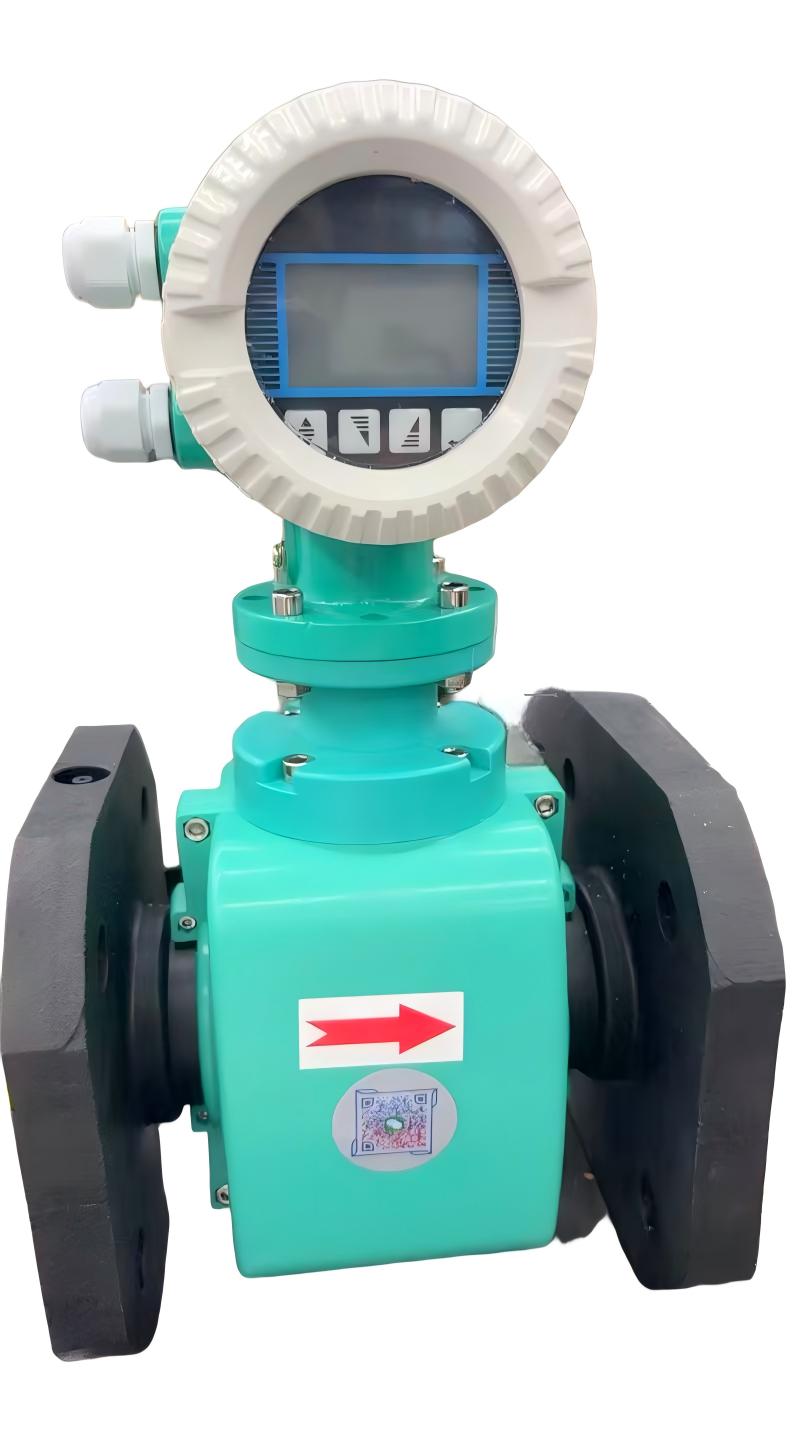
Vortex Flow Meter product overview showing industrial design

Vortex Flow Meter

The Vortex Flow Meter is an advanced flow measurement instrument developed based on the Karman vortex street principle. It is designed for accurately measuring the volumetric flow rate, standard volumetric flow rate, or mass flow rate of gases, steam, and liquids in various industrial applications.

This versatile flow meter is an ideal solution for flow measurement of diverse fluid media in industrial pipelines, finding widespread use in critical sectors such as chemical processing, food and beverage, heating systems, and power generation.

Core Advantages & Technology

Vortex Flow Meter installation in a pipeline system

Robust Principle and High Reliability

The operation of the Vortex Flow Meter is based on the proven Karman vortex street principle, ensuring stable and reliable performance. With no moving mechanical parts and the use of durable piezoelectric stress sensors, it offers exceptional reliability, requires minimal maintenance, and guarantees long-term stable operation.

This robust construction makes it a low-maintenance flow measurement solution, significantly reducing downtime and operational costs for industrial flow monitoring.

High Accuracy

Wide rangeability with precise measurement, no on-site calibration required.

Low Pressure Loss

Minimal pressure drop and energy loss, classified as an energy-saving flow meter.

Wide Turndown Ratio

Up to 1:40 for upgraded models, suitable for varying flow conditions.

Superior Measurement Performance

When measuring volumetric flow rate under operating conditions, the Vortex Flow Meter is almost unaffected by changes in critical fluid parameters such as density, pressure, temperature, and viscosity. This independence ensures consistent accuracy across a wide range of process conditions.

Its features include remarkably low pressure loss, an extensive measurement range, and high accuracy, making it a top choice for demanding industrial flow measurement applications.

Vortex Flow Meter internal sensor and DSP technology

Advanced Signal Processing and Output

The Vortex Flow Meter incorporates advanced DSP (Digital Signal Processing) technology, which significantly enhances its vibration resistance and signal stability. It provides both analog standard signals and digital pulse signal outputs, ensuring easy integration with modern digital control systems, PLCs, and computers.

This digital compatibility makes it a future-proof component for smart factories and automated process control systems requiring reliable flow data.

Key Product Features

Vortex Flow Meter suitable for gas, liquid, and steam measurement

Versatile Application and Flexible Installation

The Vortex Flow Meter boasts wide applicability, being suitable for measuring liquids, gases, and steam. Its flexible installation design allows it to be mounted vertically, horizontally, or at various angles to suit specific pipeline layouts and space constraints.

This installation flexibility simplifies the process of integrating this flow measurement device into new or existing industrial systems for liquid flow measurement or steam flow measurement.

Enhanced Durability and Sensor Options

To meet diverse industrial environments, the Vortex Flow Meter is available with different sensor technologies. The capacitive sensor type offers excellent vibration and high-temperature resistance, while the external probe design provides effective resistance to fouling and buildup.

These design choices ensure reliable performance and longevity even in harsh conditions, reducing the need for frequent cleaning or sensor replacement.

Vortex Flow Meter in chemical or power industry application

Ideal for Modern Industrial Demands

With its simple structure, high reliability, and precise measurement capabilities with temperature and pressure compensation, the Vortex Flow Meter stands out as an advanced and ideal measuring instrument. Its low pressure drop contributes to overall system energy efficiency.

From chemical plant flow control to power generation steam monitoring, this flow meter delivers the performance needed for critical industrial measurement tasks, ensuring process optimization and cost savings.

Technical Specifications & Summary

Feature Description / Specification
Measurement Principle Karman Vortex Street
Measured Media Gases, Steam, Liquids
Key Industries Chemical, Food, Heating, Power
Turndown Ratio Up to 1:40 (Upgraded Models)
Sensor Types Piezoelectric, Capacitive (High-Temp/Vibration Resistant)
Output Signals Analog Standard Signals & Digital Pulse Signals
Installation Vertical, Horizontal, or Various Angles
Design Advantage No Moving Parts, Low Maintenance, Energy-Saving

Contact Us

Need a custom solution? Our engineers are ready to help you design the perfect system.

Get In Touch
Downloads

turbid flow eter.pdf
PDF • 475.3 KB

Related Questions

View All
How to select installation location for radar level meters? What are the requirements for installation height and angle?
View Answer
<p><strong>Radar level meter installation location selection</strong> is crucial for ensuring measurement accuracy and stable device operation. Proper installation positioning affects not only measurement precision but also equipment lifespan and maintenance accessibility.</p><p>Key installation location considerations: <ul><li><strong>Vertical installation</strong>: Device should be installed vertically downward with tilt angle not exceeding 3°</li><li><strong>Avoid obstacles</strong>: Keep 3m clearance from bridge piers, pipes, and other metallic interference sources</li><li><strong>Stable flow areas</strong>: Select relatively calm water sections, avoiding rapids and vortex zones</li><li><strong>Installation height</strong>: Distance from highest water level should exceed 2 times blind zone distance with adequate safety margin</li></ul></p><p>Specific installation requirements: <ul><li>River monitoring: Install above river center, avoiding bends and confluence points</li><li>Reservoir applications: Select main reservoir body areas, away from inlet/outlet structures</li><li>Bridge mounting: Utilize existing bridge structures ensuring secure and reliable installation</li><li>Power and communication: Consider solar panel orientation and 4G signal coverage</li></ul></p><p>Ecolor Technology provides professional site survey and installation guidance services to ensure optimal device performance in water management applications.</p>
Straight pipe requirements comparison table for different flowmeter types - electromagnetic vs ultrasonic flowmeters
View Answer
<p><strong>Straight pipe requirements</strong> vary significantly among flowmeter types due to different measurement principles. Here's a comprehensive comparison:</p><ul><li><strong>Electromagnetic flowmeters (LGF series)</strong>: Upstream 5D, downstream 3D, relatively tolerant to flow disturbances</li><li><strong>Ultrasonic flowmeters</strong>: Clamp-on type requires upstream 10D-20D, downstream 5D-10D, highly sensitive to flow profile</li><li><strong>Doppler radar flowmeters (HZ-KSLF)</strong>: Non-contact measurement, no straight pipe limitations, ideal for open channels and irregular waterways</li><li><strong>Vortex flowmeters</strong>: Upstream 15D-20D, downstream 5D, sensitive to vibrations</li><li><strong>Orifice plate flowmeters</strong>: Upstream 10D-30D, downstream 5D-8D, most stringent requirements</li></ul><p>Special condition adjustments: Add 5D after 90° elbows, 10D after control valves, 3D after reducers. <strong>Electromagnetic flowmeters</strong> offer significant advantages in complex piping systems due to their tolerance to flow disturbances. Proper straight pipe selection ensures measurement accuracy meets design specifications for industrial applications.</p>
How to select the right industrial flow meter: Complete guide for different media and pipe sizes?
View Answer
<p><strong>Flow meter selection</strong> requires careful consideration of fluid properties, pipe diameter, accuracy requirements, and installation constraints. <strong>Electromagnetic flow meters</strong> like Ecolor's LGF series excel for conductive liquids with ±0.5% accuracy across DN10-DN2000 range, ideal for wastewater and chemical applications. <strong>Ultrasonic flow meters</strong> offer versatility for both conductive and non-conductive fluids with flexible installation options.</p><ul><li><strong>Conductive liquids</strong>: Electromagnetic flow meters provide zero pressure drop and high accuracy</li><li><strong>Non-conductive fluids</strong>: Ultrasonic or vortex flow meters are preferred</li><li><strong>Open channel measurement</strong>: Doppler radar flow meter HZ-KSLF offers non-contact solution</li><li><strong>Large diameter pipes</strong>: Clamp-on ultrasonic meters provide cost-effective solution</li><li><strong>High precision applications</strong>: In-line ultrasonic or electromagnetic meters recommended</li></ul><p>Consider temperature, pressure, and corrosivity factors during selection process.</p>
Does a dual-rotor flow meter need straight pipe runs?
View Answer
<p>No. As a positive displacement meter, measurement is independent of flow profile, so <strong>no upstream/downstream straight runs are required</strong> — a clear advantage over velocity-type meters (turbine, vortex).</p><p>Installation tips: 1) Install a filter (100-200 mesh) upstream to protect rotors; 2) Horizontal or vertical mounting allowed, follow flow arrow; 3) For high-viscosity fluids in winter, heat tracing prevents rotor stalling; 4) Flush new pipelines before installing the meter.</p>
How does a vortex precession flow meter work and why is it good for natural gas?
View Answer
<p>A vortex precession meter uses forced oscillation: gas passes a swirl generator that imparts rotation, creating a helical vortex that precesses around the axis. The precession frequency is proportional to flow rate and detected by a piezoelectric sensor.</p><p>Why it suits natural gas: 1) <strong>No moving parts</strong> — no wear, long maintenance intervals; 2) Wide turndown (1:15+) covering peak-valley demand; 3) Moderate pressure loss, better than orifice plates; 4) Accuracy ±1%~±1.5%, adequate for general gas custody and process metering; 5) Integrated T&amp;P compensation reads standard volume directly.</p>
Straight-run and vibration requirements for vortex precession meters?
View Answer
<p>As a fluid-oscillation meter it is sensitive to flow profile and vibration:</p><p>1) <strong>Straight runs</strong>: ≥10D upstream, ≥5D downstream (D = nominal size); add a flow conditioner after elbows or pressure regulators; 2) <strong>Vibration</strong>: pipe vibration corrupts the precession signal and causes false flow — keep away from compressors and pumps, add pipe supports or flexible couplings if needed; 3) <strong>Avoid two-phase flow</strong>: gas-liquid mixtures deviate strongly — keep gas dry or install a separator upstream; 4) <strong>Mounting</strong>: horizontal preferred, arrow aligned with flow.</p>