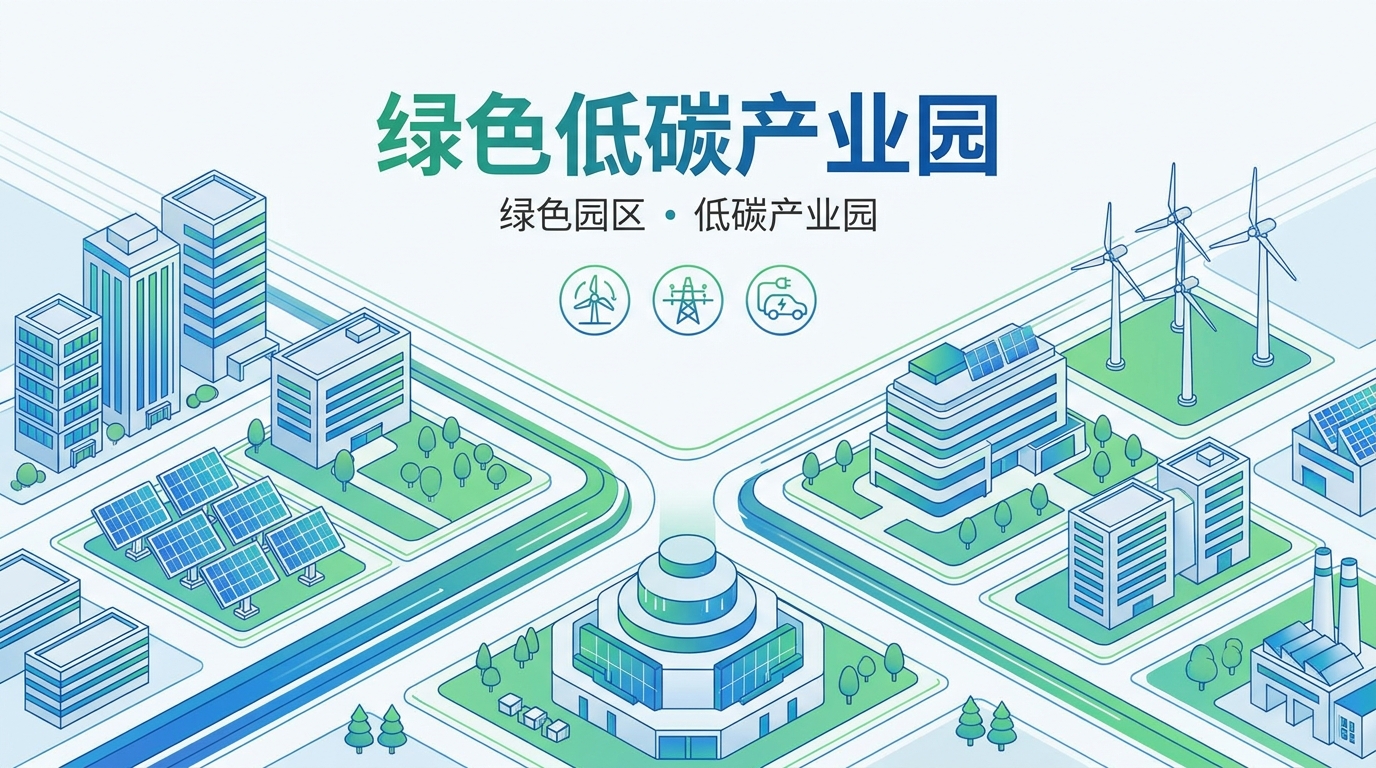
Latest Technology Advances in Low-Carbon Industrial Parks
As global climate change mitigation efforts accelerate and the "Dual Carbon" goals (peaking emissions by 2030, neutrality by 2060) take center stage, the green transformation of industrial parks has become a cornerstone of high-quality economic development. Moving beyond traditional high-energy models, next-generation low-carbon industrial parks are emerging as benchmarks for sustainable infrastructure, driven by the deep integration of digitization, intelligence, and renewable energy technologies.
Digital-Intelligent Integration: The New Green Foundation
The construction of green low-carbon industrial parks has evolved from simple greening upgrades into a comprehensive technical system based on IoT, big data, cloud computing, and AI. High-precision smart sensors now enable real-time acquisition of energy consumption data for water, electricity, gas, and heat throughout the entire park.
By combining edge computing with cloud platforms, modern digital technologies have broken away from traditional manual accounting methods. Installing intelligent monitoring equipment at key emission nodes allows managers to accurately construct dynamic carbon emission models using full lifecycle databases and Continuous Emission Monitoring Systems (CEMS).
Real-Time Data Acquisition
IoT sensors track water, electricity, gas, and heat usage instantly.
Dynamic Carbon Modeling
AI-driven models ensure accurate and traceable carbon accounting.
Cloud & Edge Computing
Powerful computational support for complex data analysis.
Core Scenarios: Integrated Energy Management
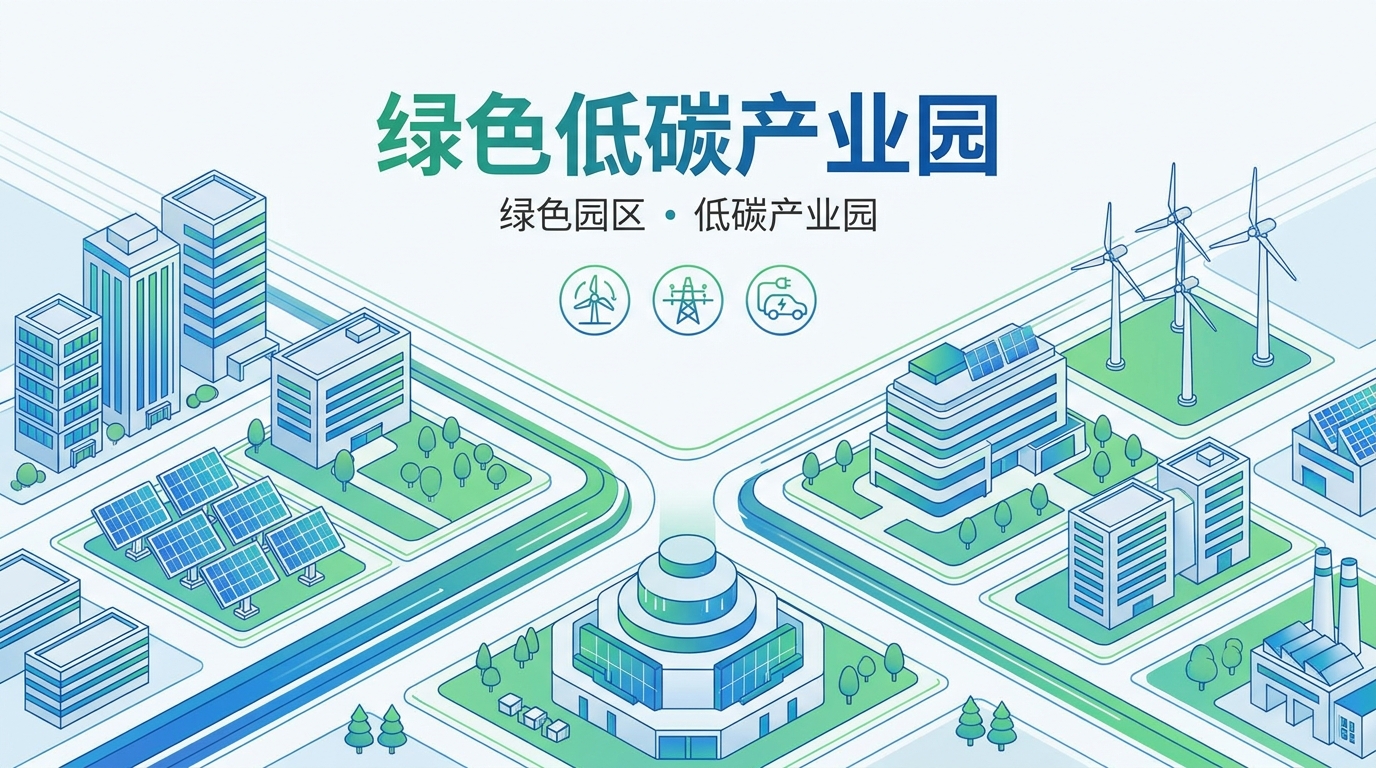
In actual operations, low-carbon industrial parks widely adopt "Source-Grid-Load-Storage" integrated microgrid systems. By deploying distributed photovoltaic (PV) and wind power generation alongside large-scale energy storage stations, parks achieve self-regulation and optimized energy allocation.
AI algorithms play a pivotal role here, accurately predicting electricity loads and renewable generation to enable peak shaving and valley filling. This significantly increases the local absorption ratio of clean energy, effectively reducing carbon emissions at the source.
Smart Building Efficiency & Resource Recycling
Next-generation Building Management Systems (BMS) allow environmental sensors to automatically adjust central air conditioning and lighting based on indoor conditions and personnel distribution. This refined control reduces daily energy consumption without compromising comfort or production requirements.
Furthermore, IoT tracking enables full-process transparent monitoring of wastewater, exhaust gas, and solid waste. Promoting scaled applications of waste heat recovery and reclaimed water reuse systems maximizes resource utilization and further reduces the overall operational carbon footprint.
Future Trends: Digital Twins & Blockchain
Future green parks will establish 3D virtual models that completely mirror physical spaces using Digital Twin technology. Managers can intuitively view real-time carbon data and simulate energy-saving renovation plans under extreme weather conditions to find optimal emission reduction paths.
Additionally, blockchain technology is expected to see widespread application in carbon asset management. Its decentralized and immutable characteristics ensure the authenticity of every ton of carbon emission data, providing authoritative evidence for carbon trading and green financial credit.
Cross-Boundary Collaboration via Virtual Power Plants
Future low-carbon industrial parks will evolve from isolated energy islands into flexible nodes capable of deep interaction with external grids. Through Virtual Power Plant (VPP) technology, parks aggregate distributed power sources and storage equipment to actively participate in grid auxiliary services.
This approach achieves higher-dimensional energy mutual aid and demand-side response, maximizing social benefits while enhancing the park's resilience and contribution to the broader energy ecosystem.
Conclusion: The Path to Zero Carbon
The construction of green low-carbon industrial parks is a systematic engineering project involving energy conversion, industrial upgrading, and technological innovation. Relying on cutting-edge technologies such as IoT, AI, and big data, parks are gradually achieving full-link optimization from the energy consumption end to the supply end.
With continuous improvements in carbon emission monitoring systems and breakthroughs in energy-saving technologies, digital technology will serve as the core driver, empowering industrial parks to steadily advance toward zero carbon, intelligence, and sustainability. This represents both the inevitable path for meeting global climate challenges and the necessary choice for driving modern industry development.

