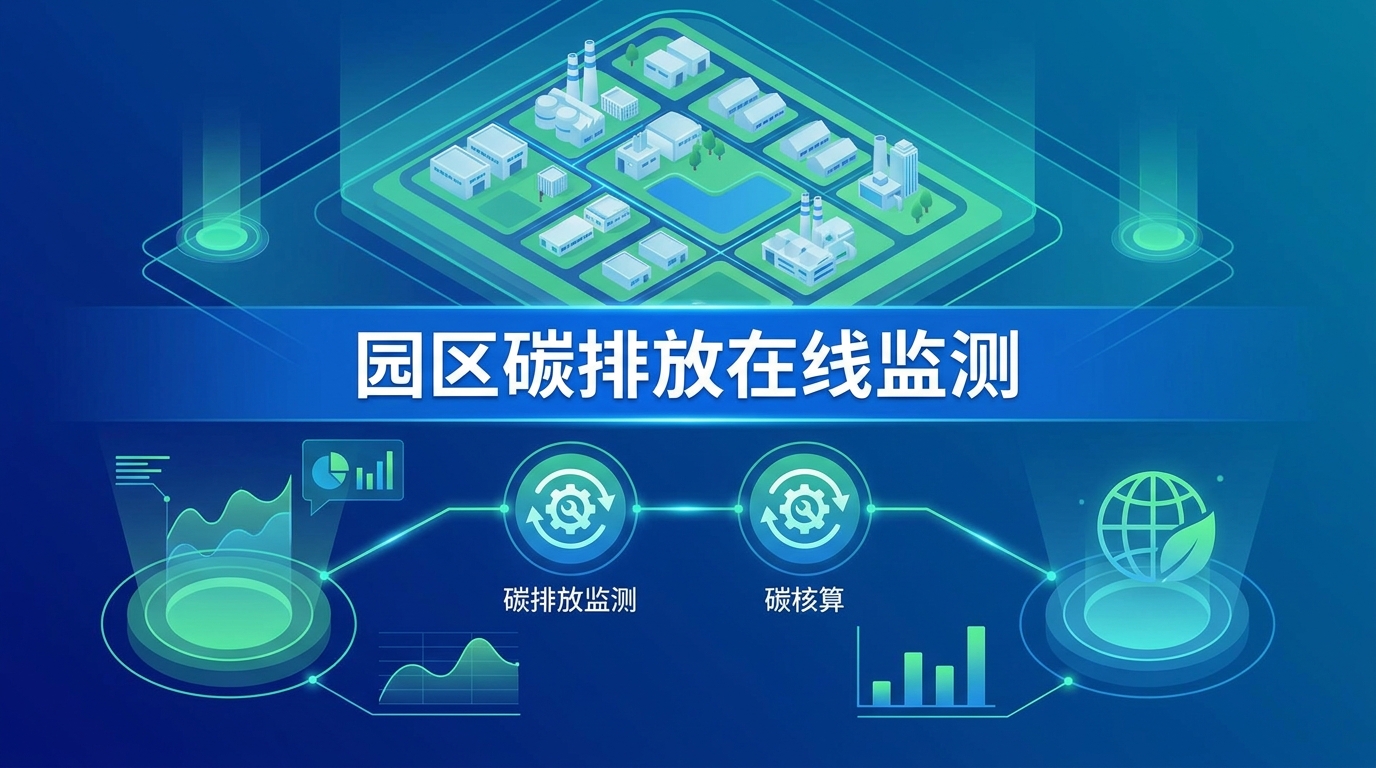
Latest Technology Advances in Low-Carbon Industrial Park Carbon Emission Monitoring
As global climate action intensifies, online carbon emission monitoring technology has become the critical infrastructure for industrial parks striving to meet "Dual Carbon" goals. By transitioning from traditional accounting to real-time greenhouse gas monitoring, these systems now provide the precision and timeliness required for effective energy conservation and green transformation.
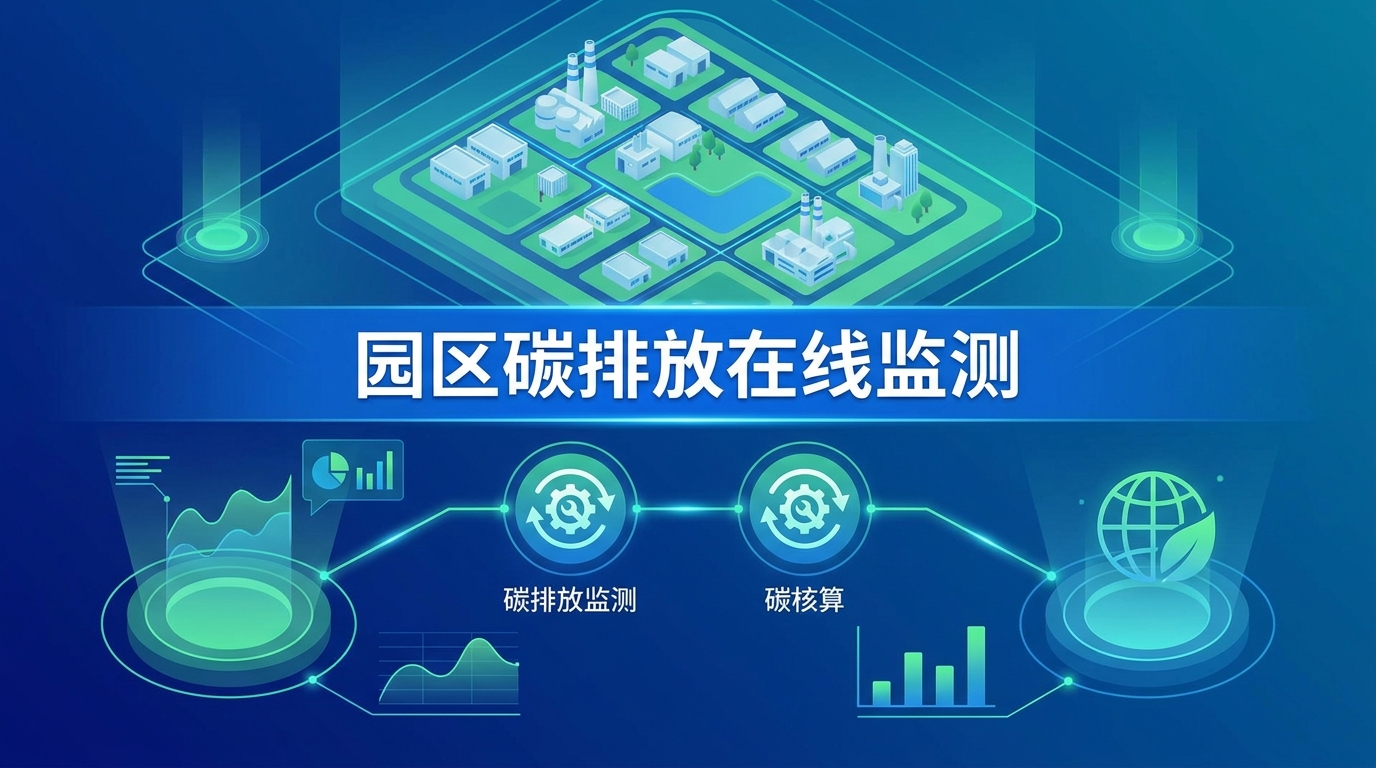
Technological Evolution: From Traditional Accounting to Real-Time Monitoring
Historically, industrial park carbon data relied on traditional carbon accounting methods like the "Emission Factor Method." These approaches often suffered from data lag and high subjectivity, failing to capture transient changes in production processes that modern management requires.
Today, the rapid development of IoT and spectral analysis has enabled a qualitative leap in greenhouse gas monitoring. Modern systems utilize advanced technologies such as Non-Dispersive Infrared Absorption Spectroscopy (NDIR) and Tunable Diode Laser Absorption Spectroscopy (TDLAS) for second-level continuous capture of CO2 and methane concentrations.
By integrating physical monitoring with material flow data, these systems create a dual-drive "Accounting + Measurement" model. This combination significantly enhances the scientific accuracy and traceability of carbon emission data through edge computing and cloud big data processing.
Application Scenarios: Full-Chain Monitoring and Carbon Footprint Tracking
Online monitoring applications now cover every link from source control to end-of-pipe treatment. In high-energy-consuming sectors like chemicals and steel, high-precision probes at boiler flues and exhaust stacks enable precise quantification of organized emissions.
Simultaneously, IoT micro-stations deployed at plant boundaries form a three-dimensional grid to monitor fugitive emissions. When abnormal fluctuations occur, the system quickly locates the source, providing immediate evidence for park management enforcement.
Furthermore, this data is pivotal for constructing product carbon footprint models. Enterprises can allocate real-time energy consumption to specific production lines, moving beyond industry-average databases to dynamic calculation. This capability secures a "green advantage" in international supply chains and supports low-carbon investment attraction.
Measurement Speed
Second-level or minute-level real-time capture of greenhouse gases.
Data Accuracy
Enhanced by combining physical monitoring with material balance data.
Scope
Covers organized emissions, fugitive leaks, and product footprints.
Future Trends: Digital-Intelligent Integration and Standardization
The future of online carbon emission monitoring lies in the deep integration of Artificial Intelligence and big data. Systems will evolve from simple data display to intelligent prediction, using machine learning to analyze historical data against production conditions and weather factors.
Advanced functions will include carbon emission trend prediction, reduction potential analysis, and quota compliance warnings. Additionally, blockchain technology will ensure tamper-proof encrypted storage, closing the loop of "Monitoring-Verification-Trading" in carbon markets.
On the ecosystem level, standardization will drive large-scale deployment. Unified Measurement, Reporting, and Verification (MRV) specifications will ensure seamless docking with national carbon market registration systems, increasing the weight of direct measurement in global carbon trading frameworks.
This analysis highlights how online carbon emission monitoring is transforming from a compliance tool into a digital engine for industrial optimization. With breakthroughs in sensing and top-level systems, it remains foundational to the global zero-carbon vision.

