Practical Implementation Guide for Standardized Installation and O&M of 80 GHz Radar Level Sensors
As accuracy requirements intensify across hydrological monitoring, urban flood control, and industrial water treatment, water level measurement technology is rapidly evolving toward intelligence and precision. In recent years, 80 GHz radar level sensors—leveraging their high operating frequency, ultra-narrow beam angle (typically ≤3°), and exceptional penetration capability—have emerged as the de facto standard in professional applications.
As non-contact instruments, they eliminate common failure modes associated with traditional contact-based devices, including sensor corrosion, sediment accumulation, and mechanical wear. To ensure long-term data reliability and measurement integrity in real-world deployments, Ecolor Technology’s Technical Engineering Team has distilled extensive field experience into this comprehensive guide.
I. Installation Protocol: Ensuring Metrological Integrity from Day One
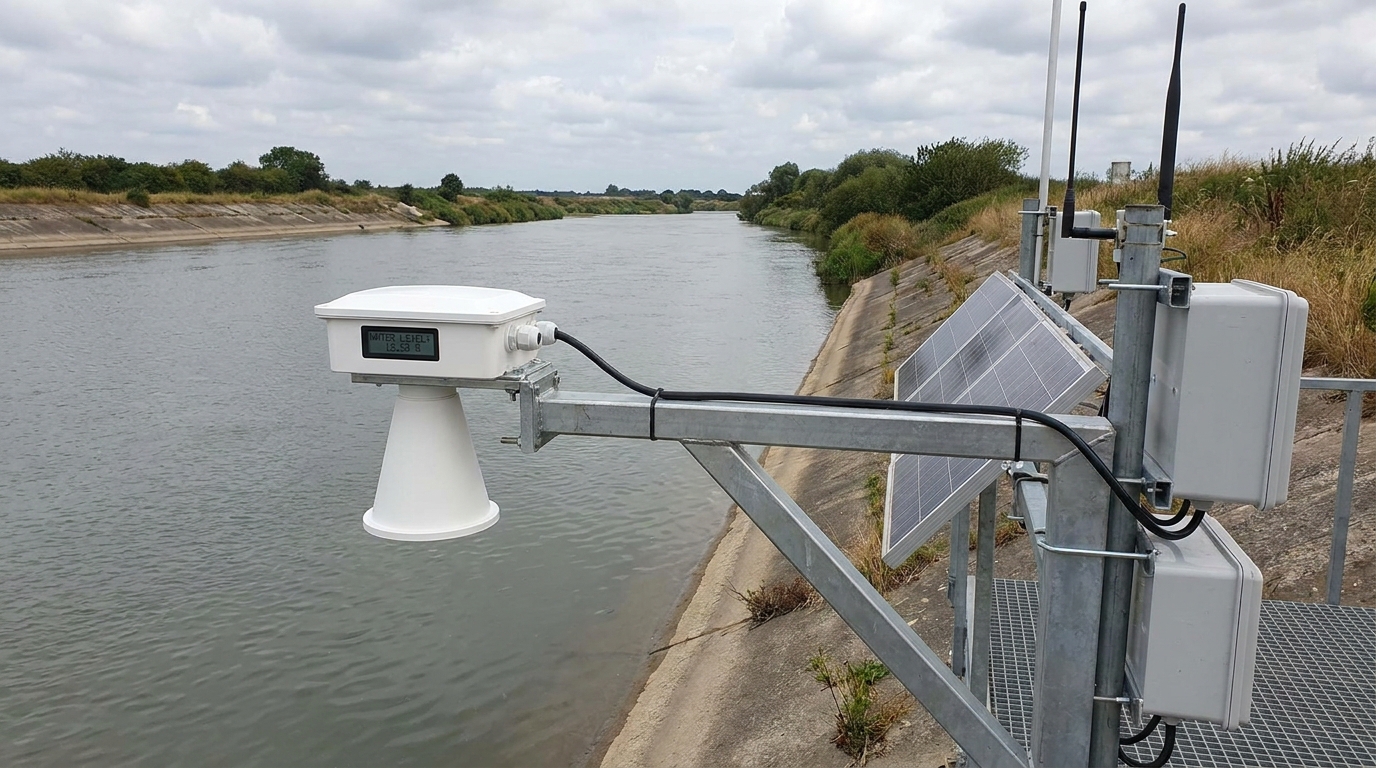
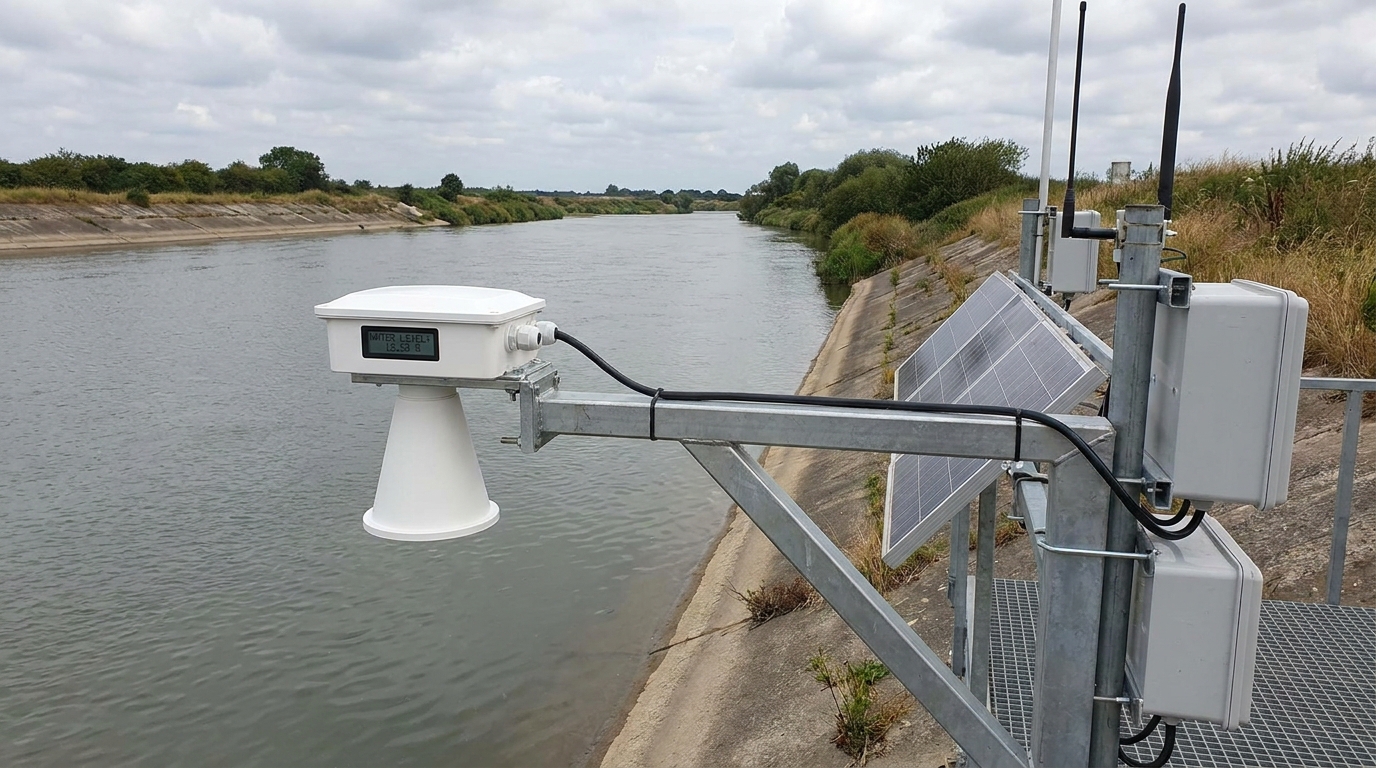
Precision installation is the foundational prerequisite for achieving sub-millimeter measurement accuracy. For 80 GHz radar sensors, adherence to rigorous mounting protocols directly determines long-term performance stability and data fidelity.
1. Site Selection & Obstruction Avoidance
Radar propagation paths must remain unobstructed. Mounting locations should avoid proximity to bridge piers, sluice gates, overhanging branches, or protruding shoreline rocks. A clear line-of-sight between the antenna face and the lowest anticipated water surface is mandatory.
2. Vertical Alignment Calibration
The sensor’s antenna face must be perfectly parallel to the horizontal plane (mounting pole plumb to ±0.5°). Minor angular deviations cause signal deflection away from the receiver, resulting in significant signal attenuation or complete echo loss.
3. Blind Zone Clearance
All radar sensors exhibit an inherent near-field blind zone (typically 0.1–0.3 m below the antenna). Installation elevation must be calculated conservatively using historical peak water level data. Failure to do so risks data overflow, erroneous “no signal” alarms, or permanent hardware damage due to submersion.
II. Commissioning & Configuration: Optimizing Performance Through Intelligent Tuning
Hardware installation is only the first step; effective commissioning transforms a physical device into a calibrated, intelligent node within the monitoring network.
- Fundamental Parameter Setup: After powering up and establishing communication (via RS485, Modbus, or analog output), enter two critical parameters precisely:
- Reference Zero Point: The vertical distance from the sensor’s physical datum to the established benchmark (e.g., riverbed).
- Full Measurement Range: Must match field measurements taken with calibrated tape measures or total stations—never estimated.
- Echo Curve Analysis: The built-in echo profile visualization is indispensable for diagnosing interference. A healthy installation displays a single, dominant peak at the true water surface. Use the sensor’s “false echo learning” or “static background suppression” functions to digitally mask persistent artifacts from fixed structures.
- Signal Smoothing & Damping: Configure damping time empirically (typically 10–30 seconds) based on local hydraulics to deliver stable values aligned with hydrological reporting standards. Over-damping masks genuine dynamics; under-damping introduces noise.
III. Routine Maintenance: Maximizing Uptime and Service Life
While non-contact operation drastically reduces maintenance frequency, proactive inspection remains essential for sustained reliability. Ecolor Technology recommends structured quarterly or biannual maintenance cycles.
Proactive maintenance ensures that the "30% product quality" is fully leveraged by "70% implementation excellence."
Antenna Inspection
Check for spider webs, insect residue, dust, or ice. Clean gently with a soft, damp microfiber cloth. Never use abrasive materials or solvents.
Structural Integrity
Verify torque on flange bolts and bracket fasteners. Inspect cable glands and conduit entries for cracking, UV degradation, or rodent damage to maintain IP68 protection.
Data Validation
Cross-validate outputs against certified staff gauges during stable-flow periods. If deviation exceeds tolerance (±3 mm for hydrology; ±5 mm for operations), perform full zero-point recalibration.
IV. Troubleshooting Framework: Accelerating Field Diagnostics
Rapid root-cause analysis minimizes downtime. Below are three prevalent issues and systematic resolution pathways:
Erratic Data Oscillation
Cause: Floating debris (water hyacinths, plastic waste) or heavy rainfall scattering energy.
Solution: Rule out hydraulic transients first. Increase digital filtering time or reduce sensitivity.
“Frozen” Measurement Output
Cause: Signal loss (“no echo”).
Solution: Confirm stable power supply (24 VDC ±10%). Check echo curve for sudden disappearance. Reboot device or manually re-acquire primary echo.
Communication Failure
Cause: SCADA/RTU connection loss.
Solution: Verify supply voltage, RS485/4–20 mA line continuity/shielding, and protocol alignment (baud rate, parity, stop bits, Modbus ID).
Conclusion
Robust hydrological monitoring infrastructure rests upon the metrological rigor of its sensing layer. The 80 GHz radar level sensor delivers unparalleled technical capability—high resolution, immunity to fouling, and real-time responsiveness. Yet as industry experience confirms: “30% product quality, 70% implementation excellence.”
Only through disciplined adherence to standardized installation practices, scientifically grounded commissioning, and proactive lifecycle maintenance can the full potential of this advanced technology be realized. Ecolor Technology remains committed to advancing global water intelligence—delivering not just hardware, but trusted engineering insight, practical knowledge transfer, and unwavering support for the world’s most critical water monitoring missions.

