AI Economy Reshaping Global Water: Data Center Water Demand Surging 129%, Smart Monitoring Is Key
The explosive growth of the AI economy, encompassing data centers and semiconductor manufacturing, is fundamentally reshaping global water resources. This surge in demand presents a critical challenge for water utilities worldwide, making intelligent water network monitoring a top priority for sustainable management.
The Staggering Water Footprint of AI Infrastructure
According to a recent Water Online report, the global AI value chain now consumes 23.7 km³ of water annually—equivalent to three times Shanghai's annual water consumption. By 2050, this figure is projected to grow by a staggering 129%. A single large-scale data center can consume water comparable to a small city.
The Dual Challenge: Surging Demand and Aging Networks
The water crisis is not solely about rising demand from tech sectors like data centers. A significant parallel issue is the state of global water infrastructure. Many developed nations operate pipe networks that are 50–100 years old, far exceeding their intended design life and leading to massive losses.
Global Wastewater Generation
310 km³/year
Water Lost via Aging Networks
100 km³/year
Projected Demand Growth by 2050
129%
Smart Water Monitoring as the Highest Impact Solution
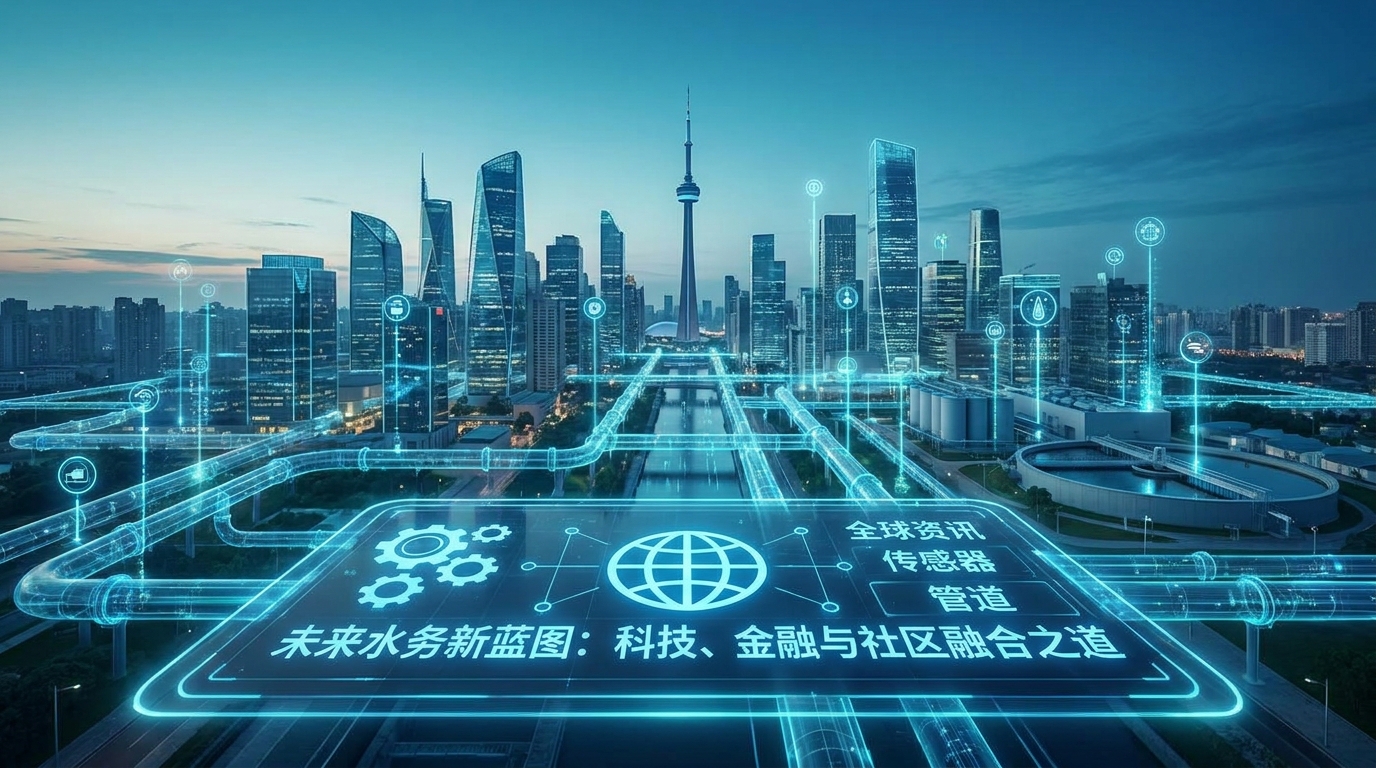
The report identifies intelligent network upgrades as the most critical lever for the water sector. Deploying smart instruments for real-time, network-wide monitoring has become the global consensus for reducing non-revenue water loss. This approach is more immediately impactful than water reuse or renewable energy alignment for treatment plants.
The core of this strategy involves a suite of smart monitoring devices, including radar level sensors for tanks and reservoirs, electromagnetic flow meters for pipeline measurement, and RTU telemetry terminals for data transmission and control.
Innovation in Smart Water Technology: Vision and AI Fusion
In China, companies like Ecolor Technology are pioneering advanced solutions. Their 80G visual radar level sensor represents a differentiated approach by fusing FMCW radar technology with high-definition cameras. This integration provides precise level measurement (±1mm accuracy) alongside real-time visual verification of pipe and tank conditions.
Complete Sensing-Transmission-Decision Chain for Utilities
When integrated with other key components like the LGF electromagnetic flow meters for accurate volumetric data and the HERO V9 RTU terminals for robust data telemetry, a complete smart water monitoring system is formed. This full-chain solution enables water utilities to achieve transformative operational improvements.
Key Performance Improvements with Smart Monitoring:
- Reduce network leakage from 15–20% to below 8%
- Extend flood warning lead time from 30 minutes to over 2 hours
- Improve overall O&M efficiency by over 60%
Transforming Water into an Engine for Sustainable Progress
As the Water Online report concludes, strategic collaboration and technology adoption can transform water from a limiting factor into an engine of sustainable progress. For utilities facing pressure from AI-driven data center water demand, investing in smart water network monitoring is no longer optional—it's essential for resilience and efficiency.
Source: Water Online, "How The AI Economy Is Reshaping Water—And What Utilities Can Do About It"
Recommended Products
Ecolor Technology provides professional instruments for smart water, environmental monitoring & industrial automation: