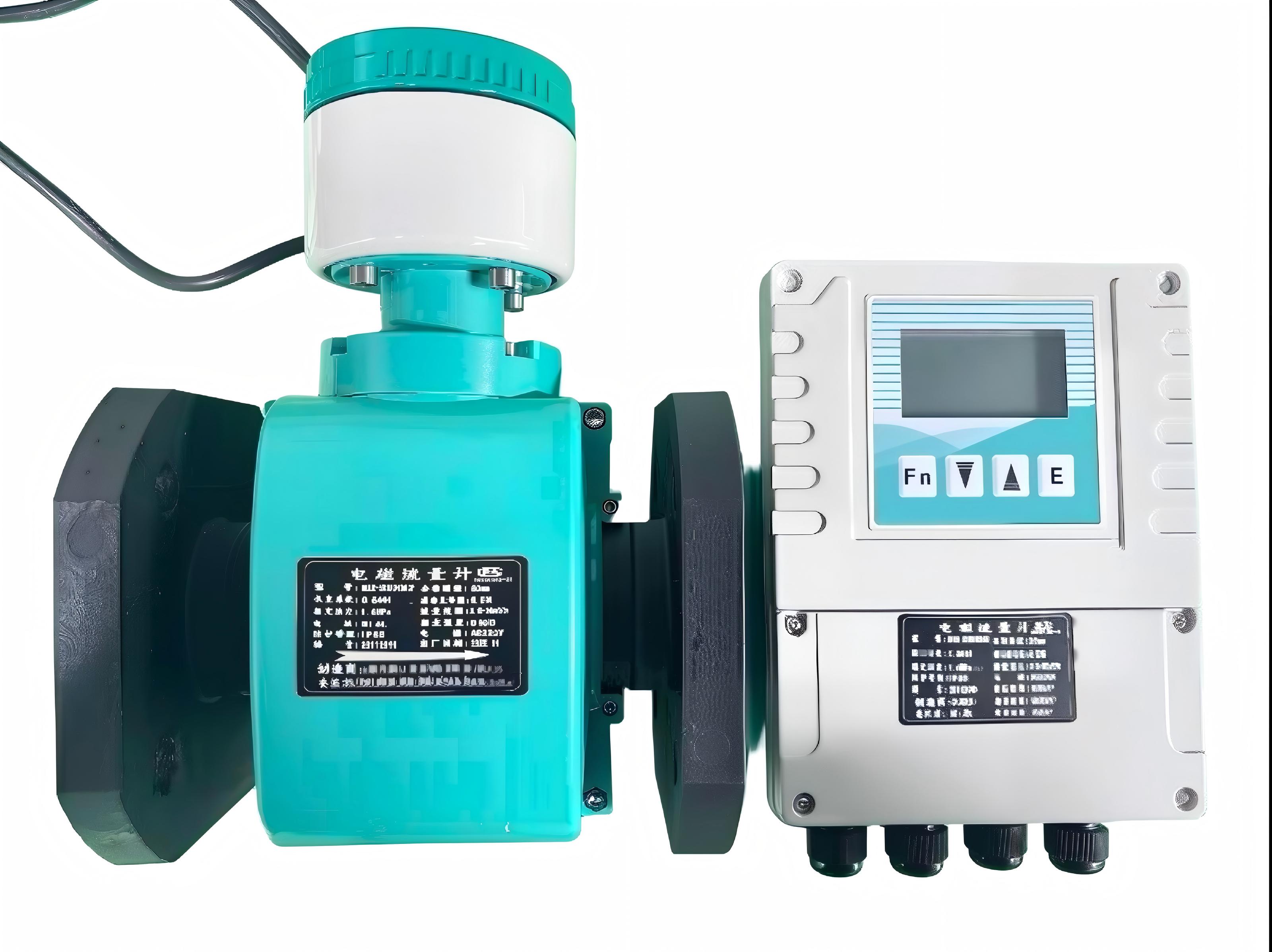
Home / Products / Split-Type Electromagnetic Flow Meter | IP68 ±0.5%
Back to Products
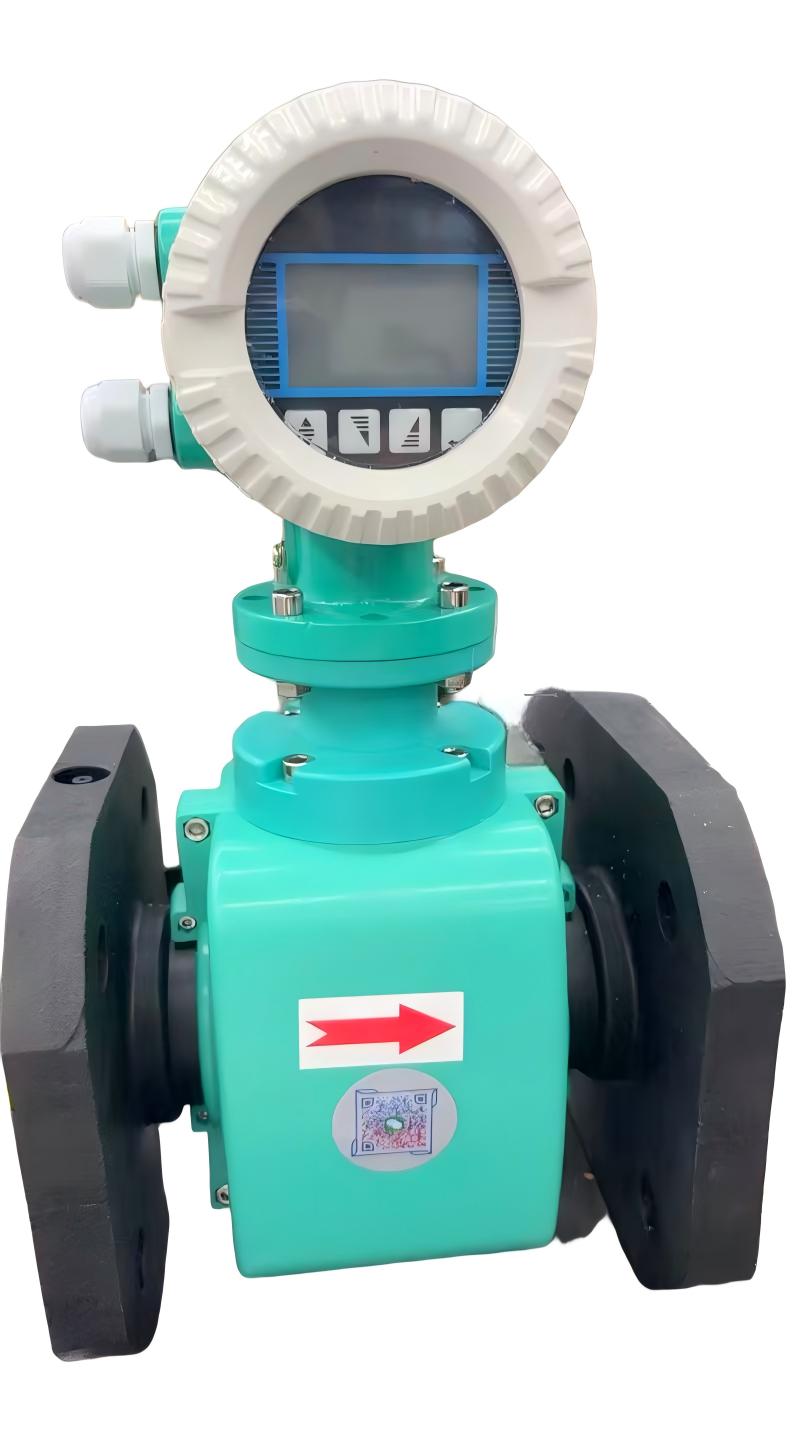
Split-Type Electromagnetic Flow Meter | IP68 ±0.5%
Flow Meters

Split-Type Electromagnetic Flow Meter | IP68 ±0.5%

Ecolor's self-developed split-type electromagnetic flowmeter, made from aerospace-grade polymer material, is suitable for flow measurement and control...

Key Features

Measurement section is integrally injection-molded with aerospace-grade long glass fiber reinforced composite material LGF-PA66 (material can be customized per customer requirements)
No welding process, fundamentally eliminating inherent magnetic interference of metal pipe sections
Integrally injection-molded embedded electrodes with excellent waterproof and corrosion resistance
Excitation coil adopts modular structure, effectively reducing winding deviation and ensuring stable product performance
Transmitter head uses self-developed advanced algorithm with fast response, meeting high standards, featuring high measurement accuracy, stable repeatability and linearity
With superior performance, cost is only half of comparable domestic products

Key Features

Measurement section is integrally injection-molded with aerospace-grade long glass fiber reinforced composite material LGF-PA66 (material can be customized per customer requirements)
No welding process, fundamentally eliminating inherent magnetic interference of metal pipe sections
Integrally injection-molded embedded electrodes with excellent waterproof and corrosion resistance
Excitation coil adopts modular structure, effectively reducing winding deviation and ensuring stable product performance
Split-type version protection rating: IP68 (waterproof)
Transmitter head uses self-developed advanced algorithm with fast response, meeting high standards, featuring high measurement accuracy, stable repeatability and linearity
With superior performance, cost is only half of comparable domestic products
With IP68 highest protection rating and CNC integrated forging process, this flowmeter can work stably in humid, submerged conditions and long-term withstand high pressure and corrosive media, a reliable choice for industrial sites
Sensor and measurement section integrated seamless structure, completely eliminating leakage risk
Coil adopts modular design for quick replacement, easier maintenance
Standard RS485 communication function for easy system integration and remote monitoring
Suitable for various conductive liquids and solid-liquid two-phase flows, wide range of applications
No obstruction inside measurement pipe, no pressure loss, low requirement for straight pipe sections

Split-Type Electromagnetic Flow Meter Overview

The split-type electromagnetic flow meter developed by Ecolor is a volumetric flow measurement instrument for conductive liquids, built around an aerospace-grade polymer measuring section and a separately mounted transmitter head. The measuring section is integrally injection-molded from LGF-PA66, a long glass fiber reinforced composite material, which gives the split-type electromagnetic flow meter excellent waterproof and corrosion-resistant properties while avoiding the magnetic interference typical of metal pipe sections. With a measurement accuracy of ±0.5% (DN50-100), IP68 protection for the split-type version and standard RS485 communication, the instrument is designed for flow measurement and control in chemical additives, sponge city projects, water supply and drainage, irrigation, water treatment, wastewater treatment, paper pulp, slurry, pharmaceutical raw materials and food processes, while its cost is only half of comparable domestic products. In agricultural irrigation projects it serves as an electromagnetic flow meter for irrigation — canal and well water metering with DN10-DN2000 sizing, ±0.5% billing-grade accuracy and optional solar-powered EC32 RTU telemetry.

Working Principle of the Split-Type Electromagnetic Flow Meter

The split-type electromagnetic flow meter operates on the principle of electromagnetic induction. When a conductive liquid flows through the measuring pipe, it passes through the magnetic field generated by the excitation coil, and a voltage is induced in the fluid in proportion to its average flow velocity. Electrodes embedded in the pipe wall detect this signal and send it to the transmitter head, where a self-developed advanced algorithm with fast response converts it into volumetric flow. Because the induced voltage depends on flow velocity alone, the measurement accuracy of the split-type electromagnetic flow meter is not affected by changes in fluid density, viscosity, temperature, pressure or conductivity. The measuring pipe contains no obstructing flow components and no moving parts, so the meter creates no pressure loss and places only low requirements on upstream and downstream straight pipe sections.

Key Features of the Split-Type Electromagnetic Flow Meter

Two core innovations distinguish this split-type electromagnetic flow meter from conventional metal-body designs: the composite measuring section and the integrated mold-casting construction.

  • The measuring section is integrally injection-molded from LGF-PA66 aerospace-grade long glass fiber reinforced composite with no welding process, fundamentally eliminating the inherent magnetic interference of metal pipe sections; the material can be customized per customer requirements.
  • Measuring electrodes are embedded directly during injection molding, providing excellent waterproof and corrosion resistance, while the seamless integrated structure of sensor and measuring section completely eliminates leakage risk.
  • The excitation coil adopts a modular structure that effectively reduces winding deviation, ensures stable product performance and supports quick replacement during maintenance.
  • A dual waterproof sealing structure combined with precision assembly delivers both excellent waterproof performance and the ±0.5% (DN50-100) high-precision measurement standard.
  • The CNC integrated forging process and IP68 protection allow the split-type electromagnetic flow meter to work stably in humid, submerged conditions and to withstand long-term exposure to high pressure and corrosive media.
  • The transmitter head offers stable repeatability and linearity, with self-diagnostic alarm output, empty-pipe detection alarm, flow upper and lower limit alarms and batch control, plus an LCD backlit display readable in direct sunlight or dark rooms.

Technical Specifications of the Split-Type Electromagnetic Flow Meter

Measurement Accuracy

±0.5% (DN50-100)

Protection Rating

IP68

Section Material

LGF-PA66

Communication

RS485

Pressure Loss

None

Construction

No Welding

  • Construction: integral injection molding, no welding, seamless sensor and section integration
  • Excitation coil: modular structure, quick replacement
  • Display: LCD backlit display on the converter
  • Alarm functions: self-diagnostic alarm, empty-pipe detection alarm, flow upper and lower limit alarm, batch control
  • Measurable media: various conductive liquids and solid-liquid two-phase flows
  • Pressure loss: none; obstruction-free measuring pipe; low straight pipe section requirement

Applications of the Split-Type Electromagnetic Flow Meter

In environmental protection projects, the split-type electromagnetic flow meter monitors sewage flow and industrial wastewater discharge, including chemical wastewater and electroplating wastewater lines, supporting discharge control. In urban pipeline networks, it provides real-time monitoring of water supply and drainage flow, offering reliable data support for pipeline operation, maintenance and leakage control, which also suits sponge city construction. In industrial scenarios such as chemical processing and food production, the split-type electromagnetic flow meter enables precise fluid measurement to optimize production, handling chemical additives, paper pulp, slurry, pharmaceutical raw materials and food-grade media. It also serves irrigation, water treatment and agricultural processes, and its suitability for various conductive liquids and solid-liquid two-phase flows keeps broadening the range of possible measurement points.

Installation and Maintenance of the Split-Type Electromagnetic Flow Meter

The composite measuring section makes the split-type electromagnetic flow meter lighter than traditional metal flow meters, which simplifies transport, installation and later maintenance, and its strong corrosion resistance suits harsh environments. In split-type installations the transmitter head can be mounted in a dry, accessible position while the sensor sits in pits, flooded chambers or submerged locations, an arrangement that suits the IP68-rated sensor particularly well. The modular coil design allows maintenance without complete disassembly of the instrument, significantly reducing operational costs, and excellent product consistency with minimal performance fluctuation during batch use reduces on-site calibration requirements. During commissioning, following the low straight-pipe-section guidance and confirming medium compatibility keep the split-type electromagnetic flow meter accurate and stable over a long service life.

? Reference Sources

  • Ecolor Industrial Product Documentation – Split-Type Electromagnetic Flow Meter Specifications
  • Technical Datasheet: LGF-PA66 Composite Material Properties for Flow Measurement Applications
  • Industry Standards for Electromagnetic Flow Meter Accuracy and IP68 Protection Ratings

Contact Us

Need a custom solution? Our engineers are ready to help you design the perfect system.

Get In Touch
Downloads

Parameters of Electromagnetic Flowmeter.pdf
PDF • 602.2 KB
LGF Smart Electromagnetic Flowmeter Operation Manual.pdf
PDF • 705.8 KB

Related Questions

View All
How to select and install electromagnetic flowmeters for agricultural irrigation systems?
View Answer
<p><strong>Electromagnetic flowmeters for agricultural irrigation</strong> require careful selection based on technical specifications and field conditions. Ecolor's LGF series electromagnetic flowmeters are specifically designed for irrigation applications, offering ±0.5% accuracy and superior environmental protection.</p><p>Selection criteria include:<ul><li>Pipe diameter: Choose appropriate size from DN10-DN2000 range, ensuring flow velocity between 0.3-10m/s</li><li>Accuracy requirements: ±0.5% precision meets agricultural billing standards</li><li>Protection rating: IP68 rating withstands harsh outdoor conditions</li><li>Power configuration: Optional EC32 RTU enables solar power and 4G remote monitoring</li></ul></p><p>Installation requires adequate straight pipe sections upstream and downstream, avoiding air bubbles and debris interference, with proper grounding. <strong>Remote type electromagnetic flowmeters</strong> suit pump house installations, while compact types work for surface pipeline metering, integrating with smart irrigation systems for precision water management.</p><p>For mixed-use networks serving both <strong>water supply</strong> and drainage, the LGF series remains a versatile <strong>flow measurement</strong> device — the same meter covers irrigation districts, pump stations and treatment plants without recalibration. Full specifications and irrigation deployment details: <a href="/EN/products/electromagnetic-flow-meter.html">electromagnetic flow meter for irrigation</a> (Ecolor LGF series).</p>
What are the successful application cases of Ecolor Technology's smart water management solutions?
View Answer
<p><strong>Ecolor Technology smart water success cases</strong> span across multiple regions, demonstrating the reliability and advanced performance of LGF electromagnetic flowmeters, radar flowmeters, and monitoring solutions:</p><ul><li><strong>Yangtze River Basin Monitoring</strong>: Deployed 200 units of HZ-KSLF multi-band radar flowmeters for non-contact flow measurement in main and tributary channels, achieving ±2% accuracy for flood control scheduling</li><li><strong>East China Water Supply Network</strong>: Installed 500 LGF split-type electromagnetic flowmeters (DN50-DN800) with EC60 RTU for pipeline leak detection, achieving 12% annual water conservation improvement</li><li><strong>Northwest Irrigation District Upgrade</strong>: Implemented ultrasonic flowmeter + visual fusion radar level meter solutions covering 150,000 acres, improving irrigation efficiency by 30%</li><li><strong>Urban Flood Early Warning System</strong>: Deployed radar level meters at 50 flood-prone locations, achieving 15-minute warning response and successfully preventing multiple urban flooding disasters</li></ul><p>These successful implementations showcase Ecolor Technology's technical expertise and extensive experience in smart water management, delivering significant economic and social benefits to clients.</p>
What are the best practices for electromagnetic flowmeter installation in municipal water supply networks?
View Answer
<p><strong>Municipal water supply networks</strong> require precise flow measurement for effective water management and loss prevention. LGF electromagnetic flowmeters offer ±0.5% accuracy across DN10-DN2000 diameter range, making them ideal for urban water distribution systems.</p><ul><li><strong>Proper sizing</strong>: Select flowmeter diameter matching pipe size, ensuring velocity between 0.5-10 m/s</li><li><strong>Installation location</strong>: Choose sites with adequate straight pipe runs (upstream ≥5D, downstream ≥2D)</li><li><strong>Grounding requirements</strong>: Install grounding rings on non-metallic pipes for proper electrical continuity</li><li><strong>Environmental protection</strong>: Use IP68 rated units for underground vault installations</li><li><strong>Remote monitoring</strong>: Integrate with EC32 RTU systems for SCADA connectivity and real-time data transmission</li></ul><p><strong>Water utility management</strong> benefits from accurate flow data enabling leak detection, pressure optimization, and regulatory compliance reporting.</p>
What are the differences between Doppler radar flowmeter and electromagnetic or ultrasonic flowmeters?
View Answer
<p><strong>Doppler radar flowmeters</strong> offer distinct advantages over traditional flow measurement technologies. Compared to LGF series <strong>electromagnetic flowmeters</strong>, radar flowmeters provide non-contact measurement, eliminating pipeline installation requirements and maintenance issues, especially beneficial for large diameter open channel applications.</p><p>Key differences from <strong>ultrasonic flowmeters</strong> include:</p><ul><li>Measurement method: Radar uses microwave non-contact measurement, while ultrasonic requires contact or proximity to the medium</li><li>Environmental adaptability: Radar is unaffected by water turbidity, ultrasonic is sensitive to particle interference</li><li>Installation convenience: Radar mounts above channels, ultrasonic requires pipe penetration or clamp-on installation</li><li>Measurement range: Radar excels in high-flow open channels, ultrasonic better suited for pipe flow</li><li>Maintenance cost: Radar requires virtually no maintenance, ultrasonic sensors need regular cleaning</li></ul><p>The HZ-KSLF <strong>multi-band radar flowmeter</strong> is ideal for wastewater treatment plants, irrigation channels, and river monitoring, with EC32/EC60 RTU series enabling remote monitoring capabilities.</p>
How to implement intelligent deployment of RTU remote terminals for pressure and flow monitoring in water supply networks?
View Answer
<p><strong>Water supply network RTU deployment</strong> is crucial for smart water management, requiring strategic installation of <strong>RTU remote terminal units</strong> at critical monitoring points. Ecolor Technology's solution includes:</p><ul><li><strong>Pressure monitoring points</strong>: EC32 series RTU installation at main and branch pipeline intersections for real-time pressure data</li><li><strong>Flow measurement stations</strong>: Integration with LGF electromagnetic flowmeters for regional water consumption monitoring</li><li><strong>Pump station automation</strong>: EC60 series RTU controlling pump operations for optimized water dispatch</li><li><strong>Leak detection</strong>: Advanced pressure and flow data analysis for timely leak identification</li><li><strong>Data transmission</strong>: 4G wireless communication ensuring real-time data upload to control centers</li></ul><p><strong>Intelligent deployment strategy</strong> should consider network topology, user distribution, and historical failure points to achieve comprehensive network monitoring coverage and operational efficiency.</p>
How do RTU remote terminals achieve precision irrigation control in irrigation district automation systems?
View Answer
<p><strong>Irrigation district RTU applications</strong> represent the core technology for modern precision agriculture, enabling intelligent water resource management through <strong>RTU remote terminals</strong>. Ecolor Technology's irrigation solutions feature:</p><ul><li><strong>Multi-point monitoring</strong>: Distributed EC32 series RTU deployment for soil moisture and weather parameter monitoring</li><li><strong>Flow measurement</strong>: Integration with ultrasonic or electromagnetic flowmeters for precise irrigation water metering</li><li><strong>Gate control</strong>: EC60 series RTU automatic control of electric gate openings for flow regulation</li><li><strong>Solar power supply</strong>: Ultra-low power design suitable for remote areas without grid power, reducing maintenance costs</li><li><strong>Remote scheduling</strong>: 4G communication supporting mobile app remote monitoring and control</li><li><strong>Data analytics</strong>: Historical data analysis for irrigation strategy optimization and improved water use efficiency</li></ul><p><strong>Precision irrigation control systems</strong> through RTU terminals enable on-demand water supply, ensuring crop growth requirements while preventing water resource waste.</p>