The Hidden Liability in Your Water Network: Deconstructing the True Cost of Lined Flowmeters
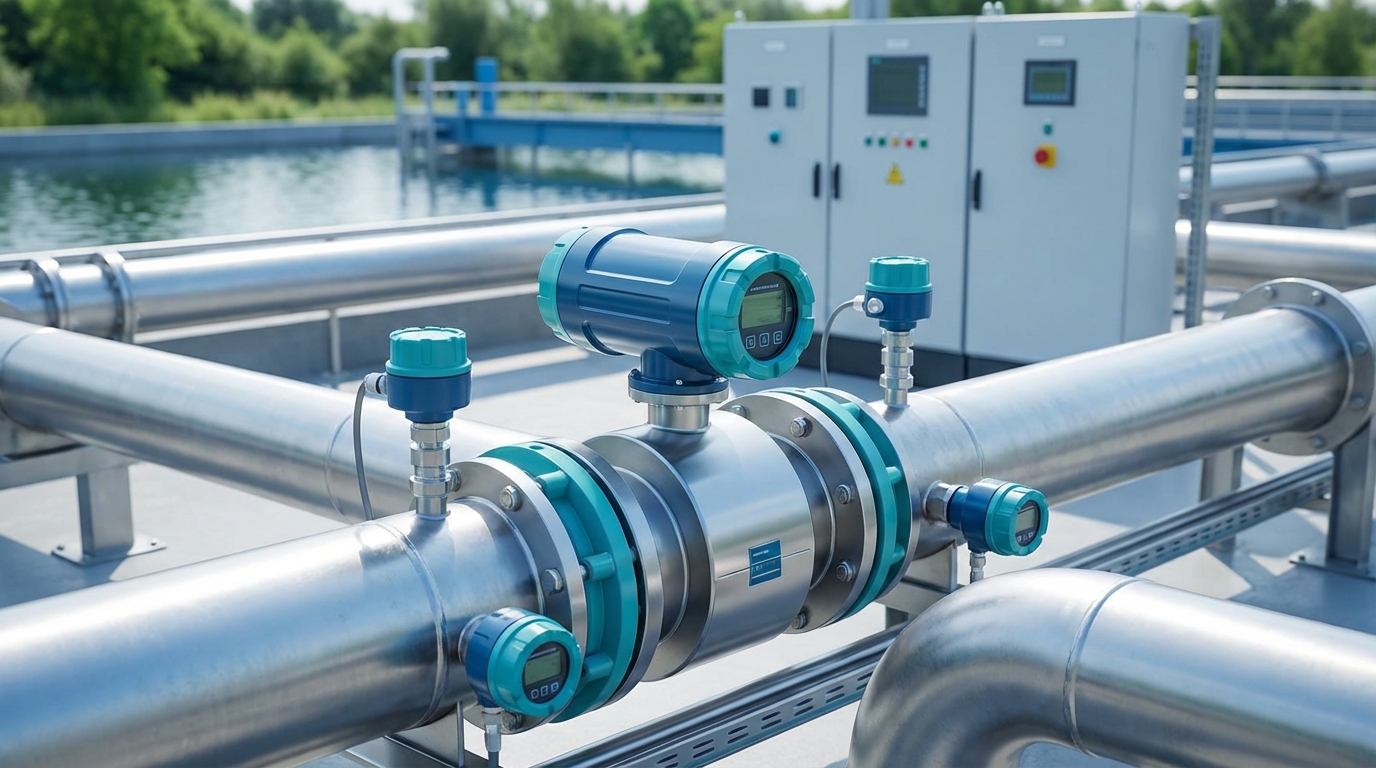
In the world of water management, from municipal utilities to industrial processing, the mantra is simple: accuracy and reliability. Every drop of water must be accounted for, monitored, and managed. The electromagnetic flowmeter is the workhorse of this domain, a critical instrument for ensuring precise measurement. However, the very environments these meters operate in—carrying everything from potable water to corrosive industrial effluent—present a persistent and costly challenge: corrosion. For decades, the industry's go-to solution has been the lined pipe, with materials like Polytetrafluoroethylene (PTFE) and rubber serving as a barrier between the fluid and the meter's metal body. This approach, while functional on the surface, conceals a fundamental weakness—a hidden liability that quietly inflates total cost of ownership (TCO) and introduces significant operational risk. The liner itself, designed to be the solution, often becomes the point of failure.
The Achilles' Heel of Traditional Design: Why PTFE Liners Fail
PTFE, often known by its brand name Teflon, is celebrated for its chemical inertness and low-friction surface. It seems like an ideal candidate for lining pipes and instrumentation. However, the reality of its application in a composite structure—a plastic liner inside a metal housing—is far more complex and problematic. The core issue, as experts in industrial piping solutions have pointed out, lies in fundamental physics. As one analysis from piping specialists at YOUFUMI highlights, the metal body of a flowmeter and its PTFE liner expand and contract at vastly different rates when exposed to temperature changes. This phenomenon, known as differential thermal expansion, creates constant stress at the interface between the two materials.
What does this mean for a water utility engineer or a plant manager? It means that flange joints, which rely on consistent pressure to maintain a seal, can loosen over time. This isn't a hypothetical risk; it's an operational certainty that necessitates a cycle of costly, preventative maintenance. To counteract the loosening caused by thermal cycling, periodic maintenance checks are required to ensure the bolt torque on PTFE-lined pipe flanges remains within specification. This translates directly into scheduled downtime, increased labor costs, and the persistent risk of leaks if a check is missed. Over the typical 10-15 year lifespan of a traditional flowmeter, these accumulated maintenance expenses can significantly bloat the instrument's TCO, far exceeding its initial purchase price.
The ultimate failure mode is even more catastrophic: delamination. Over years of thermal stress, chemical exposure, and pressure fluctuations, the bond between the liner and the metal body can weaken and fail. The PTFE liner can blister, tear, or detach completely, falling into the flow path. This not only causes a total failure of the flowmeter, leading to inaccurate or zero readings, but it also creates a physical obstruction that can damage downstream equipment like pumps and valves. For any operation relying on regulatory compliance or precise process control, such a failure is unacceptable.
A Market of Compromises: From Rubber Liners to Niche Polymers
The challenges with PTFE are not an isolated issue. The broader market for anti-corrosion materials has long been a landscape of compromises. Rubber liners, another common choice, are more flexible than PTFE but suffer from their own set of vulnerabilities. They are prone to aging, hardening, and cracking over time, especially when exposed to disinfectants like chlorine or other oxidizing chemicals common in water treatment. Abrasion from particulates in the water can also wear them down, leading to a similar end-of-life scenario as PTFE delamination.
In response, the industry has explored other advanced polymers. Materials like PVDF (Polyvinylidene Fluoride), as seen in specialized ball valves designed for highly corrosive applications, offer exceptional chemical resistance. However, fabricating large, complex geometries like a flowmeter body from these materials can be difficult and expensive, often limiting their use to smaller, high-value applications. The discussion around lined components can be nuanced; for instance, composite PTFE-lined bushings are engineered for low-maintenance, self-lubricating roles in mechanical systems. In such static, low-pressure applications, a liner can perform admirably. But the dynamic, high-pressure, and thermally variable environment inside a water main is an entirely different battlefield. The mistake is assuming that a material's success in one context guarantees its suitability in another, far more demanding one.
This reliance on multi-part, lined construction reflects a broader trend seen across technical industries—a slow migration away from solutions that require assembly and maintenance towards integrated, inherently reliable designs. An interesting parallel can be drawn from the world of analytical chemistry. As noted in a review of gas chromatography accessories, seasoned chemists have largely abandoned manually prepared components in favor of 'prepacked deactivated inlet liners' to ensure consistency and reliability. The principle is the same: why tolerate a known point of failure when technology allows you to engineer it out of the system entirely?
The Paradigm Shift: Ecolor's Liner-Free LGF Polymer Flowmeter
This is precisely the leap forward that Ecolor Technology has achieved with its SITUMAN brand of electromagnetic flowmeters. Instead of trying to perfect the imperfect concept of a liner, Ecolor has eliminated it. The solution is a revolutionary approach to material science and manufacturing: a liner-free anti-corrosion flowmeter built from an aerospace-grade composite.
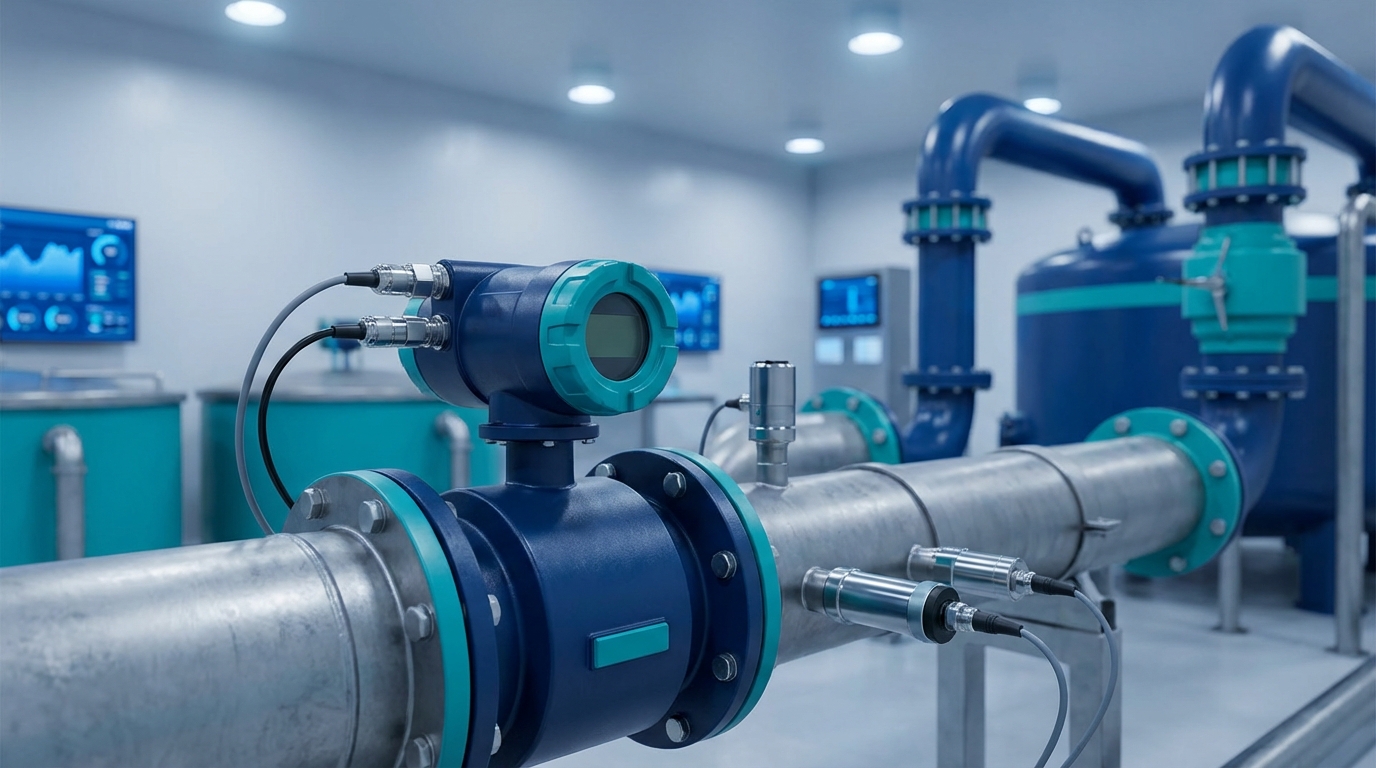
The core of this innovation is LGF-PA66 (Long Glass Fiber-reinforced Polyamide 66), a high-performance polymer composite. Using a state-of-the-art, one-piece injection molding process, Ecolor creates a complete flowmeter sensor body that is homogenous and seamless. There are no welds, no seams, and most importantly, no liner. The material that resists corrosion is the same material that provides the structural integrity of the meter. This elegant design choice directly neutralizes the fundamental flaws of traditional lined meters:
- Elimination of Delamination Risk: With no liner to detach, the most common and catastrophic failure mode of anti-corrosion flowmeters is completely designed out of the system.
- Immunity to Differential Thermal Expansion: As a single, homogenous body, the flowmeter expands and contracts uniformly. This ensures flange seals remain secure without the need for periodic bolt retorquing, drastically reducing maintenance requirements.
- Unmatched Durability and Lifespan: The LGF-PA66 composite boasts exceptional mechanical strength, pressure resistance, and chemical inertness. This robust construction provides a design life of 20 years, offering true maintenance-free performance for the meter body and peace of mind for asset managers.
- Superior Chemical Resistance: The polymer matrix is inherently resistant to a wide spectrum of chemicals found in municipal and industrial water, ensuring long-term stability and measurement accuracy without degradation.
Redefining Total Cost of Ownership and Reliability
For procurement managers and utility engineers, the implications of this technology are profound. The decision to invest in a flowmeter can no longer be based on initial purchase price alone. A true assessment must consider the Total Cost of Ownership, where Ecolor's LGF polymer flowmeter presents a compelling financial and operational advantage.
Traditional Lined Flowmeter TCO:
Initial Purchase Cost + (Annual Labor for Maintenance Checks x 15 years) + Cost of Downtime for Servicing + High Risk of Mid-Life Replacement Cost due to Liner Failure.
Ecolor LGF Polymer Flowmeter TCO:
Initial Purchase Cost + Near-Zero Maintenance Cost for Meter Body over 20 years.
The value proposition extends far beyond cost savings. It is about de-risking a critical component of your infrastructure. A reliable flowmeter ensures accurate billing, supports water conservation efforts, guarantees regulatory compliance, and optimizes process efficiency. The promise of a 20-year maintenance-free lifespan is not just a feature; it's a strategic advantage that allows water professionals to shift resources from reactive maintenance to proactive system improvements. It allows you to truly "See What You Measure" with confidence, year after year.
The evolution of industrial materials is clear: from simple metals, to complex lined assemblies, and now to integrated, high-performance composites. For water infrastructure, this evolution marks the end of the compromised, maintenance-heavy era of the lined pipe. Ecolor Technology's liner-free LGF polymer flowmeter isn't just an improvement; it's the new standard for anti-corrosion flow measurement. To future-proof your network and eliminate the hidden costs of liner failure, exploring this next generation of instrumentation is a critical step forward. To learn more, visit us at www.cssoc.com.
Sources
- PTFE Lined Pipe Bolt Torque Specs for Sealing | YOUFUMI
- Composite PTFE-Lined Bushings: Complete Technical Specifications For Engineering Applications | VIIPlus
- PTFE Ball Valve and range of PTFE Instrumentation Valves | FAV
- Essential GC Accessories | LCGC International
- China Ptfe Teflon Oven Liner, Ptfe Teflon Oven Liner Wholesale, Manufacturers, Price | Made-in-China.com
Recommended Products
Ecolor Technology provides professional instruments for smart water, environmental monitoring & industrial automation: