In-Depth Analysis: Low-Carbon Industrial Parks Advance Toward High-Quality Development as Digital & Intelligent Technologies Reshape the Industrial Ecosystem
The challenges posed by global climate change are increasingly severe. The "Dual Carbon" goals have long moved beyond macro-level visions and are now deeply integrated into, and reshaping, micro-level industrial landscapes. As the primary engine of regional economic development, industrial parks host a vast array of industrial production and commercial activities. Industry data indicates that thousands of national and provincial-level industrial parks across China contribute over half of the nation's industrial output value, while simultaneously serving as concentrated hubs for energy consumption and critical sources of greenhouse gas (GHG) emissions. In essence, effectively managing carbon emissions at the park level is the critical leverage point for industrial decarbonization.
Currently, the development of low-carbon parks has transitioned from early conceptual advocacy and isolated pilot projects into a new phase of comprehensive implementation and high-quality development. Extensive emission reduction models are being phased out, replaced by refined, data-driven, and systematic green operational logic. Driven by evolving policy directives, upgrading market demands, and leapfrog advancements in underlying digital and intelligent technologies, the industry ecosystem for low-carbon parks is undergoing a profound restructuring.

I. Maturing Policy Frameworks and Standards Leading the Zero-Carbon Transition of Parks
A dense array of policy documents issued at both national and local levels has established the top-level design for the green and low-carbon development of industrial parks. Past environmental policies largely focused on end-of-pipe treatment, emphasizing singular energy-saving or emission-reduction targets. Today's policy orientation has shifted toward systematic thinking, explicitly mandating the coordinated advancement of carbon reduction, pollution control, ecological expansion, and economic growth. This shift means park administrators can no longer rely on piecemeal, reactive governance measures; instead, they must establish comprehensive, holistic carbon management strategies.
A clear signal from the policy front is the comprehensive transition from dual control of energy consumption to dual control of carbon emissions. Standard systems for carbon emissions at the park level are being rapidly implemented, with numerous regions successively releasing evaluation guidelines for zero-carbon/low-carbon park construction.
These policies not only establish quantitative assessment indicators for green development but also impose extremely stringent regulatory requirements on GHG emission control, carbon inventory reporting, and third-party verification. The development of low-carbon parks has thoroughly moved past the shallow waters of "spontaneous exploration" and fully entered the deep waters where "compliance-driven" and "standard-led" approaches carry equal weight.
In this wave of compliance, parks equipped with robust carbon management systems will gain a significant competitive advantage. When vying for national special policy subsidies or securing low-interest green financing, transparent carbon data serves as the strongest "credit endorsement." Meanwhile, in the fiercely competitive landscape for investment attraction, parks capable of providing high-quality green energy and low-carbon supporting services are more likely to be favored by advanced manufacturing sectors and multinational corporations.
II. Escalating Market Demand and the Consensus on Full-Lifecycle Carbon Management
Market-side demand is undergoing intense disruption and reshaping. In recent years, park management's understanding of carbon reduction was often confined to isolated physical retrofits, such as replacing LED lighting, upgrading aging HVAC pumps, or installing distributed photovoltaic panels on factory roofs. While effective, these measures prove increasingly inadequate against the backdrop of a complex international trade environment and stringent supply chain requirements.
International trade carbon barriers are becoming increasingly prominent. The implementation of the EU Carbon Border Adjustment Mechanism (CBAM) has imposed direct cost pressures on domestic export-oriented enterprises in sectors such as steel, aluminum, and cement. Concurrently, ESG (Environmental, Social, and Governance) principles have fully permeated the core strategies of large enterprises. Multinational anchor enterprises like Apple and Tesla are imposing strict "green power ratio" and "carbon neutrality" timelines on their suppliers, requiring disclosure not only of Scope 1 (direct) and Scope 2 (indirect) emissions data, but increasingly mandating the tracing of Scope 3 (value chain upstream and downstream) carbon footprints.
The demand for supply chain carbon reduction from export-oriented and listed enterprises operating within parks has surged exponentially. This pressure rapidly transmits upward, forcing park administrators to break away from traditional "rent collection and landscaping" property management models and transition toward "green empowerment services." Enterprises require parks to provide precise carbon emission data support, green power trading channels, and carbon neutrality certification services. Comprehensive low-carbon park solutions that integrate underlying data sensing, mid-tier data accounting, and top-level carbon asset operations are rapidly becoming essential market products.
III. Deep Integration of Digital & Intelligent Technologies to Build a Precise and Efficient Carbon Management Foundation
The evolution of any business model relies on underlying technological support. The deep integration of next-generation information technologies like IoT, big data, and AI with energy and environmental management is the core driving force for breaking through low-carbon park development bottlenecks. Traditional carbon inventories heavily rely on manual collection of electricity bills and procurement invoices, followed by conversion using emission factors. This "calculated carbon" model is not only time-consuming and labor-intensive but also suffers from data lag and high error rates, making it highly susceptible to data integrity risks during international audits. The introduction of digital and intelligent technologies is propelling park carbon management genuinely toward digitalization, intelligence, and refinement.
1. Underlying Sensing Layer: The Leap from "Calculated Carbon" to "Measured Carbon"
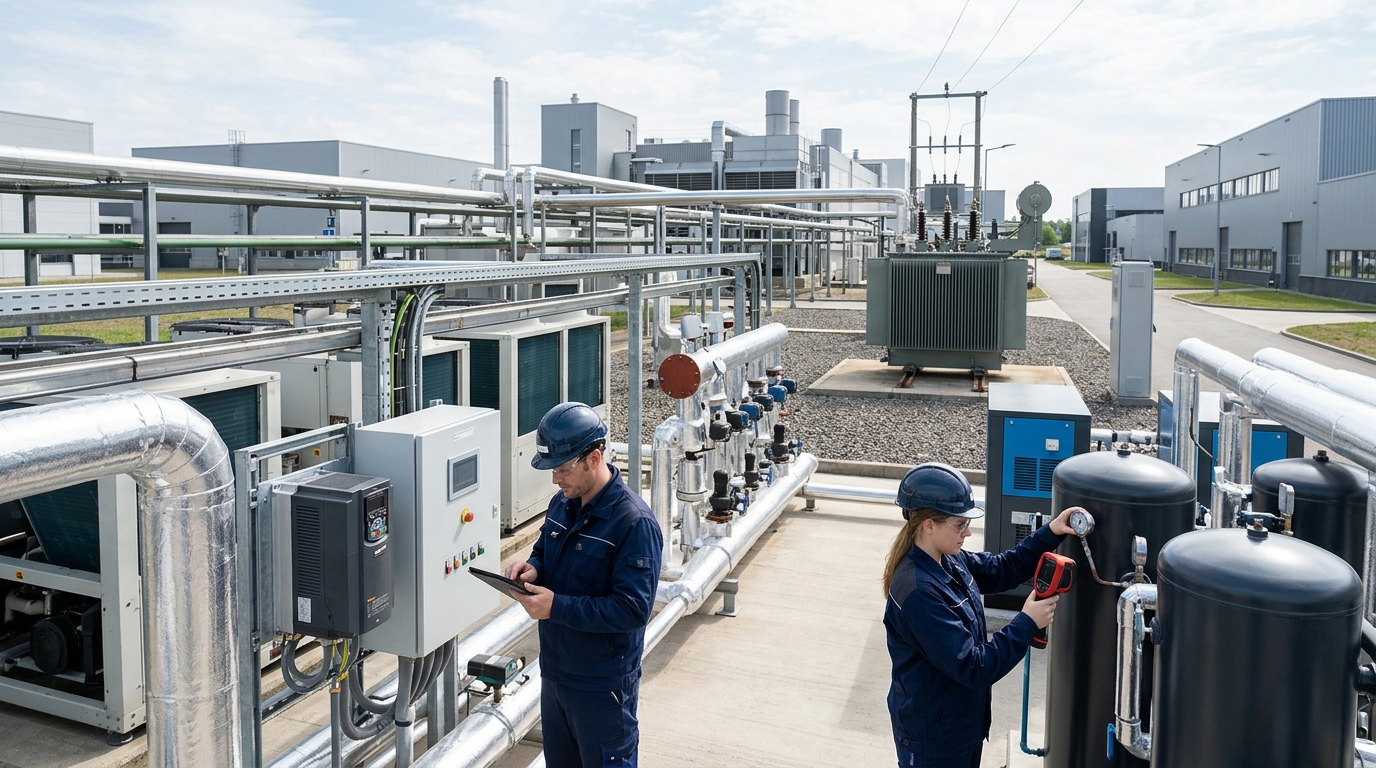
Online monitoring technologies for greenhouse gases are becoming standard infrastructure for modern industrial parks. By deploying high-precision smart sensors and Industrial IoT (IIoT) gateways at critical nodes, parks achieve comprehensive digital mapping of the physical world. At major emission sources (e.g., gas boilers, industrial kilns, chemical plant stacks), Continuous Emission Monitoring Systems (CEMS) can capture real-time concentrations and flow rates of key GHGs like carbon dioxide and methane. For fugitive emission areas and the overall microenvironment, grid-based micro-monitoring stations provide around-the-clock environmental background data. This continuous, dynamic, high-frequency data collection method completely eliminates the lag associated with manual meter reading and periodic inventories, ensuring the authenticity, completeness, and exceptional timeliness of underlying carbon data.
2. Data Processing & Application Layer: AI-Driven Carbon Footprint Traceability
Acquiring massive data is only the first step; a scientific and rigorous carbon accounting system serves as the "brain" for parks to achieve low-carbon operations. Leveraging continuous monitoring data aggregated via IoT gateways, combined with cloud computing infrastructure and AI algorithms, parks can establish dynamic digital twin models for carbon emissions. Equipped with mainstream domestic and international carbon accounting standards (e.g., ISO 14064, GHG Protocol), the system automatically handles complex factor matching and accounting tasks, significantly reducing compliance costs.
Of greater commercial value, the digital-intelligent platform can precisely map the carbon footprints of individual enterprises, production lines, and even specific product batches within the park. Through full-chain tracking and traceability of energy and material flows, the system automatically generates intuitive carbon emission heatmaps. Park administrators and resident enterprises can clearly identify high-energy-consuming "carbon hotspots," enabling targeted interventions. They can then formulate the most cost-effective emission reduction strategies, such as process optimization, equipment replacement, or waste heat recovery, transforming "blind carbon reduction" into "precision carbon reduction."
IV. Future Outlook: Building an Ecological Closed Loop of Microgrids and Carbon Neutrality
Looking beyond current frameworks to the future, low-carbon parks will no longer be merely physical industrial carriers; they will evolve into highly autonomous, self-optimizing green micro-ecosystems. The production, consumption, and trading of energy will form a perfect closed loop within this micro-ecosystem.
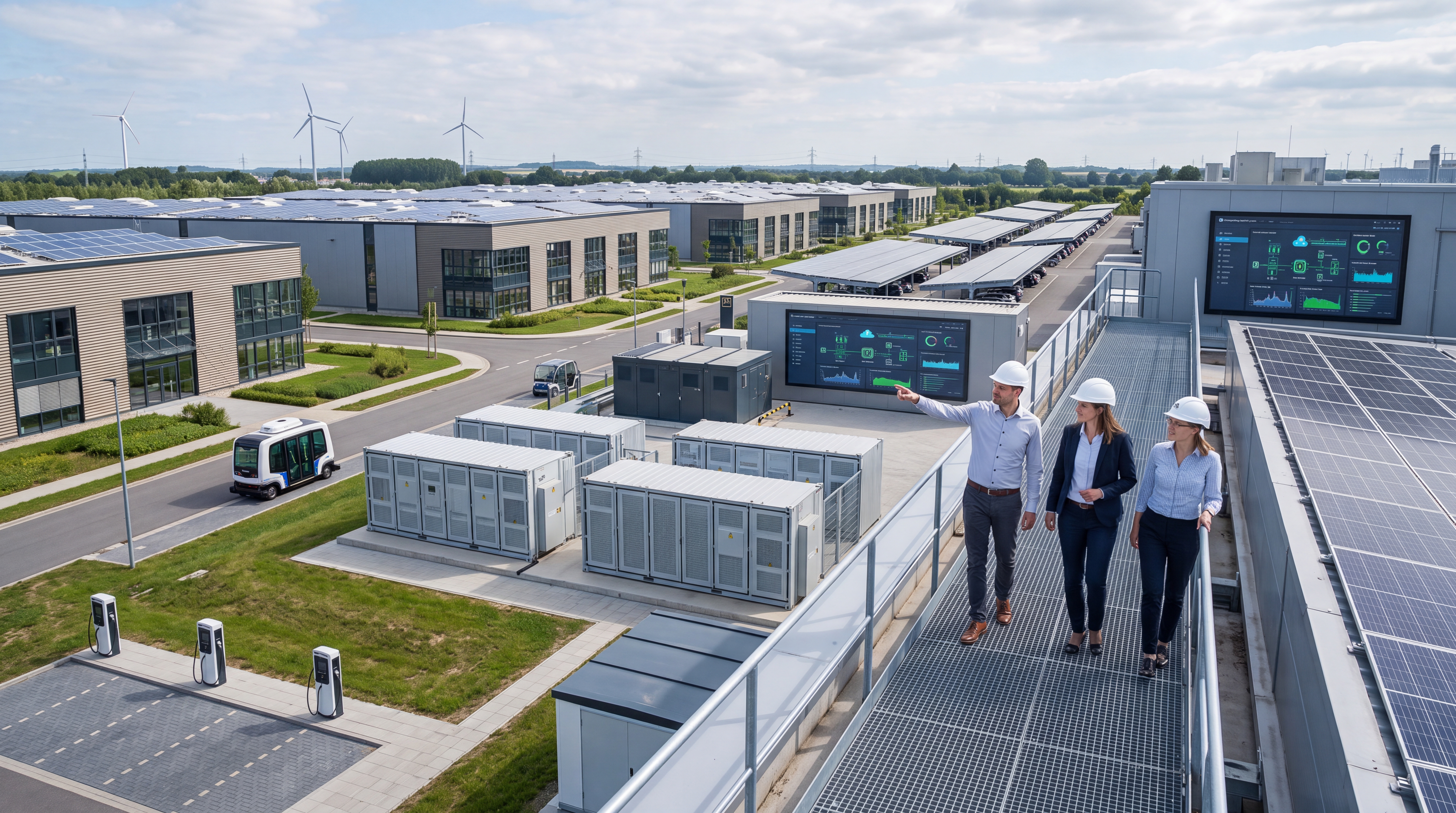
The construction of integrated source-grid-load-storage microgrids, alongside the widespread application of Virtual Power Plant (VPP) technology, serves as the core pillar of this vision. Parks are no longer mere energy consumers but "prosumers" integrating photovoltaic generation, energy storage facilities, and flexible loads. Through intelligent dispatch systems, parks can discharge stored energy or shed non-critical loads during peak grid demand, and absorb surplus green power during off-peak periods, achieving higher rates of green power self-sufficiency and regional energy mutual support.
The continuous expansion of the national carbon trading market (gradually extending from the power sector to building materials, steel, non-ferrous metals, and others) will further highlight the carbon asset management attributes of parks. In the future, digital carbon management platforms will serve not only as compliance tools for regulatory adherence but also as the park's "green ledger" and potential "revenue generation center." Through full-process refined carbon asset operations, parks can not only mitigate compliance default risks but also convert carbon allowances saved through energy-saving technological upgrades and green power substitution into tangible revenue in the carbon market, achieving a win-win for both environmental and economic benefits.
Conclusion
The development of low-carbon parks is by no means an overnight endeavor; it is a long-term, systemic transformation deeply interwoven with policy directives, market dynamics, and technological innovation. In this irreversible era, high-frequency, accurate online GHG monitoring networks form an indispensable foundation, while scientific, dynamic carbon accounting and footprint management serve as the critical leverage for breakthroughs. Only by proactively embracing Industrial IoT and digital-intelligent technologies, and constructing a full-chain, transparent, and traceable carbon management system, can industrial parks build a robust moat in the future green economy wave, truly advancing toward zero-carbon, intelligent, and sustainable high-quality development.
Learn More
Visit https://www.cssoc.com or call 400-808-9114 to obtain customized low-carbon management solutions for your industrial park.
Reference Sources
- Ecolor Technology Internal Industry Research Reports & Market Observations
- NDRC & NEA "Guiding Opinions on Promoting New Industrialization and Green Low-Carbon Development of Industrial Parks"
- MEE "Notice on Carrying Out the Construction of Greenhouse Gas Emission Monitoring and Accounting Systems"