Energy-Saving Procurement and Maintenance for Industrial Parks: How Much Does an Energy-Saving Retrofit Cost?
Energy conservation in industrial parks is moving from single-equipment upgrades toward system-level energy efficiency optimization and long-term operations. As load structures for electricity, steam, compressed air, cooling, and lighting become more complex, the impact of park energy costs on profitability continues to grow.
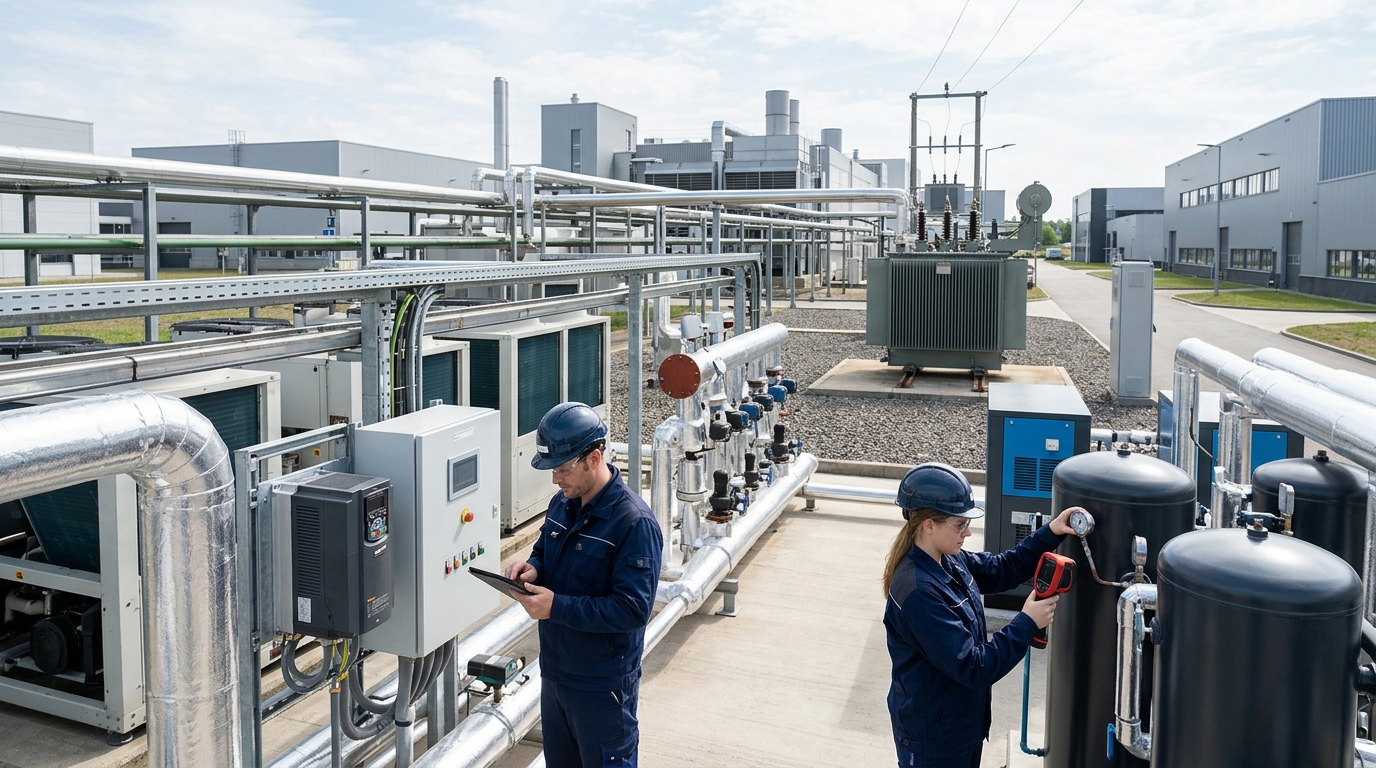
Driven by mechanisms such as energy efficiency audits, energy-saving retrofits, and Energy Performance Contracting (EPC), the investment logic for energy conservation in industrial parks is also changing. Companies no longer focus only on equipment unit prices but pay more attention to baseline energy consumption, energy-saving rates, payback periods, maintenance costs, and the accuracy of carbon emission accounting.
For park operators, energy-saving retrofits are both a means to reduce energy costs and an important tool to enhance competitiveness in attracting tenants, meet green park assessment requirements, and respond to peak-valley electricity tariff fluctuations.
I. Industrial Park Energy Conservation Demand Is Shifting from an “Option” to a “Must”
Energy consumption in industrial parks is characterized by strong continuity, concentrated loads, high system coupling, and limited retrofit windows. The annual electricity consumption of a mid-sized park commonly ranges from 30 million to 150 million kWh. In some parks dominated by cooling, compressed air, heating, and automation equipment, energy costs can account for 10% to 25% of production costs.
Load Structure Variations
- Electronics Manufacturing: Sensitive to clean HVAC, compressed air, and power quality.
- Food & Pharma: Focus on steam, cooling, and waste heat recovery.
- Machining: Heavy use of motors, welding machines, air compressors, and cranes.
Market Potential
The comprehensive energy-saving potential of mature industrial parks typically ranges from 8% to 20%.
For a park with a CNY 50 million annual electricity bill, a 10% saving rate unlocks CNY 5 million in annual savings. Adding steam and compressed air optimizations can yield even higher benefits.
However, energy-saving potential is not equivalent to immediately realizable benefits; it requires energy efficiency audits, equipment selection, operating strategies, and operations and maintenance management. This is why industrial park energy conservation projects have shifted from “equipment procurement” to “system services.”
II. Energy Efficiency Audits Are Becoming a Prerequisite
The core purpose of an audit is not to identify “which equipment is obsolete,” but to recognize “where recoverable waste exists.” Audit subjects generally include equipment registers, energy metering, operating curves, load factors, peak-valley distribution, compressed-air leakage, steam trap status, cooling system COP, motor load factors, and data completeness.
Retrofits without audits can easily fall into the problem of “single-point investments without overall optimization.” For example, after replacing high-efficiency motors, if the load factor remains below 30%, actual energy-saving effects may be inferior to variable-frequency retrofit or system matching optimization.
| Audit Scope Example | Key Metrics to Check |
|---|---|
| Compressed Air | Actual specific power, pipeline pressure, dew point, terminal leakage rate, load/unload frequency. |
| Steam Systems | Steam trap leakage rates, condensate recovery rates, insulation heat losses, boiler thermal efficiency. |
| Cooling Systems | Chiller load factors, pump VFD control, cooling tower approach temperature, group-control strategies. |
Audit Fees: Basic audit fees often range between CNY 50,000 and CNY 200,000. If temporary metering instruments must be installed for continuous data collection (7–30 days) and a bankable report produced, costs may reach CNY 200,000 to CNY 500,000.
III. Price Ranges of Major Energy-Saving Products and Solutions
Prices vary widely based on equipment power, system complexity, installation conditions, brand configuration, and O&M requirements. Below is a breakdown of common market solutions.
High-Efficiency Motors & VFDs
Replacing standard induction motors with IE3/IE4 models.
- Unit Cost: CNY 12k – 80k per motor.
- Project Cost (500kW + VFD): CNY 180k – 350k.
- Note: VFD retrofits for fans/pumps often deliver better value than simple motor replacement due to fluctuating loads.
Compressed-Air Waste Heat Recovery
Recovering 70-80% of compressor input power converted to heat.
- Single Unit: CNY 100k – 300k.
- Multi-Unit System: CNY 500k – 1.5M.
- Payback: Typically 2 – 5 years via hot water/steam savings.
Central HVAC & Cooling
Retrofits range from control optimization to full chiller replacement.
- Control/VFD Only: CNY 150k – 600k.
- Full Replacement: CNY 800k – 3M.
- Savings Rate: 15% – 30% depending on load distribution and climate.
Industrial Lighting (LED)
Replacing metal halide/fluorescent with LED fixtures.
- Cost (per 10k units): CNY 100k – 250k (incl. controls/wiring).
- Savings Rate: 50% – 70%.
- Strategy: Best used as data entry points for smart platforms (zone control/daylight sensors).
Smart Energy Management Platforms
Software and hardware integration for monitoring and analytics.
- Basic Version: CNY 500k – 1.2M.
- Advanced (Carbon/Forecasting): CNY 1.5M – 3M.
- Focus: Interface compatibility, data governance, and upgrade capability over aesthetics.
Distributed PV & Energy Storage
Optimizing energy mix and responding to peak-valley tariffs.
- Rooftop PV: CNY 3 – 4 per watt.
- Storage: CNY 0.8 – 1.5 per kWh capacity.
- 1 MWh Project: CNY 1M – 2M total investment.
IV. Energy Performance Contracting (EPC) Changes Investment Decisions
EPC reduces upfront capital expenditure pressure by having Energy Service Companies (ESCOs) invest and parks share savings. Common models include savings-share and energy fee custody.
Key EPC Parameters
Benefit Sharing
10% – 30% (Savings Share)
15% – 35% (Fee Custody)
Contract Term
Typically 3 – 8 years
(Up to 10 years for complex systems)
Core Challenge
Measurement & Verification (M&V): Isolating savings from production/temp changes.
EPC drives services from “engineering delivery” to “operations delivery.” Mature solutions integrate audits, implementation, platform monitoring, O&M assurance, and accounting into a closed-loop package. Neglecting O&M can lead to declining energy-saving rates after 2–3 years.
V. Procurement Recommendations: From Point Savings to System Optimization
- Avoid Isolated Decision-Making: System matching is key. High-efficiency motors at low load (<30%) may save less than VFD retrofits. Compressors set at high pressure may increase whole-system consumption despite meeting terminal demand.
- Clarify Energy Boundaries: Distinguish public areas, workshops, offices, and utility stations with separate metering. Without clear boundaries, savings attribution and EPC implementation become difficult.
- Prioritize Low-Risk Projects: Start with compressed-air leakage remediation, lighting retrofits, steam trap replacement, and basic group-control optimization. These offer fast paybacks and lower O&M risks.
- Consider Lifecycle Cost (LCC): Electricity often accounts for >60% of a compressor's LCC. Cheap equipment with poor partial-load efficiency or short life increases total cost.
- Plan Construction Windows: Require phased implementation plans and emergency response protocols to minimize production downtime during retrofits involving piping, controls, and interlocks.
Recommended Path: “Audit first, pilot verification, then scale replication.” Verify effects in typical load areas before promoting to other zones to reduce investment risk.
VI. Maintenance Cost Analysis: Long-Term Operation is Key
Annual maintenance costs for industrial park energy-saving projects typically account for 3% to 8% of initial investment. Projects with smart platforms, sensor networks, and energy storage may have higher O&M costs but benefit from predictive maintenance.
Physical Asset Risks
- Heat Exchangers: Scale buildup can reduce waste heat recovery efficiency by 10-20%.
- Compressors: Poor filter/oil maintenance directly increases specific power.
- HVAC: Aging fill/scaling condenser drops COP significantly.
- Steam Traps: Failures cause steam waste and safety risks (water hammer).
Digital Platform Costs
Annual O&M for smart energy platforms: CNY 50k – 300k.
Maintenance involves more than servers; it requires data quality governance. Meter deviations, communication interruptions, and labeling errors affect savings accounting. Establish verification cycles and anomaly response mechanisms.
Personnel Capability: Contracts should specify training duration, operating manuals, and fault response times. If operators are unfamiliar with VFD logic or group control, equipment may remain in manual mode, preventing realized savings.
VII. Typical Park Case Study & Benefit Estimation
Consider a comprehensive industrial park with 80 million kWh annual electricity consumption and 60,000 tons of steam. Pre-retrofit issues included 15% compressed-air leakage, 8% steam trap failure, and simplistic HVAC controls.
| Phase | Action | Investment (CNY) | Expected Impact |
|---|---|---|---|
| I | Air Leakage & Pressure Opt. | ~600,000 | Reduce air elec. use by 5-8% |
| II | Waste Heat & Condensate Rec. | ~1,800,000 | Preheat process/makeup water |
| III | HVAC Group Control & VFD | ~2,600,000 | Improve cooling eff. by 12-20% |
| IV | Motors, VFDs, Lighting | ~4,200,000 | System-wide electrical reduction |
| V | Smart Energy Platform | ~1,200,000 | Sub-metering & Accounting |
| Total | Comprehensive Retrofit | ~10,400,000 | 10-12% Overall Saving |
Financial Outcome: With annual electricity costs of ~CNY 52M and steam costs of ~CNY 15.6M, the project yields CNY 6M – 7.7M in annual savings. The static payback period is approximately 1.4 to 1.7 years.
If EPC is adopted, the service provider might share 25% of benefits while handling O&M and verification, allowing the park to retain 75% of savings with zero upfront capex.
VIII. Outlook: Refined and Digital Stage
The future industrial park energy conservation market will show three trends:
- Shift to Operations: Managing multi-energy complementarity (electricity, steam, air, PV, storage) rather than just equipment renewal.
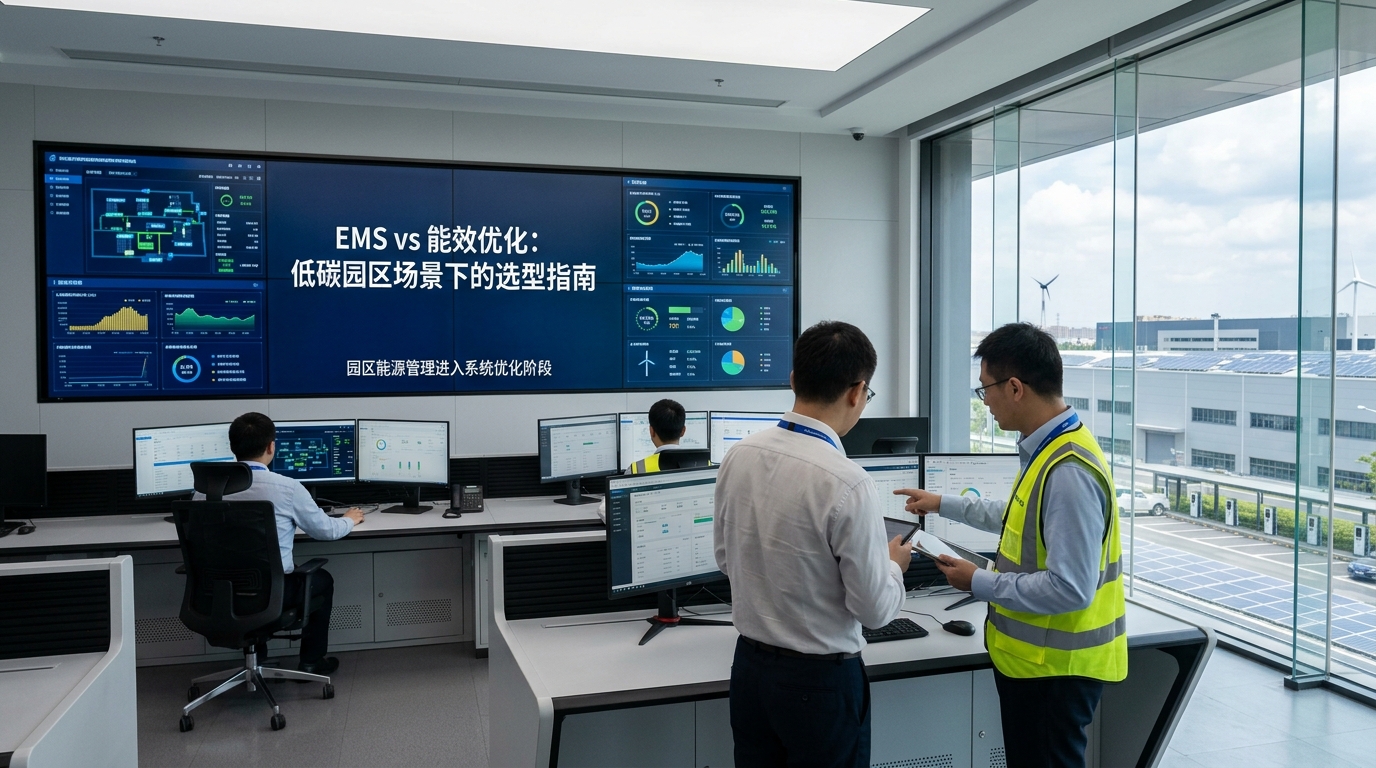
- Digital Measurement: Reliance on real-time metering, edge computing, and carbon accounting for project acceptance.
- Lifecycle Returns: Evaluation criteria expanding beyond payback period to include equipment life, maintenance costs, carbon asset value, and tenant attraction competitiveness.
For park operators, energy-saving retrofits are not an endpoint but a long-term management tool. By connecting audits, EPC, O&M, and data governance, industrial parks can convert energy-saving potential into stable returns.