Low-Carbon Parks Enter the Phase of Refined Management: Carbon Accounting, Online Monitoring, and Policy Synergy Reshape Industrial Competitiveness
Driven by the "dual carbon" goals and industrial upgrading, low-carbon parks are shifting from isolated energy-efficiency retrofits to systemic carbon governance.
From Compliance to Value
Market demand is shifting. Energy-intensive industries seek cost reduction through centralized supply, while export-oriented manufacturers face EU CBAM pressures. Parks providing unified carbon accounting now attract high-end manufacturing and green finance.
The New Infrastructure
Low-carbon parks are evolving into regional "carbon data infrastructure," supporting government regulation, credit approval, and green procurement through standardized, verified data chains.
The Strategic Shift in Park Development
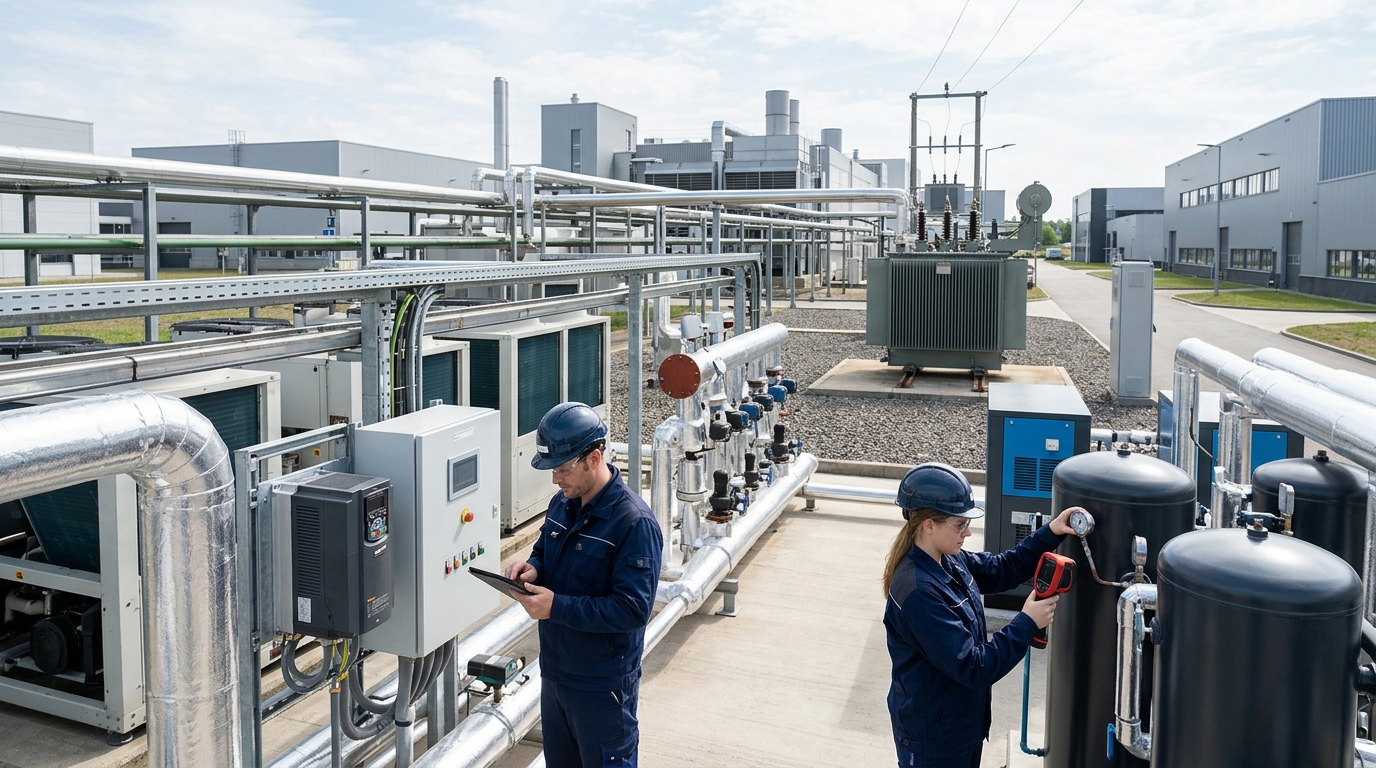
In the past, park development mostly focused on upgrading photovoltaic, lighting, and air conditioning systems. Today, with changes in green supply chains, ESG disclosure, and international economic and trade rules, parks need to simultaneously fulfill functions such as energy optimization, industrial synergy, carbon data management, and green services. Industry consensus is gradually crystallizing: low-carbon parks are not just about reducing energy consumption, but about establishing sustainable operational and accounting systems.
At the market level, the demand for low-carbon parks is shifting from compliance-driven to value-driven. Export-oriented manufacturing enterprises, facing pressure from the EU Carbon Border Adjustment Mechanism (CBAM), customer emission reduction requirements, and Environmental Product Declarations, have higher expectations for park-level carbon services. In the future, parks that can provide unified carbon accounting, online energy monitoring, and carbon footprint support will more easily attract high-end manufacturing, multinational enterprises, and green financial resources.
Carbon Accounting: The Foundational Capability
Traditional parks often suffer from ill-defined enterprise boundaries, scattered energy consumption data, and inconsistent emission factor parameters, making it difficult to compare and track greenhouse gas statistics. In the next stage, park carbon accounting will move from annual estimations to monthly, quarterly, and even real-time management, gradually covering indirect emissions such as purchased electricity and heat, logistics, and waste treatment.
Standardizing boundaries, regulating data collection processes, and introducing third-party verification will become important indicators of the maturity of park carbon management.
Rising Importance of Carbon Footprints
As global supply chains strengthen their requirements for green product certification and full life-cycle emission reduction, parks need to help enterprises generate traceable product-level carbon data. In industries such as electronics, automotive components, chemicals, and new materials, carbon footprints are becoming a critical reference for international procurement and supply chain qualification.
- Data Integration: Integrating energy, materials, processes, and logistics data.
- Online Monitoring: Combining data with real-time monitoring to form a continuous data chain.
- Certification Support: Providing a reliable foundation for product carbon footprint accounting and certification.
Technological Drivers: Online Monitoring & Digital Twins
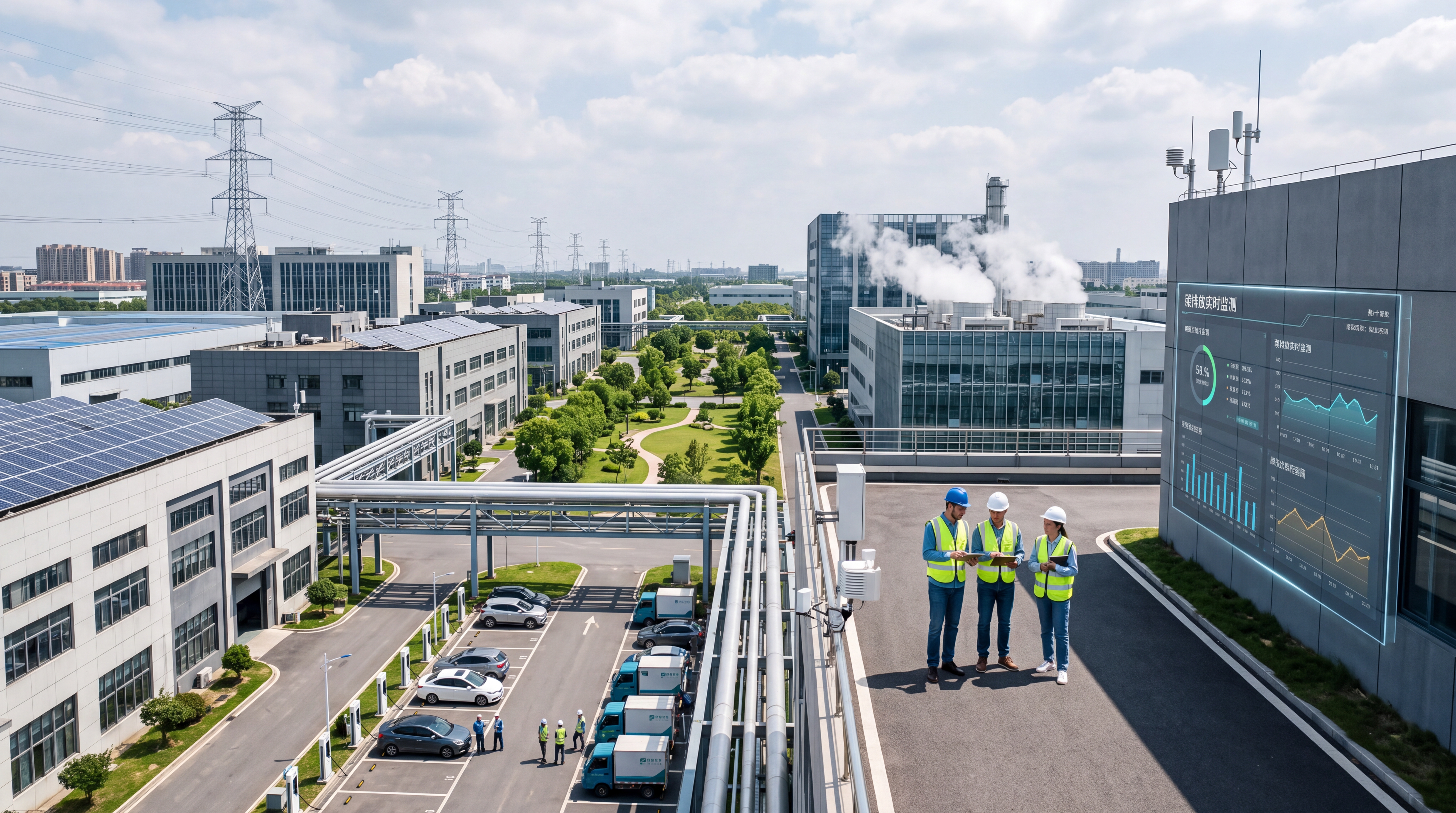
Online monitoring will become a critical gateway for the digitalization of low-carbon parks. By deploying sensors and smart terminals on electricity meters, gas meters, heating networks, production equipment, and emission nodes, parks can collect real-time data on energy consumption, water consumption, and greenhouse gas emissions.
Further integrated with digital twins, artificial intelligence, and edge computing, parks can achieve load forecasting, PV output forecasting, equipment fault diagnosis, and carbon emission anomaly identification. This shifts operations from passive statistics to proactive optimization, realizing coordinated dispatch of energy, production, and emissions.
Policy Environment & Future Outlook
The policy environment continues to shape the industry landscape. Domestically, the dual control of carbon emissions is gradually replacing the dual control of energy consumption, and the coverage of the carbon market is expected to expand. Internationally, regulations like the EU Battery Regulation and CBAM have raised the requirements for the verifiability of greenhouse gas data.
Key Challenges Remain:
- Fragmented standards and data silos
- Emphasis on construction over operation
- Shortage of multidisciplinary talent
From a forward-looking perspective, low-carbon parks will gradually evolve into regional "carbon data infrastructure." Parks need to establish greenhouse gas accounts covering enterprises, buildings, transportation, and public facilities. They can also help enterprises transform emission reductions into market competitiveness through carbon asset management, green power trading, carbon footprint certification, and supply chain synergy.
As policy, technology, and industrial demand continue to resonate, low-carbon parks will enter a new stage centered on data credibility, systemic synergy, and closed-loop value creation.