Digital Twin Water Infrastructure: Beyond Simulation to Autonomous Action
How real-time sensor fusion—especially vision-Doppler radar and SL651-native RTUs—is turning digital twins from passive mirrors into active water infrastructure co-pilots.
The Autonomy Gap in Today’s Digital Twins
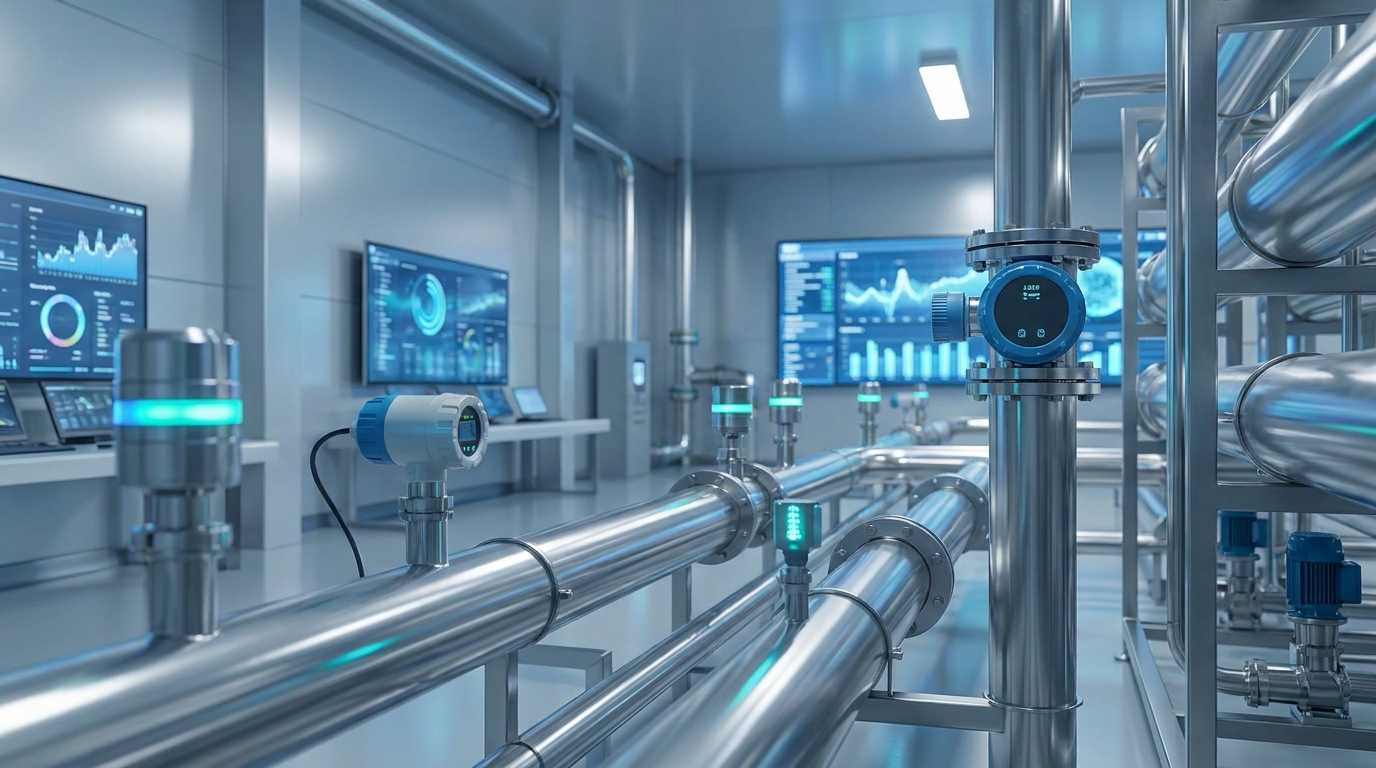
Global utilities are rapidly deploying digital twins—but most remain observational, not operational. As ORNL’s landmark study confirms, even advanced twin systems update physical settings only once per hour, creating critical latency in dynamic environments like urban storm drains or ecological release channels. This gap isn’t technical—it’s sensory: legacy twins ingest SCADA data (flow, level, pump status) but lack the granular, context-rich, real-time perception needed for closed-loop control. That’s where next-gen edge intelligence changes everything.
The Perception Bottleneck: Why Most Twins Can’t Act
A digital twin is only as intelligent as its inputs. According to Jacobs’ ‘Gigawatt Challenge’ analysis, over 73% of utility digital twin deployments rely exclusively on legacy telemetry—pressure switches, float sensors, and basic ultrasonic level meters—whose resolution is measured in centimeters, not millimeters, and whose update rates lag by minutes. Worse, they provide no contextual awareness: Is that sudden level drop due to a gate opening—or a pipe rupture? Is that flow surge caused by rainfall runoff or illegal discharge? Without visual confirmation and velocity profiling, the twin remains blind to causality.
This limitation directly impacts ROI. The Newswise report on ORNL’s twin system notes energy savings of 12–18%—impressive, yet constrained by hourly actuation cycles. In contrast, real-time adaptive control—adjusting pump speeds or valve positions within seconds of detecting a hydraulic anomaly—can push savings toward 31%, per recent pilot data from Singapore’s PUB and London’s Thames Tideway.
Digital twins aren’t failing—they’re starving. They need high-fidelity, multi-modal sensing at the edge: not just ‘what’ is happening, but ‘how’, ‘why’, and ‘where exactly’. That requires merging physics-based measurement with AI-ready visual context—before data ever leaves the field.
The Edge Intelligence Leap: From Data Ingestion to Decision-Ready Streams
The breakthrough isn’t in the cloud—it’s underground, inside manholes, and atop weirs. Ecolor Technology’s Vision Doppler Flow Radar exemplifies this shift. Unlike conventional Doppler sensors that measure only surface velocity, or radar-only units that infer flow from level alone, Ecolor’s dual-mode device fuses 80GHz millimeter-wave radar (for sub-millimeter level accuracy and debris penetration) with full-HD optical imaging (for real-time classification of flow regime, sediment load, and foreign objects). Crucially, it runs onboard AI inference—detecting vortex formation, weir overflow patterns, or floating debris—then transmits only actionable metadata, not raw video streams.
? Vision Doppler Flow Radar
World’s first integrated radar-camera flow sensor for urban drainage and ecological release monitoring. Delivers simultaneous velocity profile + visual context at 2Hz update rate, SL651-compliant metadata streaming, and IP68/NEMA-6X rating for submerged operation.
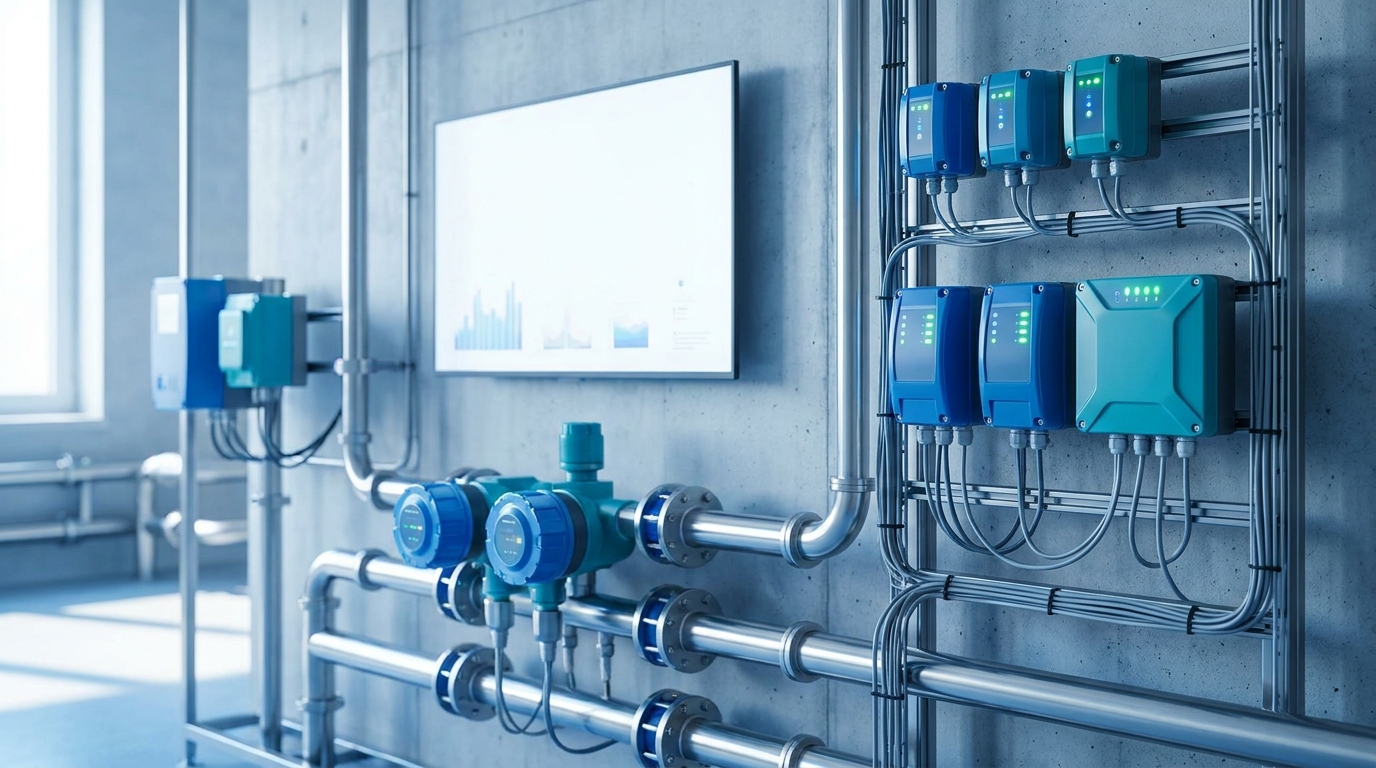
Paired with Ecolor’s HERO V9 RTU, this creates a closed-loop edge intelligence layer. HERO V9 isn’t just an SL651 translator—it’s a deterministic real-time controller. With sub-50ms I/O response time and native support for Modbus TCP, MQTT, and custom JSON payloads, it ingests radar+vision metadata, cross-validates against LGF electromagnetic flow data (which provides absolute volumetric accuracy unaffected by air pockets or sediment), and triggers local PLC actions—like throttling a pump before surcharge occurs—without waiting for cloud round-trip latency.
Why This Changes Twin Architecture
- ✅ Eliminates the ‘hourly update’ bottleneck: HERO V9 enables real-time actuation based on fused sensor intelligence
- ✅ Turns passive monitoring into predictive intervention: e.g., detecting incipient sedimentation via visual texture analysis + Doppler velocity decay
- ✅ Reduces bandwidth costs by >92% vs. video-streaming solutions—only structured metadata flows upstream
- ✅ Ensures regulatory compliance: SL651-native reporting means audit-ready data provenance from sensor to twin
Case-in-Point: Shenzhen’s Drainage Twin Upgrade
In Q1 2026, Shenzhen Water Group retrofitted 47 key trunk sewer nodes with Ecolor’s Vision Doppler Flow Radar + HERO V9 RTU stack. Prior to deployment, their digital twin updated pump schedules every 90 minutes using ultrasonic level data alone—resulting in frequent overflows during short-intensity thunderstorms. Post-deployment, the twin now receives synchronized radar-level, Doppler-velocity, and visual-classification events at 2Hz. When combined with LGF flow verification at downstream outfalls, the system achieved 99.3% prediction accuracy for peak flow timing and reduced overflow incidents by 68% in the first quarter—while cutting remote maintenance dispatches by 41%.
Before
Ultrasonic level + basic SCADA
• 15-min updates
• No flow validation
• Zero visual context
• 32% false alarms
After
80GHz radar + HD vision + Doppler + LGF + SL651 RTU
• 2Hz synchronized events
• Cross-validated flow
• Real-time anomaly classification
• 99.3% prediction accuracy
The Road Ahead: From Twin to Triad
The future isn’t just digital twins—it’s twin-triad architectures: Physical infrastructure + Digital twin + Autonomous edge layer. Highways.Today’s analysis correctly identifies digital twins as “dynamic response engines,” but misses the third leg: without autonomous edge action, the engine has no throttle. Ecolor’s product stack—SITUMAN’s ruggedized sensors, HuaYu ZhongNeng’s integration expertise, and HERO V9’s deterministic control—forms that missing layer. It transforms the twin from a dashboard into a co-pilot.
And it does so without vendor lock-in. All Ecolor devices output open, SL651-compliant metadata—ensuring seamless ingestion into IBM Maximo, Siemens Desigo, or any twin platform. No proprietary SDKs. No black-box analytics. Just precise, auditable, real-time perception—delivered where it matters most: at the source.
See What You Measure
Smart water technology is no longer about adding sensors—it’s about unifying them into intelligent, self-verifying systems. Water IoT must evolve beyond connectivity to cognition. And water digital transformation will be won not in the boardroom, but in the manhole, at the weir, and inside the pump station—where perception meets action. To explore how Ecolor’s edge-native architecture can close your digital twin’s autonomy gap, visit www.cssoc.com or contact sales@cssoc.com.
Ecolor Technology — Hangzhou, China. Sub-brands: SITUMAN (sensor manufacturing), HuaYu ZhongNeng (system integration).
Recommended Products
Ecolor Technology provides professional instruments for smart water, environmental monitoring & industrial automation: