Urban Pipeline Network Trend Outlook: Drainage Reshaping the Urban Pipeline Network
Over the past decade, China has rapidly advanced the construction of urban drainage pipe networks. Under public statistical standards, the total length of urban drainage pipelines nationwide has exceeded 900,000 kilometers, covering a massive asset system including roads, pump stations, detention tanks, and wastewater treatment plants. As urbanization enters its mid-to-late stage, the industry's focus is shifting from "having it" to "having it done well": the stormwater, sewage, and combined sewers built in the early stages are gradually aging, revealing issues such as structural defects, illicit cross-connections between stormwater and sewage, and insufficient flow capacity. The increasing frequency of extreme rainfall also makes traditional experience-based management inadequate for flood prevention and dispatching needs.
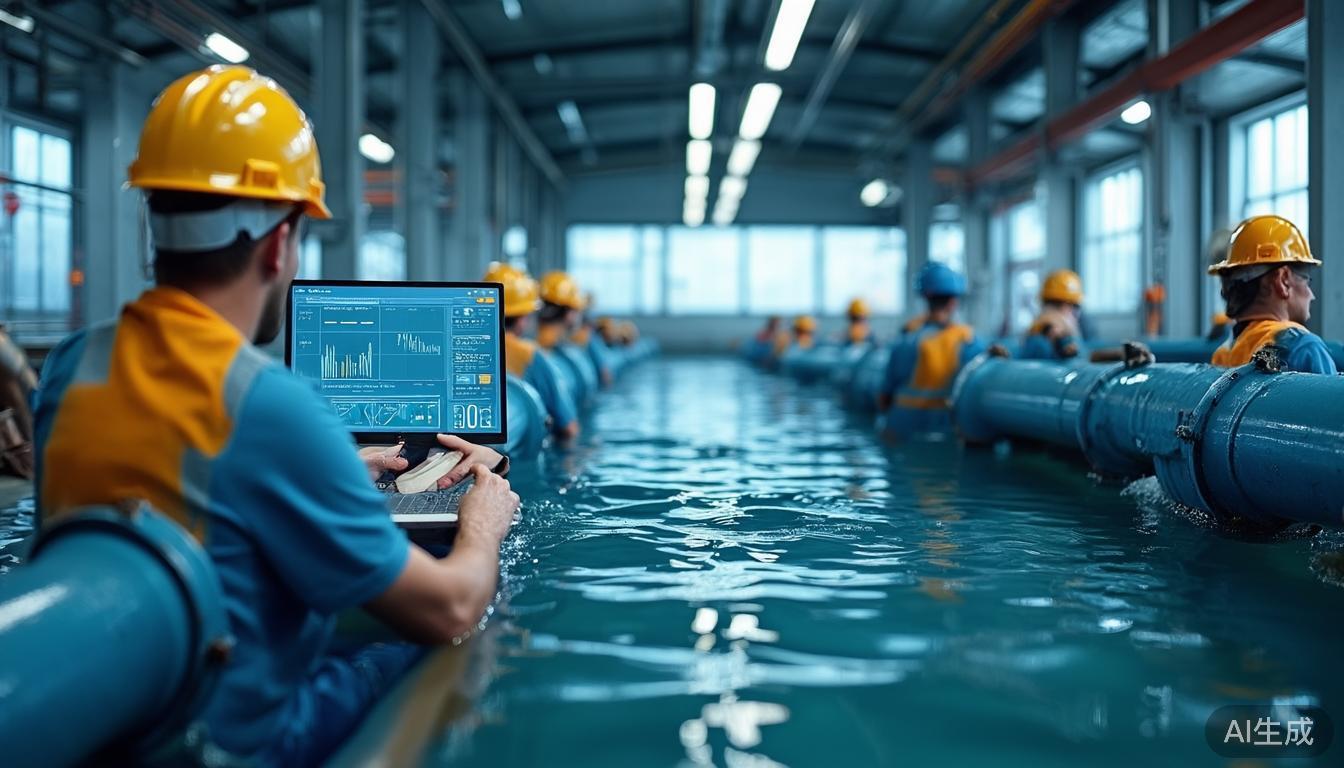
Against this backdrop, online sensing devices for liquid level and flow rate have evolved from auxiliary tools into critical access points for the operation and management of drainage systems. Urban pipe networks are no longer just hidden underground engineering projects; they have become safety systems composed of sensors, communication networks, hydraulic models, and dispatching platforms. Observations by Ecolor Technology note that the market is forming a composite structure of "engineering construction + sensing and monitoring + model prediction + operation services." This article will analyze the market trends, technological directions, and policy impacts of urban pipe networks focusing on drainage, liquid level, flow rate, and flood prevention.
I. Market Trends: Investment Shifts from Incremental Expansion to Quality Improvement
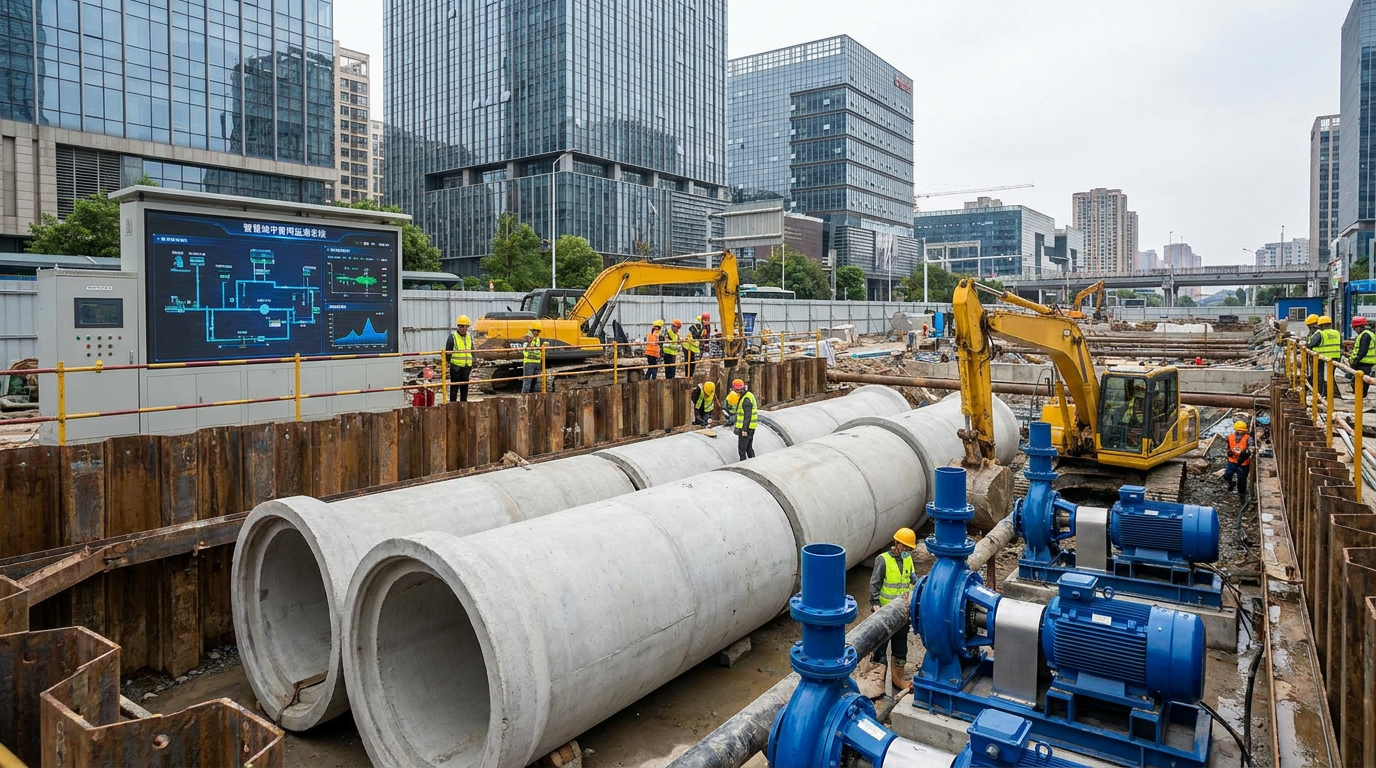
The first main thread of the urban pipe network market is the shift in investment logic from primarily new construction to a balance of new construction and renewal. Currently, a large number of municipal drainage pipelines with diameters ranging from DN300 to DN2000 have been in operation for over 20 years, facing issues such as corrosion, misalignment, leakage, and siltation. Surveys in some cities have revealed a high proportion of structural and functional defects, necessitating systematic remediation through CCTV inspection, QV inspection, sonar inspection, and trenchless rehabilitation. In a three-year drainage pipe network remediation plan, a provincial capital proposed investigating and renovating over a thousand kilometers of aging pipelines, integrating inspection, repair, monitoring, and O&M into bundled projects. Project value is no longer determined solely by pipe materials and earthworks, but increasingly depends on the volume of defect treatment and operational performance.
The second main thread is the demand for flood prevention driving the drainage system from point-by-point modification to systematic governance. Local authorities are imposing higher monitoring and dispatching requirements on underpass interchanges, low-lying communities, river outfalls, pump station forebays, and storage facilities. Multi-source data such as liquid level, flow rate, rainfall, video, and pump station operating status are being integrated. Consequently, drainage pipe network projects are deeply integrated with urban lifelines, emergency management, and integrated water affairs platforms. The focus of market procurement has also shifted from "how many kilometers of pipelines have been built" to "how much the sewage collection rate has increased, how much the waterlogging duration has been shortened, and how much the overflow frequency has decreased." This means the industry boundary is expanding from municipal engineering to urban operational safety, and the service cycle is extending from construction delivery to long-term operation.
II. Liquid Level Monitoring: From Single-Point Alarms to Dynamic Water Level Profiling
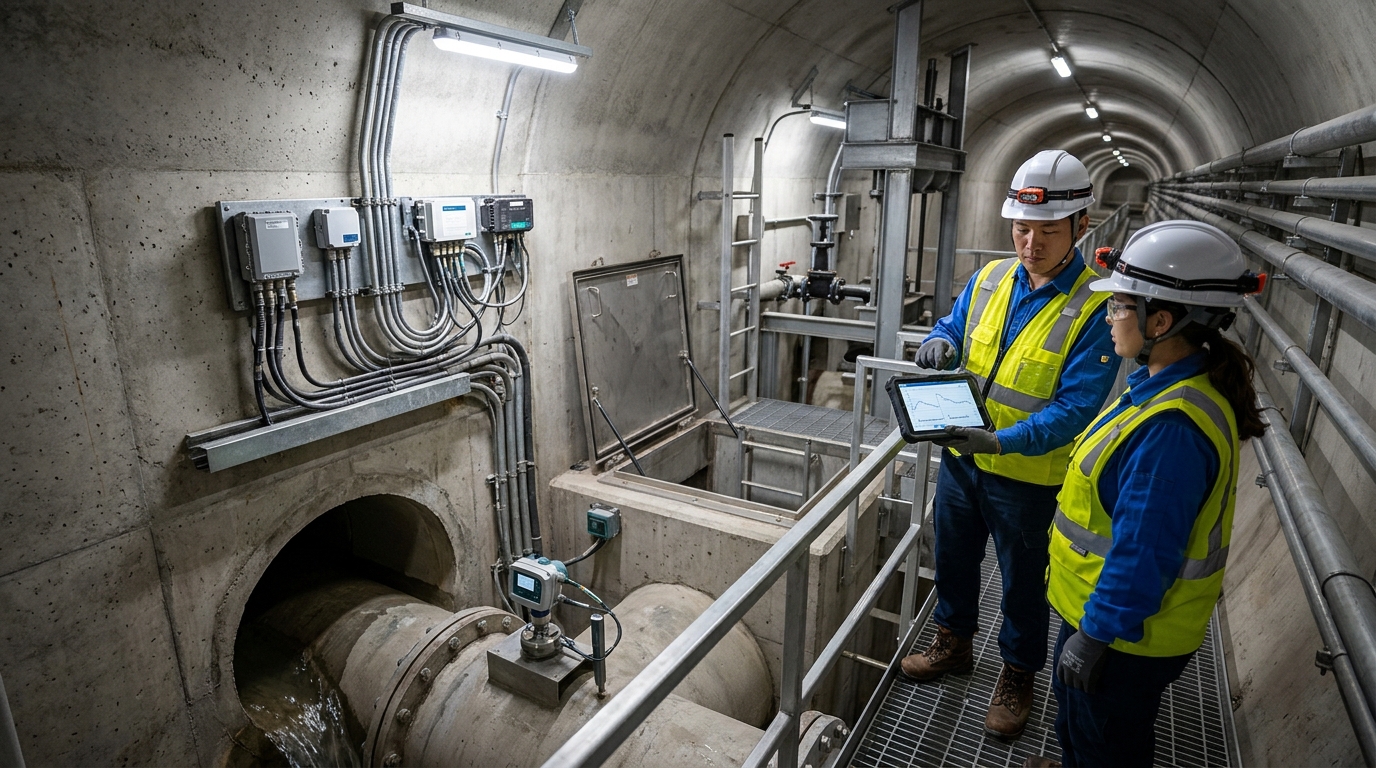
Liquid level is the most fundamental operational status indicator in drainage pipe networks. Whether it is the full-pipe risk in sewage networks, the pre-emptive discharge capacity in stormwater networks, or the waterlogging risk at underpass interchanges and low-lying road sections, liquid level data can intuitively reflect the system's margin. Traditional manual inspections are delayed in discovery, limited in coverage, and difficult to conduct during heavy rain. Online liquid level monitoring utilizes radar, ultrasonic, and hydrostatic pressure sensors to convert water level changes in manholes, pump station forebays, detention tanks, and outfalls into continuous data. Common measurement ranges are 0 to 8 meters or 0 to 10 meters, with accuracy reaching ±2 mm to ±5 mm. Equipment typically needs to meet the IP68 protection rating, and low-power terminals paired with lithium batteries can operate for 3 to 5 years.
Liquid level applications are upgrading from "threshold-based alarms" to "dynamic water level profiling." A single liquid level value only indicates whether a specific point is too high; however, by combining liquid level with pipe invert elevation, pipe diameter, slope, and upstream/downstream relationships, it is possible to estimate pipe segment fullness, residual flow capacity, and storage space.
In a city prone to waterlogging, liquid level gauges, rain gauges, and video surveillance were deployed in an underpass tunnel. When water accumulation reached a threshold of 20 to 25 centimeters, the system automatically linked with warning screens and traffic control, reducing manual decision-making time. In the future, liquid level monitoring will integrate with short-term meteorological forecasts and surface runoff models to form a closed loop of pre-emptive discharge before rain, regulation during rain, and post-rain assessment, thereby enhancing the resilience of the drainage system.
III. Flow Measurement: From Total Volume Statistics to Real-Time Hydraulic Accounting
Liquid level reflects "how high the water is," while flow rate reflects "how much water there is and how fast it moves." Flow measurement in drainage systems is more challenging because stormwater and sewage pipelines are often in a partially full state, and flow regimes are significantly affected by rainfall, water consumption, pump stations, and downstream water levels. With the increased application of Doppler flow meters, electromagnetic flow meters, ultrasonic transit-time flow meters, and partially full pipe flow measurement devices, continuous online measurement of pipe network flow is being realized. Common projects cover pipe diameters from DN300 to DN3000, with flow velocity measurement ranges up to 0.03 m/s to 6 m/s, and comprehensive accuracy mostly between ±1% and ±2.5%; electromagnetic flow meters can achieve approximately ±0.5% accuracy in full-pipe sewage measurement.
The value of flow data lies in supporting water balance and hydraulic accounting. Sewage networks can identify illicit cross-connections, groundwater infiltration, river water backflow, and direct sewage discharge by analyzing dry-weather flow, minimum nocturnal flow, and flow variations during rainfall. Stormwater networks can evaluate siltation, outfall blockages, and storage effects through flow peaks, peak lag times, and recession curves. In a city in South China, during a stormwater-sewage separation renovation, Doppler flow meters were installed on a DN1200 trunk pipe. It was found that flow increased during rain while sewage concentration decreased. Subsequent water quality and pipe network investigations located multiple cross-connection points. After the renovation, the influent BOD concentration and collection efficiency of the wastewater treatment plant improved. Flow measurement is transforming from a statistical tool into a diagnostic tool.
IV. Flood Prevention Dispatching: Building a Warning Closed Loop
Urban flood prevention is the most concentrated embodiment of the value of drainage pipe networks. In recent years, heavy rainfall in many places has caused road waterlogging, water intrusion into underground spaces, and traffic disruptions, shifting the industry's focus from "meeting engineering standards" to "risk process management." According to relevant technical guidelines, the design return period for urban stormwater pipelines and channels is typically 1 to 5 years, and even higher for important areas; the design return period for urban waterlogging prevention is generally 20 to 50 years, and can reach 100 years for particularly critical areas. However, engineering standards cannot cover all extreme weather events, making real-time monitoring, predictive warning, and emergency dispatching necessary supplements. Liquid level, flow rate, rainfall, pump station SCADA, gate status, and video surveillance together form the foundation of flood prevention sensing.
The key to the flood prevention warning closed loop is multi-source data fusion. Rain gauges provide rainfall intensity, liquid level gauges reflect pipe network and river water levels, flow meters reflect conveyance capacity, pump station and gate data reflect facility status, and weather radar provides rainfall trends for the next 1 to 3 hours. A mega-city in East China has established a waterlogging warning model in flood-prone areas. By combining historical waterlogging points, pipe network capacity, and pump station operation data, the advance warning time for some risk points has been increased to over 30 minutes, buying time for traffic control, mobile pump truck deployment, and personnel evacuation. Future flood prevention dispatching will place greater emphasis on coordinated joint dispatching, reducing peak superposition and backflow risks through pre-emptive discharge, peak shifting, and combined gate-pump control, shifting flood prevention from post-disaster rescue to pre-disaster preparedness.
V. Technological Directions: Integration of Sensing Devices, Edge Computing, and Digital Twins
From the perspective of technological evolution, urban pipe networks are forming a system where the sensing layer, network layer, model layer, and application layer collaborate. The environment inside drainage manholes is complex, with issues such as corrosive gases, oil stains, condensation, floating objects, and signal blockage. Future liquid level and flow devices will place greater emphasis on maintenance-free operation, self-cleaning, anti-interference, and long lifespan. Combining 80GHz radar level gauges, low-frequency ultrasound, and hydrostatic level gauges with temperature compensation algorithms can improve stability under complex conditions; flow meters, through multi-parameter fusion and self-diagnostic functions, can identify siltation, drift, and sensor faults. In terms of communication, NB-IoT and 4G Cat1 remain mainstream, while 5G RedCap, BeiDou short message, and satellite IoT can serve as supplementary links during extreme weather.
Edge computing and digital twins will enhance system intelligence. Monitoring terminals equipped with edge algorithms can perform filtering, threshold judgment, trend identification, and anomaly alarming locally, shortening the response link; in high-risk scenarios such as underpass interchanges, tunnels, and underground garage entrances, edge control can directly link with warning screens, barriers, and pump start/stop functions. Digital twins are not merely simple 3D displays; they integrate GIS pipe network data, pipe diameter, slope, material, defect records, real-time liquid level and flow, and rainfall forecasts to form dynamic simulation capabilities. By coupling 1D pipe network models with 2D surface models, it is possible to simulate full-pipe conditions, overflows, and waterlogging depths under different rainfall scenarios. In the future, AI models can also use historical data to automatically calibrate parameters and provide dispatching recommendations.
VI. Policy Impacts: Urban Lifelines and Renewal Reshape Project Logic
Policy is one of the most important driving forces in the urban pipe network industry. In recent years, the state has continuously deployed initiatives around urban wastewater treatment and resource utilization, urban drainage and flood prevention system construction, sponge city construction, urban lifeline safety engineering, and underground pipe network renewal. Policy goals are no longer just about increasing facility scale, but emphasize safety, resilience, low carbon, and performance. In the wastewater treatment sector, the focus is on sewage collection efficiency, influent concentration improvement, and sludge disposal; in the drainage and flood prevention sector, the focus is on eliminating waterlogging points, coping with excessive rainfall, and building emergency response capabilities; in the sponge city sector, the focus is on source reduction, runoff control, and non-point source pollution reduction. These requirements collectively drive the drainage pipe network from a mere engineering facility to a comprehensive governance system.
Funding and assessment mechanisms are also changing. Special local government bonds, central budget investments, ultra-long-term special treasury bonds, and urban renewal funds provide support for pipe network renovation and monitoring system construction. Unlike previous projects that heavily favored engineering investment, the new round of projects places greater emphasis on quantifiable performance: whether the centralized sewage collection rate has increased, whether the influent BOD and COD concentrations of wastewater treatment plants have improved, whether the frequency of combined sewer overflows has decreased, whether the waterlogging duration at key vulnerable points has been shortened, and whether the online rate of monitoring equipment meets standards. Liquid level, flow, and rainfall data will not only be used for operation but will also become crucial evidence for project acceptance, fiscal performance evaluation, and regulatory enforcement. Consequently, the industry is gradually shifting from equipment sales and engineering construction to comprehensive O&M and data services.
VII. Outlook: Forming a "Sensing-Prediction-Dispatching-Assessment" System
Looking ahead to the next five years, the urban pipe network industry will present three definitive trends. First, drainage pipe network assets will be redefined, with liquid level, flow rate, water quality, rainfall, pump stations, and model algorithms jointly constituting the urban water safety system. Second, monitoring will shift from demonstration to normalization; key trunk pipes, waterlogging-prone points, pump station forebays, underpasses, and storage facilities will be universally equipped with online monitoring, with continuously increasing requirements for data frequency, accuracy, and stability. Third, project evaluation will shift from engineering acceptance to operational performance; the ability to reduce waterlogging, improve collection rates, decrease overflows, and shorten response times will become the core criteria for measuring investment effectiveness.
From a technical roadmap perspective, future urban drainage management will form a closed loop of "sensing—prediction—dispatching—assessment." The sensing layer provides liquid level, flow rate, and equipment status; the prediction layer combines meteorological forecasts and hydraulic models to anticipate risks; the dispatching layer coordinates pump stations, gates, and detention tanks; and the assessment layer optimizes contingency plans through data review. As the costs of AI, edge computing, and IoT communication decline, urban pipe networks will possess stronger self-diagnostic and decision-support capabilities. However, the industry must also be vigilant against prioritizing construction over O&M, platforms over data, and presentation over application. Only by establishing unified data standards, stable O&M budgets, and cross-departmental coordination mechanisms can the digitalization of urban pipe networks truly translate into flood prevention safety and environmental governance outcomes. Ecolor Technology believes that drainage, liquid level, flow rate, and flood prevention will become the new benchmarks for urban governance capabilities.