How the LGF Flowmeter Redefines Electromagnetic Flowmeter Price in Smart Water
Aerospace-grade material innovation and precision manufacturing are dismantling legacy pricing models—delivering ±0.2% accuracy at unprecedented entry costs.
The Economic Imperative in Modern Water Infrastructure
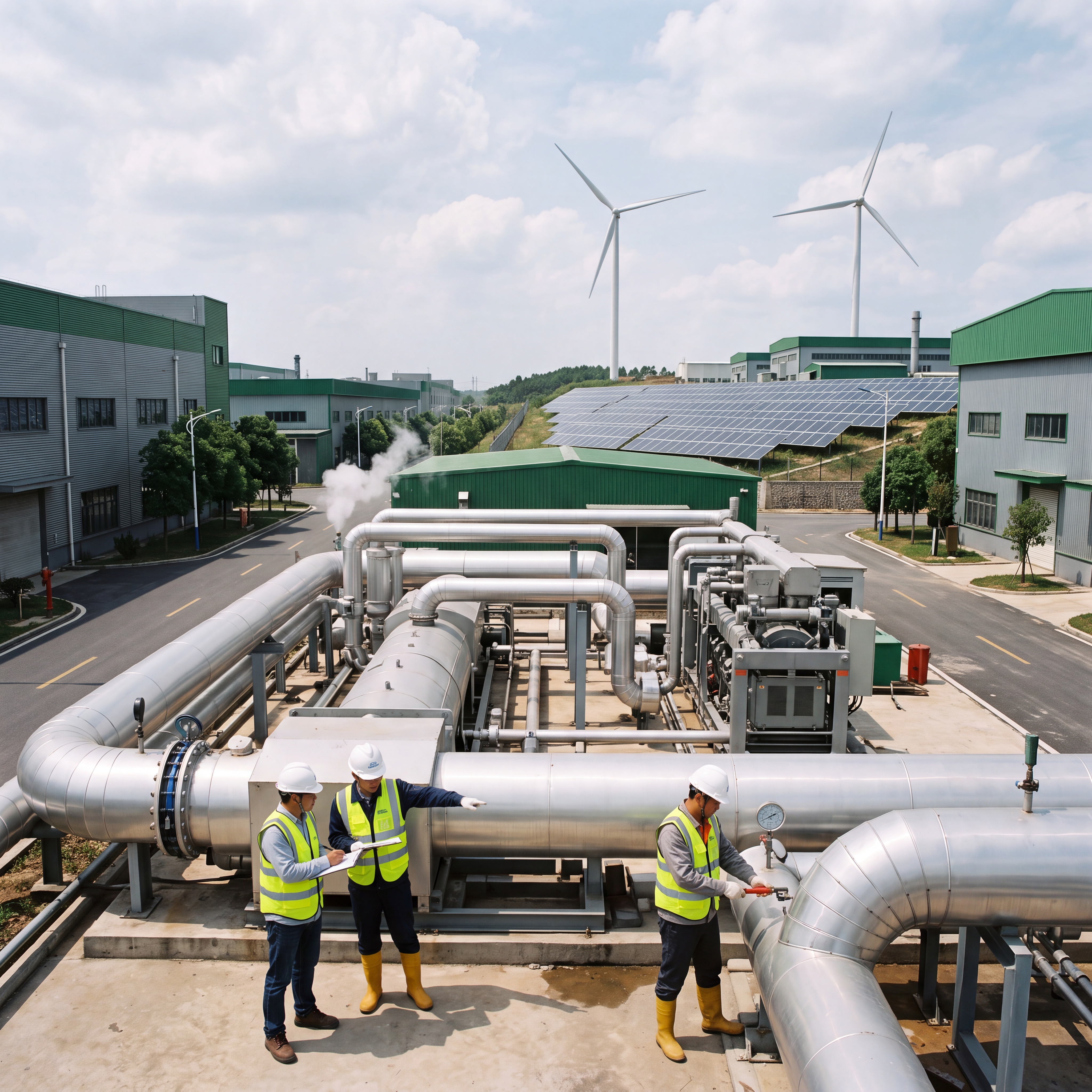
Global water utilities face unprecedented capital constraints while managing aging pipelines, regulatory compliance, and demand for real-time data visibility. Historically, high-precision electromagnetic flow monitoring required substantial upfront investment—limiting deployment to critical junctions and leaving secondary networks uninstrumented.
Domestically engineered, aerospace-grade instrumentation is transforming this paradigm—enabling comprehensive network coverage without sacrificing metrological integrity or long-term reliability.
Rethinking Electromagnetic Flowmeter Price Through Total Cost of Ownership
Municipal water authorities and industrial facility managers operate under tight budget cycles. Traditional procurement favored imported brands due to perceived reliability—but high electromagnetic flowmeter price created deployment bottlenecks. When unit cost exceeded operational thresholds, utilities resorted to sparse monitoring and statistical modeling instead of direct measurement—undermining leak detection, NRW reduction, and distribution balancing.
Today’s forward-looking procurement strategies prioritize total cost of ownership (TCO), not just sticker price. Domestic manufacturers have deconstructed legacy supply chains—eliminating intermediaries and optimizing production via vertical integration. The result? High-fidelity electromagnetic flowmeters deployed across entire zones—not just isolated nodes—making full-network visibility a standard, not a luxury.
Deconstructing the Electromagnetic Flowmeter Price Myth
For decades, precision meant premium pricing—driven by multi-part assemblies, imported electrodes, and labor-intensive welding. Modern engineering has eliminated these inefficiencies. One-piece injection molding using advanced polymer composites represents a fundamental shift: consolidating structure and function into a monolithic body eliminates weld seams, reduces magnetic interference, and accelerates production—without compromising accuracy.
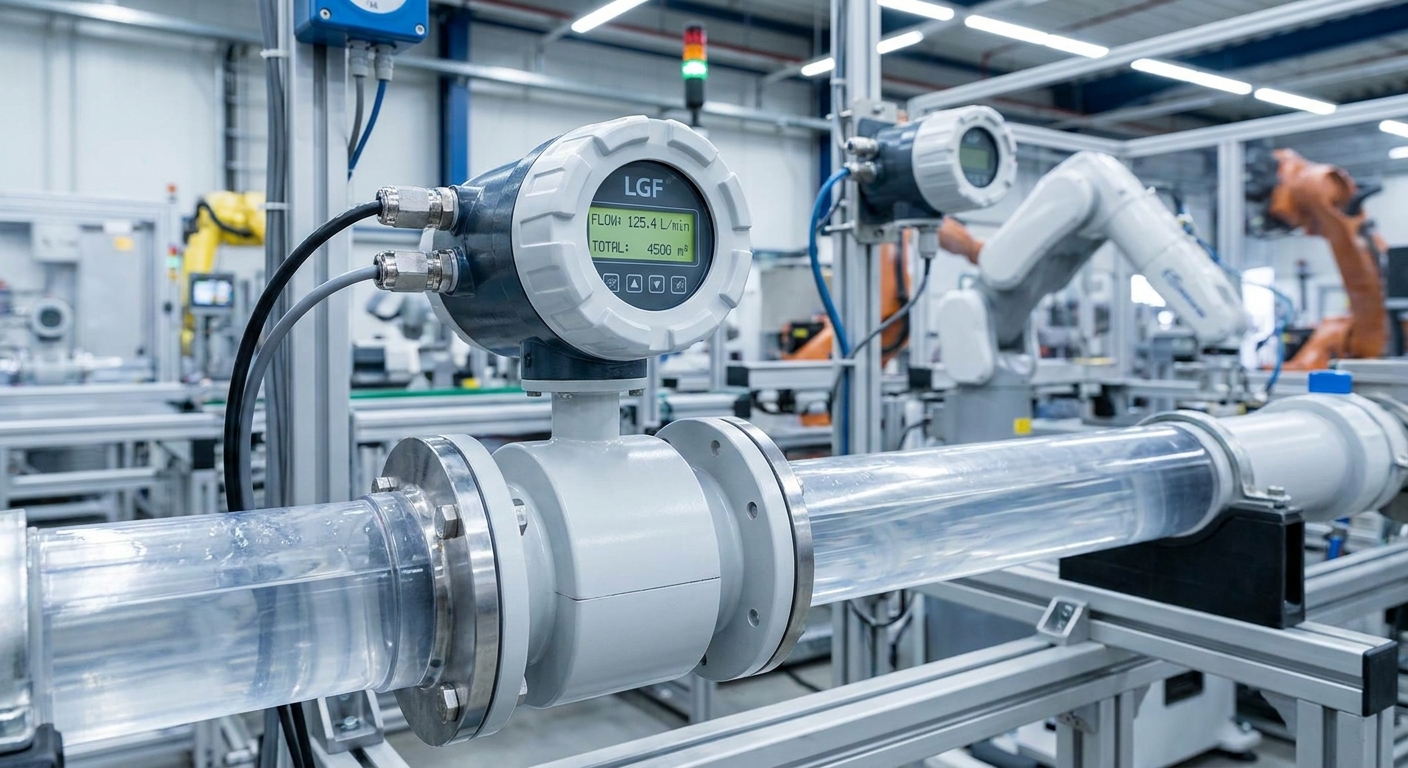
The LGF flowmeter series exemplifies this evolution. Its aviation-grade LGF-PA66 composite housing delivers structural integrity and complete electromagnetic transparency—replacing lined metal housings that require precise electrode alignment and frequent gasket replacement.
Aerospace-Grade Materials: The PA66 Revolution
Polyamide 66 (PA66) is trusted in aerospace and automotive sectors for tensile strength, thermal stability, and chemical resistance. In hydrodynamic instrumentation, LGF-PA66 is engineered for continuous submersion—resisting hydrolysis, microbial degradation, and scaling. Uniform density from one-piece molding eliminates stress points and microfractures caused by hydraulic shock or thermal cycling.
Critically, its non-conductive, ferromagnetic-free composition acts as a natural Faraday cage—blocking electromagnetic noise from underground power lines, metallic reinforcements, and adjacent equipment. This ensures pristine signal-to-noise ratios across all environments—from rural mains to congested urban valve chambers.
LGF Series Electromagnetic Flowmeter: Engineering Specifications That Defy Budget Categories
Precision & Range
±0.2% measurement accuracy across full range
DN10 to DN2000 coverage
Durability & Integration
IP68 submersible rating
Zero-weld architecture | IoT-ready telemetry
Value Benchmark
Starting at 850 RMB per DN50 unit
Scalable for municipal-wide deployments
Smart Compatibility
Native support for SITUMAN & HERO V9 RTU
Edge-validated data & protocol conversion
Procurement Strategy: From CAPEX Savings to Operational ROI
Evaluating an affordable flow meter means shifting focus from acquisition cost to lifecycle economics. Traditional imported sensors carry CAPEX premiums exceeding 300%. At scale—across hundreds of monitoring points—this differential redirects millions in capital. But true advantage lies in OPEX: simplified installation, no welding certifications, and reduced calibration frequency cut labor costs and accelerate project timelines.
Traditional Imported Model
- ⚠️ High CAPEX: 300%+ premium pricing
- ⚠️ Complex installation: Requires certified welding
- ⚠️ Magnetic interference in dense urban zones
- ⚠️ Extended lead times: 8–12 weeks delivery
LGF Domestic Innovation Model
- ✅ Optimized CAPEX: Starting at 850 RMB/DN50
- ✅ Plug-and-play: One-piece assembly installation
- ✅ Zero magnetic interference: PA66 composite housing
- ✅ Rapid deployment: 3–5 day domestic fulfillment
Integrating with Next-Gen IoT Architectures
High-precision electromagnetic flowmeters deliver maximum value only when embedded in intelligent telemetry ecosystems. Isolated measurements lack context—without centralized aggregation, edge processing, and cloud analytics, they remain raw data points.
Ecolor Technology’s vertically aligned ecosystem ensures seamless interoperability: SITUMAN guarantees standardized output signals and robust physical interfaces; HuaYu ZhongNeng deploys scalable communication networks bridging field sensors to control center dashboards. Paired with the HERO V9 RTU, the LGF flowmeter becomes part of an intelligent edge computing architecture—performing local validation, anomaly detection, and protocol conversion before transmitting optimized payloads. This minimizes bandwidth use, reduces latency during alerts, and maintains logging during outages—transforming flow data into actionable intelligence.
The Road Ahead: Standardizing High-Performance Domestic Instrumentation
The global water sector is entering an era where high-fidelity electromagnetic flowmeters are no longer premium components reserved for critical junctions—they’re foundational infrastructure for resilient, data-driven management. Regulatory mandates for real-time monitoring, transparency, and carbon accountability demand rapid, scalable sensing deployment—without compromising asset longevity.
By embracing monolithic polymer architectures, edge-integrated telemetry, and domestic precision manufacturing, utilities build networks that are economically sustainable, technically robust, and operationally transformative.
See What You Measure
Ready to deploy high-precision, cost-optimized water monitoring at scale?
Visit Website