Low-Carbon Park Market Trends: 2026 Energy Management Pricing and Selection Recommendations
As dual-carbon goals advance, park energy management is shifting from manual meter reading to real-time monitoring, efficiency optimization, and asset operation centered on EMS. This article analyzes market drivers, price ranges, procurement strategies, and investment returns for 2026.
Introduction: Refinement, Decarbonization, and Assetization
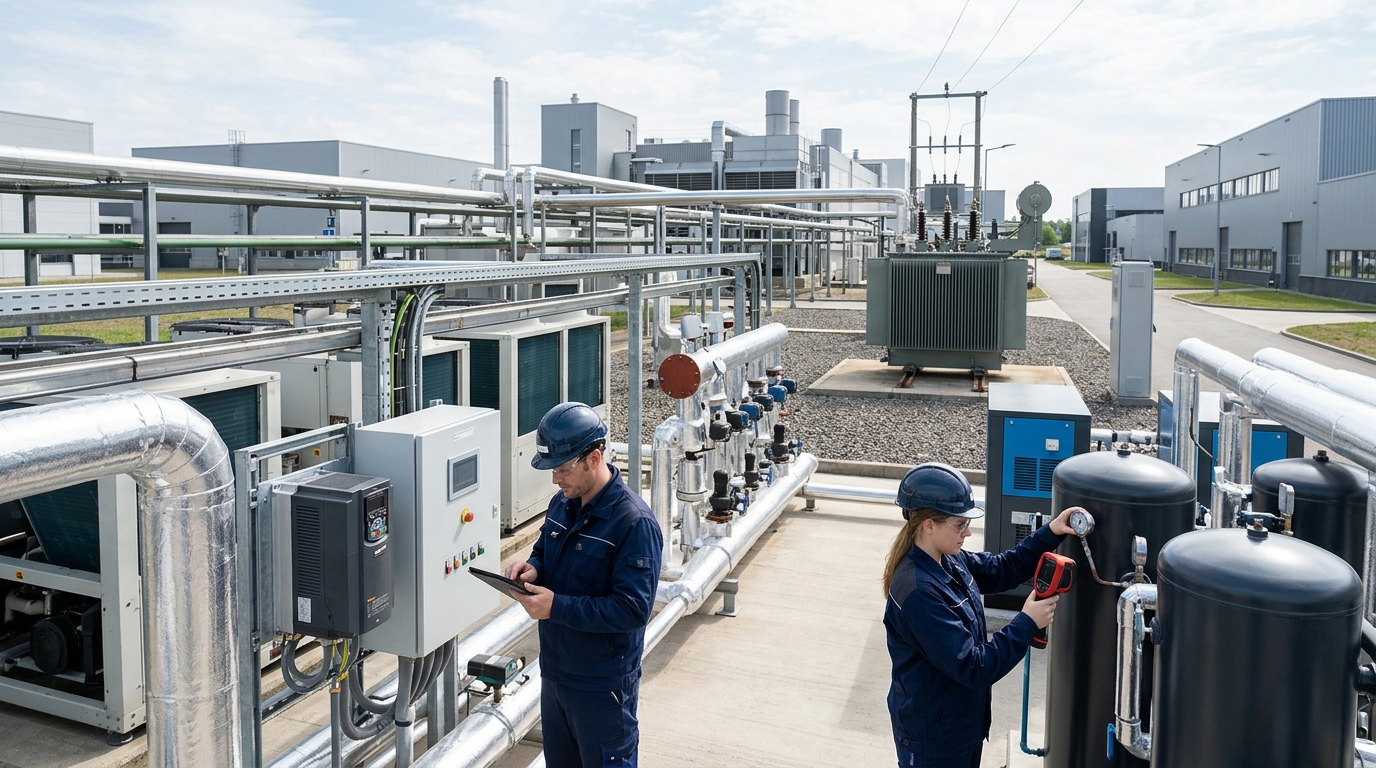
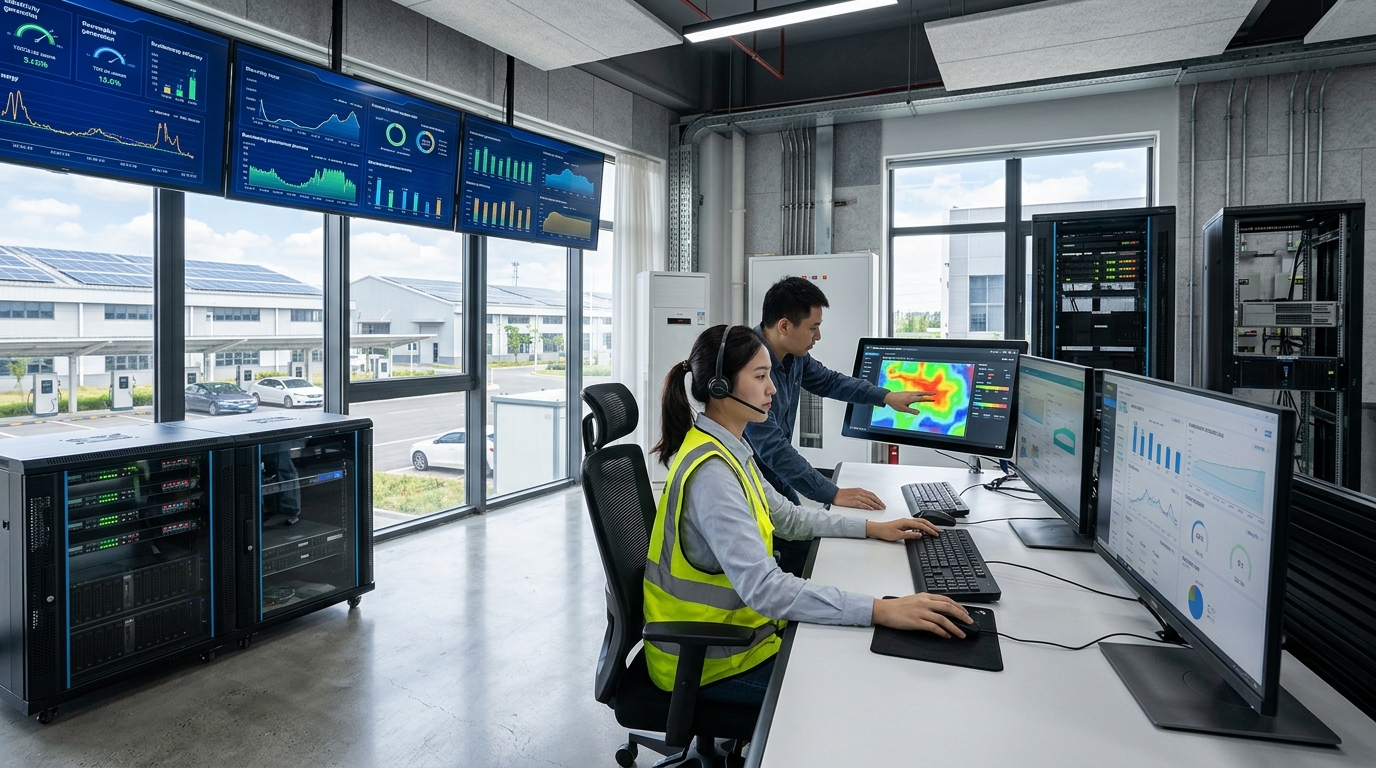
Against the backdrop of advancing dual-carbon goals, deepening market-based electricity reform, and increasingly complex energy consumption structures in parks, park energy management is shifting from manual meter reading and post-event statistics to real-time monitoring, energy efficiency optimization, and asset operation centered on EMS. Parks include both production loads and multiple scenarios such as air conditioning, lighting, charging stations, photovoltaics, and energy storage; single energy-saving devices can no longer support overall cost-reduction and carbon-reduction requirements.
Industry practice shows that park energy management is moving from mere visibility to precise accounting, reliable control, and value-added operation. Market prices vary widely, ranging from basic monitoring at just over CNY 100,000 to integrated source-grid-load-storage-carbon systems costing millions or even tens of millions of yuan. This article provides an objective analysis from perspectives including market drivers, price ranges, procurement recommendations, maintenance costs, typical cases, and investment returns.
I. Market Drivers: Dual-Carbon Goals, Electricity Pricing, and Distributed Energy
Demand for park energy management first arises from policy and regulation. As dual control of energy consumption gradually shifts to dual control of carbon emissions, parks need to establish foundational data systems for energy consumption and carbon emissions. Different park types—industrial, commercial, logistics, and data center—all face requirements for energy consumption intensity, carbon emission intensity, green electricity ratio, and ESG disclosure. Without accurate metering and unified accounting standards, energy-saving and carbon management are difficult to implement.
Electricity Pricing Mechanisms
Mechanisms such as time-of-use tariffs, critical peak pricing, demand charges, and power factor assessment are becoming increasingly granular. An EMS helps optimize electricity cost structures through load forecasting, staggered equipment operation, energy storage dispatch, and demand management.
Distributed Energy Resources
Rooftop PV, energy storage, charging stations, heat pumps, and waste heat utilization facilities are entering parks. Park energy management becomes critical infrastructure connecting energy assets, production systems, and building systems to avoid issues like insufficient local PV consumption.
II. EMS Product Price Ranges: Four Typical Solutions
The price of a park EMS should not be judged solely as software; it should be comprehensively evaluated based on metering points, hardware retrofitting, communication networks, control depth, algorithm models, and O&M services. Common industry projects can generally be divided into four categories.
- Basic Energy Consumption Monitoring: Suitable for small parks (<50,000 m²). Focuses on visualization and reporting. Investment: CNY 100,000 – 300,000 (approx. CNY 2–6/m²).
- Standard EMS: For industrial/business/logistics parks (~100,000 m²). Includes sub-metering, peak/flat analysis, and preliminary carbon calculation. Investment: CNY 300,000 – 800,000.
- Advanced Energy Efficiency Optimization: Emphasizes closed-loop control (chiller optimization, AI load forecasting). Requires additional sensors and edge controllers. Investment: CNY 800,000 – 3,000,000.
- Integrated Source-Grid-Load-Storage-Carbon Platforms: For large/zero-carbon pilot parks. Manages PV, storage, carbon assets, and VPP trading. Investment: CNY 3 million – 10+ million. SaaS options available.
III. Procurement Recommendations: Clarify Objectives First
When procuring a park energy management system, avoid the misconception that “more functions are always better.” Start from energy types, management objectives, organizational capability, and budget constraints.
- Conduct an Energy Diagnosis: Sort out energy media (electricity, water, gas, heat) and identify major consuming equipment. Industrial parks should focus on compressed air and HVAC; business parks on central AC and lighting.
- Clarify Objectives: Is it for regulatory reporting (data completeness), cost reduction (demand management), dual-carbon management (carbon factors), or asset operation (revenue accounting)?
- Determine Metering Granularity: Key equipment (chillers, compressors) needs independent metering. Gateway meters should be accuracy class 0.5 or higher.
- Check Protocols and Security: Ensure support for Modbus, BACnet, MQTT, etc. Closed-loop controls must have safety boundaries and fallback mechanisms.
IV. Energy Efficiency Optimization Paths and Cases
The key to park energy saving is not single-point equipment replacement, but data-based system optimization. Overall typical energy-saving rates range from 6% to 18%.
Case Study: Chiller Plant Optimization
A smart manufacturing park in East China (380,000 m², 4,800 kW cooling capacity) deployed an EMS for chiller group control and temperature differential optimization.
Result: 12.6% energy-saving rate, saving approx. CNY 860,000 annually.
Compressed Air Systems
In some industrial parks, compressed air accounts for 15–30% of electricity use. EMS group control and leak diagnosis can reduce supply pressure by 0.05–0.08 MPa.
Example: 10.3% savings, CNY 380,000/year saved.
PV + Storage + Charging
EMS formulates strategies based on TOU tariffs and forecasts. Revenue comes from peak-valley arbitrage, self-use replacement, and demand response.
Example: CNY 2.1 million comprehensive annual revenue generated.
V. Maintenance Cost Analysis: Life-Cycle Expenditure
The cost of a park energy management system should not be judged only by initial construction investment. Life-cycle costs include communication, hardware, software, calibration, algorithm maintenance, and manual O&M.
- Hardware Maintenance: Smart meters last 8–10 years; sensors/gateways 5–8 years. Annual inspection/replacement costs range from CNY 30,000 to 200,000 depending on scale.
- Software & Platform: Private deployment typically charges 10–20% of contract value annually for upgrades and patches. SaaS fees range from CNY 30,000 to 200,000/year.
- Algorithm & Strategy: Models require continuous adjustment for seasons and pricing policies. For a CNY 2 million project, annual maintenance might be ~CNY 160,000 (including hardware, software, comms, and tuning).
"Common annual maintenance fees in the industry are usually 5% to 12% of the initial system investment, depending on system complexity, deployment method, and control depth."
VI. Investment Return and Implementation Risks
Revenue sources are diversifying: electricity cost reduction, demand charge optimization, power factor improvement, demand response subsidies, and carbon asset management.
ROI Example: For a park with 10 million kWh annual consumption (CNY 0.75/kWh), an 8% energy-saving rate yields ~CNY 600,000 in savings. With a CNY 1.8 million investment, the static payback period is about 3 years, potentially shortening to 2 years with demand management.
Risks: Weak metering foundations, poor data quality, unclear control permissions, and integration difficulties are common. Parks should set strict indicators for data completeness (>98%) and adopt a phased implementation approach: monitoring → alarms → strategy recommendations → semi-automatic execution → closed-loop control.
VII. Outlook: From Tool to Zero-Carbon Operating System
Over the longer term, park energy management will become important infrastructure for zero-carbon parks and new-type power systems. As distributed energy resources grow, parks will evolve from consumers to adjustable, tradable prosumers.
Technology will increasingly rely on AI and digital twins for load forecasting and carbon accounting, but algorithms must be built on reliable metering and explainable rules. Market integration with green electricity trading, carbon markets, and virtual power plants will define future competitiveness. The value of park energy management will shift from single-point energy-saving projects to long-term low-carbon operational excellence.