The Affordability Breakthrough in Smart Irrigation Flowmeters
The Unseen Bottleneck in Global Food Security
The global mandate is clear: produce more food with less water. According to the FAO, agriculture accounts for 72% of all global freshwater withdrawals, and with a growing population, the strain on water resources is unprecedented.
Large-scale initiatives like China's 'High-Standard Farmland' program aim to modernize irrigation infrastructure. However, their success hinges on affordable and reliable agricultural water metering technology, a historical bottleneck that is now being overcome.
Why Traditional Agricultural Metering Fails at Scale
For decades, deploying effective water metering in irrigation districts has been a balancing act fraught with compromise. Procurement managers have been forced to choose between accuracy, durability, and cost, rarely achieving all three.
This compromise has led to widespread inefficiencies and data gaps that undermine the very goals of water conservation and precision irrigation.
The Prohibitive Cost of Precision
High-precision electromagnetic flowmeters have been the gold standard, but their high cost makes large-scale deployment in agriculture financially unsustainable. A project requiring hundreds of monitoring points would see its budget explode with traditional meters.
As a result, many districts resort to less accurate mechanical meters or manual estimations, which are antithetical to modern, data-driven agriculture.
The Challenge of Field Durability
Agricultural environments are notoriously harsh, with extreme temperatures, UV radiation, and water full of abrasive sediment. This environment is a proving ground for equipment.
A common failure in conventional meters is liner delamination, where the internal liner peels away, causing inaccuracies and requiring costly replacement. Mechanical meters, with moving parts, are equally susceptible to clogging and wear.
The Logistical Nightmare of Maintenance
Irrigation networks span vast, remote territories. Dispatching technicians for routine maintenance on hundreds of distributed sites is a logistical and financial drain that is not scalable for modern agricultural management.
A truly 'smart' irrigation system should be one that can be deployed and, for the most part, forgotten, minimizing the need for physical intervention.
A Paradigm Shift: The Rise of the Affordable Smart Flowmeter
The bottleneck in smart irrigation flowmeter deployment has always been the convergence of cost, durability, and connectivity. Addressing this required a fundamental rethinking of instrument design.
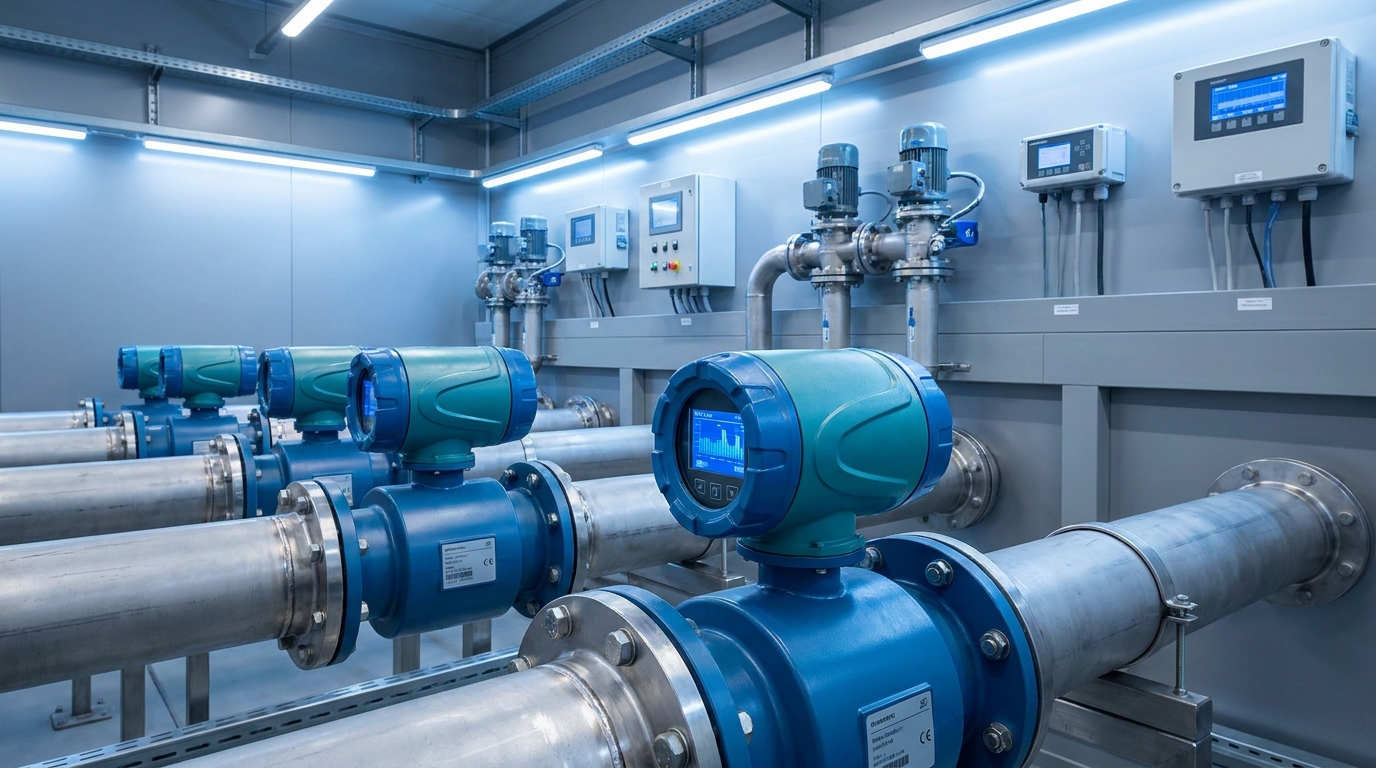
The primary innovation lies in construction. Instead of a glued-on liner, the new generation of flowmeters features a PFA/FEP liner that is injection-molded directly onto the sensor body. This seamless construction completely eliminates the risk of liner delamination.
Superior Durability
Seamless, injection-molded liner eliminates delamination. IP68 rated for harsh field conditions.
Breakthrough Cost
Starting from ~$120 (850 RMB) for a DN50 model, enabling mass deployment.
Maintenance-Free
No moving parts to clog or wear. Designed for long-term, zero-maintenance operation.
Connecting the Field: Low-Cost, Solar-Powered Telemetry
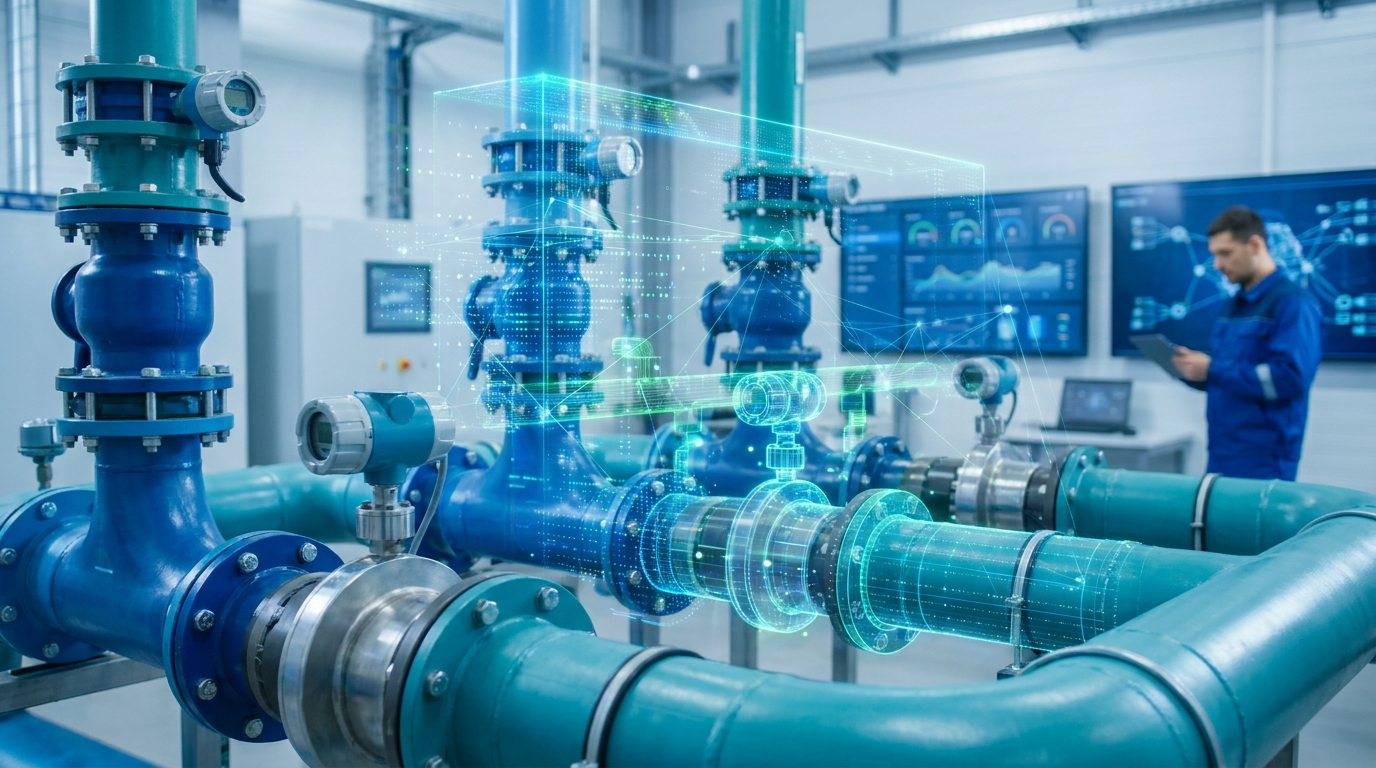
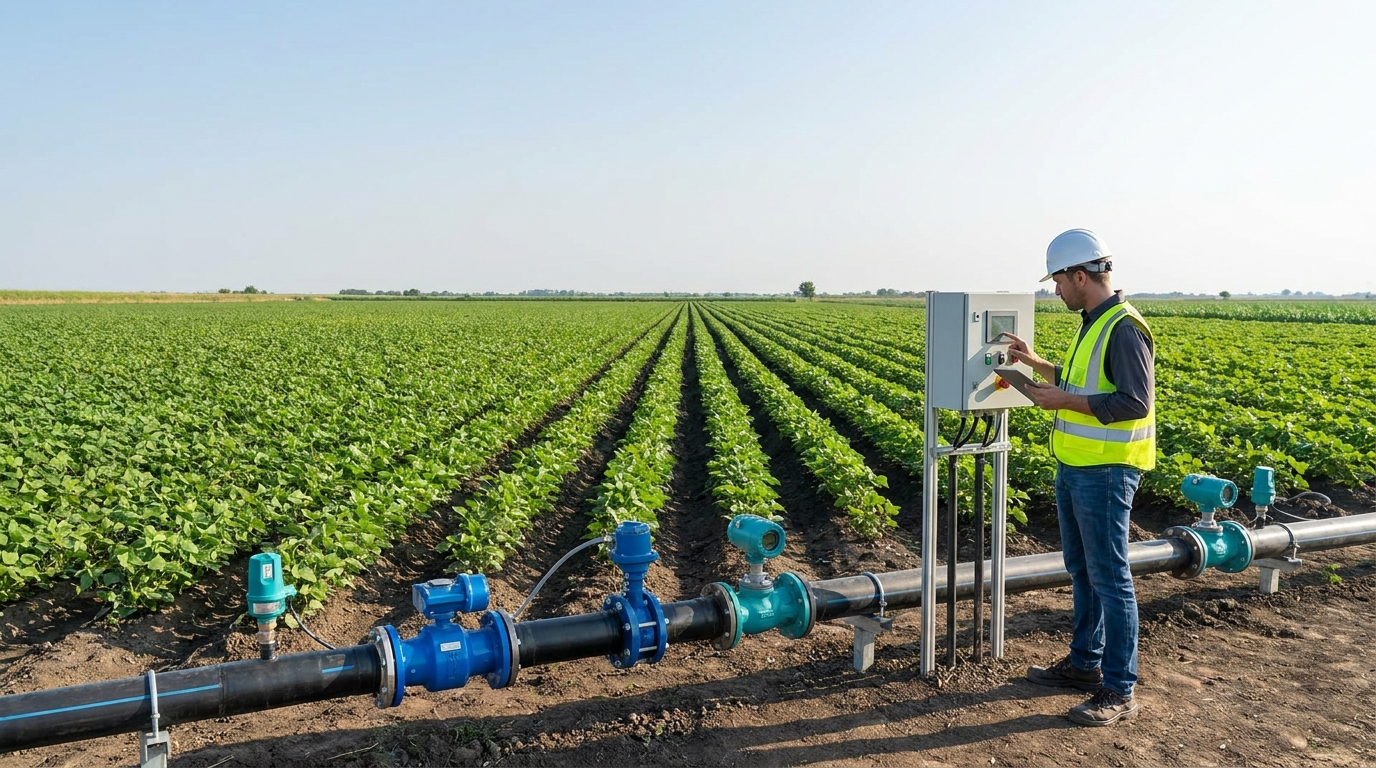
A sensor is only as good as the data it delivers. The flowmeter is paired with a rugged, solar-powered RTU with integrated 4G communication, creating a fully autonomous monitoring station.
This integrated package—a precision flowmeter and a solar-powered 4G RTU—is available for under $700 (5,000 RMB), providing a direct data pipeline from the most remote canal to the central management platform.
The Multiplier Effect of Granular Data for Precision Agriculture
When affordable and reliable metering technology is deployed at scale, it acts as a catalyst for a complete transformation in water management. The benefits extend far beyond simple billing.
Equitable Water Allocation and Leak Detection
Accurate data from every offtake ensures fair distribution based on water rights. A centralized platform can instantly flag anomalies for early leak and theft detection, minimizing water loss.
Data-Driven Irrigation Scheduling
By correlating water usage with soil moisture and weather data, managers can move to dynamic, demand-based water delivery. This is the core of precision irrigation—giving crops the exact water they need, when they need it.
Transforming Project Economics
Consider a 20,000-hectare project requiring 1,000 metering points. Traditional solutions at $2,500 per point would cost $2.5 million. An affordable smart flowmeter solution at ~$700 per point reduces the total to $700,000.
This 70% reduction in CAPEX frees up capital for other infrastructure or allows for a higher density of sensors, directly enhancing project ROI and accelerating progress towards sustainability goals.
Conclusion: The Future of Irrigation is Data-Driven
The challenge of feeding our future population sustainably can only be met through intelligent technology. The new generation of durable, affordable, and maintenance-free smart irrigation flowmeters finally closes the gap.
By breaking the cost barrier, these technologies democratize access to the data that underpins modern water management. They turn vast agricultural landscapes into fully transparent, data-rich ecosystems where every drop is counted and every decision is informed.
To explore how our cost-effective and robust agricultural water metering solutions can enhance the efficiency and sustainability of your next project, please visit us at www.cssoc.com.
Sources: FAO AQUASTAT (2022), The World Bank, The State Council of the People's Republic of China.
Recommended Products
Ecolor Technology provides professional instruments for smart water, environmental monitoring & industrial automation: