Home / Products / Orifice Plate Flow Meter
Back to Products
Orifice Plate Flow Meter
Flow Meters

Orifice Plate Flow Meter

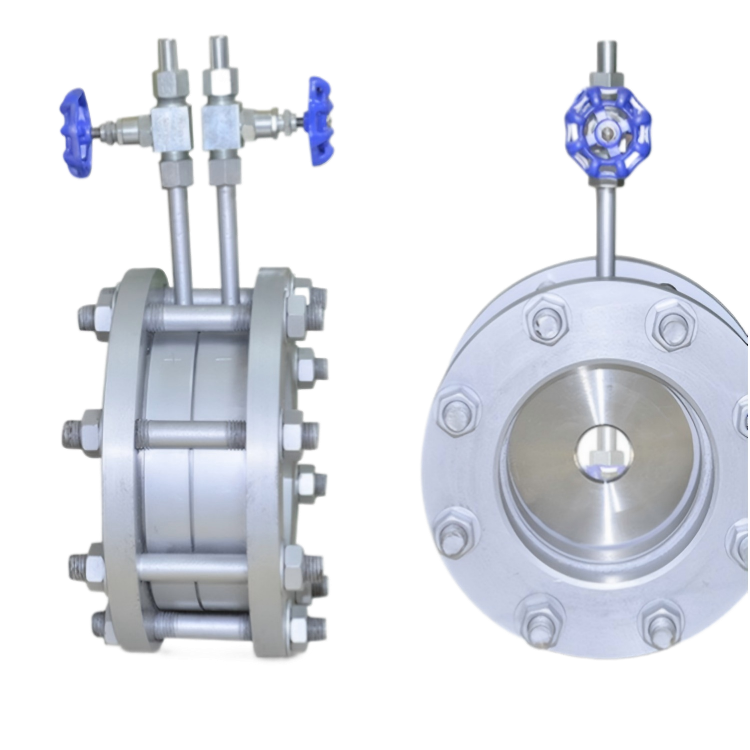
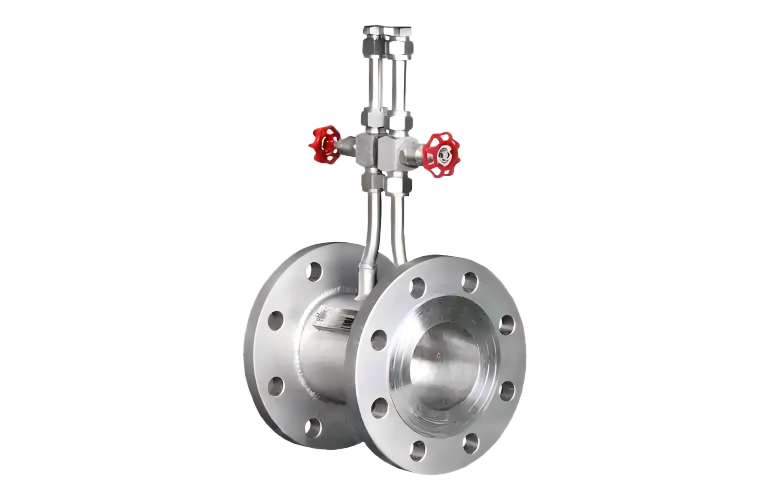
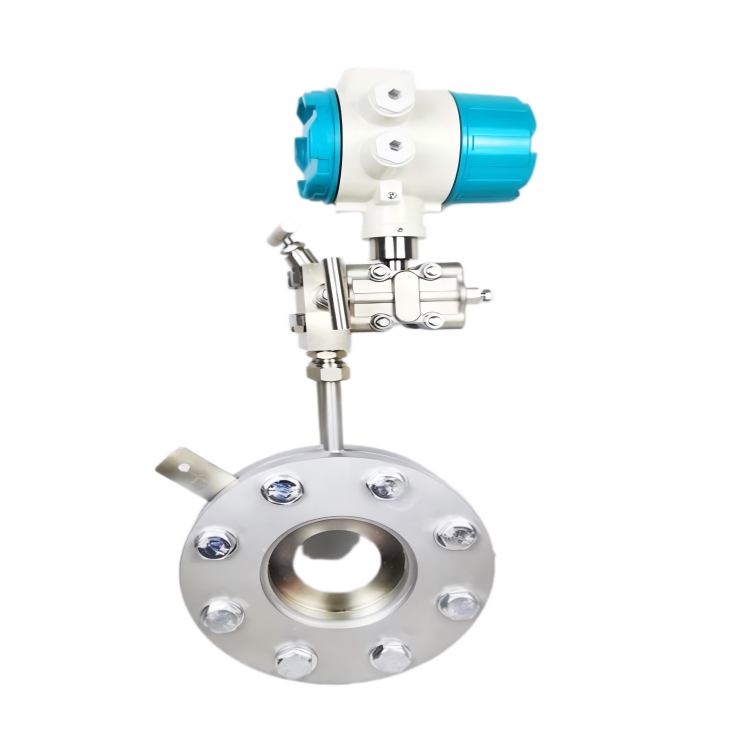
The orifice plate flow meter is a high-range-ratio differential pressure flow device composed of a standard orifice plate paired with a multi-paramete...

Key Features

High temperature and pressure resistance, suitable for flow control and regulation in process lines
Simple mechanism, reliable operation, stable performance
Wide range, high accuracy, extensive application
Broad range of measurable media, suitable for flow measurement of gases, steam, and liquids

Performance Metrics

Pressure Tapping Method Corner Tapping, Flange Tapping, D and D/2 Tapping
Accuracy Class ±1.5%, ±1%, ±0.5% (Customizable)
Installation Method Flange, Wafer, Compact
Measured Medium Steam, compressed air, biogas, and various other gases; water, oil, and various other liquids

Key Features

High temperature and pressure resistance, suitable for flow control and regulation in process lines
Simple mechanism, reliable operation, stable performance
Wide range, high accuracy, extensive application
Broad range of measurable media, suitable for flow measurement of gases, steam, and liquids
Simple operation, easy maintenance
High rangeability, adapts to large flow variation ranges
Complies with national standards, flexible and diverse installation methods
Orifice Plate Flow Meter standard assembly

What is an Orifice Plate Flow Meter?

An orifice plate flow meter is a high-range-ratio differential pressure flow device composed of a standard orifice plate paired with a multi-parameter differential pressure transmitter or a combination of differential pressure, temperature, and pressure transmitters. It is a versatile instrument capable of measuring the flow of gases, steam, liquids, and natural gas, making it a cornerstone for process control and measurement.

This type of flow meter is extensively applicable across various sectors of the national economy, including petroleum, chemical, metallurgy, electric power, heating, and water supply. It serves as an important tool for developing industrial and agricultural production, saving energy, and improving economic efficiency.

Key Features & Advantages

Robust & Reliable

Features high temperature and pressure resistance with a simple mechanism for reliable operation and stable performance in demanding process lines.

Versatile Measurement

Offers a broad range of measurable media, suitable for accurate flow measurement of gases, steam, and various liquids with high rangeability.

User-Friendly Design

Designed for simple operation and easy maintenance, complying with national standards and offering flexible, diverse installation methods.
Orifice Plate Flow Meter installation in pipeline

Core Functions in Process Automation

In process automation instrumentation, the orifice plate flow meter serves two major functions. Primarily, it acts as a precise detection instrument for process automation control systems, providing critical flow data for regulation.

Secondly, it functions as a reliable totalizer for measuring material quantities. This dual role in both control and custody transfer underscores its vital position in industrial measurement and management.

Wide Application of Orifice Plate Flow Meters

The application of this differential pressure flow device extends far beyond core industries. It is widely used in coal, chemicals, transportation, construction, and the light and textile industries.

Furthermore, orifice plate flow meters find essential roles in food processing, medicine, agriculture, environmental protection, and even aspects of daily life. Their contribution to improving product quality and management levels is significant across the economic spectrum.
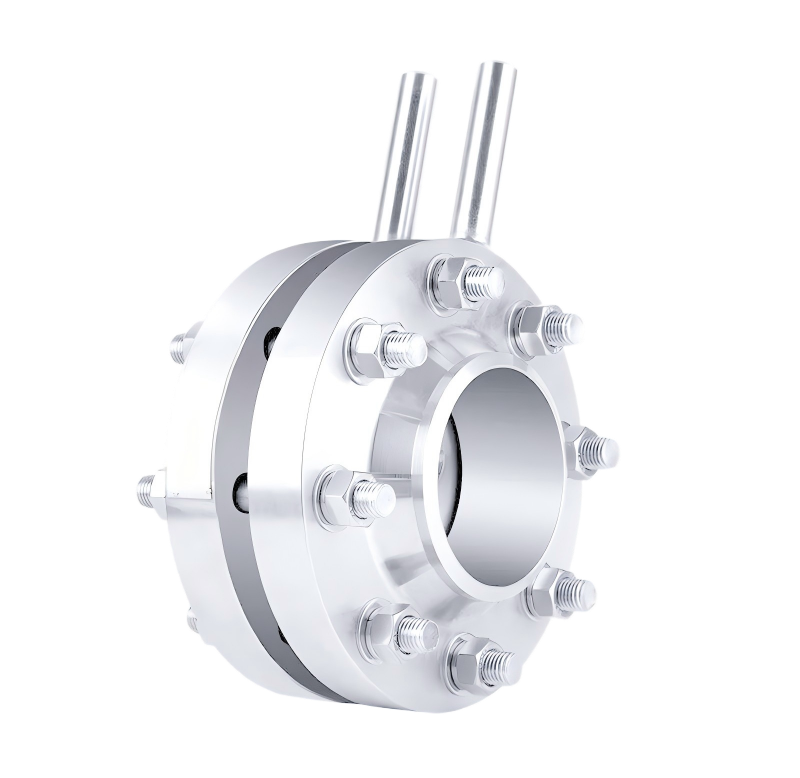
Industrial orifice plate meter for steam flow measurement

Technical Performance and Specifications

The orifice plate flow meter is engineered for performance, offering a wide measurement range and high accuracy. Its high rangeability allows it to adapt to large flow variation ranges commonly encountered in industrial processes.

Key Specifications at a Glance

Measured Media
Gases, Steam, Liquids, Natural Gas
Primary Application
Process Control & Measurement
Key Feature
High Rangeability / Wide Range
Device Type
Differential Pressure Flow Device
Typical System
Orifice Plate with DP, Temp, & Pressure Transmitters
Performance
Stable, Reliable, High Accuracy
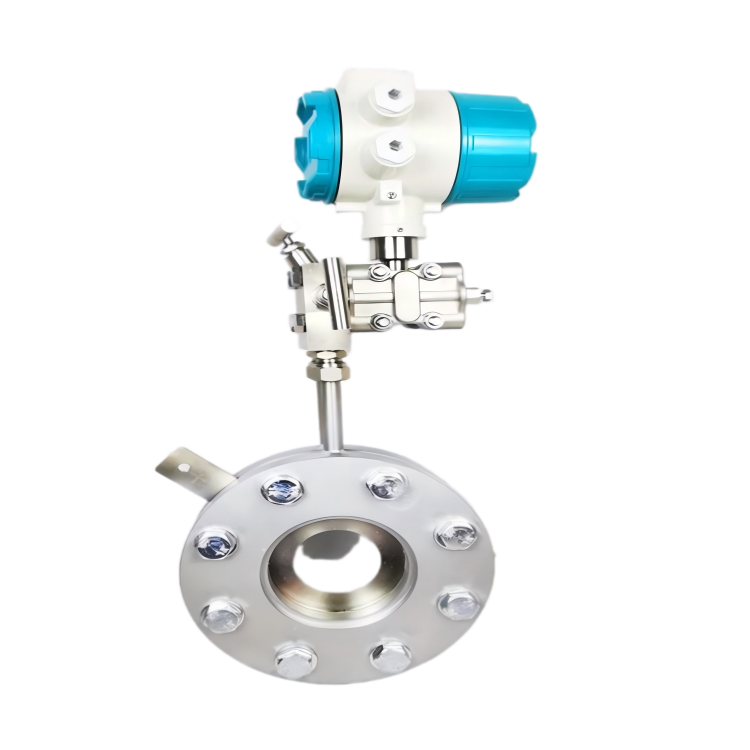
Orifice plate flow meter components and assembly Multi-parameter differential pressure transmitter for flow metering

Summary: A Vital Tool for Industry

In conclusion, the orifice plate flow meter holds a significant position in the national economy. Its combination of a simple yet robust orifice plate with advanced multi-parameter transmitters creates a solution that is fundamental for energy saving, efficiency improvement, and enhanced management levels in countless applications worldwide.

Contact Us

Need a custom solution? Our engineers are ready to help you design the perfect system.

Get In Touch
Downloads

Orifice meter-Product Parameter.pdf
PDF • 274.3 KB

Related Questions

View All
Straight pipe requirements comparison table for different flowmeter types - electromagnetic vs ultrasonic flowmeters
View Answer
<p><strong>Straight pipe requirements</strong> vary significantly among flowmeter types due to different measurement principles. Here's a comprehensive comparison:</p><ul><li><strong>Electromagnetic flowmeters (LGF series)</strong>: Upstream 5D, downstream 3D, relatively tolerant to flow disturbances</li><li><strong>Ultrasonic flowmeters</strong>: Clamp-on type requires upstream 10D-20D, downstream 5D-10D, highly sensitive to flow profile</li><li><strong>Doppler radar flowmeters (HZ-KSLF)</strong>: Non-contact measurement, no straight pipe limitations, ideal for open channels and irregular waterways</li><li><strong>Vortex flowmeters</strong>: Upstream 15D-20D, downstream 5D, sensitive to vibrations</li><li><strong>Orifice plate flowmeters</strong>: Upstream 10D-30D, downstream 5D-8D, most stringent requirements</li></ul><p>Special condition adjustments: Add 5D after 90° elbows, 10D after control valves, 3D after reducers. <strong>Electromagnetic flowmeters</strong> offer significant advantages in complex piping systems due to their tolerance to flow disturbances. Proper straight pipe selection ensures measurement accuracy meets design specifications for industrial applications.</p>
Why are oval gear flow meters ideal for high-viscosity fluids?
View Answer
<p>Oval gear meters are classic positive displacement devices: two oval gears driven by differential pressure rotate and displace a fixed volume per revolution. Accuracy correlates with lubricity and is only weakly affected by viscosity — <strong>higher viscosity means less slip and better accuracy</strong>, which makes them ideal for diesel, heavy fuel oil, crude oil and resins.</p><p>Typical accuracy ±0.2%R~±0.5%R; widely used for marine bunkering, depot loading and chemical batching.</p>
How does a vortex precession flow meter work and why is it good for natural gas?
View Answer
<p>A vortex precession meter uses forced oscillation: gas passes a swirl generator that imparts rotation, creating a helical vortex that precesses around the axis. The precession frequency is proportional to flow rate and detected by a piezoelectric sensor.</p><p>Why it suits natural gas: 1) <strong>No moving parts</strong> — no wear, long maintenance intervals; 2) Wide turndown (1:15+) covering peak-valley demand; 3) Moderate pressure loss, better than orifice plates; 4) Accuracy ±1%~±1.5%, adequate for general gas custody and process metering; 5) Integrated T&amp;P compensation reads standard volume directly.</p>
What is the pressure loss of the LGF-PA66 electromagnetic flow meter and does it add pumping energy cost?
View Answer
<p>The LGF-PA66 has a full-bore straight-through measuring tube with no throttling elements and no moving parts. Pressure loss comes only from minor local resistance: a few kPa up to roughly a dozen kPa at rated flow across DN15–DN1200. Orifice plates typically cost 10–40 kPa and turbine meters are comparable or worse, so the electromagnetic design is the energy-saving choice.</p> <p>Two points for pumping-cost evaluations:</p> <ul> <li>The PA66 body is moulded in one piece with low surface roughness; at the same size and flow it loses slightly less head than a stainless-steel body with a separate liner;</li> <li>In pump-station retrofits this pressure-loss level barely shifts the system resistance curve, so the pump operating point and long-term electricity consumption stay effectively unchanged.</li> </ul> <p>Where energy KPIs matter, pair the LGF-PA66 with an EC60 RTU: it collects the meter's 4–20 mA or pulse output together with pump power data and computes specific energy (kWh per m³) for the platform, exposing high-consumption periods. On DN300+ lines, every kPa of head saved translates into thousands of kWh per year — the reason many municipal stations replace orifice metering with the LGF-PA66 during upgrades.</p> <p>For more information, please visit our product pages or contact our technical team.</p>