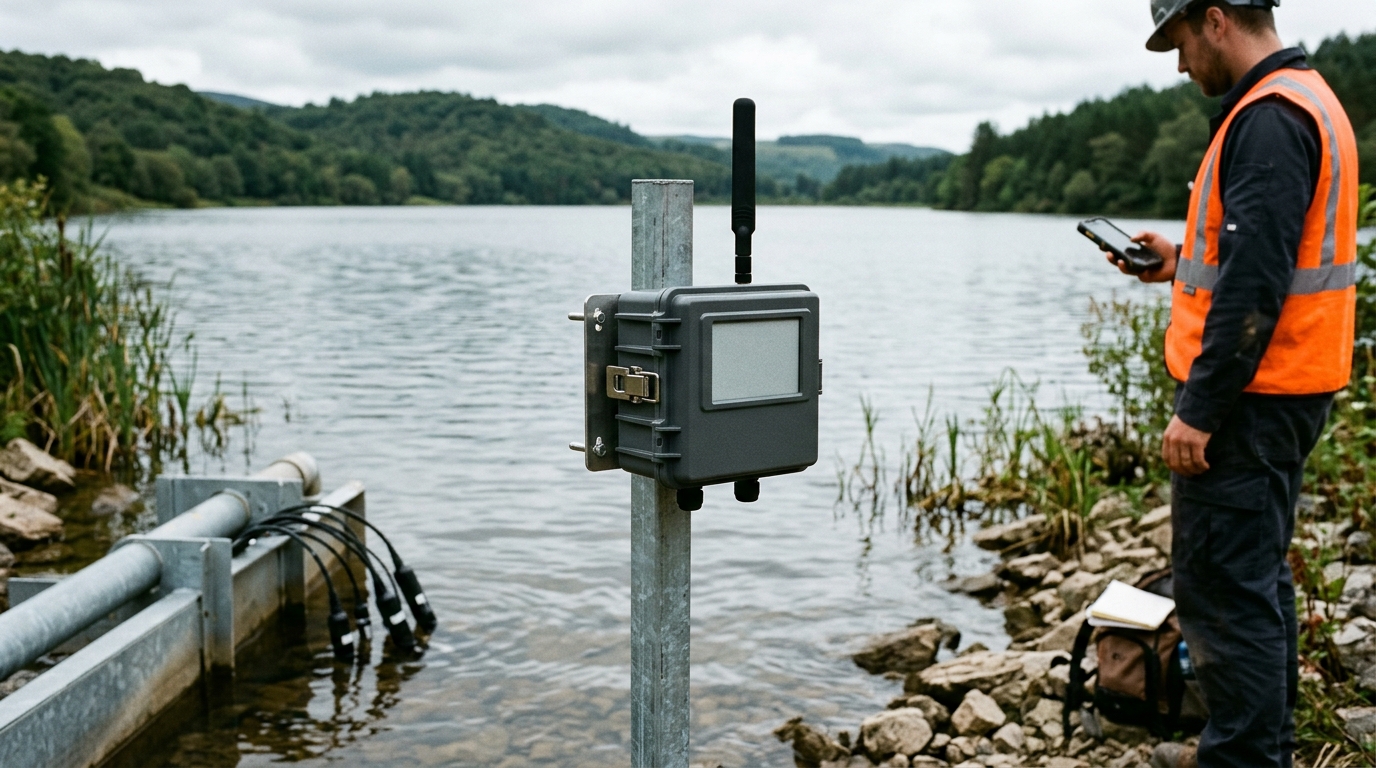
Micro-Power Self-Powered Portable Telemetry Terminal for Emergency Water Source Quality Monitoring
Addressing the pain points of emergency water source monitoring — no grid power or wired communication at temporary sites, extremely short deployment windows, multi-parameter high-frequency sampling needs, harsh outdoor environments, and data sharing across multiple departments — this solution is built around the micro-power self-powered portable telemetry terminal (Hero V9 series): sleep current below 50 μA, standard 114 Ah lithium battery pack delivering over 4 years of autonomous operation, industrial-grade 4G LTE compatible with all carriers, IP68 protection for continuous submersion. It supports RS485 Modbus/CJ-188 multi-parameter water quality analyzers, 3 pulse channels and 2 analog inputs, with automatic switching between regular timed sampling and abnormal high-frequency sampling, dual alarm mechanisms (threshold exceedance + instantaneous surge), and simultaneous reporting to up to 3 data centers for multi-department emergency data sharing. Bluetooth configuration with e-paper display enables tool-free setup, and the quick-release bracket design allows deploy-and-measure in minutes — bringing hour-level mobile monitoring capability to sudden water pollution incidents, backup water source activation, and flood-season source water security.
Overview
Summary
Addressing the pain points of emergency water source monitoring — no grid power or wired communication at temporary sites, extremely short deployment windows, multi-parameter high-frequency sampling needs, harsh outdoor environments, and data sharing across multiple departments — this solution is built around the micro-power self-powered portable telemetry terminal (Hero V9 series): sleep current below 50 μA, standard 114 Ah lithium battery pack delivering over 4 years of autonomous operation, industrial-grade 4G LTE compatible with all carriers, IP68 protection for continuous submersion. It supports RS485 Modbus/CJ-188 multi-parameter water quality analyzers, 3 pulse channels and 2 analog inputs, with automatic switching between regular timed sampling and abnormal high-frequency sampling, dual alarm mechanisms (threshold exceedance + instantaneous surge), and simultaneous reporting to up to 3 data centers for multi-department emergency data sharing. Bluetooth configuration with e-paper display enables tool-free setup, and the quick-release bracket design allows deploy-and-measure in minutes — bringing hour-level mobile monitoring capability to sudden water pollution incidents, backup water source activation, and flood-season source water security.
Key Advantages
Challenges
- No infrastructure at temporary sites: emergency monitoring points on reservoir banks and river beaches have no grid power and no wired network; permanent-station construction is impossible, and generator-based temporary setups carry high O&M cost, noise and fuel logistics
- Extremely short response window: sudden pollution incidents demand continuous monitoring capability within hours; conventional equipment requires civil works, cabling and professional commissioning that cannot meet emergency timelines
- Multi-parameter high-frequency sampling: during emergencies, turbidity, pH, conductivity, DO and residual chlorine must be sampled at high frequency to track plume migration — beyond the capability of ordinary low-power devices
- Harsh field environment punishes equipment: storm immersion, flooding and frequent transport/collisions cause high failure rates in standard-protection devices; any data interruption blinds decision-making
- Data must be shared across departments simultaneously: emergency data must reach water dispatch centers, environmental regulation platforms and government emergency command systems at once; single-center architectures need secondary forwarding, hurting timeliness and reliability
Results
- Hour-level station deployment: quick-release bracket plus tool-free Bluetooth configuration let a single operator install and commission a point; time from equipment arrival to first data report compresses to under one hour
- 4+ years of maintenance-free autonomy: sleep current below 50 μA with a 114 Ah lithium pack delivers at least 4 years at typical duty cycles — no battery changes or external power through the entire emergency mission
- One-stop full-parameter access: RS485 supports Modbus-RTU/CJ-188 multi-parameter analyzers, 3 pulse inputs and 2 analog inputs handle level and pressure sensors — one terminal networks all parameters at the emergency source
- Abnormal high-frequency sampling captures pollution plumes: dual alarms (threshold exceedance + instantaneous surge) automatically switch to second-level sampling, fully recording the plume passage
- Triple-center simultaneous reporting: emergency data collected once is reported to up to 3 centers at the same time — dispatch, regulation and command departments share one data source with zero delay and no secondary forwarding
Solution Details
Micro-Power Self-Powered Portable Telemetry Terminal for Emergency Water Source Quality Monitoring
When a sudden water pollution incident forces a switch from the primary intake, or when flood-season raw water quality deteriorates rapidly, water utilities and authorities must establish continuous water quality monitoring at emergency sources within hours. Emergency monitoring differs fundamentally from permanent stations: temporary monitoring points are typically located on reservoir banks, river beaches or backup intake heads with no grid power and no wired network; the emergency window is short, so equipment must be deploy-and-measure on arrival; the monitoring burden is heavy — turbidity, pH, conductivity, dissolved oxygen, residual chlorine and more must be sampled at high frequency and transmitted in real time; harsh field conditions including storm immersion, flooding and frequent transport demand exceptional ruggedness; and emergency data must simultaneously reach water supply dispatch, environmental regulation and government emergency command departments, which a single-center reporting architecture cannot satisfy.
Self-Powered Portable Telemetry Terminal as the Emergency Monitoring Data Hub
This solution adopts the micro-power self-powered portable telemetry terminal (Hero V9 series) as the data hub for emergency water source quality monitoring. The terminal ships with a 114 Ah@3.6 VDC lithium thionyl chloride battery pack and a sleep current below 50 μA; at a typical duty cycle of one sample every 15 minutes and one report every 2 hours, theoretical battery life exceeds 4 years — completely eliminating dependence on grid power or generators at emergency sites. The IP68-rated enclosure combines silicone-gasket physical sealing, potted electronics and a high-gain waterproof antenna for continuous submersion duty, surviving storms and floods. On the communication side, the industrial-grade 4G LTE module auto-adapts to all major carrier networks — wherever there is cellular coverage, a station can be built; the terminal can report to up to 3 data centers simultaneously in multi-center or primary/backup mode, so emergency data is collected once and shared by all parties.
Multi-Interface Full-Parameter Data Acquisition for Emergency Sources
For data acquisition, the terminal provides one RS485 port supporting Modbus-RTU and CJ-188 protocols for direct connection of turbidity, pH/ORP, conductivity, dissolved oxygen and residual chlorine analyzers, plus 3 pulse/switch inputs and 2 analog inputs (0-5 V / 4-20 mA) compatible with pressure, level sensors and pulse meters — a single terminal completes the full-parameter network at an emergency source. The professional "regular timed sampling + abnormal high-frequency sampling" mode keeps the device in low-power periodic operation under normal water quality; once a parameter exceeds limits or surges instantaneously, it automatically switches to high-frequency sampling with immediate alarms — preserving battery life while never missing the critical data window as a pollution plume passes. The dual-core ARM Cortex-M3 + MSP430 processor with embedded RTOS ensures reliable multi-threaded acquisition, while the independent 5 PPM high-precision clock chip with automatic zero-hour synchronization guarantees strictly consistent, traceable timestamps throughout the emergency.
Tool-Free Field Configuration and Maintenance Experience
Field maintenance experience is another key for emergency scenarios. With a built-in Bluetooth 5.0 module and e-paper display, operators configure meter constants, ranges, alarm thresholds and sampling/reporting intervals entirely through a smartphone app — no laptop required; magnetic buttons and status indicators visualize signal strength, battery voltage and live parameter readings. The mounting bracket with quick-release latch installs directly on well walls, railings or temporary poles, and secondary detachment takes minutes for rapid relocation. Firmware can be upgraded over the air via Bluetooth or 4G even during active emergency duty. The complete system upgrades emergency source monitoring from the hour-scale blind zone of "manual sampling, lab delivery, waiting for reports" to continuous online monitoring with minute-level data reaching multiple centers directly — winning precious time for intake-switching decisions, pollution plume tracking and water supply security early warning.
Key Product Features of the Self-Powered Telemetry Terminal
- Ultra-low power, long life: sleep current below 50 μA with a standard 114 Ah@3.6 VDC lithium thionyl chloride pack (expandable); theoretical battery life ≥4 years at 15-min sampling / 2-hr reporting; proprietary lightweight IP communication stack with small footprint and high efficiency
- IP68 triple waterproofing: silicone-gasket sealing, potted electronics and high-gain waterproof antenna allow continuous submersion; storm, flood and humid well environments are safe; rugged ABS enclosure withstands frequent transport
- 4G LTE all-carrier + multi-center reporting: industrial-grade module auto-adapts to all carriers; reports to up to 3 data centers simultaneously in multi-center or primary/backup mode with automatic failover
- Professional emergency sampling modes: automatic switching between regular timed sampling and abnormal high-frequency sampling; dual alarm mechanism (threshold + instantaneous surge); sampling/storage interval configurable down to the second and reporting interval to the minute
- Multi-interface full-parameter acquisition: 1×RS485 (Modbus-RTU/CJ-188) for multi-parameter analyzers, 3 pulse inputs (single/double/triple pulse, forward-reverse metering), 2 analog inputs (0-5 V / 4-20 mA); dual-core ARM Cortex-M3 + MSP430 with embedded RTOS for reliable parallel acquisition
- Tool-free field configuration: built-in Bluetooth 5.0, e-paper display and magnetic buttons; smartphone app handles all parameter setup and calibration; signal strength, battery voltage and live data on screen; OTA firmware upgrade via Bluetooth/4G
? Reference Sources
- Original product description and technical specifications provided by the manufacturer
- Hero V9 series micro-power self-powered portable telemetry terminal documentation
Approach
How we implement intelligence into your infrastructure step by step.
Emergency site survey and rapid deployment design
Select monitoring points based on intake location, shoreline conditions and 4G coverage; design portable deployment — quick-release brackets on well walls, railings or temporary poles, battery power with no external supply; define per-point parameter lists and instrument configurations, and maintain an emergency deployment playbook rehearsed in peacetime and ready in crisis.
Multi-parameter instrument access and terminal configuration
Connect turbidity, pH/ORP, conductivity, DO and residual chlorine analyzers via RS485 Modbus-RTU; wire level and pressure sensors to analog channels; configure meter addresses, ranges, sampling/storage intervals (second-level) and reporting intervals (minute-level) through the Bluetooth app; set threshold and instantaneous-surge alarm limits for every parameter.
Multi-center reporting and emergency platform integration
Configure the terminal to report simultaneously to water dispatch, environmental regulation and emergency command centers in parallel or primary/backup mode; complete protocol integration tests with each platform so that emergency data flows once-collected, multi-delivered with no secondary-forwarding delay.
Abnormal high-frequency sampling strategy
Enable regular + abnormal dual-mode sampling: low-frequency periodic operation preserves battery under normal conditions; any threshold breach or instantaneous surge triggers second-level high-frequency sampling and immediate alarms, fully recording water quality evolution as the plume passes and providing minute-level data for plume tracking and intake-switching decisions.
Emergency O&M and demobilization management
Establish emergency duty routines: remote monitoring of battery voltage and signal strength, on-site Bluetooth inspection via e-paper status; after mission completion, quick-release demobilization, full data export and archiving, OTA firmware maintenance, and return-to-standby storage — forming a peacetime-prepositioned, wartime-rapid-response emergency monitoring asset cycle.
Recommended Hardware
Essential components for this solution.
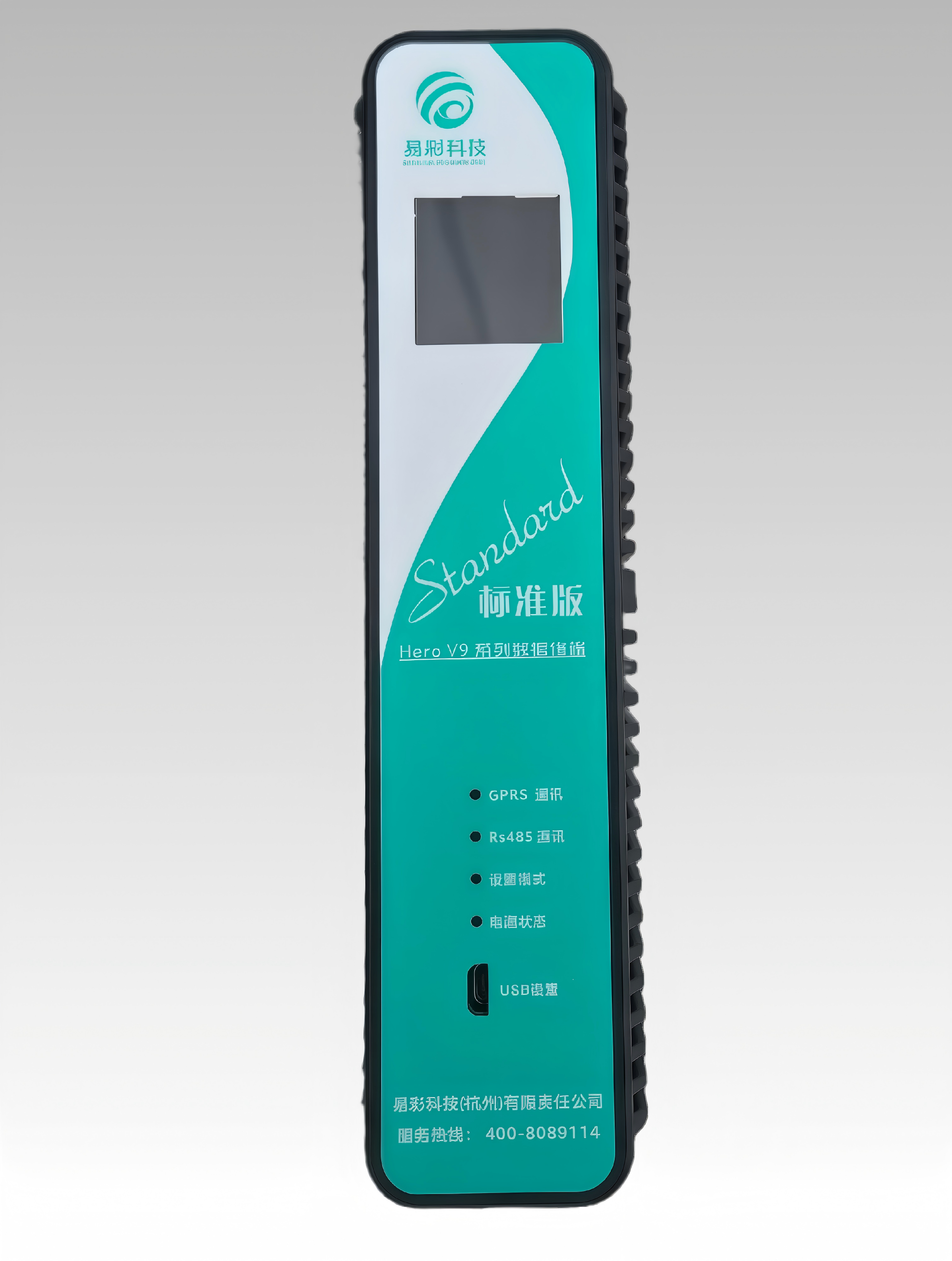
HERO V9-EC32 Hydrology RTU | Remote Terminal Unit
This product has the functions of remote data collection, control and communication. It can receive ...
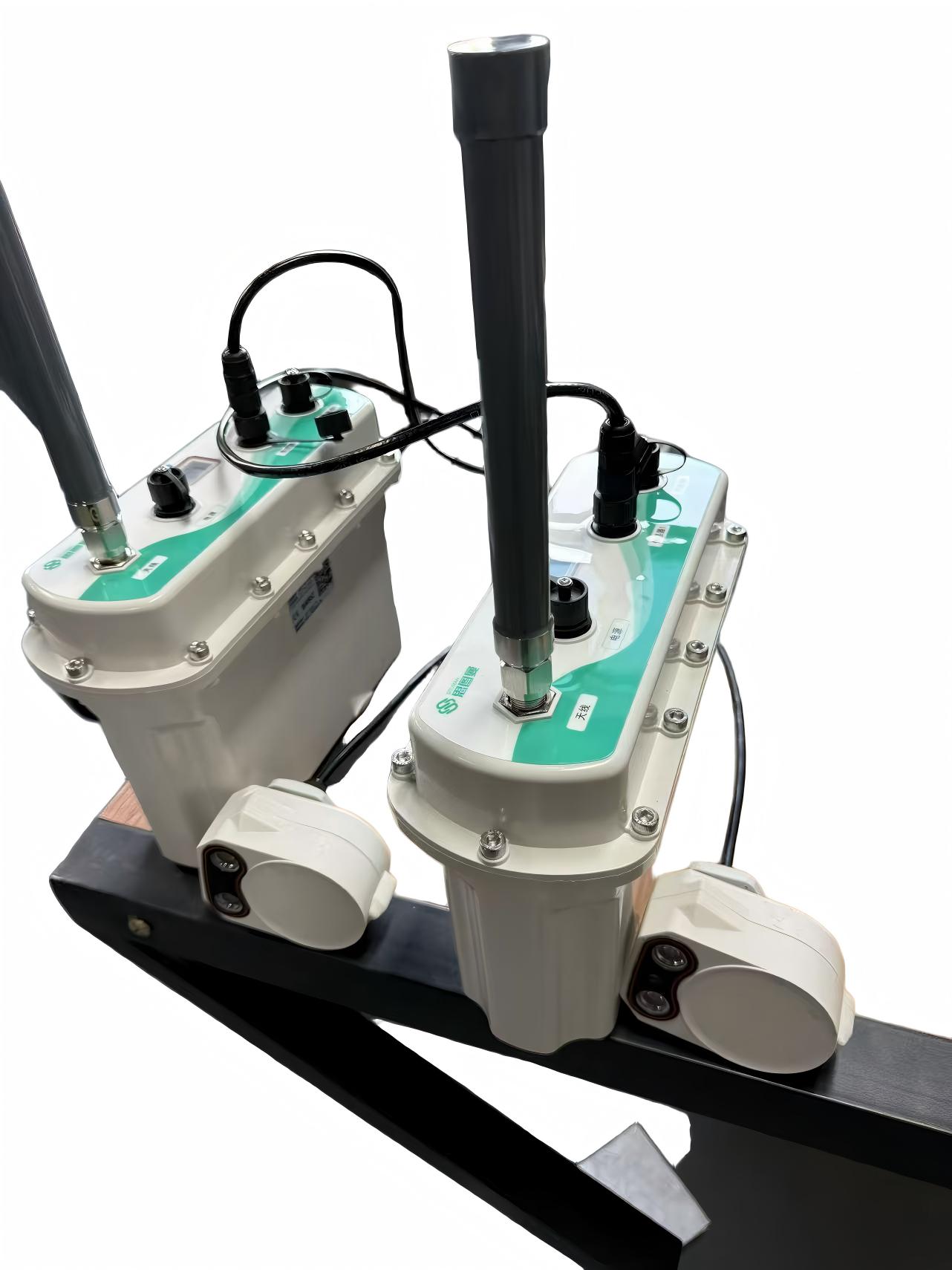
Low Power Self-Powered Portable Remote Telemetry Terminal (Hero V9 Series)
The self-powered portable remote telemetry terminal Hero V9 series is designed for outdoor operation...
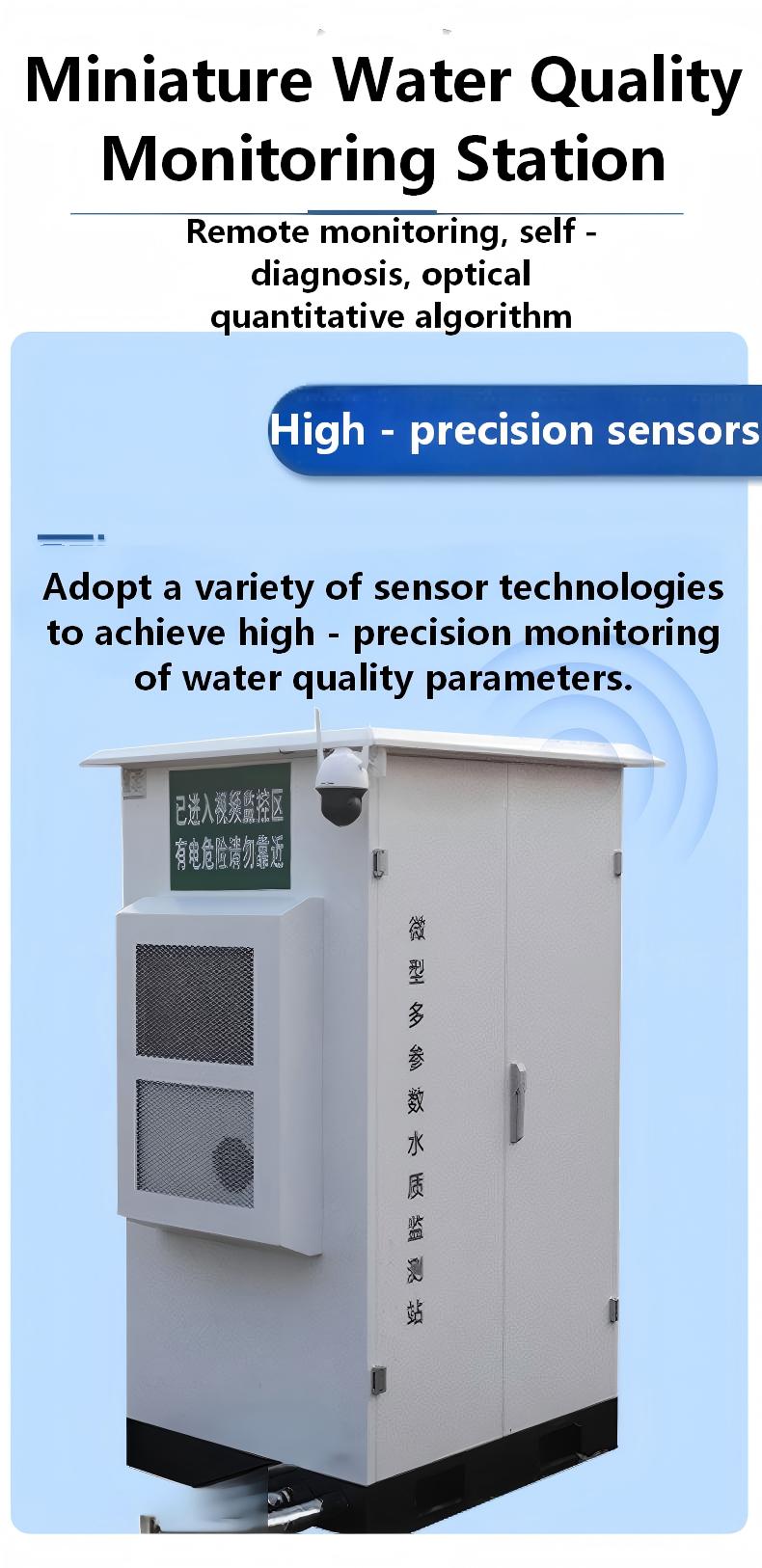
Compact Water Quality Monitoring Station
A pre-integrated, all-in-one outdoor monitoring station for convenient water environment surveillanc...
❓ Related FAQs
Related Solutions
Compact Water Quality Monitoring Station Solution for Township River Cross-Section Assessment
Wastewater Treatment Plant Water Quality Online Monitoring System
Water Quality Online Monitoring Comprehensive Solution

Ready to Optimize Your Business?
Contact us, and our professional team will provide customized solutions to help your business achieve digital transformation.
Get In Touch