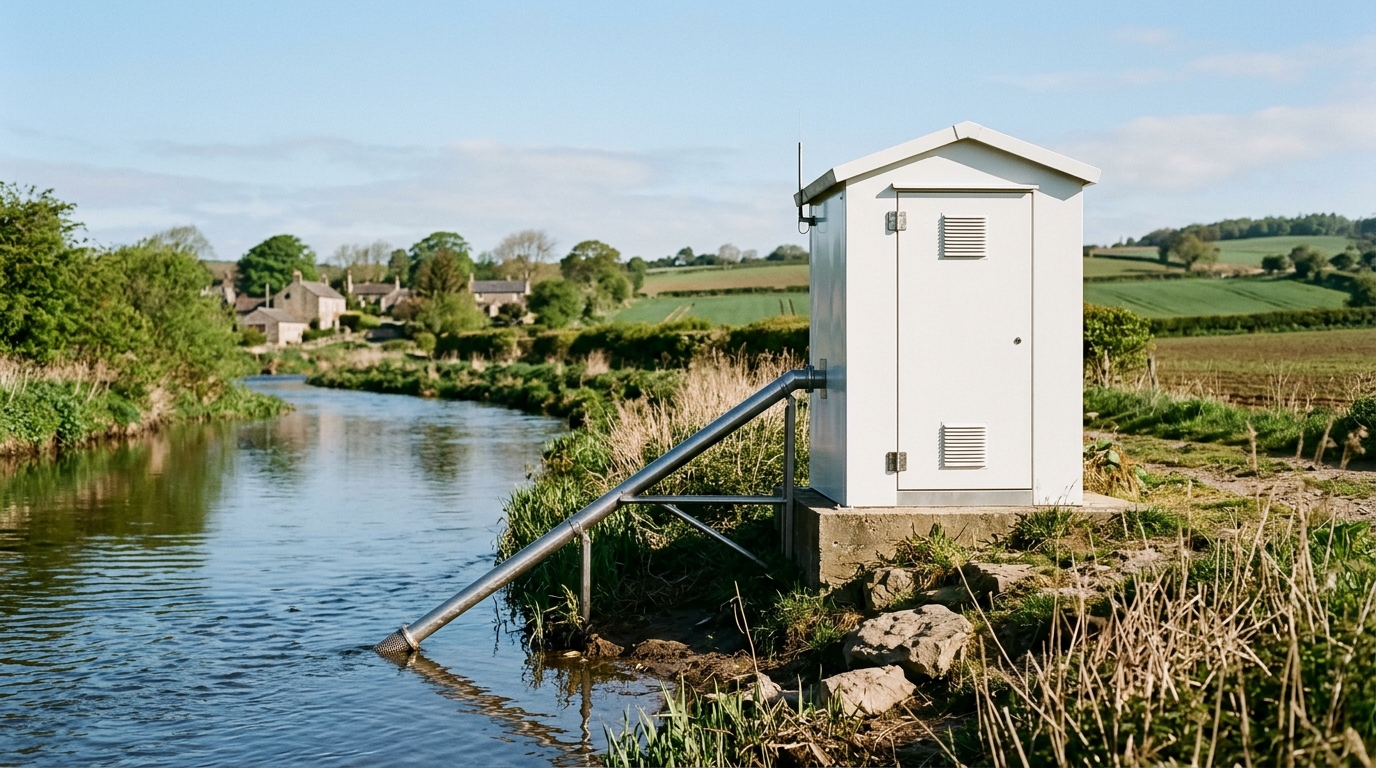
Compact Water Quality Monitoring Station Solution for Township River Cross-Section Assessment
Addressing the pain points of township river cross-section water quality assessment - high cost and long construction cycles of standard stations, dispersed sites with weak local O&M capability, the need for continuous, credible and traceable assessment data, high-frequency capture of pollution plumes during rainy seasons, and simultaneous reporting to river-chief and environmental regulatory platforms - this solution is built around compact automatic water quality monitoring stations: 0.5-4 m2 enclosures require no land acquisition or civil works for rapid deployment, integrating automatic COD, ammonia nitrogen, total phosphorus, total nitrogen analysis plus the standard five parameters, with automatic sampling, cleaning, calibration and standard-sample QC; 4G/Ethernet telemetry feeds county-level regulatory and river-chief platforms directly. Intermittent, continuous and emergency operating modes fit routine assessment and flood-season intensive monitoring, while grid-based deployment achieves full coverage of township cross-sections - a refined data foundation for water environment assessment, early warning, remediation and river-chief performance evaluation.
Overview
Summary
Addressing the pain points of township river cross-section water quality assessment - high cost and long construction cycles of standard stations, dispersed sites with weak local O&M capability, the need for continuous, credible and traceable assessment data, high-frequency capture of pollution plumes during rainy seasons, and simultaneous reporting to river-chief and environmental regulatory platforms - this solution is built around compact automatic water quality monitoring stations: 0.5-4 m2 enclosures require no land acquisition or civil works for rapid deployment, integrating automatic COD, ammonia nitrogen, total phosphorus, total nitrogen analysis plus the standard five parameters, with automatic sampling, cleaning, calibration and standard-sample QC; 4G/Ethernet telemetry feeds county-level regulatory and river-chief platforms directly. Intermittent, continuous and emergency operating modes fit routine assessment and flood-season intensive monitoring, while grid-based deployment achieves full coverage of township cross-sections - a refined data foundation for water environment assessment, early warning, remediation and river-chief performance evaluation.
Key Advantages
Challenges
- Standard stations are costly and slow to build: traditional automatic water quality stations require land acquisition, civil works and specialized installation, with high unit investment and month-scale construction cycles; township boundary sections are numerous and dispersed, so the standard-station model cannot achieve full-coverage assessment
- Weak township O&M capability: townships lack professional environmental O&M teams; reagent replacement, cleaning, calibration and fault handling depend on county or third-party resources, with slow response and runaway costs if frequent - creating high risk of data gaps and missed reports
- Assessment data must be continuous, credible and traceable: cross-section assessment is tied to river-chief performance and scrutinized by all parties; manual monitoring is infrequent and open to human interference, lacking automatic QC and data traceability, so assessment disputes are hard to arbitrate
- Rainy-season plumes demand high-frequency capture: after heavy rainfall, agricultural non-point source and overflow pollution concentrate in township rivers, with water quality changing drastically within hours; low-frequency monitoring misses the entire pollution process, creating high risk of misclassifying assessment categories
- Multi-platform reporting requirements: assessment data must simultaneously feed the county-level water environment regulatory platform, the river-chief information system and higher-level environmental networks, with differing interface protocols and high transmission reliability demands that traditional single-center reporting cannot meet
Results
- Rapid station commissioning in weeks: 0.5-4 m2 compact enclosures need no land acquisition or civil works and deploy on existing riverside land, compressing township cross-section construction from months to weeks with sharply lower unit investment
- Full-parameter automatic monitoring: COD, ammonia nitrogen, total phosphorus, total nitrogen plus the standard five parameters integrated in one station, indication error within +/-10%, built-in standard-sample verification for automatic QC - assessment data accurate, credible and traceable
- Low O&M threshold: automatic sampling/cleaning/calibration plus shortage and leakage alarms, minimum maintenance interval >=168 h and monthly reagent replacement, remote monitoring via the O&M app - county-level staff can manage all township stations
- Flood-season plume capture: intermittent/continuous/emergency mode switching enables high-frequency intensive monitoring during flood seasons, fully recording plume passage so assessment class determinations are evidence-based
- Direct multi-platform reporting: dual 4G + Ethernet channels stream data in real time with local SQL storage over 5 years; county platforms, river-chief systems and higher-level networks share the same data source
Solution Details
Compact Water Quality Monitoring Station for Township River Cross-Section Assessment
Cross-section water quality assessment of township rivers is the key lever for extending water environment governance to the grassroots level. As provincial and municipal assessment sections cascade down to township boundary sections, the number of monitoring points multiplies, while traditional standard automatic water quality stations - large footprint, long construction cycles and high unit investment - cannot support full-coverage monitoring at the township level. Meanwhile townships lack professional O&M teams, and the continuity, accuracy and traceability of assessment data face serious challenges: manual monitoring is infrequent and untimely, unable to capture the transient water quality changes when pollution plumes pass during rainstorms. Once assessment bulletins are linked to river-chief performance, data quality becomes the focus of all parties.
Compact Station Solution: Solving Construction and O&M Difficulties
This solution deploys compact automatic water quality monitoring stations to solve both station construction and O&M difficulties for township cross-sections. Each station highly integrates multiple water quality analyzers and auxiliary equipment in a compact enclosure, available in 0.5, 1, 2 and 4 m2 specifications. With a small footprint and no need for large-scale land acquisition or civil works, stations can be built and commissioned within weeks on existing riverside land. Inside the enclosure, online COD, ammonia nitrogen, total phosphorus and total nitrogen analyzers combine with pH, dissolved oxygen, conductivity, turbidity and temperature sensors for the standard five parameters, so a single station covers the full assessment parameter set. The analysis system uses a dual-optical-path design with multi-channel rotary valve liquid switching and plunger-pump metering that never contacts reagents; indication error stays within +/-10%, and built-in standard-sample verification provides automatic quality control, making assessment data accurate and credible.
Flexible Operating Modes for Routine and Emergency Monitoring
For operating modes, the station flexibly switches between intermittent, continuous and emergency modes: during routine assessment periods, intermittent mode performs scheduled automatic sampling and analysis, balancing data validity against reagent consumption; during flood seasons or pollution incidents, continuous/emergency modes run high-frequency intensive monitoring to fully capture plume passage. The system provides automatic sampling, cleaning and calibration with infrared photoelectric detection for reagent shortage and automatic leakage alarms; the minimum maintenance interval is no less than 168 hours and reagents are replaced monthly, greatly reducing O&M frequency and skill requirements at township sites. A color touch-screen HMI displays absorbance curves and flow-path diagrams in real time, and the O&M app supports process parameter monitoring, remote control and fault diagnosis, so county-level O&M staff can manage all township stations remotely. The IP55 high-protection enclosure with air conditioning and indoor heaters operates stably from -10 to 45 degrees C, suited to harsh rural outdoor climates.
Data Link: Real-Time Transmission to Regulatory and River-Chief Platforms
On the data link, stations provide dual 4G and Ethernet channels; after local storage in an SQL database (over 5 years of capacity), data streams in real time to the county-level water environment regulatory platform and river-chief information system, supporting automatic water quality class evaluation, exceedance alarms, upstream-downstream pollution accountability tracing and river-chief performance ranking. Deployed in a grid pattern according to basin and river network characteristics, multiple compact stations together cover all assessment cross-sections of township rivers; combined with big-data analysis of spatiotemporal water quality patterns, this delivers refined technical support for water environment assessment, early warning and remediation decisions - upgrading township cross-section assessment from manual sampling and monthly bulletins to continuous online, real-time traceable digital supervision.
Key Product Features
- Highly integrated compact enclosure: multiple water quality analyzers and auxiliary equipment integrated in 0.5-4 m2 enclosures - small footprint, easy installation, no large-scale land acquisition or civil works, ideal for rapid township riverside deployment
- Full assessment parameter coverage: integrated online COD (0-1000 mg/L), ammonia nitrogen (0-200 mg/L), total phosphorus (0-20 mg/L) and total nitrogen (0-300 mg/L) analyzers plus pH, dissolved oxygen, conductivity, turbidity and temperature sensors; automatic/manual range switching with configurable strategies
- Automatic operation and QC: automatic sampling, cleaning and calibration; built-in standard-sample verification; infrared photoelectric reagent-shortage detection and automatic leakage alarms; plunger-pump metering never contacts reagents; dual-optical-path design computes absorbance in real time
- Three flexible operating modes: intermittent, continuous and emergency modes - scheduled sampling for routine assessment to balance reagent consumption, high-frequency intensive monitoring during floods and pollution incidents; operating temperature -10 to 45 degrees C with air conditioning and indoor heaters
- Low maintenance, long data retention: minimum maintenance interval >=168 h, monthly reagent replacement, local SQL database storage expandable beyond 5 years of data, MTBF >=1440 h - guaranteed data continuity
- Smart transmission and O&M: dual 4G radio / Ethernet channels, RS232/RS485/RJ45 digital and 4-20 mA analog interfaces; color touch-screen Linux HMI shows absorbance curves and flow-path diagrams in real time; optional DTU and O&M app enable remote monitoring, fault diagnosis and remote back-control; USB program upgrades supported
Technical Specifications at a Glance
Approach
How we implement intelligence into your infrastructure step by step.
Cross-section survey and grid-based siting
Survey sites against the basin river network and township assessment section list: verify shoreline conditions, power and communications access, catchment area and pollution source distribution; apply grid principles to determine each station's specification (0.5-4 m2) and parameter mix, producing a county-wide township siting map.
Rapid construction and system integration
Crane-lift the compact enclosure onto existing riverside land, complete power (220 VAC) connection, intake and sampling piping, and instrument integration and commissioning; configure COD, ammonia nitrogen, total phosphorus and total nitrogen analyzers plus five-parameter sensors, and set ranges, automatic calibration cycles and standard-sample verification plans.
Operating mode and assessment regime configuration
Set intermittent mode with scheduled automatic sampling for routine assessment; pre-configure continuous/emergency mode switching plans for flood seasons and pollution-sensitive periods; per the assessment rules, define data validity rates, exceedance alarm thresholds and automatic water-quality-class evaluation aligned with river-chief assessment milestones.
Multi-platform reporting network
Dual redundant 4G and Ethernet transmission feeds data simultaneously to the county water environment regulatory platform, the river-chief information system and higher-level environmental networks; the local SQL database retains over 5 years of raw data to support dispute tracing and arbitration.
County-wide centralized O&M management
Establish a county-level centralized management model on the O&M app: remotely monitor each station's process parameters, reagent levels and equipment status; monthly rounds to replenish reagents, quarterly standard-sample verification, remote fault diagnosis plus nearest-crew dispatch - guaranteeing data continuity across all township stations.
Recommended Hardware
Essential components for this solution.
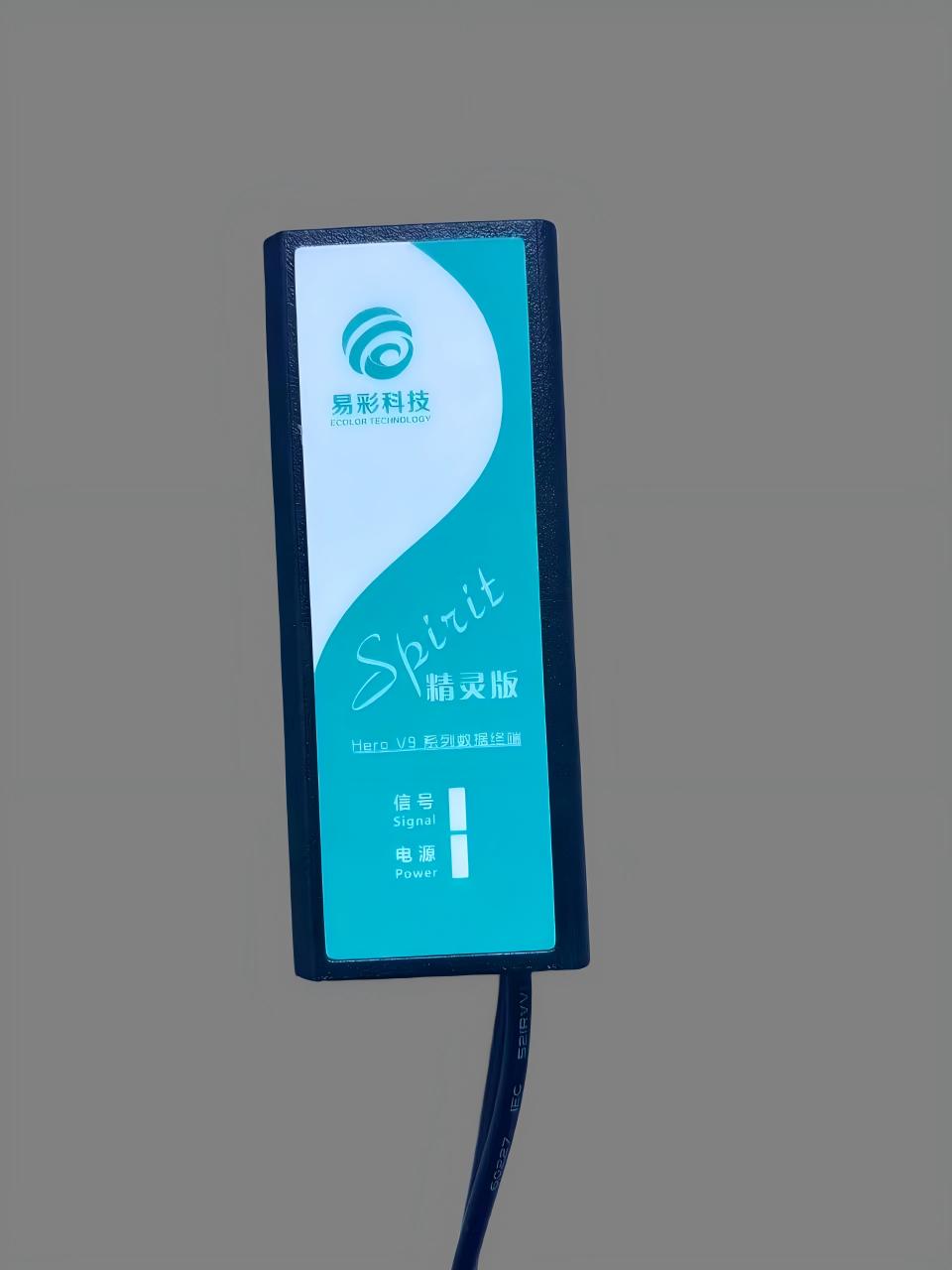
Measurement and Control Terminal (Hero V9 Series - EC60)
The Measurement and Control Terminal (Hero V9 Series - EC60) is a meticulously developed terminal pr...
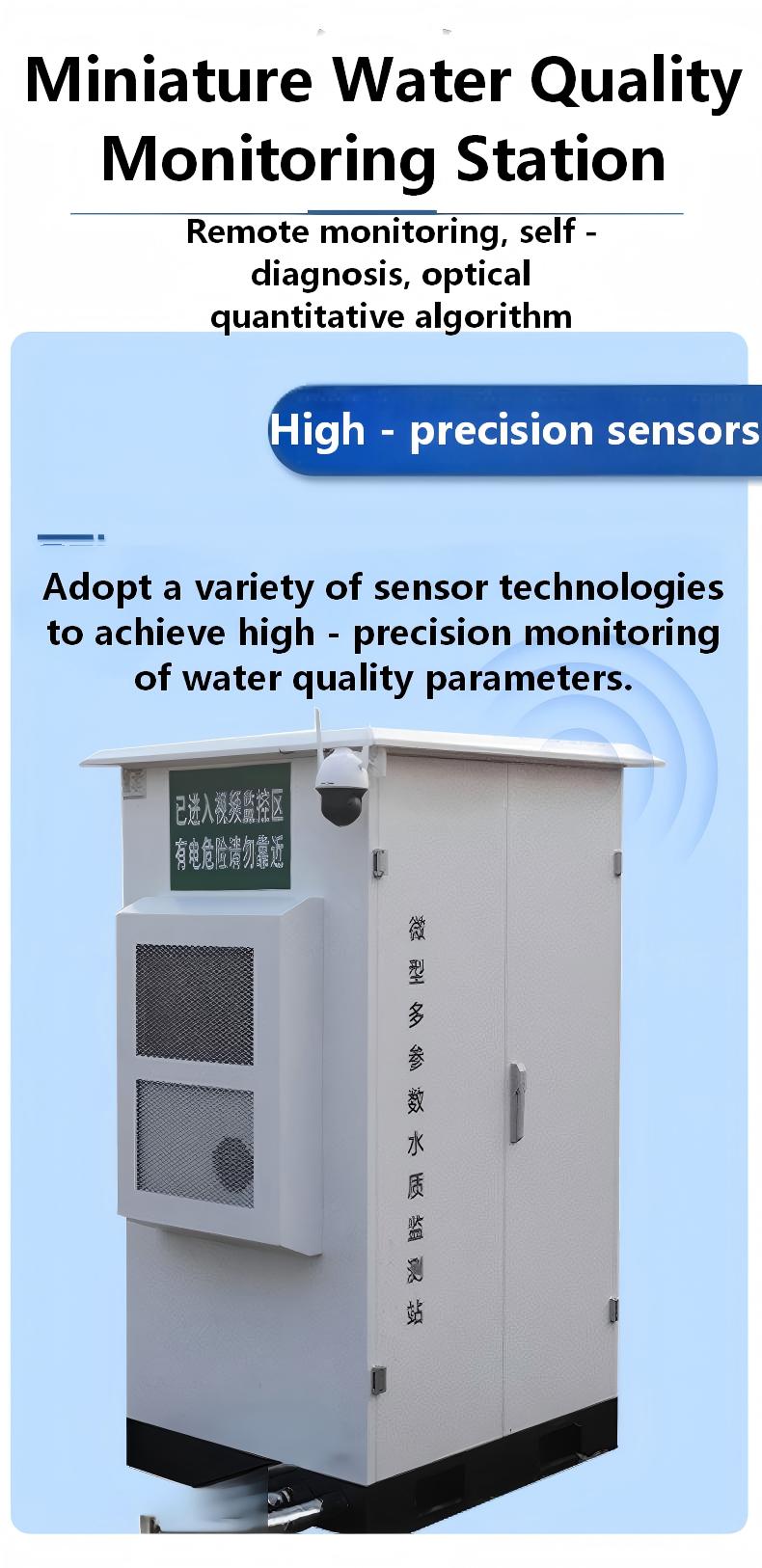
Compact Water Quality Monitoring Station
A pre-integrated, all-in-one outdoor monitoring station for convenient water environment surveillanc...
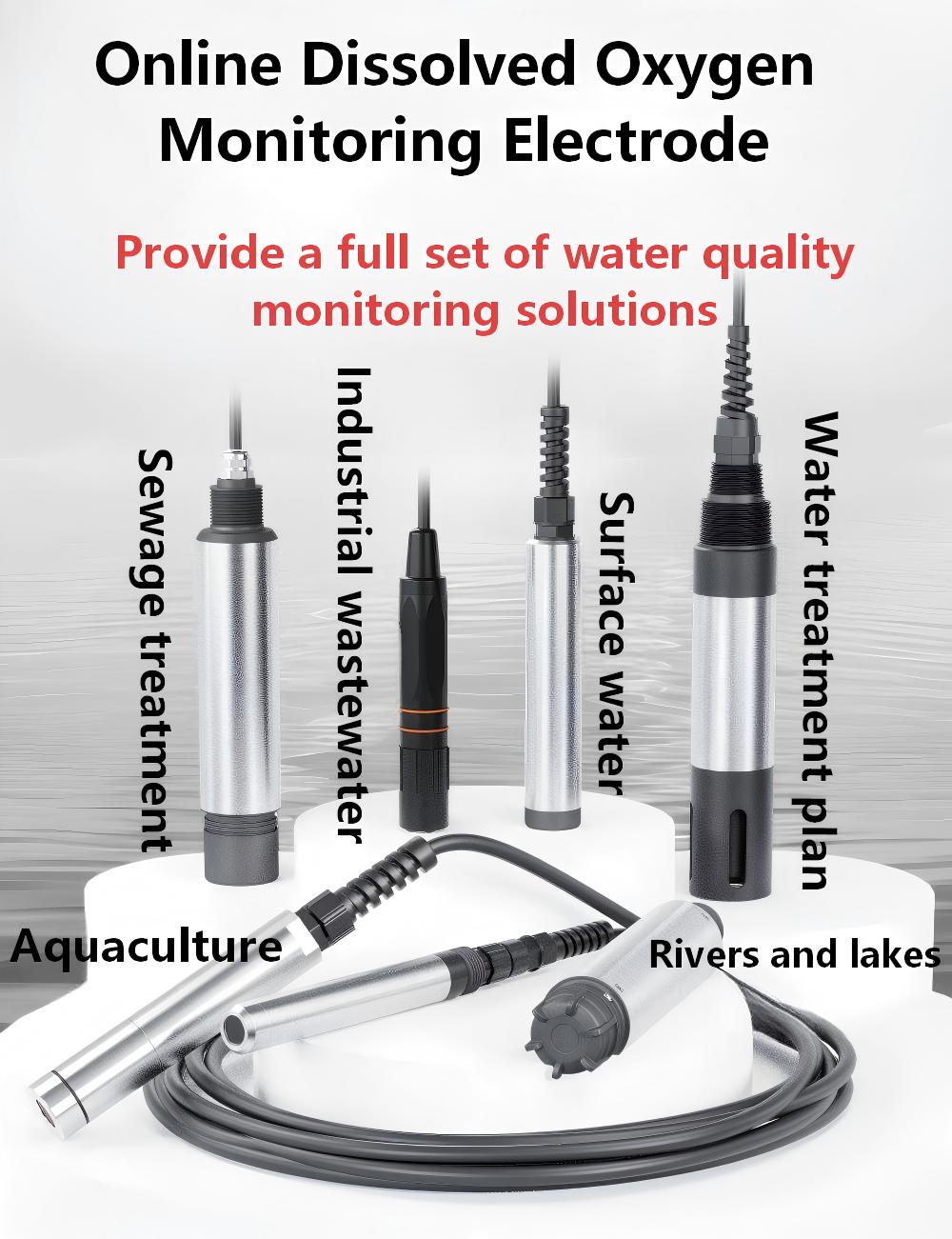
Dissolved Oxygen Electrode (Multiple Options Available)
The Dissolved Oxygen Online Analyzer is an intelligent online optical analysis instrument, widely us...
❓ Related FAQs
Related Solutions
Micro-Power Self-Powered Portable Telemetry Terminal for Emergency Water Source Quality Monitoring
Wastewater Treatment Plant Water Quality Online Monitoring System
Water Quality Online Monitoring Comprehensive Solution

Ready to Optimize Your Business?
Contact us, and our professional team will provide customized solutions to help your business achieve digital transformation.
Get In Touch