Latest Technology Advances in Low-Carbon Industrial Parks: Online Carbon Emission Monitoring
Against the global backdrop of climate action, online carbon emission monitoring has emerged as a critical digital infrastructure for industrial parks. By shifting from static calculations to dynamic, real-time tracking, these systems enable precise management of energy consumption and carbon output. This technological leap is essential for driving regional green transformation and meeting stringent carbon neutrality goals.
Technical Evolution in Industrial Park Carbon Management
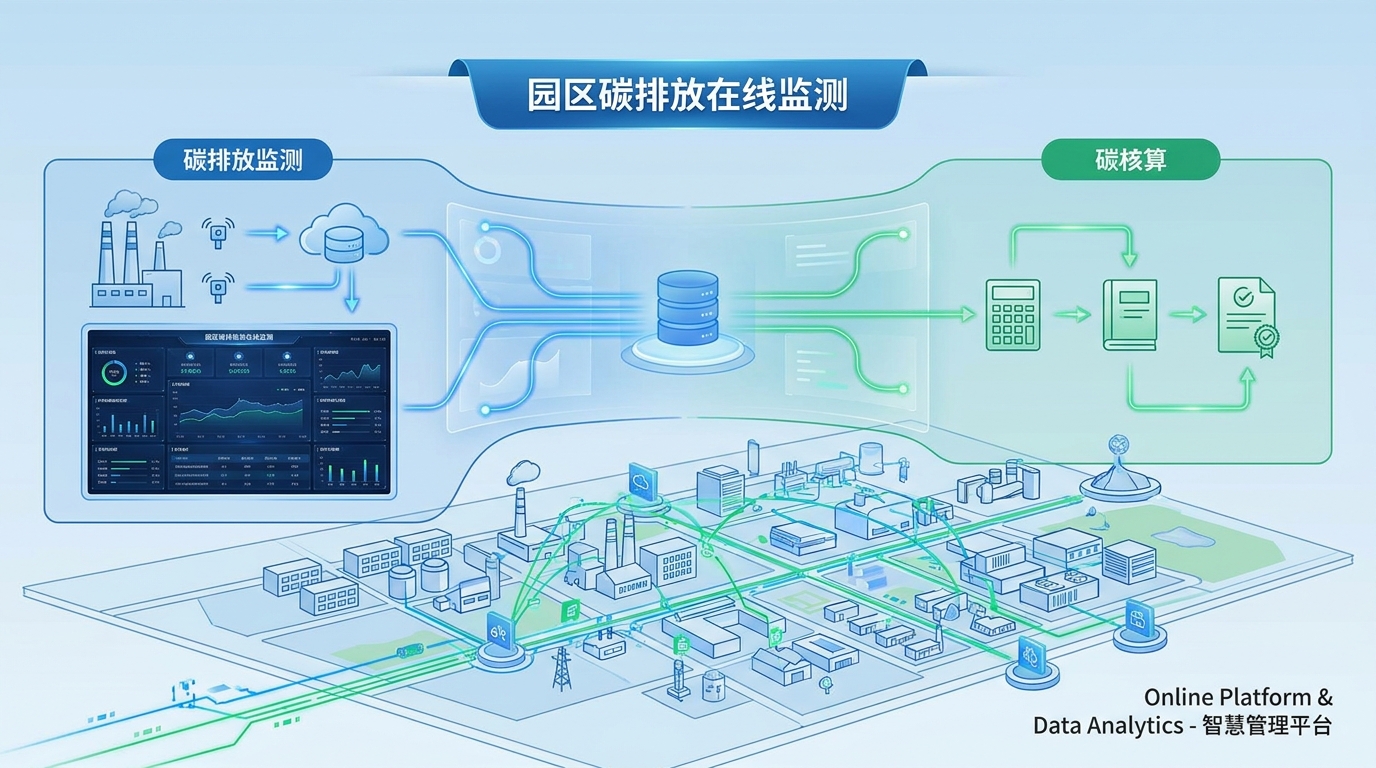
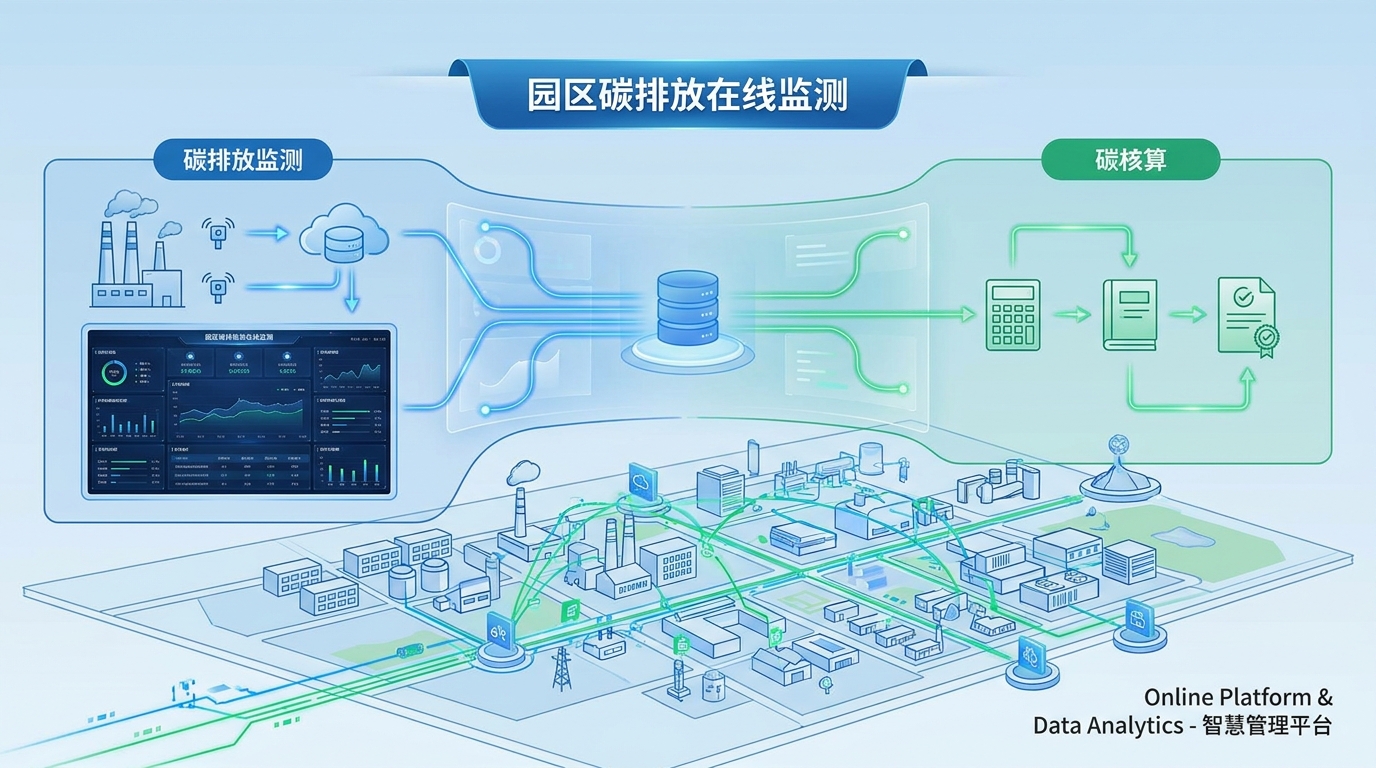
Traditional carbon accounting methods often relied on emission factors and material balances, which suffered from long data cycles and coarse granularity. Modern online carbon emission monitoring addresses these limitations by deploying high-precision sensors using advanced optical techniques like NDIR, TDLAS, and CRDS. These technologies allow for continuous, real-time measurement of greenhouse gases such as CO₂ and CH₄ at fixed source stacks and park boundaries.
The integration of edge computing with sensing technologies enables a "dual-track" data processing mode that fuses measured concentration data with flue gas parameters. This approach significantly enhances the credibility and traceability of underlying data, providing robust technical support for subsequent carbon audits and compliance obligations. It effectively validates the traditional emission factor method while capturing transient emission changes during production processes.
Real-Time Data Transmission and Digital Integration
High-frequency greenhouse gas monitoring data captured by front-end hardware is transmitted in real-time to big data management platforms via the Industrial Internet of Things (IIoT). On the software algorithm layer, the system integrates measured concentration data with parameters such as flue gas velocity, temperature, and humidity. Through embedded standardized algorithmic models, the system performs accurate real-time carbon accounting.
This digital infrastructure no longer merely lists raw data but transforms it into actionable insights for environmental management. The fusion of the "measured method" with the "accounting method" serves as an effective validation mechanism, ensuring that carbon asset management is based on reliable, auditable information.
Macro-Control and Micro-Operation Applications
From a macro perspective, online monitoring systems provide park committees with a panoramic, real-time "carbon emission map." Managers can intuitively grasp the real-time emission rates and cumulative emissions of individual enterprises, allowing for the timely identification of abnormal fluctuations. This capability plays an irreplaceable role in helping the park coordinate regional carbon quotas and formulate scientific energy-saving plans.
At the micro-enterprise level, this technology is a core tool for achieving refined carbon footprint management, especially as global supply chains impose stricter environmental requirements. By deploying monitoring equipment at key nodes, enterprises can decompose macro-level data to specific production lines and products. This enables the generation of high-granularity product carbon footprint reports required for mechanisms like the EU's CBAM.
Strategic Benefits for Enterprise Operations
Integrating carbon emission monitoring data with enterprise Energy Management Systems (EMS) allows technicians to identify inefficient process links characterized by high energy consumption. This facilitates targeted technical upgrades, achieving a win-win situation for both economic efficiency and environmental benefits. The ability to precisely allocate carbon costs to individual products empowers companies to optimize their production strategies.
Future Trends: Intelligence, Standardization, and Collaboration
The future of online carbon emission monitoring in industrial parks focuses on three core directions: intelligence, standardization, and collaboration. With the deep integration of Artificial Intelligence (AI), platforms will evolve from simple data display to predictive carbon management. AI models can analyze historical data, weather conditions, and production schedules to predict emission trends and guide forward-looking energy dispatch.
Standardization efforts are also accelerating regarding equipment selection, installation specifications, and alignment of accounting models. As national standards mature, online measured data will become a crucial basis for statutory carbon verification and trading markets. This ensures smoother connections between real-time monitoring data and regulatory compliance systems.
Finally, the trend toward collaboration is emerging as "synergistic reduction of pollution and carbon emissions" becomes a primary governance line. Future systems will achieve deep fusion with conventional air pollutant monitoring (SO₂, NOx, VOCs) at both sensor and platform levels. This synergy reduces duplicate hardware investment costs and provides a more scientific decision-making base for comprehensive environmental governance.
In summary, online carbon emission monitoring is the underlying support for the collaborative transformation of industrial parks toward digitization and greening. As technology iterates, a new ecosystem of modern industrial parks driven by data and characterized by intelligent low-carbon operations is accelerating its formation.
Key Takeaways for Industrial Parks
- Precision: Shift from estimation to real-time, high-frequency monitoring using advanced optical sensors.
- Integration: Fuse measured data with operational parameters for accurate carbon accounting.
- Scalability: Support both macro-regional planning and micro-product footprint analysis.
- Intelligence: Leverage AI for predictive management and optimized energy dispatch.
- Compliance: Prepare for stricter regulations and carbon border adjustment mechanisms.

