Latest Technology Advances in Mountain Flood Monitoring and Early Warning Systems
Driven by global climate change, mountain flood monitoring and early warning systems have become critical for protecting lives in regions prone to extreme weather. Characterized by sudden onset and immense destructive power, flash floods often outpace traditional measures. Consequently, establishing a scientific and efficient system is a pivotal step in enhancing society's comprehensive capacity for disaster prevention, mitigation, and relief.
Front-End Sensing: The Foundation of Smart Water Conservancy
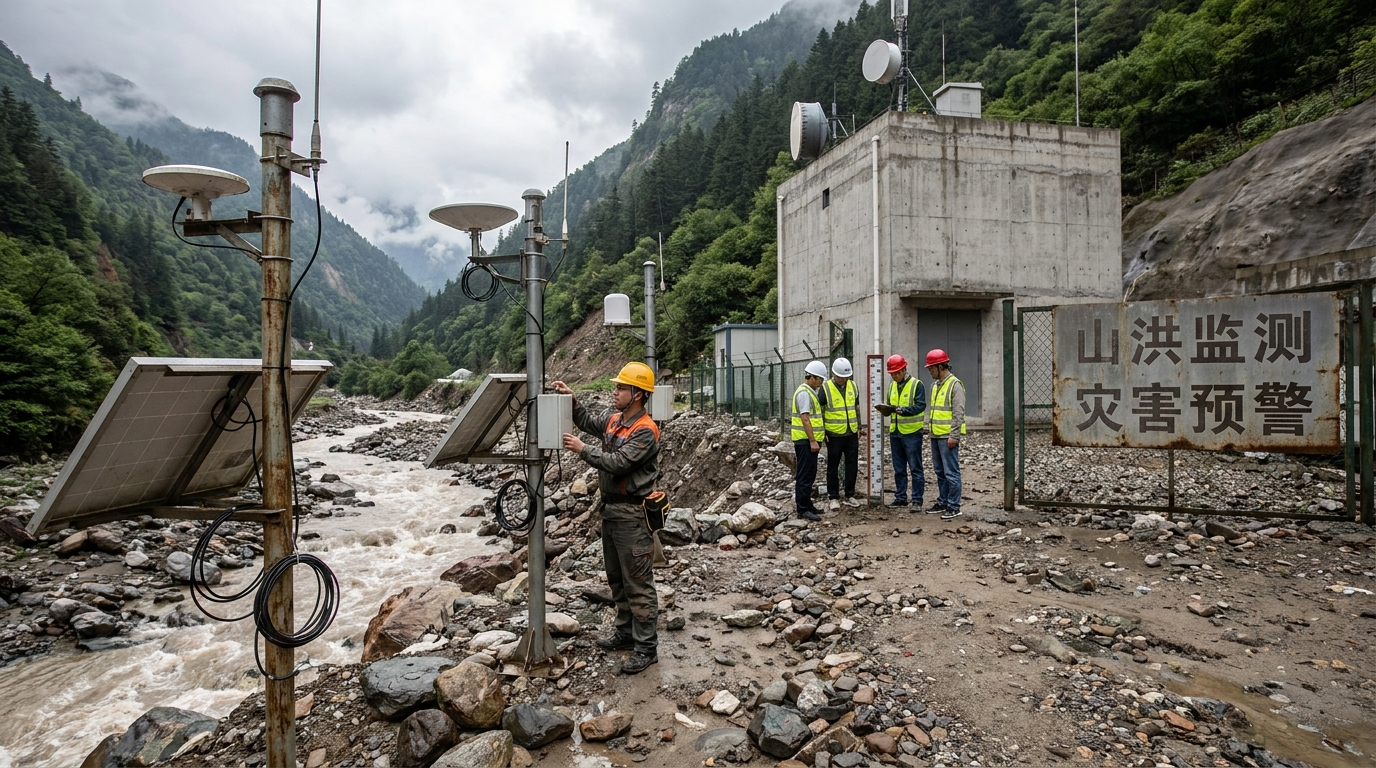
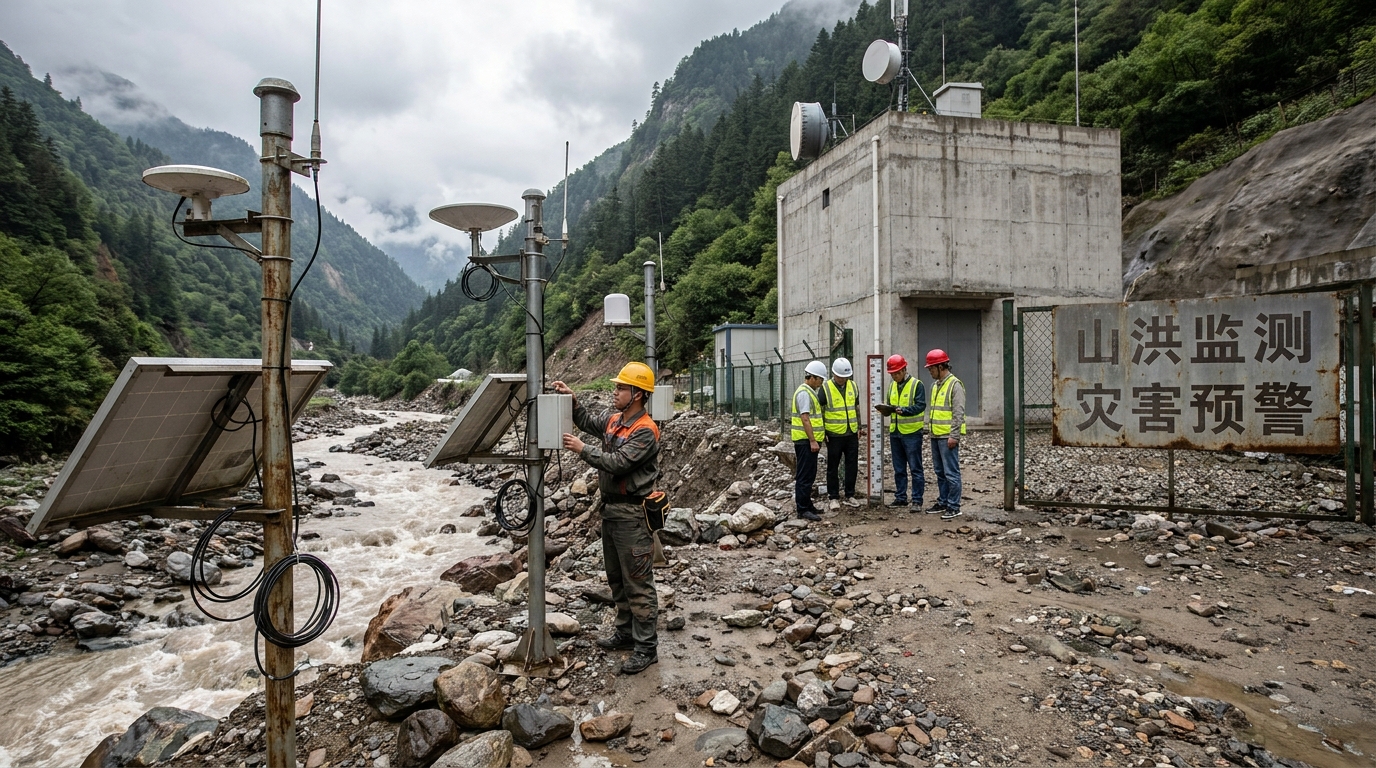
Within the current technological framework, mountain flood monitoring relies on the Internet of Things (IoT) and sensor technology to construct a "24/7, full-coverage" three-dimensional perception network. Front-end sensing devices act as the system's "neural endings," directly determining the accuracy and timeliness of data collection.
Rainfall is the direct trigger for flash floods, making precise measurement paramount. Currently, tipping bucket rain gauges and piezoelectric rain gauges are widely deployed to enable continuous, automated monitoring. Notably, piezoelectric rain gauges, lacking moving mechanical parts, demonstrate exceptional maintenance-free reliability in harsh outdoor environments filled with fallen leaves and sediment.
Advanced Water Level Meters for Harsh Environments
Simultaneously, water level meters serve as the direct tools for monitoring flow states in small and medium-sized mountain rivers. Radar water level meters leverage their non-contact measurement advantages to maintain high precision even in adverse weather conditions and high-velocity, sediment-laden flows. They remain unaffected by external interferences such as temperature gradients and wind pressure.
When data from rain gauges and water level meters are integrated and analyzed, the system can precisely grasp "how much rain is falling" and "how high the water is rising." This provides a robust data foundation for backend calculation models essential for effective disaster management.
Application Scenarios: Bridging the Last Mile of Disaster Prevention
In hilly small watersheds and gully areas prone to flash floods, strategic placement is key. By installing rain gauge stations upstream and water level stations at critical cross-sections downstream, the system leverages the time lag of water flow propagation to create a spatial warning gradient. This effectively secures precious evacuation time for downstream populations.
In villages and towns directly threatened by flash floods, monitoring systems must be deeply integrated with household alarm devices and rural broadcasting systems. Once front-end sensors detect that water levels or rainfall exceed pre-set danger thresholds, the system automatically triggers sound and light alarms within seconds. This capability truly bridges the "last mile" of disaster warning, ensuring alerts reach the most vulnerable residents instantly.
Transportation Safety
Continuous monitoring of submerged road sections allows traffic management departments to promptly implement closures. This proactive measure prevents secondary disasters like washed-out roadbeds, safeguarding vital transportation lifelines.
Critical Infrastructure
Systems are increasingly applied around bridges, culverts, and tunnels. Real-time data ensures rapid response to water level changes, preventing accidents caused by water-submerged structures.
Future Trends: Multi-Source Fusion and Intelligent Prediction
Future disaster prevention will expand horizontally to include soil moisture content, debris flow acoustic monitoring, Beidou satellite surface displacement, and satellite remote sensing. This multi-dimensional, three-dimensional perception system significantly reduces false negatives and false positives under extreme working conditions.
With the introduction of edge computing, gateway devices will possess local "thinking" capabilities. They can perform data cleaning and threshold judgment locally, autonomously triggering alarms even during network outages. Simultaneously, AI algorithms enable more precise construction of hydrodynamic models, transitioning from traditional "threshold-based alarms" to forward-looking "trend prediction."
Targeted Warning Release via GIS and Big Data
Leveraging Geographic Information Systems (GIS) and mobile big data analytics from telecommunications operators, future disaster warnings will feature dynamic, precise push notifications based on geographic fencing. This ensures that individuals in dangerous areas receive evacuation instructions immediately.
This targeted approach maximizes the efficiency of emergency evacuation, ensuring that resources are directed exactly where they are needed most during a crisis.
Conclusion: Building an Impregnable Technological Barrier
As sensing technologies continue to iterate and optimize, and as cutting-edge technologies such as IoT, big data, and AI fully empower the sector, mountain flood monitoring and disaster warning systems are becoming increasingly sensitive, reliable, and intelligent. Relying on modern flood control and disaster reduction networks built with high-precision equipment, we will undoubtedly achieve superior effectiveness in facing challenges posed by extreme climates.
— Written by the Industry News Editorial Department of Ecolor Technology