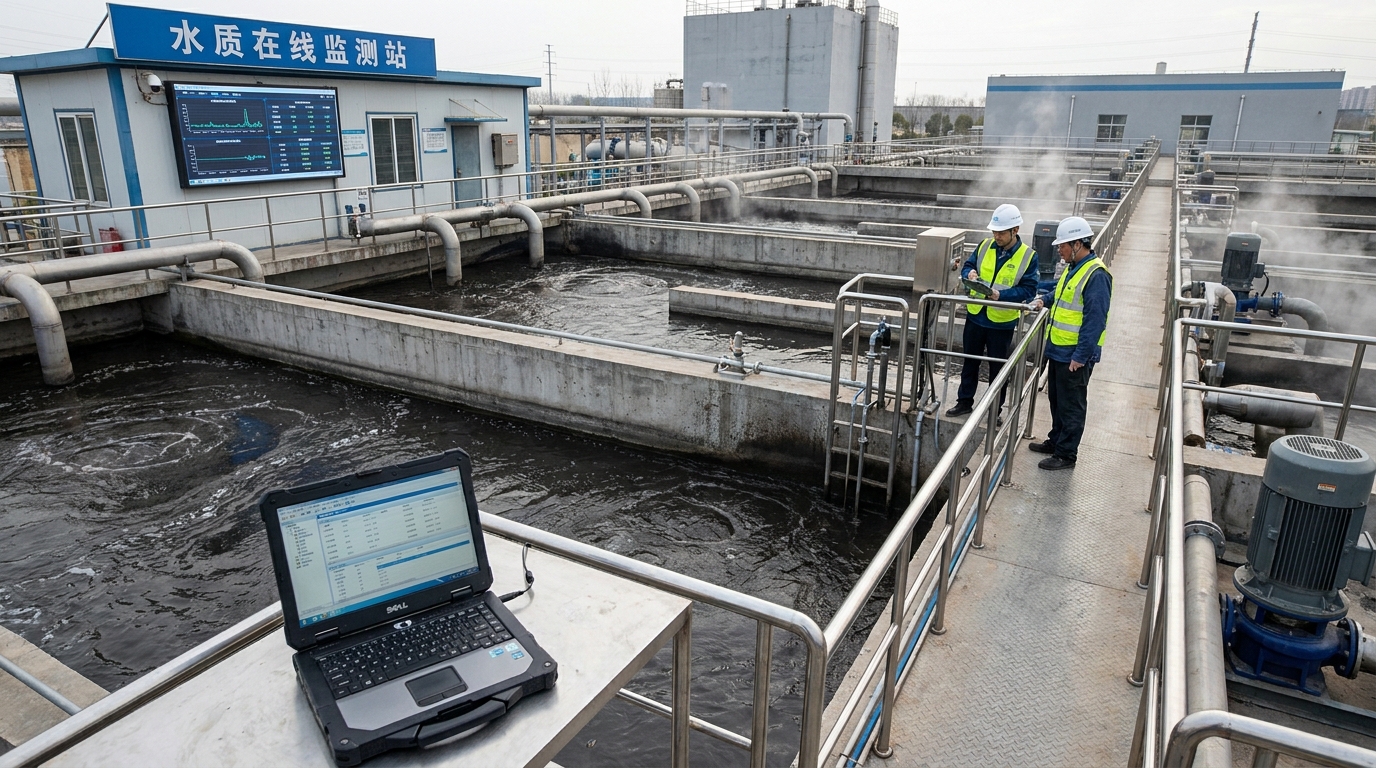
Wastewater Treatment Plant Online Monitoring: Latest Technology Advances in Urban Sewer Networks
Wastewater treatment plant online monitoring is transforming urban sewer networks into intelligent, responsive infrastructure—enabling real-time process control, regulatory compliance, energy optimization, and predictive maintenance across municipal and industrial systems.
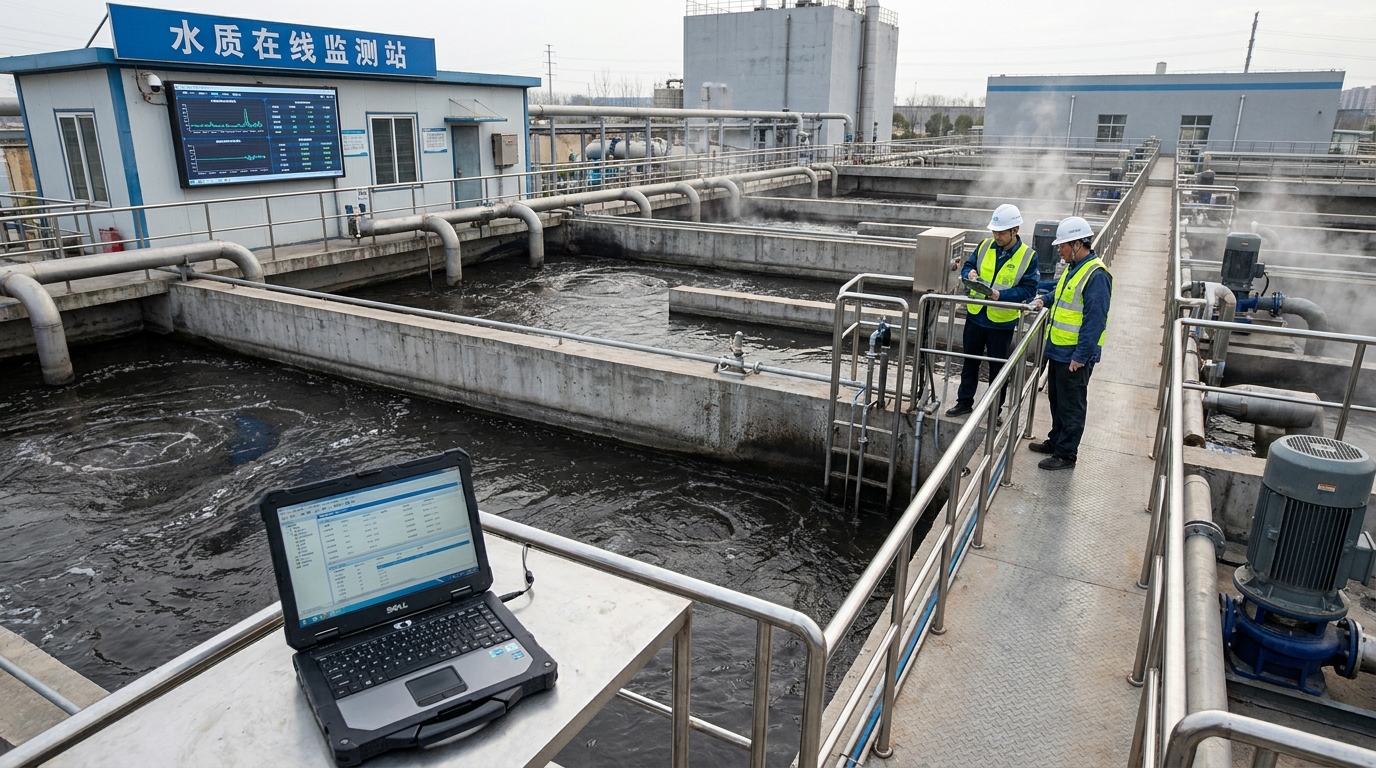
The Digital Nervous System of Modern WWTPs
As global environmental regulations tighten—and dual carbon goals accelerate industrial decarbonization—the wastewater sector is shifting from manual, reactive operations to precision digital control. Online monitoring technology serves as the sensory nervous system of modern wastewater treatment plants (WWTPs), delivering continuous, high-frequency data across influent, biological treatment, and effluent discharge stages.
Far beyond compliance, these systems form the foundation for energy efficiency, cost reduction, and operational resilience—turning raw data into actionable intelligence for smarter urban water management.
Current State: From Lab Sampling to Real-Time Sensing
Traditional wastewater monitoring relied on infrequent lab analysis—introducing delays, labor overhead, and blind spots in dynamic processes. Today’s online water quality monitoring integrates electrochemical, optical, acoustic, and hybrid sensing technologies to deliver uninterrupted measurement of critical parameters: pH, conductivity, dissolved oxygen (DO), COD, ammonia nitrogen (NH₃-N), total phosphorus (TP), and total nitrogen (TN).
Electromagnetic Flowmeters
- • Zero pressure loss & no moving parts
- • Immune to sludge, fibers, corrosion
- • Critical for influent/effluent accounting, RAS control, chemical dosing
- • Enables accurate mass balance & hydraulic modeling
Optical DO Sensors (Fluorescence Quenching)
- • Oxygen non-consumptive measurement
- • Insensitive to flow velocity or fouling
- • Extended calibration intervals & low maintenance
- • Essential for stable nitrification & denitrification
Key Application Scenarios Across the Treatment Chain
1. Influent Pump Station & Preliminary Treatment
Volatile inflow and industrial shock loads demand early detection. Large-bore electromagnetic flowmeters provide real-time hydraulic load data—enabling proactive pump staging and overflow prevention. Simultaneously, online pH and conductivity analyzers act as early-warning systems for toxic discharges, triggering bypass or neutralization before nitrifiers or membranes are compromised.
2. Biological Reactors (Core Process Zone)
Aeration consumes 50–70% of total plant energy. Dense deployment of high-accuracy DO sensors—integrated with PID controllers and variable-frequency drives (VFDs) on blowers—enables true demand-driven aeration. This closed-loop strategy reduces blower power consumption by 15–30%, prevents floc disruption, and maintains optimal nitrification/denitrification balance.
3. Tertiary Treatment & Final Effluent Discharge
Regulatory mandates require verified, auditable data transmission from outfall points. Synchronized online analyzers (COD, NH₃-N, TP, TN) paired with electromagnetic flowmeters enable precise daily pollutant mass loading (kg/day) calculations—serving both as legally defensible compliance evidence and an objective performance scorecard for treatment efficiency and risk exposure.
Future Trends: From Sensing to Smart Decision-Making
Online monitoring is rapidly evolving beyond data acquisition toward autonomous intelligence—driven by three converging technological frontiers that redefine reliability, connectivity, and insight generation in urban wastewater infrastructure.
Intelligent, Low-Maintenance Sensors
Built-in ultrasonic cleaning, compressed-air backflushing, and embedded diagnostics detect electrode drift or biofilm buildup—triggering predictive maintenance alerts instead of unplanned downtime.
Edge Computing & IoT Integration
Smart sensors now function as autonomous IoT nodes—using LoRaWAN, NB-IoT, or 5G to stream processed data directly to cloud platforms, enabling cross-plant benchmarking and remote expert support.
AI-Driven Process Optimization
Digital twin models fuse real-time sensor data with weather forecasts and historical trends—machine learning recommends or auto-adjusts dosing, aeration, and sludge wasting for fully adaptive, resilient operations.
Conclusion: Precision Infrastructure for Sustainable Urban Water Stewardship
Wastewater treatment is no longer just pollution control—it is a sophisticated process industry demanding rigorous instrumentation, data integrity, and intelligent automation. Electromagnetic flowmeters and optical DO sensors exemplify how advanced online monitoring strengthens regulatory compliance while empowering utilities to reduce lifecycle costs, optimize energy use, and advance global water sustainability goals. As edge AI, self-healing sensors, and unified IoT architectures mature, urban sewer networks are becoming truly intelligent—anticipating challenges, adapting in real time, and delivering measurable environmental and economic value.

