As environmental regulations tighten, modern wastewater treatment plants are shifting from manual sampling to advanced online monitoring technology. This transition ensures real-time accuracy and efficiency in urban water management. The following analysis explores the current status, core applications, and future trends of these critical systems in city networks.
Current Status: Core Equipment for Online Monitoring Technology
In complex wastewater processes, sensors act as the "neurons" of the system. Precise measurement of flow rates and real-time control of water quality parameters form the foundation for stable operations.
Electromagnetic Flowmeters have become the standard due to their resistance to clogging from suspended solids and sludge. Operating on Faraday's law, they ensure accurate influent statistics and chemical dosing without moving parts obstructing the channel.
For biochemical treatment, fluorescence-based Dissolved Oxygen (DO) sensors are widely adopted. Unlike traditional methods, they consume no oxygen, offer extended maintenance cycles, and provide reliable data for precision aeration systems.
Flow Measurement
Electromagnetic flowmeters resistant to clogging and corrosion.
Water Quality
Fluorescence DO sensors with zero oxygen consumption.
Multi-Parameter
Reagent-free COD, Ammonia Nitrogen, and Total Phosphorus analyzers.
Typical Applications in Wastewater Treatment Plants
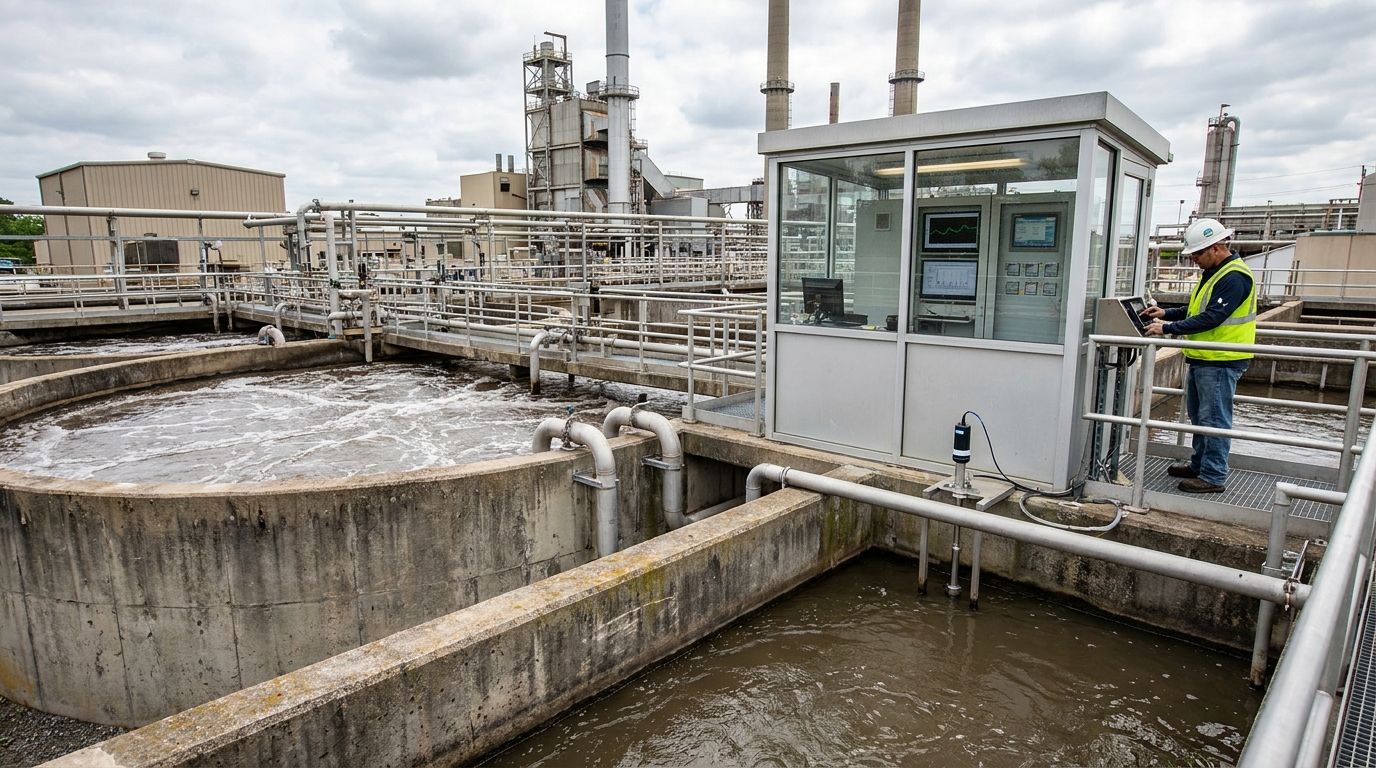
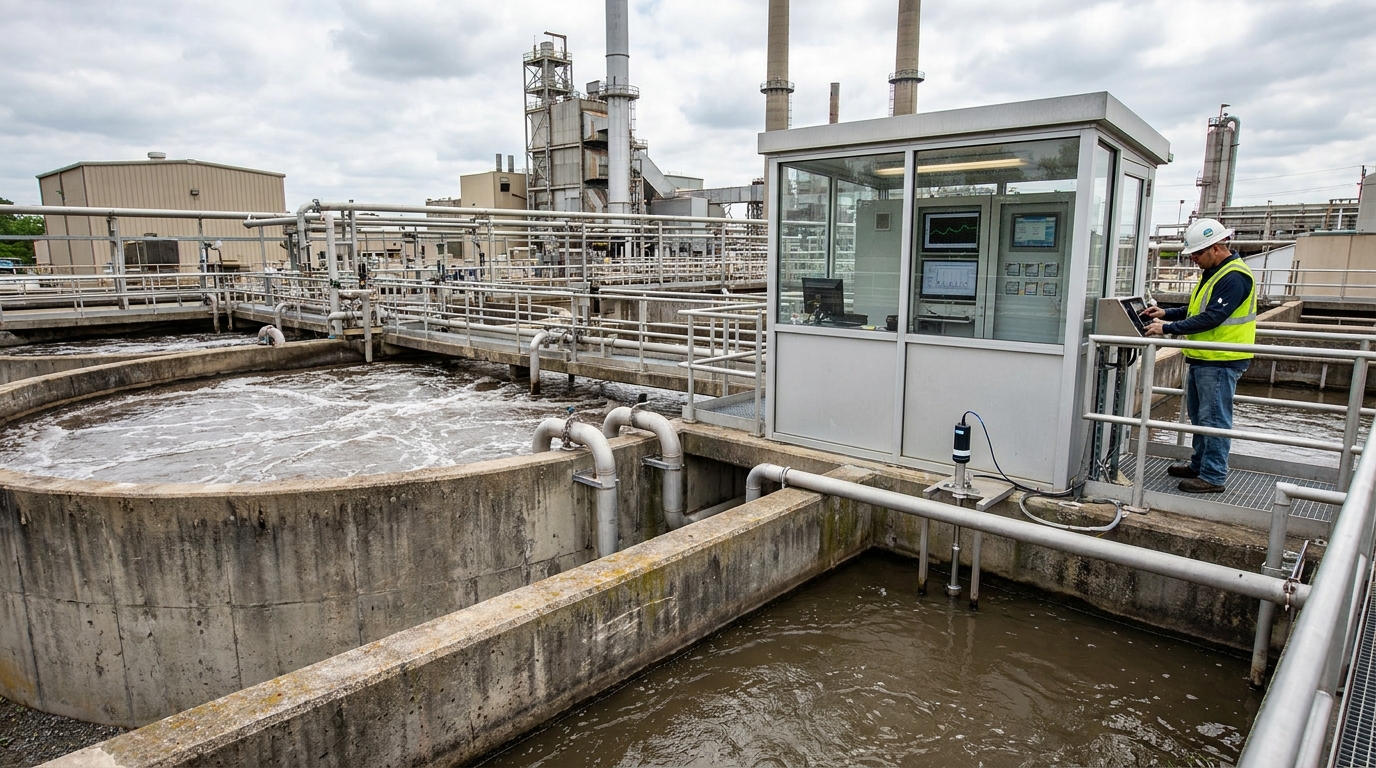
Online monitoring is a systematic engineering project spanning the entire water treatment lifecycle. Its impact is most evident in three key scenarios involving inflow, process optimization, and compliance.
1. Influent Water Quality Warning
Deploying analyzers at the inlet allows the central control room to calculate total pollutant loads in real time. If abnormal pH or toxic substances are detected, the system triggers alarms to divert water to emergency tanks, protecting the biochemical system.
2. Process Optimization & Energy Saving
In aeration basins, DO, MLSS, and ORP sensors form a closed-loop control system. PLCs use this data to automatically adjust blower frequencies, ensuring effluent stability while significantly reducing energy consumption through demand-driven precision aeration.
3. Compliance Discharge & Data Networking
High-precision stations at the effluent end serve as gatekeepers for environmental compliance. Data is encrypted and uploaded to regulatory platforms, ensuring transparency and strict adherence to environmental protection responsibilities.
Future Trends: From Automation to Comprehensive Intelligence
The industry is transitioning towards "comprehensive intelligence" driven by three major trends in online monitoring technology.
Edge Computing & AI Integration: Machine learning models will utilize vast monitoring data to create digital twins. AI can predict effluent quality trends and automatically generate feed-forward adjustment schemes based on historical and real-time data.
Miniaturization & Self-Maintenance: Future sensors will feature self-cleaning structures like ultrasonic cleaning and nano-coatings to prevent biofilm attachment. Self-diagnostic chips will alert operators to health issues before data drift occurs.
All-Element IoT Construction: Information silos will be broken down, achieving full interconnectivity from city pumping stations to receiving waters. This enables unified dispatch and comprehensive governance of the urban water environment from a global perspective.
In summary, online monitoring technology is the core technical foundation for the water industry to achieve green and low-carbon development. With continuous iteration of sensing technologies and data analysis dimensions, these systems will become more intelligent, precise, and reliable, providing strong support for improving the global aquatic ecosystem.