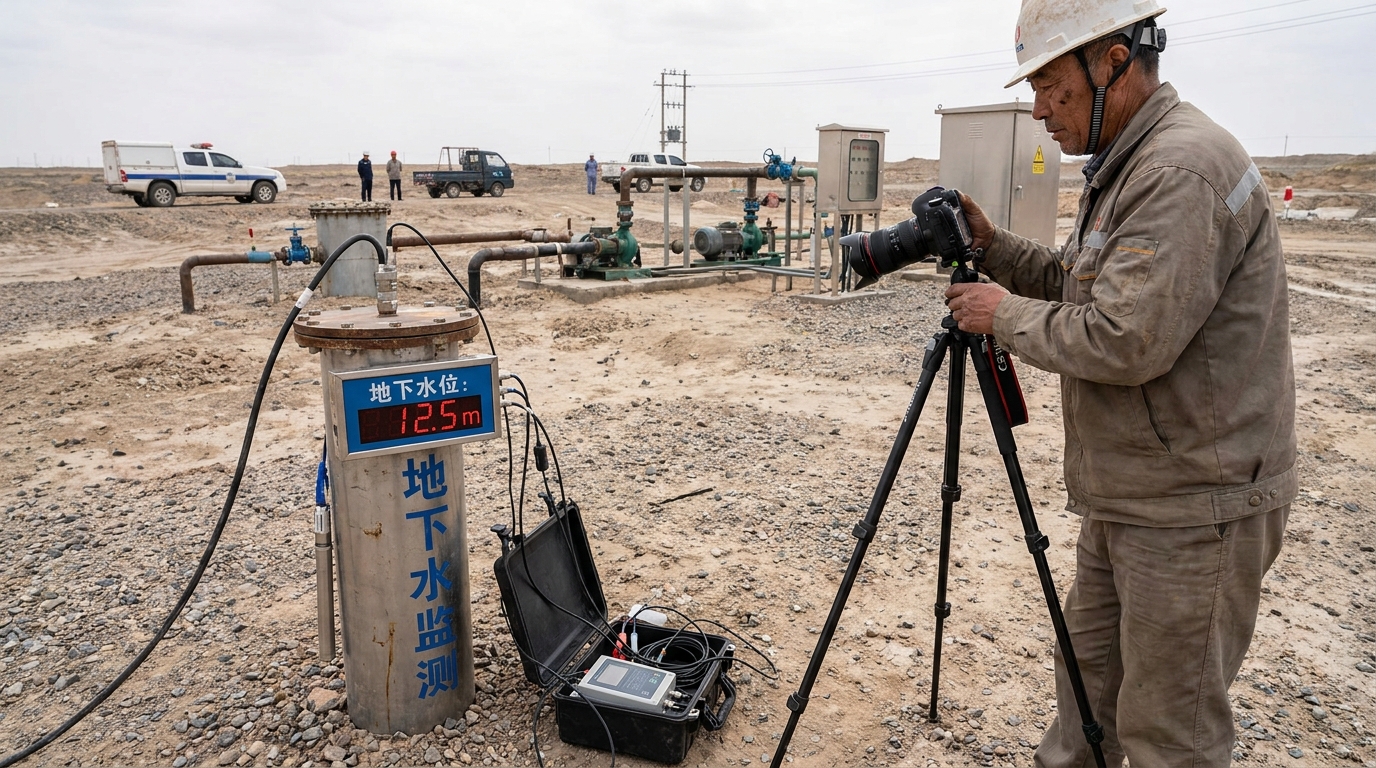
Latest Technology Advances in Groundwater Dynamic Monitoring
Groundwater serves as a critical resource for maintaining ecological balance and ensuring human production, yet issues like over-exploitation and pollution are becoming prominent. Establishing a sound groundwater dynamic monitoring system is now a prerequisite for the scientific allocation of water resources and a key measure for national water source protection strategies. This article provides an in-depth analysis of core technologies, typical application scenarios, and future development trends within the field of groundwater monitoring.
Technology Status: Deep Integration of High-Precision Sensing and IoT
The modern groundwater monitoring system has moved beyond traditional manual sounding methods, fully entering an era of automation and informatization. At the heart of this system lies the fundamental data point: groundwater level, which requires continuous and precise measurement to be effective.
Submersible pressure transducers have become the most widely used sensing devices across the industry today. Operating on the principle of hydrostatic pressure, these gauges convert minute pressure changes into standard electrical signals using high-precision piezoresistive or capacitive sensitive elements.
Given that groundwater monitoring environments often involve deep wells facing complex conditions such as sediment, corrosive minerals, and drastic water pressure fluctuations, modern submersible gauges are predominantly constructed from anti-corrosion stainless steel or titanium alloys. Furthermore, they incorporate surge protection and anti-condensation designs to ensure long-term stable operation in harsh environments.
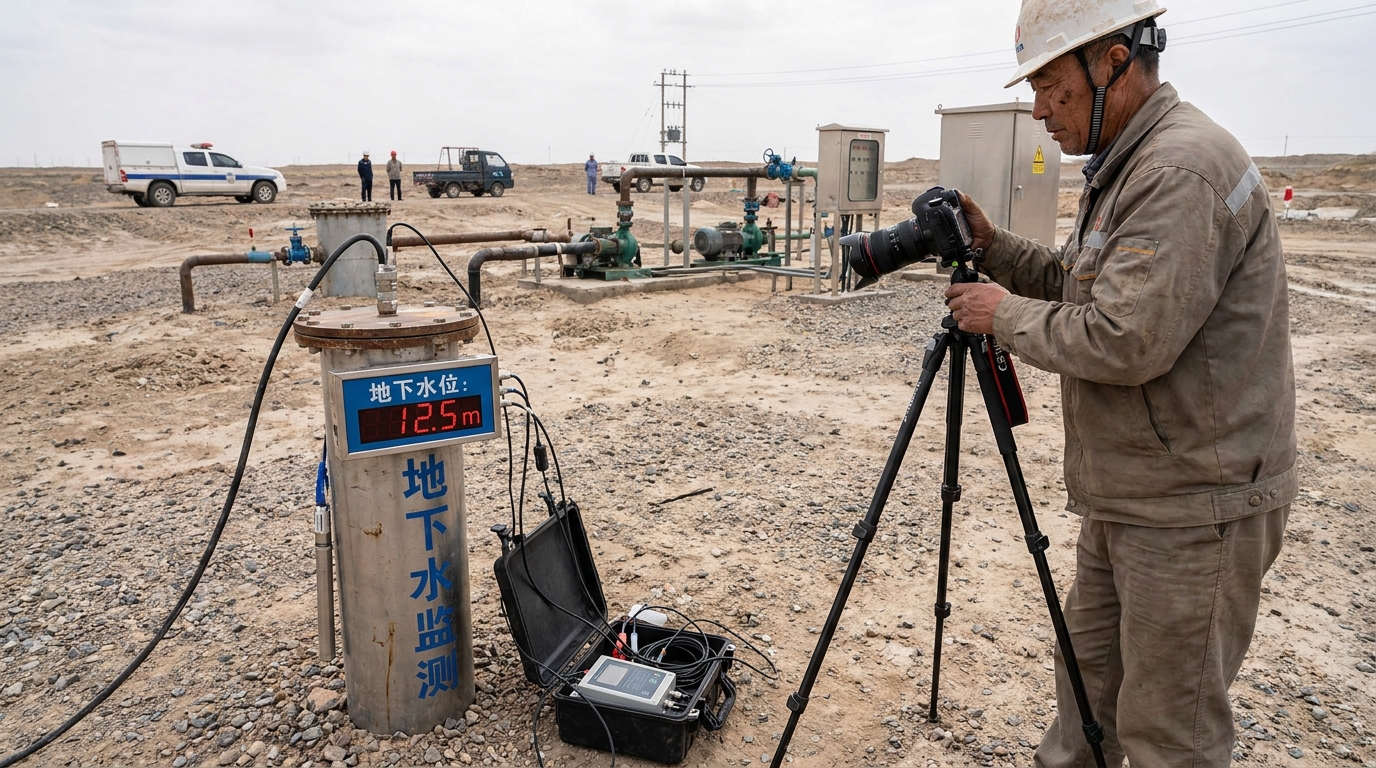
Beyond precise front-end perception, current groundwater dynamic monitoring systems have highly integrated low-power Internet of Things (IoT) technologies. Through wireless transmission modules utilizing NB-IoT, LoRa, or 4G/5G networks, data on water levels and temperatures collected by sensors can be uploaded to cloud servers in real-time.
This "perception-transmission-knowledge-application" integrated architecture significantly enhances the timeliness and accuracy of data, providing robust support for management departments.
Application Scenarios: From Water Source Protection to Geological Disaster Warning
The application scope of groundwater dynamic monitoring technology is extensive, spanning multiple dimensions including ecological protection, agricultural production, and urban construction.
The primary application scenario lies in water source protection. Centralized groundwater drinking water sources act as the "lifeline" for urban water supply security. By deploying dense monitoring well networks within protected areas and utilizing submersible level gauges alongside water quality sensors, authorities can monitor the impact of extraction on aquifers around the clock.
If the system detects an abnormal downward trend in groundwater levels, it automatically triggers an early warning, guiding water utilities to adjust pumping strategies promptly. This prevents aquifer depletion and saltwater intrusion, thereby fundamentally ensuring the sustainable utilization of water sources.
Secondly, in large-scale agricultural irrigation districts, groundwater dynamic monitoring serves as a crucial basis for promoting water-saving agriculture. By analyzing seasonal fluctuations in groundwater levels, agricultural management departments can scientifically determine groundwater extraction quotas, effectively curbing over-extraction for farming purposes.
Furthermore, during the urbanization process, drastic changes in groundwater levels are often direct inducers of geological disasters such as land subsidence and ground fissures. Conducting high-frequency groundwater monitoring in major engineering construction zones and along urban rail transit lines can buy valuable time for the early identification of risks and prevention of geological disasters.
Development Trends: Multi-Parameter Integration and Intelligent Data Analysis
Looking ahead, groundwater dynamic monitoring technology will evolve towards higher degrees of integration and intelligence. The industry is exhibiting several significant trends driven by the need for comprehensive environmental profiling.
First is the multi-parameter integration of hardware equipment. Traditional submersible level gauges primarily address the issue of "quantity" (i.e., water level), whereas future monitoring needs are shifting towards a balance of "quality and quantity." Next-generation sensors are gradually integrating functions such as water level, temperature, electrical conductivity (salinity), pH value, and even specific pollutant concentration monitoring into a single unit.
These miniaturized, multi-functional composite sensors can significantly reduce well construction and equipment procurement costs while providing comprehensive groundwater environmental profile data.
Second is the application of big data and artificial intelligence in software platforms. With the exponential growth in the number of monitoring nodes, processing massive amounts of data has become a new challenge. Future groundwater monitoring cloud platforms will deeply integrate machine learning algorithms.
By building digital twin watershed models, AI can automatically filter out anomalous interference data and analyze the complex coupling relationships between climate change, precipitation recharge, and groundwater level variations. This not only enables precise prediction of future groundwater level evolution trends but also provides optimal decision-making schemes for the spatial balancing of water resources.
Third is the design of ultra-low power consumption and maintenance-free equipment. Since many monitoring wells are distributed in remote wilderness areas, battery life and maintenance costs are industry pain points. Future sensor devices and communication terminals will further optimize sleep-wake mechanisms.
Coupled with micro-hydroelectric generation or efficient solar thin-film technologies, the goal is to achieve "permanent online" status for devices with minimal human intervention.
Conclusion: Empowering Sustainable Management
In summary, groundwater dynamic monitoring has evolved from simple physical measurement into a comprehensive interdisciplinary field integrating sensing, communication, and big data analysis. Continuous breakthroughs in underlying perception technologies, represented by submersible level gauges, have built a solid data foundation.
Against the backdrop of increasing national emphasis on ecological civilization construction and water source protection, the innovation and iteration of related technologies will undoubtedly provide superior technical empowerment for the scientific management of groundwater resources, geological environment protection, and the overall sustainable development of the economy and society.

