Latest Technology Advances in Industrial Water Withdrawal Monitoring
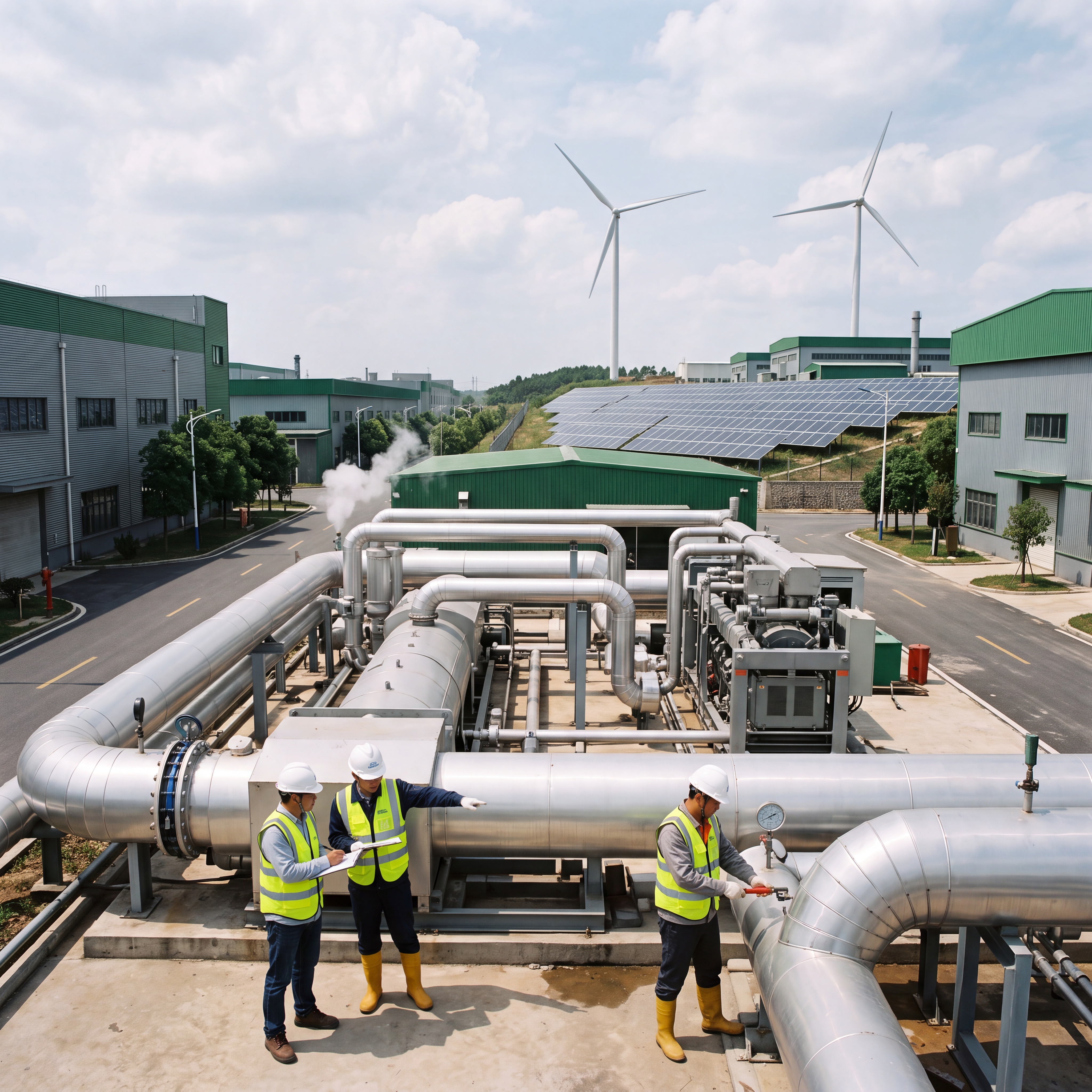
As global water scarcity intensifies, the refined management of industrial water withdrawal monitoring has become a core priority for green manufacturing. In response to China's water resources tax reform, accurate and real-time data collection is essential for compliance, cost optimization, and sustainable development. This article explores how modern electromagnetic flowmeters and IoT systems are transforming industrial water management into a precise, intelligent, and compliant process.
Current Status: High-Precision Metering Equipment
Traditional mechanical water meters are increasingly failing to meet the rigorous standards of modern industry and tax audits. Issues such as susceptibility to raw water quality variations, rapid internal wear, and accuracy degradation over time have made them less viable for critical applications.
Consequently, the industry is undergoing a comprehensive upgrade toward high-precision, electronic integration. Electromagnetic flowmeters have emerged as the mainstream solution for industrial front-end water withdrawal monitoring due to their unique working principles and significant technical advantages.
Why Electromagnetic Flowmeters Lead the Market
Operating on Faraday's Law of Electromagnetic Induction, these meters boast a standout feature: the absence of obstructive moving parts within the measuring tube. This design results in virtually zero pressure loss and makes them highly resistant to clogging by sand or suspended solids.
Modern units typically achieve measurement accuracies of Class 0.5 or higher, remaining unaffected by fluctuations in fluid density, viscosity, temperature, or pipeline pressure. This high-stability performance provides irrefutable data support for precise water resources tax calculations, preventing both enterprise overpayment and national resource loss.
Application Scenarios: Holistic Supervision from Source to Outfall
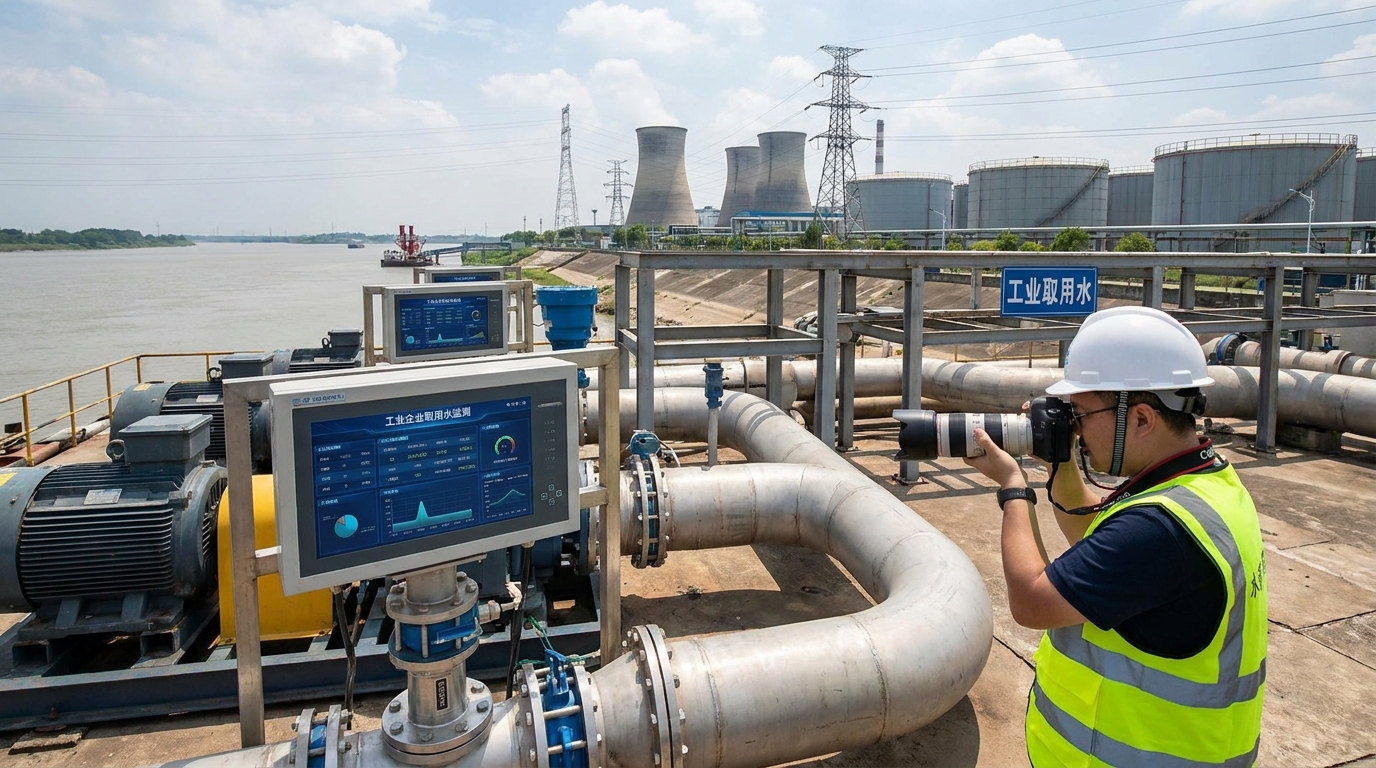
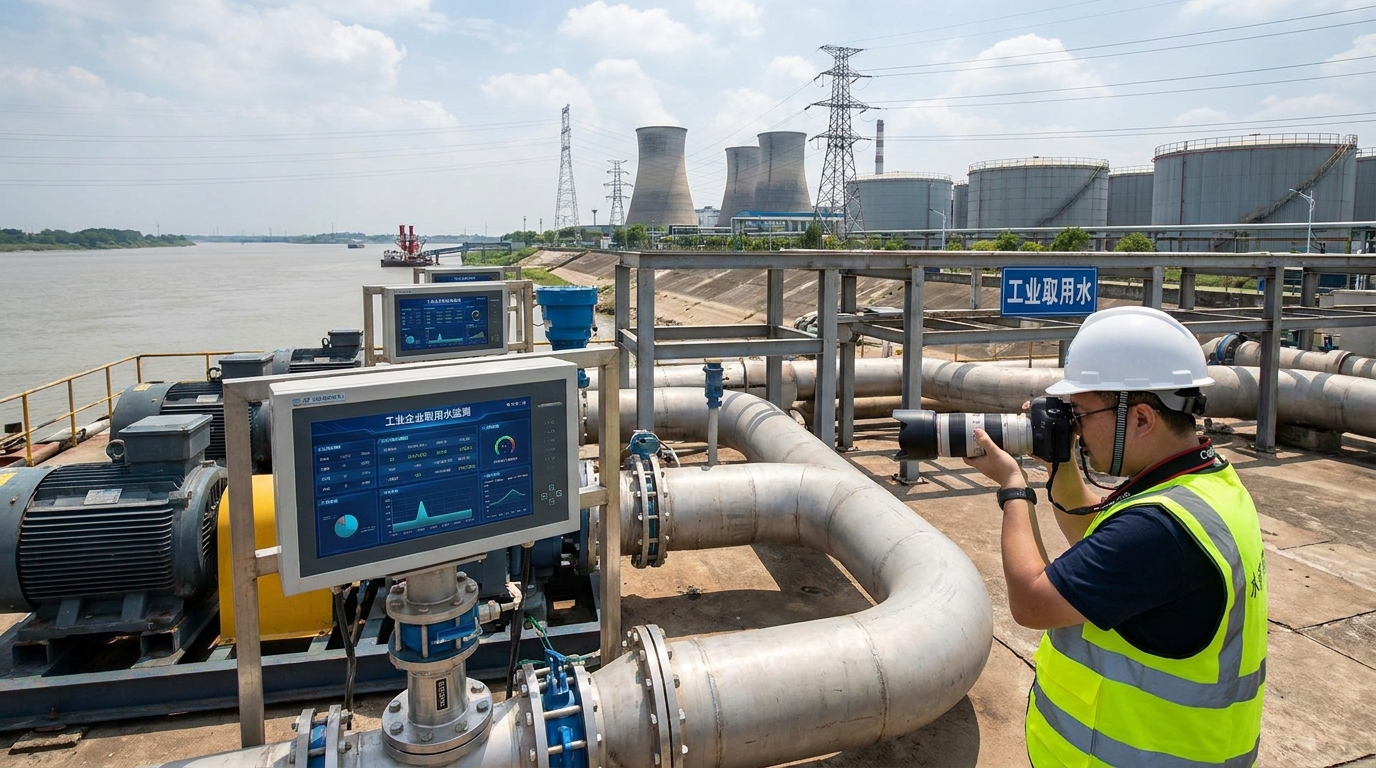
In practical settings, monitoring systems cover the entire lifecycle, from water source abstraction to final wastewater discharge. For high-consumption industries like steel, chemicals, and thermal power, large-diameter electromagnetic flowmeters are widely installed on primary intake pipelines.
These devices are equipped with enclosures boasting extremely high protection ratings to withstand harsh environments, including humidity and submersion. They ensure reliable operation even in complex flow conditions typical of large-diameter main pipes.
Key Features of Modern IoT Monitoring Systems
Data transmitted instantly via 4G/5G or NB-IoT networks to regulatory platforms.
Encrypted data ensures authenticity and continuity for strict tax audits.
Full transparency allows intuitive grasp of consumption across workshops.
Enables water balance testing and targeted technological renovations.
Future Trends: Multi-Dimensional Sensing & Intelligent Decision-Making
The future of industrial water monitoring lies in multi-dimensional sensing and deep data fusion. Devices will evolve beyond single-fluid dynamics to integrate online water quality monitoring (conductivity, turbidity) and pipeline pressure functions.
By leveraging big data analytics and edge computing, systems can cross-reference historical usage with production capacity to establish precise mathematical models. If actual usage deviates from predicted ranges, the system automatically alerts for potential leaks or anomalies, shifting management from "post-event repair" to "pre-event prediction."
System Integration: ERP and Automated Tax Declaration
At the institutional level, metering systems will integrate deeply with Enterprise Resource Planning (ERP) and automated tax declaration platforms. This cross-system data interoperability enables automatic, precise calculation of water resources taxes.
One-click compliant declaration significantly reduces administrative costs while elevating the digital water management level across society. In summary, modern monitoring has evolved into a systematic engineering project integrating advanced materials, IoT communications, and AI-driven analysis.
In the era of deepening water resources tax reforms, high-precision water withdrawal metering technologies represented by electromagnetic flowmeters are becoming critical infrastructure driving enterprises toward refined water usage, tax compliance, and green production.
© Ecolor Technology. All rights reserved. Unauthorized reproduction is prohibited.