Latest Technology Advances in Field Meteorological Monitoring for Smart Agriculture
In the dual context of global climate change and the transformation towards agricultural modernization, the demand for refined and scientific management in agriculture has become increasingly urgent. The traditional, extensive agricultural model, which relied heavily on "farming by the weather," is gradually being replaced by data-driven precision agriculture. Within this digital revolution, field meteorological monitoring technology serves as a critical information link connecting the natural environment with crop growth, playing an irreplaceable role. This article explores the current technical status, core application scenarios, and future development trends of field meteorological monitoring systems, focusing on agricultural meteorology, soil moisture dynamics, and precise irrigation.
Technical Status: From Macro-Forecasting to Micro-Scale IoT Field Monitoring
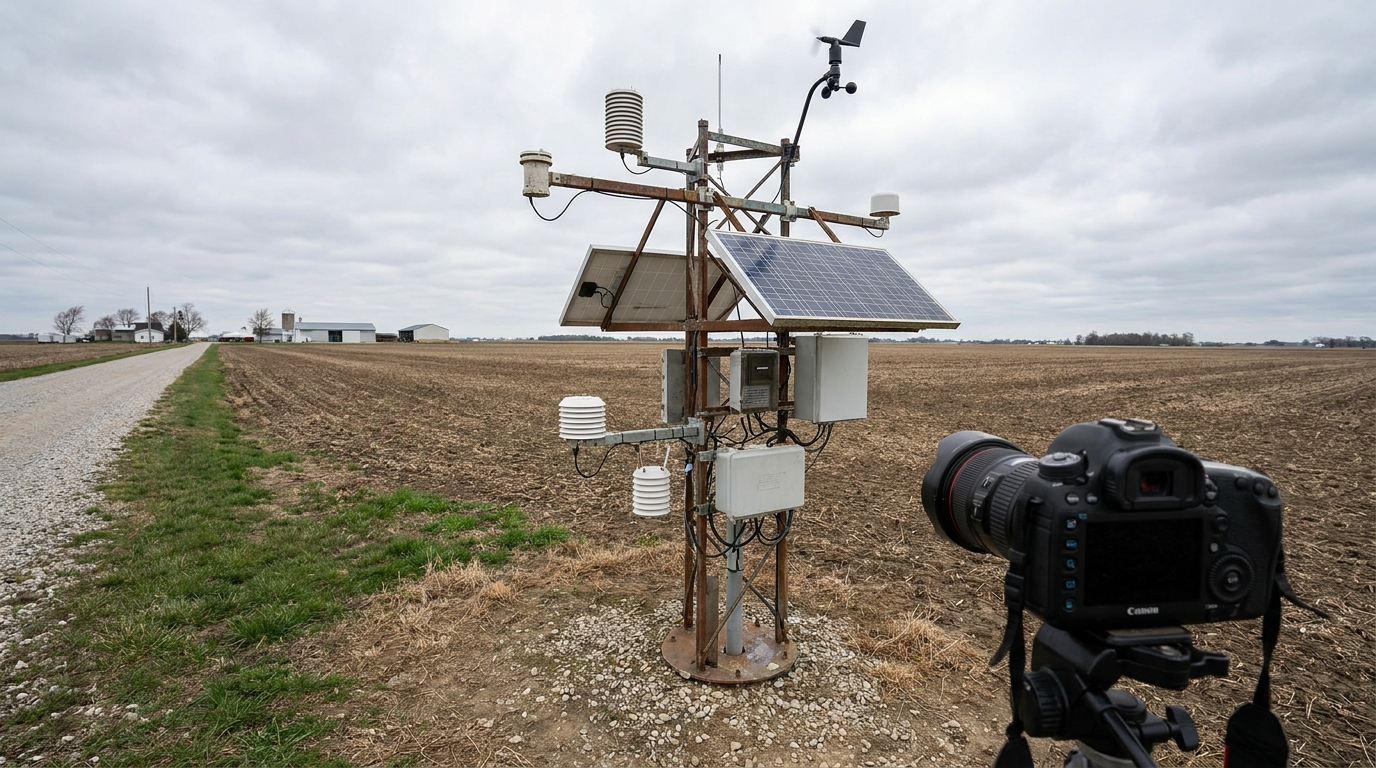
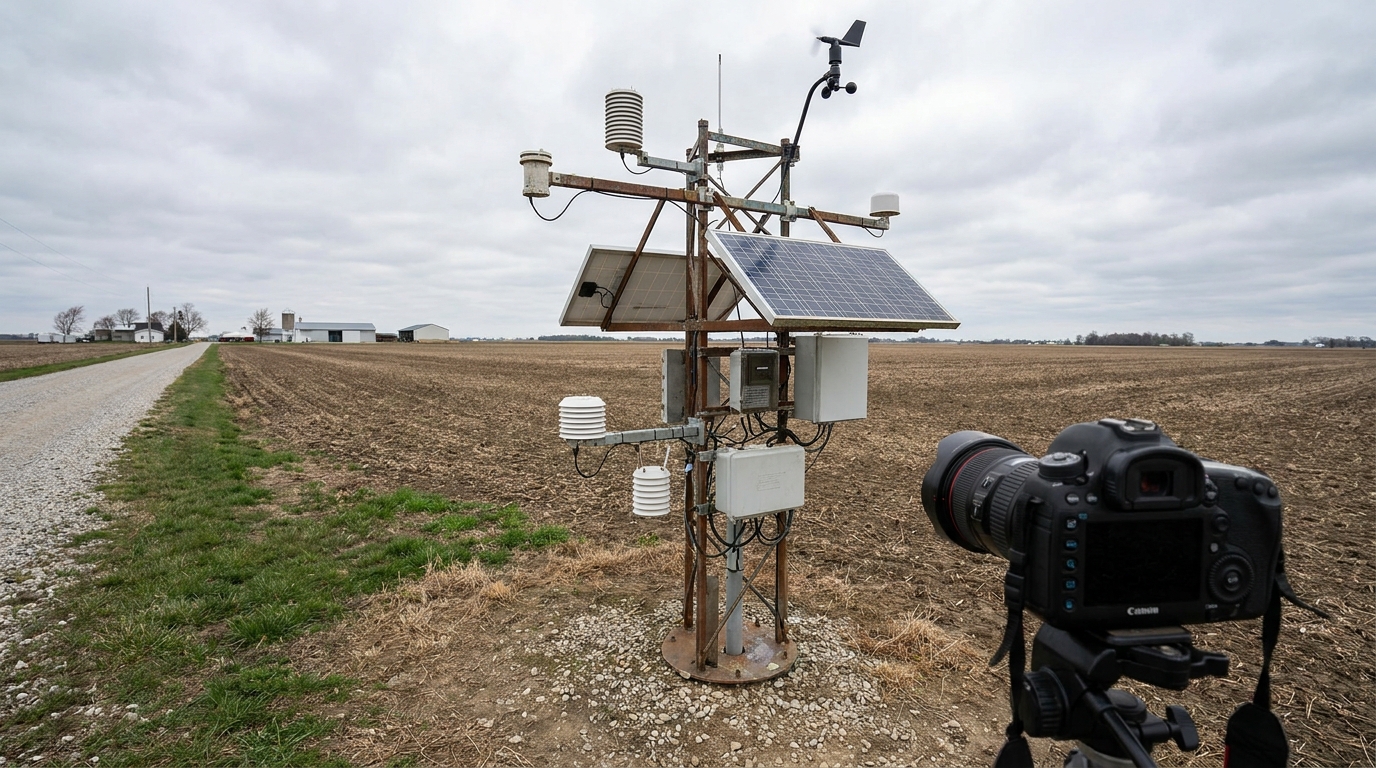
For a long time, agricultural meteorological data relied primarily on regional conventional weather stations. However, influenced by geographical environments, topographical undulations, and vegetation distribution, regional data often failed to accurately reflect real-time micro-climatic differences within specific farmlands. The emergence of modern field weather stations has effectively filled this gap in micro-monitoring, bringing meteorological services directly into the crop canopy and root zones.
Current field meteorological monitoring systems have achieved a high degree of integration and Internet of Things (IoT) connectivity. Modern field weather stations not only collect surface-level conventional agricultural parameters such as air temperature and humidity, wind speed and direction, rainfall, and light intensity with high precision but also extend their monitoring触角 underground. Through multi-layered soil sensors, these systems can real-time acquire key indicators including soil moisture content at various depths, soil temperature, and electrical conductivity.
High-Precision Sensors
Multi-layered soil sensors for depth-specific moisture and conductivity.
Robust Connectivity
LPWAN technologies (NB-IoT, LoRa) for remote data transmission.
Energy Independence
Efficient solar power supply for autonomous operation.
Data Continuity
Eliminates spatial constraints ensuring 24/7 data streams.
Application Scenarios: Multi-Dimensional Agricultural Management Driven by Data
The maturation of field meteorological monitoring technology has spawned a series of agricultural application scenarios with significant economic and ecological value. Among these, the most core applications are the efficient management of water resources and the early prevention of meteorological disasters.
Firstly, the implementation of precise irrigation. Relying on real-time soil moisture data provided by field weather stations, combined with atmospheric evapotranspiration calculations by the system, farm managers can precisely grasp the "thirst" status of crops. When soil moisture drops below the set safety threshold for plant growth and no effective precipitation is forecast in the near future, the control system can automatically trigger smart irrigation devices to supplement water in appropriate amounts. This data-driven precise irrigation not only significantly improves water and fertilizer utilization rates and conserves water resources but also effectively prevents soil compaction and groundwater pollution caused by over-irrigation.
Pest Prevention and Extreme Weather Defense via Real-Time Monitoring
Secondly, early warning and comprehensive prevention of pests and diseases. The outbreak of crop pests and diseases is often closely related to specific temperature, humidity, light, and precipitation conditions. By continuously monitoring the local micro-climate and combining it with pathological algorithm models developed by agricultural protection experts, the system can push warning information to managers at the initial stage when meteorological conditions conducive to pest outbreaks begin to form. This allows agricultural producers to shift from "passive pesticide spraying" to "active defense," achieving reduced pesticide usage and increased efficiency.
Additionally, in dealing with extreme weather, field weather stations perform exceptionally well. For instance, during early spring or late autumn, by monitoring near-surface temperature changes in real-time, if frost risks are detected, the system can immediately link with anti-frost fans, smoke generators, or spray systems for physical anti-freezing measures, minimizing the damage caused by natural disasters to crop yields and economic value.
Development Trends: Multi-Source Data Fusion and Deep Empowerment by Artificial Intelligence
Looking ahead, field meteorological monitoring technology is accelerating its evolution towards greater intelligence, stereoscopic coverage, and inclusivity. The industry as a whole presents three major development trends.
First is the Stereoscopic Integration of Multi-Source Data. Future agricultural meteorological monitoring will integrate ground sensor nodes with low-altitude drone remote sensing and high-altitude satellite remote sensing to construct an integrated "Sky-Air-Ground" agricultural meteorological and soil moisture monitoring network. This combination of macroscopic surveys and microscopic detailed checks will greatly enhance the accuracy of assessing drought and flood disasters across large areas of farmland.
AI-Driven Decision Making and Cost-Effective Equipment Popularization
Second is the Deep Integration of Artificial Intelligence and Big Data. With the massive accumulation of historical meteorological and soil data from fields, machine learning and AI algorithms will play an absolutely core role in agricultural meteorological forecasting and farming decision-making. Future systems will possess powerful self-evolution and prediction capabilities, capable of generating precise farming guidance tailored to specific crops based on subtle trends in micro-meteorology.
Third is the Miniaturization and Cost-Effective Popularization of Equipment. With advancements in semiconductor sensor manufacturing processes and the effects of mass production, the hardware costs of field weather stations will further decrease, and device volumes will become more compact. This trend will promote the rapid popularization of field meteorological monitoring equipment from large-scale modern farms and research institutions to the vast number of small and medium-sized farmers and cooperatives.
Conclusion: The Digital Foundation for Future Smart Agriculture
Field meteorological monitoring technology is profoundly reshaping the production logic of modern agriculture. From the soil moisture network that precisely perceives every drop of soil water, to the precise irrigation system that scientifically schedules every cubic meter of water, to the agricultural meteorological brain that discerns the instantaneous changes of field climates, the power of data is taking root and sprouting in the vast farmlands. As relevant hardware technologies and software algorithms continue to iterate, field meteorological monitoring will inevitably become an indispensable digital foundation for future smart agriculture, providing strong technical support for ensuring global food security and promoting the green and sustainable development of agriculture.