Latest Technology Advances in Wastewater Treatment Plant Online Monitoring
As global environmental protection standards tighten and the "Dual Carbon" goals advance, modern water industry operations are transforming from extensive management to refined, intelligent systems. Building precise, real-time, and stable online monitoring systems has become an inevitable requirement for wastewater treatment plants (WWTPs) to ensure regional water ecological safety and operational efficiency. This article explores the current status, core application scenarios, and future trends of water quality online monitoring and flow control technologies essential for the industry's digital transformation.
The Foundation of Intelligent WWTP Operations
In various stages of the wastewater treatment process, the real-time acquisition of data serves as the foundation for automated control. Traditional manual sampling and laboratory testing methods suffer from significant time lags, failing to meet the requirements of modern processes for responding to instantaneous load changes.
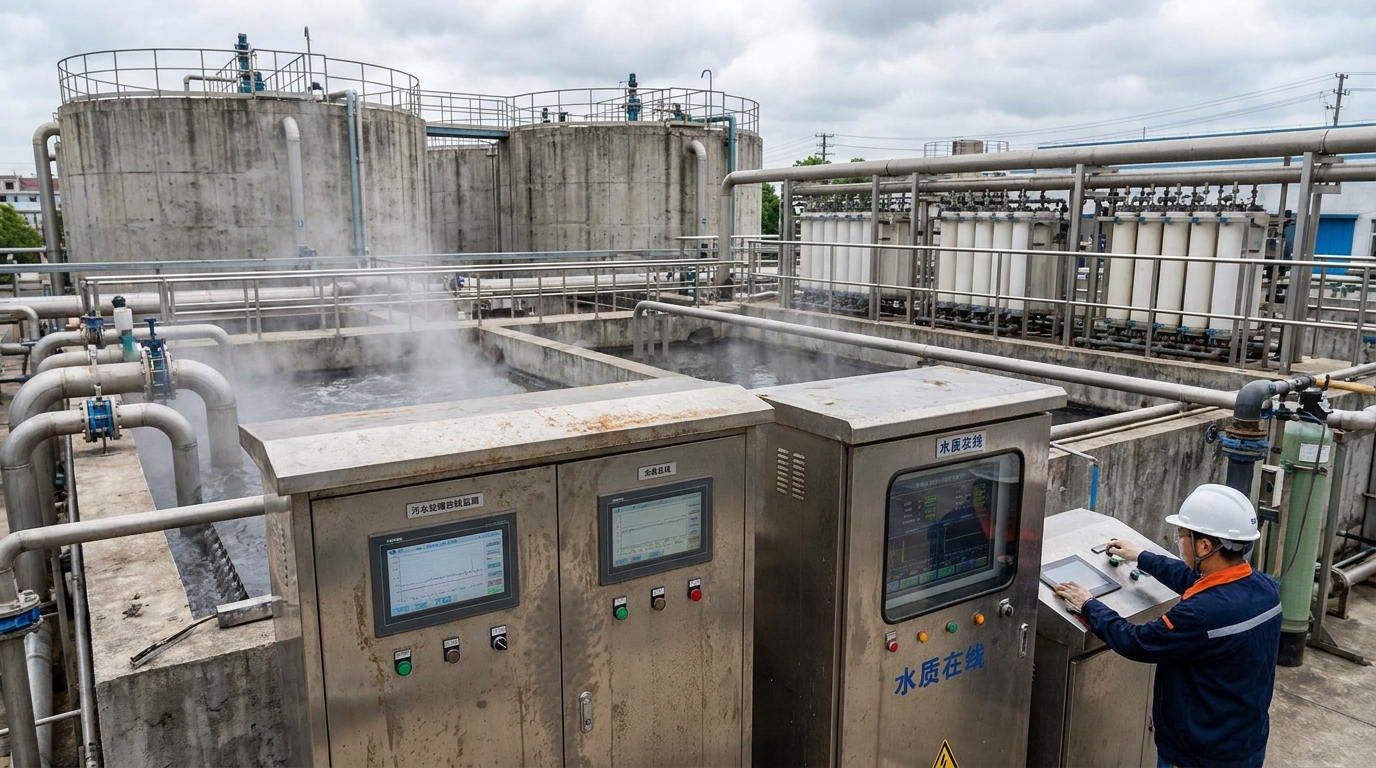
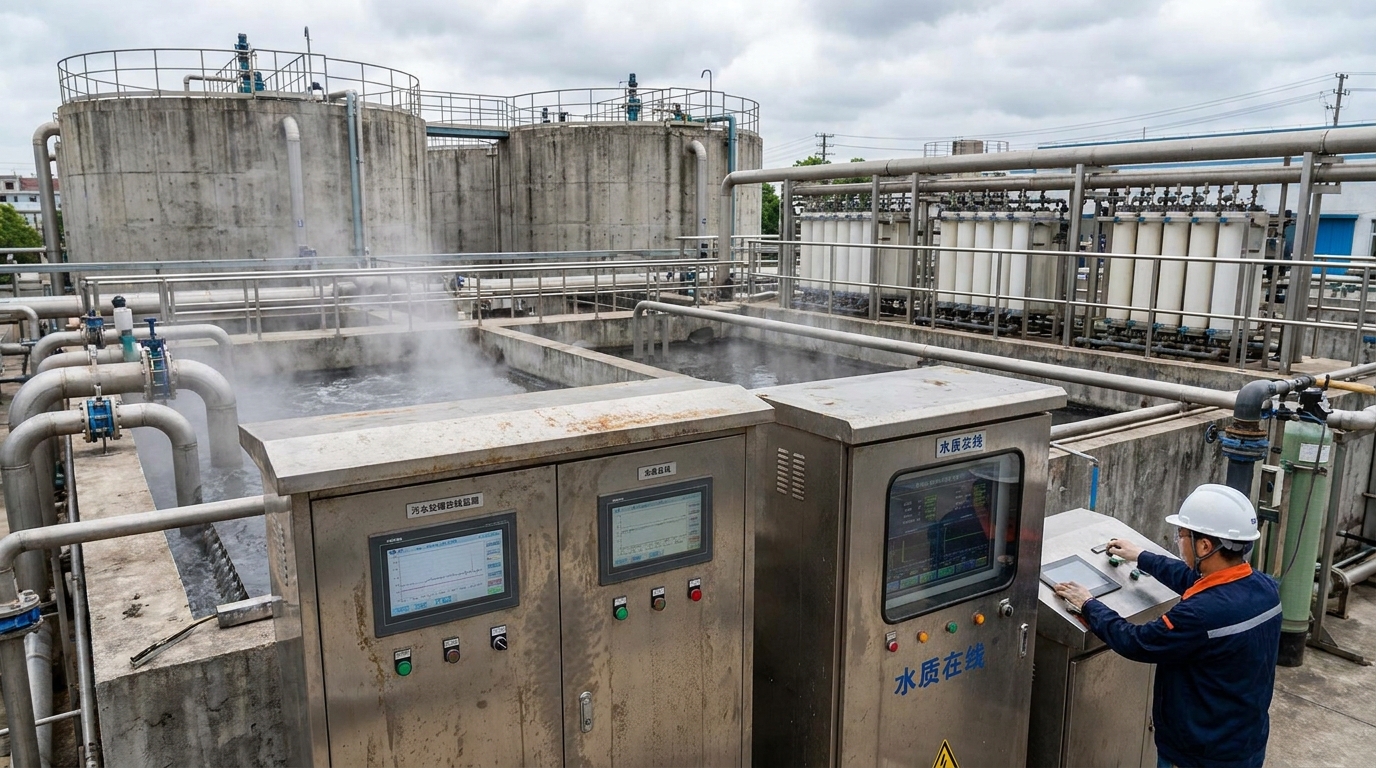
Consequently, the widespread adoption of water quality online monitoring systems has become critical for enhancing WWTP operational efficiency. By deploying sensor matrices at influent points, various treatment units, and effluent outlets, these systems collect hydrological and water quality data around the clock.
This continuous data stream provides reliable underlying support for the logic judgments of central control systems, enabling immediate responses to fluctuating conditions.
Advanced Electromagnetic Flowmeters for Industrial Sewage
Among numerous monitoring indicators, flow rate is the fundamental parameter for assessing WWTP operating loads, performing material balance calculations, and controlling chemical dosing. Since urban sewage and industrial wastewater typically contain large amounts of suspended solids, silt, and corrosive substances, traditional mechanical flowmeters are prone to clogging or wear.
Against this backdrop, electromagnetic flowmeters have emerged as the most widely used flow measurement equipment in the wastewater treatment sector due to their unique technical advantages. Operating based on Faraday's law of electromagnetic induction, they feature no obstructing moving parts within the measuring tube, resulting in zero pressure loss.
Furthermore, they remain unaffected by fluid density, viscosity, temperature, and variations in electrical conductivity within certain ranges, ensuring high accuracy even for sludge return and waste sludge discharge.
Precision Dissolved Oxygen Monitoring for Energy Efficiency
Beyond physical hydrological parameters, critical water quality parameters in biochemical treatment processes are equally paramount for online monitoring. Within activated sludge processes, dissolved oxygen (DO) concentration in the aeration basin is a vital control indicator directly impacting microbial activity and community structure.
Excessively low DO causes aerobic microorganisms to enter a hypoxic state, reducing organic degradation efficiency, while excessively high DO leads to severe energy waste from aeration blowers. Statistics indicate that aeration system energy consumption typically accounts for over 50% of a WWTP's total energy usage.
Therefore, real-time and precise monitoring of dissolved oxygen, coupled with closed-loop linkage control of blower systems, is key to achieving energy conservation and emission reduction targets.
Fluorescence-Based DO Sensors Replace Traditional Polarographic Models
Regarding technological evolution, traditional polarographic DO sensors, which require regular membrane and electrolyte replacement, involve high maintenance workloads and are often limited by flow velocity constraints. Currently, fluorescence-based DO sensors have gradually become the mainstream choice for modern facilities.
Based on the principle of fluorescence quenching, this technology consumes no oxygen, is unaffected by flow velocity, and probes often feature self-cleaning mechanisms such as built-in brushes or air blowers. These features significantly reduce the workload for on-site operations personnel.
Ensuring the continuity and authenticity of online monitoring data, these advanced sensors minimize downtime and improve the reliability of long-term operational records.
Persistent Challenges in Real-World Applications
Sensor Fouling & Maintenance
Complex water quality can cause biofilm attachment and chemical scaling, leading to measurement drift. This places higher demands on instrument automatic cleaning mechanisms and advanced materials science to maintain accuracy.
Data Silos
While hardware devices like monitors and flowmeters are common, there is often a lack of deep integration between devices and host software. Data is frequently used merely for "monitoring" rather than "control," failing to fully unleash the value of big data analytics.
Intelligent Development: From Reactive to Predictive Maintenance
Looking ahead, wastewater treatment online monitoring technology is rapidly developing towards intelligence, miniaturization, and networking. Edge computing technology is being introduced to sensor terminals, transforming them from simple data collection units into smart nodes capable of self-diagnosis and fault prediction.
For instance, sensors can analyze their own signal attenuation curves to predict and notify maintenance personnel of impending issues, shifting strategies from "reactive repair" to "predictive maintenance."
With the deep integration of IoT and AI, "Digital Twin" WWTPs will utilize deep learning on massive historical data to build dynamic biochemical reaction models, executing feedforward control to optimize aeration rates before fluctuations occur.
Conclusion: The Nervous System of Modern Water Industry
Water quality online monitoring systems encompassing electromagnetic flowmeters and DO sensors constitute the "nervous system" of modern wastewater treatment plants. With continuous iteration of sensing technologies and the evolution of data algorithms, online monitoring will no longer serve solely to meet regulatory requirements for environmental compliance.
Instead, it will truly transform into the core productivity driving the water industry toward refined operations and energy/carbon reduction. The comprehensive digital transformation of the industry will undoubtedly provide robust technical guarantees for constructing a greener and more sustainable ecological water environment.