Upstream Automation Monitoring System Upgrade with High-Performance RTUs
In response to the nation's growing emphasis on water resource management, a major hydraulic hub project has successfully completed an automation upgrade centered around high-performance Remote Terminal Units (RTUs). This initiative achieves precise control over basin hydrological data, providing a solid foundation for flood control and scientific water resource scheduling. The following details how this transformation enhances efficiency across a 1,200-square-kilometer basin.
Project Background: Overcoming Manual Limitations
The hydraulic project covers a vast area of 1,200 square kilometers, including three large reservoirs, five control gates, and dozens of tributaries. Historically, hydrological monitoring relied heavily on manual inspections, resulting in significant data latency where field information took over two hours to reach the management center. Furthermore, the accuracy of manually transcribed data was only around 85%, severely constraining the timeliness of flood warning systems.
To address these critical inefficiencies, the Basin Management Committee mandated a comprehensive upgrade for real-time monitoring and automated operations. This strategic shift aims to eliminate data silos and ensure that emergency responses are based on accurate, instantaneous information rather than delayed reports.
Key Technical Challenges in Harsh Environments
The upgrade faced multifaceted challenges, starting with rugged terrain that made laying traditional communication lines difficult and costly. Existing legacy equipment lacked compatibility with modern digital protocols, creating isolated data silos that hindered system-wide analysis. Additionally, remote locations without grid access required innovative energy solutions to ensure ultra-reliable power supply.
Ensuring data integrity and security against cyber threats while maintaining low-latency transmission was paramount for effective emergency response. These constraints necessitated a robust solution capable of operating autonomously in harsh conditions without compromising data flow.
Solution Architecture: Core Role of High-Performance RTUs
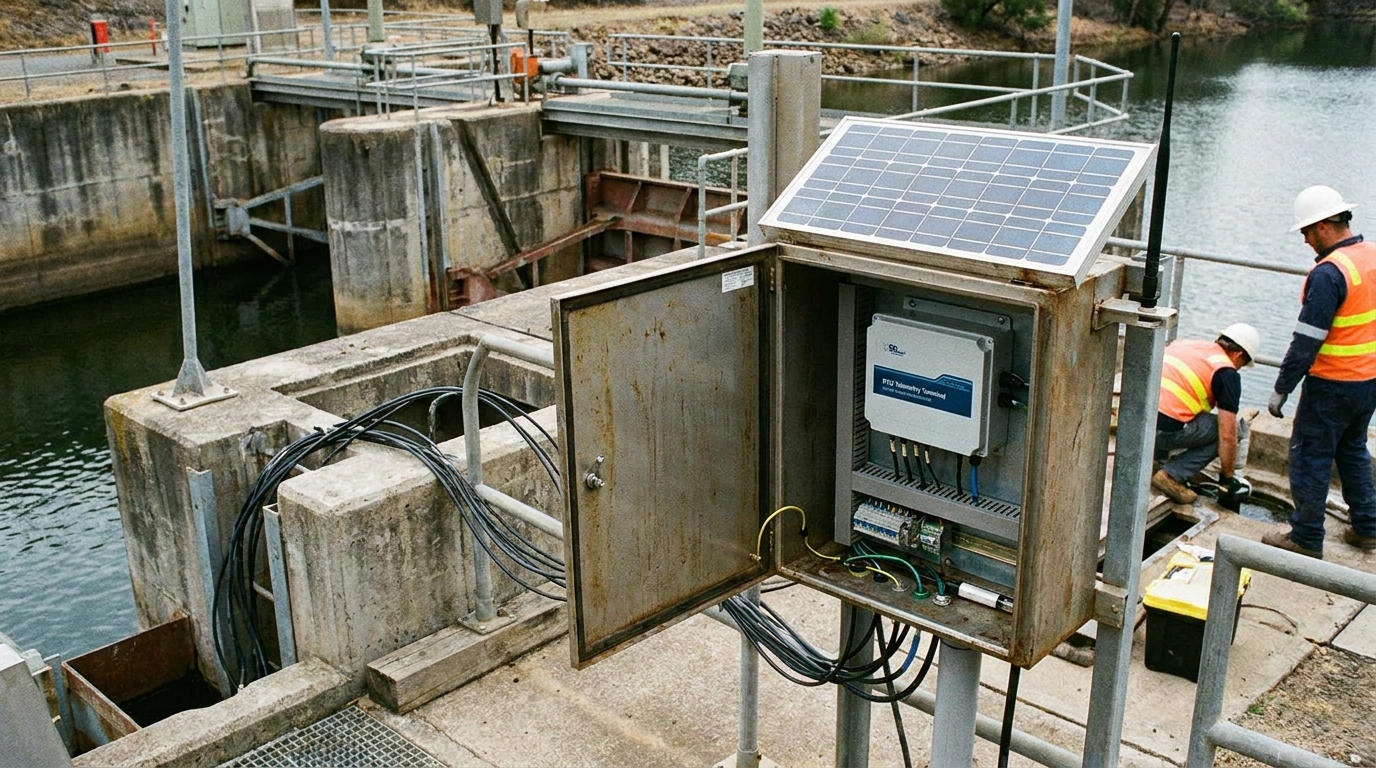
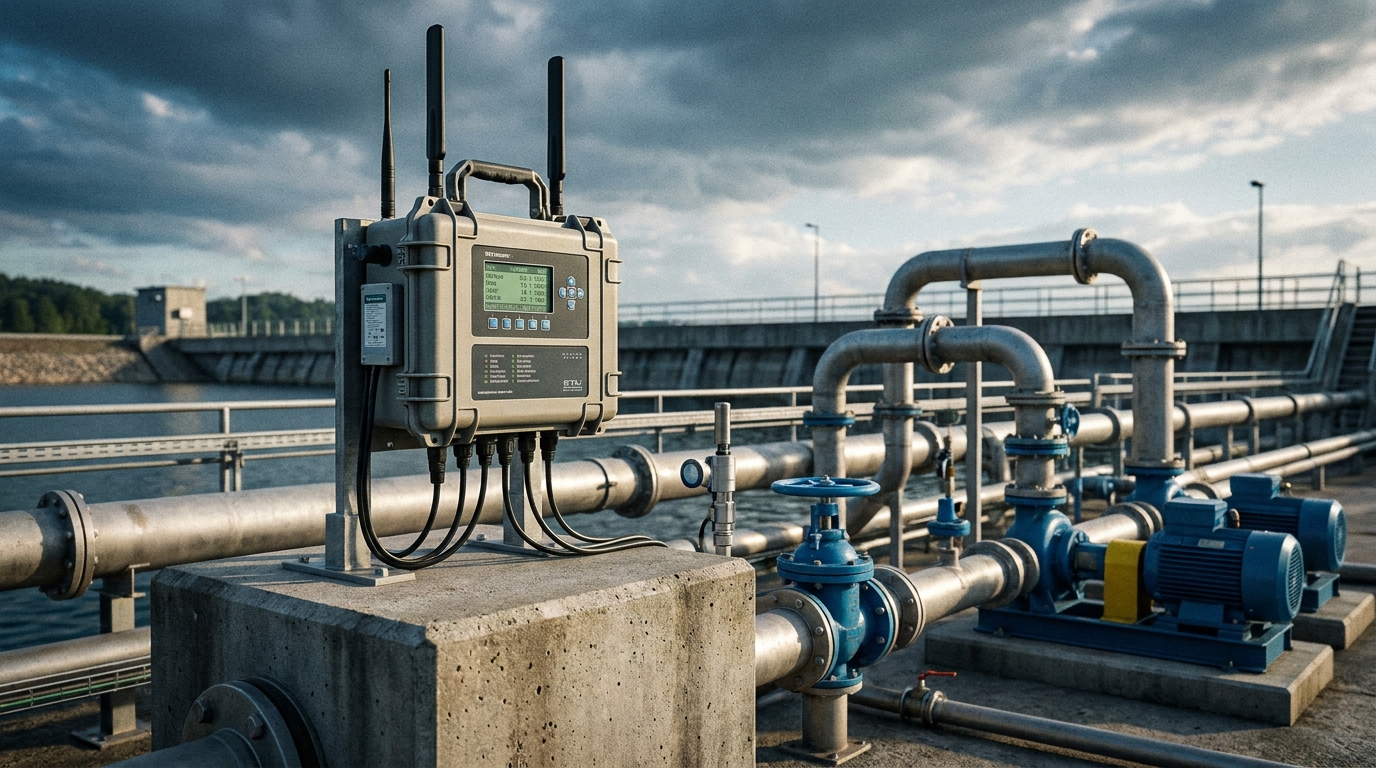
The project team selected high-performance RTUs as the core intelligence nodes, designed specifically for harsh environmental conditions and complex telemetry tasks. Unlike standard industrial controllers, these advanced units feature multi-protocol support including Modbus, DNP3, and IEC 60870-5-104. This flexibility allows seamless integration with diverse sensors such as ultrasonic level gauges, flow meters, and rainfall stations.
Deployment involved installing these RTUs at every critical node, from reservoir inflow points to key tributary junctions. Each unit is equipped with dual-SIM card capabilities for cellular backup and LoRaWAN or satellite communication interfaces for areas with poor signal coverage. This redundancy ensures uninterrupted data flow even during severe weather events that might disrupt terrestrial networks.
Hardware Robustness
The selected RTUs boast an industrial-grade design with IP68 protection ratings, capable of withstanding extreme temperatures ranging from -40°C to +75°C. They are built to resist high humidity and corrosive environments common near water bodies. Built-in surge protection and isolation circuits safeguard sensitive electronics from lightning strikes and voltage fluctuations.
Software Intelligence & Edge Computing
Firmware embedded within the RTUs includes edge computing capabilities, performing local data validation, filtering, and preliminary analysis before transmission. If sensor readings deviate significantly due to noise or malfunction, the RTU flags anomalies locally to reduce bandwidth usage and prevent false alarms. Additionally, the units support over-the-air (OTA) updates for remote algorithm deployment.
Network Resilience: Hybrid Communication Architecture
A hybrid communication architecture was established to ensure maximum reliability. Primary data transmission occurs via 4G/5G networks, ensuring high-speed connectivity for real-time monitoring of critical water levels. When cellular signals are weak or unavailable, the system automatically switches to LoRa mesh networks or satellite links.
This "always-on" capability is crucial for flood forecasting, where seconds count. By maintaining continuous connectivity regardless of environmental interference, the system guarantees that emergency responders receive vital data when it matters most.
Operational Results and Impact
Data Aggregation Time (was >2 hrs)
Data Accuracy Rate (was 85%)
Early Warning Lead Time
Following full-scale deployment, the time required to aggregate data from the field to the command center has been reduced from over two hours to less than 30 seconds. Data accuracy has surged from 85% to 99.8%, eliminating errors associated with manual transcription. This leap in efficiency directly enhanced the authority's ability to predict flash floods and manage water releases proactively.
Real-World Success: Mitigating Infrastructure Risk
In the most recent rainy season, the upgraded system detected a rapid rise in water levels in one of the tributaries 45 minutes earlier than previous methods would have allowed. This early warning enabled the automatic adjustment of gate openings, effectively mitigating a potential breach and saving millions of dollars in potential infrastructure damage.
Moreover, the automated reporting features have streamlined daily operational workflows, freeing up human resources to focus on strategic decision-making rather than routine data collection. The system has proven its value not just in data gathering, but in active disaster prevention.
Conclusion and Future Outlook: Integrating AI Predictive Models
This successful upgrade demonstrates the transformative power of high-performance RTUs in modernizing water resource management. By bridging the gap between physical infrastructure and digital intelligence, the project has set a new benchmark for smart water conservancy in the region. The integration of edge computing, redundant communications, and robust hardware has created a resilient ecosystem capable of adapting to future climate variability.
Looking ahead, the project team plans to expand the scope by integrating AI-driven predictive models. These models will leverage historical and real-time data collected by the RTUs to forecast water quality changes, sediment transport, and long-term hydrological patterns. As the global water industry evolves, cases like this underscore the importance of investing in reliable, intelligent telemetry solutions.

