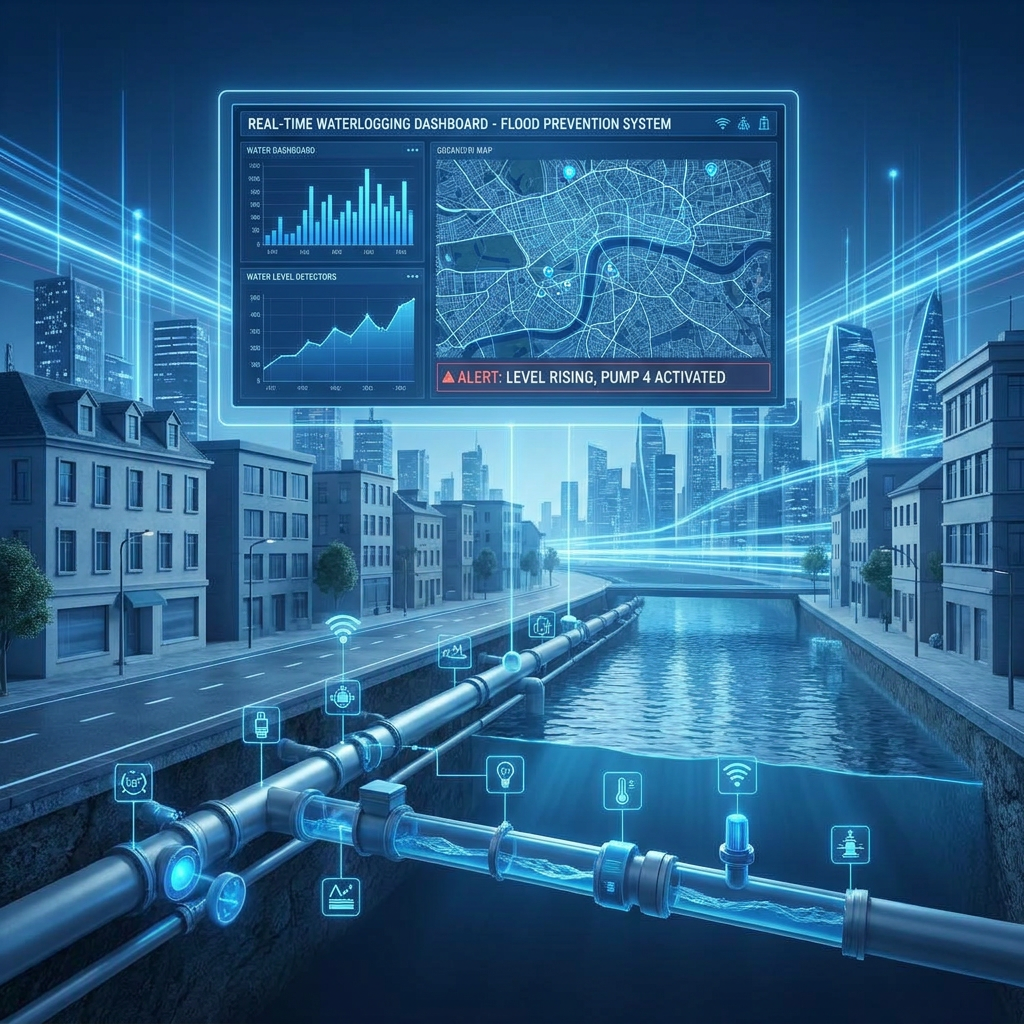
2026 Urban Waterlogging Early Warning System Market Trends: Pricing, Selection, and Maintenance
As global climate change intensifies urban flooding risks, the urban waterlogging early warning system market has evolved into a critical component of modern municipal disaster management. Driven by IoT advancements and AI analytics, these systems now offer millimeter-level precision in flood detection, replacing traditional manual patrols with intelligent, data-driven solutions. This analysis explores 2026 pricing tiers, procurement strategies, and lifecycle costs for government bodies and engineering firms seeking resilient flood defense infrastructure.

Technological Evolution of Urban Waterlogging Early Warning Systems
Modern urban waterlogging early warning systems are strategically deployed at high-risk nodes like underpass tunnels, low-lying roads, and drainage pumping stations. The architecture integrates front-end IoT sensing, network transmission, and cloud-based analytics to replace outdated manual monitoring methods.
High-frequency millimeter-wave radar gauges have largely superseded static pressure and ultrasonic sensors due to their non-contact measurement capabilities and resistance to environmental interference. When combined with AI-powered video surveillance, these systems deliver real-time water depth feedback down to the millimeter while analyzing flow velocity and road conditions.
Basic Tier
$700 – $2,100
Entry-level radar/ultrasonic sensors with 4G/NB-IoT alerts for budget projects.
Comprehensive Tier
$2,800 – $7,000
Mid-range systems with starlight cameras, LED warnings, and solar power integration.
Holographic Intelligent Tier
$7,000+ per point
High-end deployments with IP68 ratings, edge computing, and City CIM integration.
In-Depth Analysis of Urban Waterlogging Early Warning System Price Ranges
Market prices for urban waterlogging early warning systems vary significantly based on sensor accuracy, communication protocols, and functional configurations. The Basic Monitoring Tier ($700–$2,100) suits budget-conscious projects requiring extensive coverage in blind spots using entry-level radar or ultrasonic gauges.
The Comprehensive Warning Tier ($2,800–$7,000) represents the mainstream municipal choice, integrating high-frequency radar, starlight cameras, and LED warning screens for "audio-video + data" dual verification. These systems automatically trigger traffic blockades when water levels exceed safe limits.
For core transportation hubs, the Holographic Intelligent Tier ($7,000+) offers full IP68 protection, edge computing gateways, and seamless integration with City CIM platforms. This tier enables predictive risk assessment for pedestrians and vehicles during extreme flood events.
Scientific Procurement Recommendations for Waterlogging Systems
Procurement entities must move beyond price-only comparisons and evaluate urban waterlogging early warning systems based on three critical factors:
- Environmental Adaptability: Prioritize high-frequency millimeter-wave radar equipment that remains unaffected by oil slicks, floating debris, and electromagnetic interference from vehicles.
- System Openness: Ensure compatibility with standard hydrological protocols (e.g., SL651) to integrate seamlessly into existing municipal flood control command platforms.
- Power Redundancy: Select dual-power supply systems with large-capacity gel batteries and efficient solar panels to maintain 7–15 days of operation during continuous rain and power outages.
Full Lifecycle Maintenance Cost Analysis for Early Warning Systems
While initial construction costs are often prioritized, the annual maintenance cost for urban waterlogging early warning systems typically ranges from 10% to 15% of the initial investment. This ongoing expense is crucial for evaluating the total economic efficiency of flood defense projects.
Key maintenance dimensions include communication fees for 4G/5G data transmission and cloud platform leasing, hardware depreciation for solar panels and batteries (requiring replacement every 2–3 years), and labor costs for seasonal sediment removal and sensor calibration.
Neglecting these recurring expenses can compromise system reliability during critical flood events. Proactive budgeting ensures continuous operational capability and maximizes the return on investment for resilient city infrastructure.
Conclusion: Building resilient cities requires rational analysis of urban waterlogging early warning system pricing, scientific selection of advanced radar sensing technology, and comprehensive lifecycle maintenance planning. Only through these measures can we truly safeguard urban safety and public property against increasingly severe flood threats.

