Industry Case Study: Comprehensive Energy Saving Retrofit of a Large-Scale New Materials Industrial Park in South China

As the global industrial sector accelerates its green transition, energy conservation and carbon reduction in high-consumption industrial parks have become central priorities for the industry. Recently, the engineering team at Ecolor Technology successfully delivered a comprehensive energy-saving project for a large-scale new materials industrial park in South China. By integrating cutting-edge energy management concepts with Internet of Things (IoT) technologies, the project effectively addressed long-standing issues of high energy consumption and aging infrastructure within the park. This article provides a professional engineering analysis of the project's implementation background, technical breakthroughs, and final outcomes.
Project Background and Comprehensive Energy Efficiency Diagnosis
Covering an area of approximately 450,000 square meters, this new materials industrial park boasts an annual output value exceeding 3 billion RMB. However, having been operational for over a decade, the park's original energy supply systems and foundational power equipment began to exhibit severe efficiency degradation and exorbitant operation and maintenance costs. Historical data indicates that the park's annual electricity consumption reached a staggering 85 million kilowatt-hours, making energy costs a critical bottleneck constraining corporate profit growth.
At the outset of the project, Ecolor Technology's professional engineering team conducted a three-week intensive energy efficiency diagnosis. By installing temporary high-frequency data acquisition terminals and conducting on-site pipeline mapping, the team produced a detailed diagnostic report. The report identified three core high-energy consumption nodes: First, the central air compressor station suffered from aging equipment, multiple micro-leaks in the piping network, and predominantly fixed-frequency operation, resulting in extremely low system-wide energy efficiency. Second, the overall Coefficient of Performance (COP) of the chiller units and cooling towers had dropped to around 3.2, significantly below current industry standards. Third, the lack of global intelligent control left subsystems as "information silos," relying on manual experience for adjustments, which led to significant wasteful energy consumption.
Engineering Technical Challenges in Zero-Disruption Retrofit
During the site survey and solution design phases, the Ecolor Technology team faced numerous rigorous technical and objective constraints. A primary challenge was the zero-disruption construction requirement. As a new materials production base, the park operates on a 24-hour continuous production schedule. Any unplanned shutdown of the power systems would result in the scrapping of products along the entire production line. Consequently, the transition from old to new systems had to be completed in a "zero-perception" state.
Complex pipeline retrofitting presented another hurdle. Underground pipelines had undergone multiple local repairs over more than ten years, resulting in significant discrepancies between the actual layout and existing blueprints. Re-routing the compressed air and chilled water pipes required careful navigation to avoid existing high-voltage cable trays and hazardous chemical pipelines. Additionally, maintaining high-precision temperature and humidity control in core cleanroom workshops posed a severe test for hydraulic balancing adjustments and variable frequency drive (VFD) control strategies within the air conditioning system.
Comprehensive Solution and Implementation Process
Addressing these pain points and challenges, Ecolor Technology tailored a comprehensive retrofit plan combining "hardware iteration + software empowerment" for the park. Furthermore, the project introduced the Energy Performance Contracting (EPC) business model. Under this arrangement, the park owner bore no upfront costs for equipment procurement or construction. Instead, Ecolor Technology fully invested, and both parties agreed to share the energy cost savings generated by the retrofit according to a stipulated ratio during the agreement period. This approach effectively mitigated the park's financial pressure and technical risks.
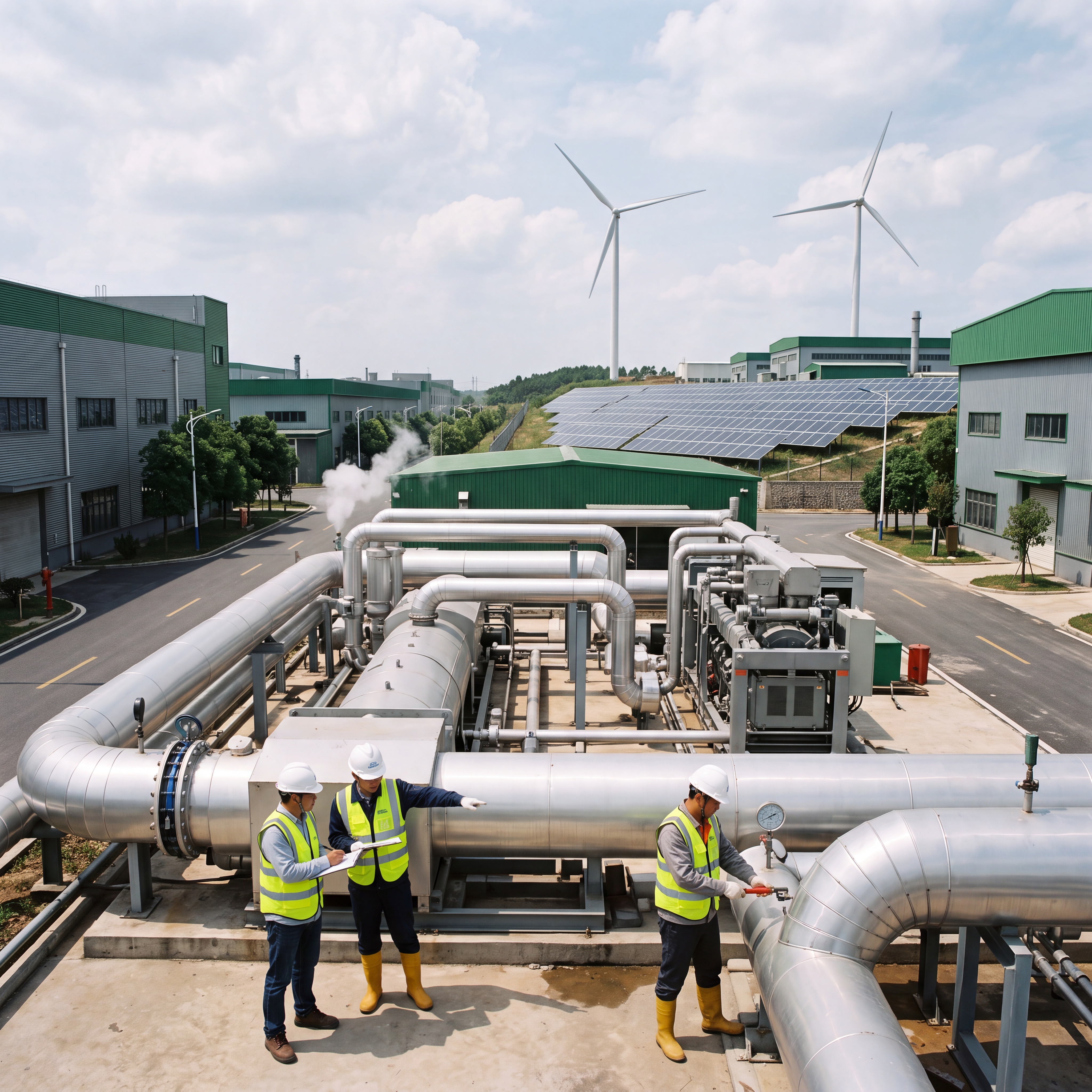
In terms of specific implementation, this energy saving retrofit project covered the following core modules. Firstly, deep optimization of the central air conditioning system involved dismantling the original inefficient fixed-frequency centrifugal chillers and replacing them with new variable-frequency centrifugal chillers featuring magnetic bearing technology. Simultaneously, chilled water pumps and cooling water pumps were retrofitted with VFDs, and differential pressure bypass valves were installed to achieve dynamic balance in the water system. Secondly, waste heat recovery and constant-pressure retrofitting of the air compressor system replaced old equipment with two-stage compression variable-frequency air compressors. The high-temperature waste heat generated during air compressor operation was redirected via heat exchangers into employee living areas and certain process heating loops, achieving cascaded energy utilization.
Data-Driven Final Results and Operational Benefits
Efficiency Improvement
- Central AC COP increased from 3.2 to 5.4 (Grade 1 Standard)
- Air-to-gas ratio decreased by 21.5%
Energy & Carbon Savings
- Annual electricity saved: 13.5 million kWh
- Standard coal saved: 1,659 tons/year
- CO₂ emissions reduced: 7,708 tons/year
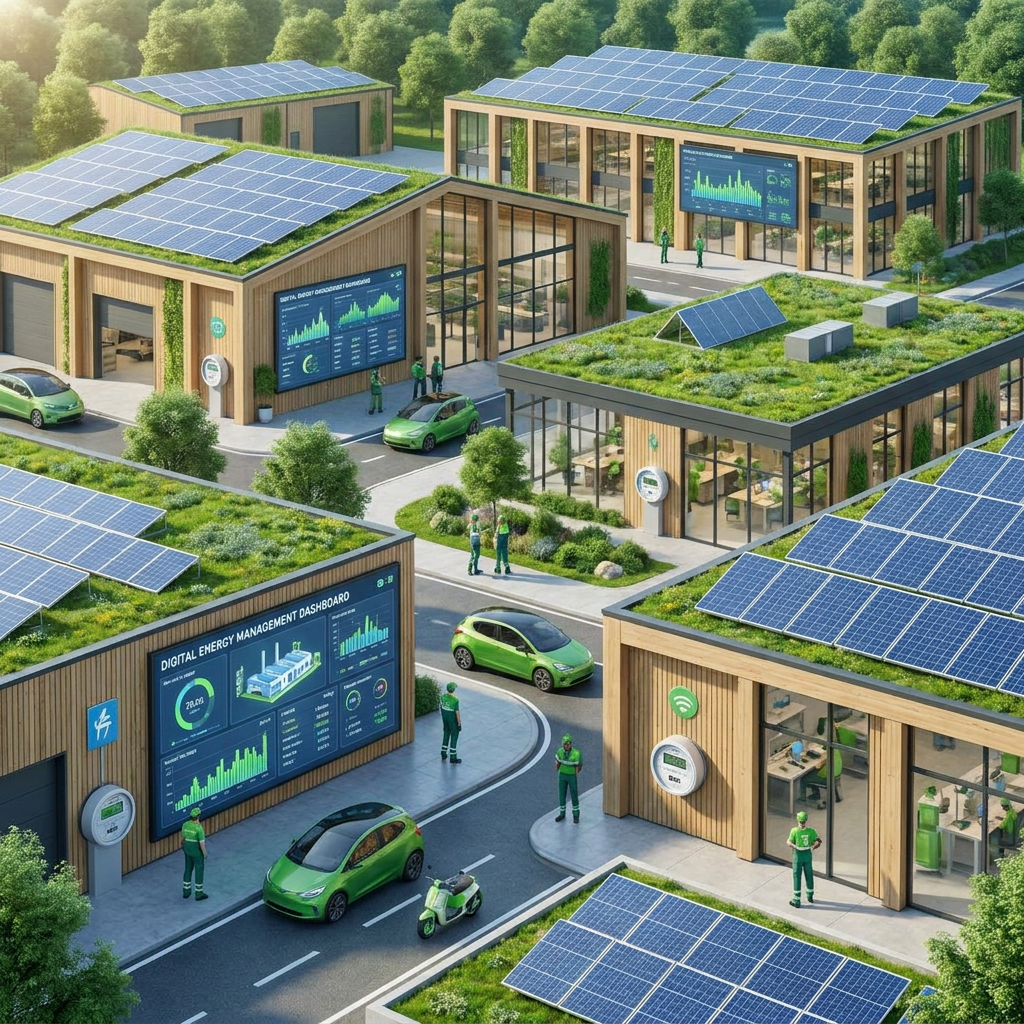
To ensure production continuity, Ecolor Technology adopted a "parallel pre-installation and night-time switchover" construction strategy. Engineers first constructed new pipe valve groups and control cabinets outside the system perimeter. Using the low-load window between 2:00 AM and 4:00 AM, they performed pressurized drilling and rapid flange connections. This ensured zero interruption to park production throughout the construction period. Additionally, an AI-based Integrated Energy Management Platform built on Ecolor Technology's underlying architecture was deployed. Utilizing edge computing gateways to collect real-time operational data, the platform employed algorithmic models to optimize the group control of chiller units and air compressors.
Following four months of construction and one month of single-unit commissioning, the project has now operated stably for three full quarters. According to verification reports issued by third-party authoritative testing agencies, the retrofit results are significant. Leveraging the Energy Performance Contracting model, the park achieved direct electricity cost savings sharing exceeding 3 million RMB annually without any initial investment. Furthermore, the launch of the AI Energy Integrated Management Platform reduced the number of inspection personnel in the power workshop from 12 to 4, significantly lowering labor and operational maintenance costs.
Conclusion: A Model for Low-Carbon Transformation
The successful delivery of this energy-saving retrofit project for the South China new materials industrial park has not only brought immediate economic and environmental benefits to the enterprise but also provided a highly practical engineering model for the low-carbon transformation of traditional manufacturing parks in China. Ecolor Technology remains committed to the research and development of underlying energy-saving technologies and digital management platforms. Through professional and objective engineering technical services, we aim to assist more industrial enterprises in achieving high-quality, sustainable green development.