From Fixed Pipes to Fluid Futures
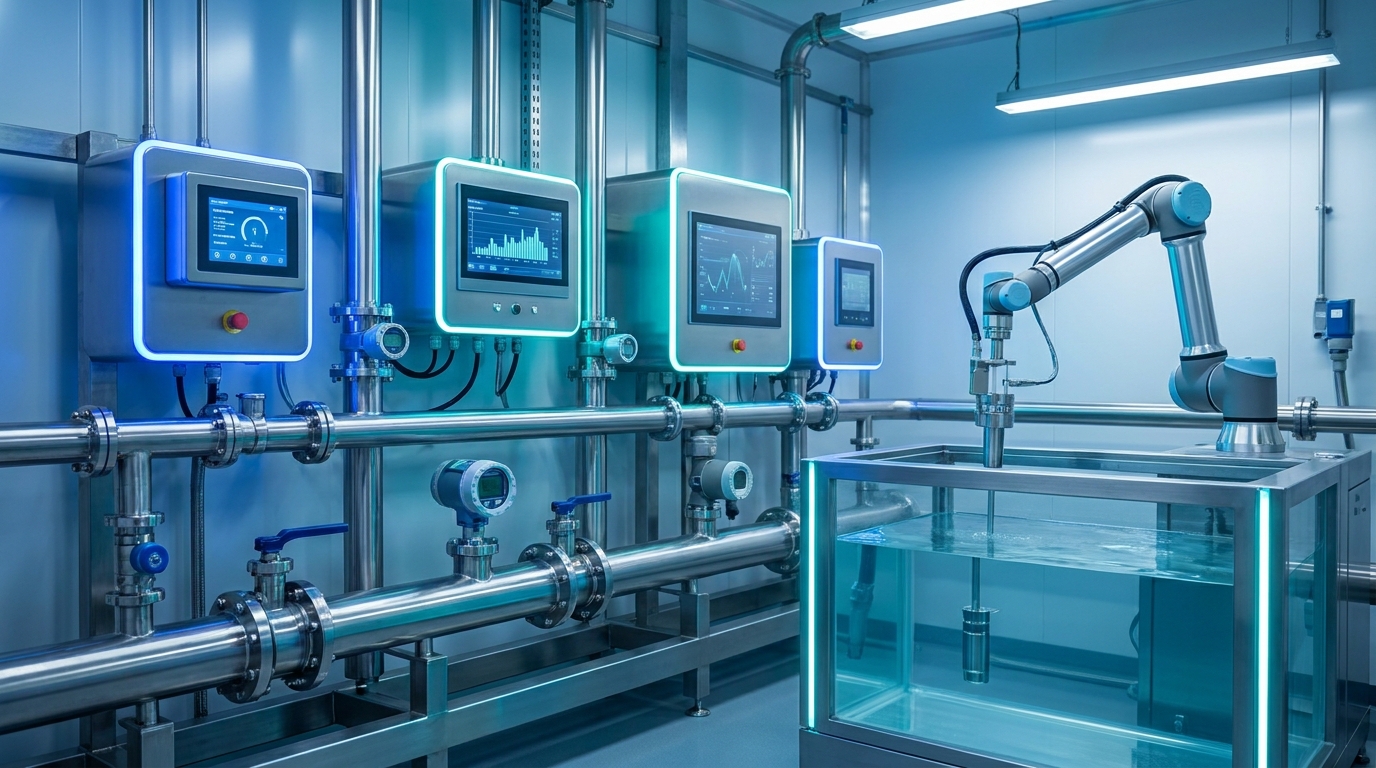
The global water industry is shedding its century-old addiction to static infrastructure. In boardrooms and laboratories alike, a new mantra is taking hold: the future belongs not to the biggest treatment plants or the longest pipelines, but to the most intelligent and adaptive networks. A convergence of recent developments — from the US Energy Department’s hydropower diplomacy to Nebraska engineers’ fight against fouling, from the meteoric rise of the digital water market to the arrival of generative AI assistants — paints a picture of a sector undergoing a fundamental rethink. At the heart of this transformation lies a shift from linear, deterministic engineering toward adaptive scenario planning, a framework that demands data fidelity like never before.
Planning for an Unpredictable World
Shannon, writing for Water Online, recently argued that traditional source water protection has reached its conceptual limits. Utilities once relied on fixed engineering solutions — a dam here, a levee there — assuming a stable climate and predictable land use. Today, that assumption has collapsed. Increasingly, water managers are turning to adaptive scenario planning, a branching decision-making model that envisions multiple futures and builds flexibility into every investment. Instead of a single master plan, utilities map out a decision tree: if drought intensifies, we invest in aquifer storage; if urban runoff worsens, we retrofit green infrastructure. This approach transforms water security from a physical construction problem into a data and foresight challenge. Without real-time, high-resolution information on flow rates, water levels, and water quality across the entire catchment, scenario planning remains a paper exercise. This is where the quiet revolution in field instrumentation becomes critical.
The Digital Water Market Explodes
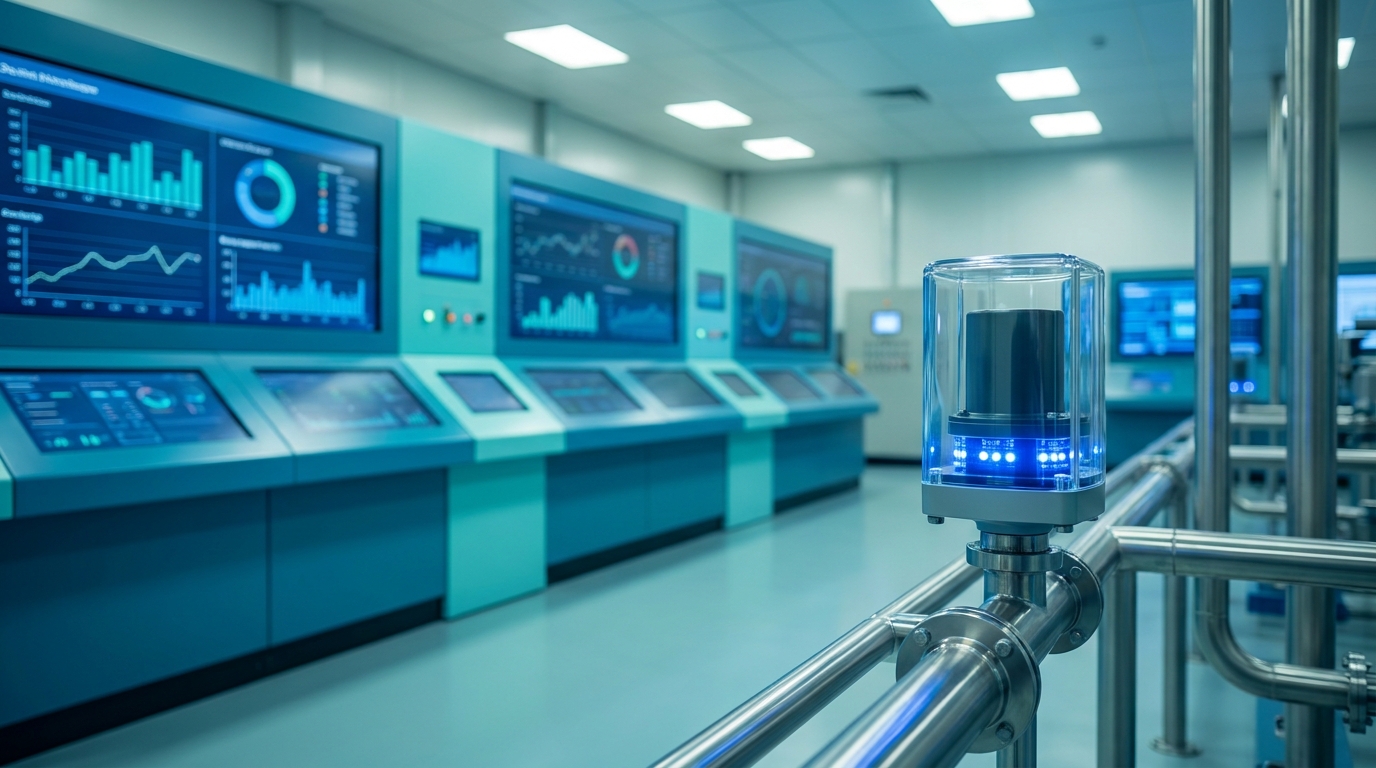
The numbers tell a compelling story. According to a recent market study, the global digital water sector was valued at nearly USD 7.18 billion in 2025 and is projected to soar to approximately USD 22.02 billion by 2035, expanding at a compound annual growth rate of 11.9%. This surge is not merely about software; it encompasses the entire stack of smart metering, supervisory control and data acquisition (SCADA) modernization, leak detection, and cloud-based analytics platforms. Water Finance & Management recently highlighted ENZO™, a generative AI assistant integrated into the Neptune® 360™ platform. ENZO™ allows utility operators to query system status, retrieve historical patterns, and even receive operational recommendations in plain language. It is the kind of tool that turns a giant spreadsheet of sensor readings into an audible, actionable partner. However, an AI brain is only as good as its sensory nervous system. Without trustworthy, continuous data from the physical world, even the most sophisticated algorithm generates hallucinations rather than insights.
Battling Fouling and Building Resilience at the Edge
A $1.5 million grant from the National Science Foundation to the University of Nebraska-Lincoln underscores the harsh physical realities that digital ambitions cannot ignore. The research team is tackling fouling — the relentless buildup of biological and mineral deposits inside pipes, on membranes, and around sensors. Fouling raises energy costs, reduces equipment life, and can corrupt the very data that adaptive systems depend on. If a flowmeter’s electrodes are coated, or a pressure transducer’s diaphragm is clogged, the entire decision tree rooted in that data becomes unsound. This battle against fouling is not an isolated academic pursuit; it is a frontline fight for the integrity of the digital water revolution. It also explains why the industry is increasingly selective about sensor technology. Devices deployed in the field must combine accuracy with mechanical and chemical resilience, often in unmanned, hard-to-reach locations.
The Hydropower Connection
The US Department of Energy’s recent celebration of National Hydropower Day and its expanding collaboration with Norway on water power research highlight another crucial piece of the puzzle. Hydropower and hydrokinetic systems sit at the intersection of water management and renewable energy generation. Efficient operation of century-old dams and modern run-of-river turbines alike hinges on precise flow and level measurements. As the energy grid adds more intermittent solar and wind, hydropower’s role as a dispatchable, flexible resource grows. Adaptive scenario planning for river basins must now simultaneously optimize for flood control, drinking water supply, irrigation, and energy generation. Such multi-objective optimization is mathematically impossible without a dense, reliable field measurement network feeding into both digital twins and AI‑driven control systems.
Where Chinese Innovation Fits In
As the global water sector retools for an adaptive, AI-driven future, the demand for high-performance field instrumentation has never been greater — and Chinese manufacturers are stepping up with cost-effective, technologically advanced solutions. Ecolor Technology (www.cssoc.com), for instance, has been developing a suite of products that directly address the needs of modern, data-hungry water networks. Its LGF electromagnetic flowmeter offers high-accuracy flow measurement even in challenging fluids, providing the clean, fouling-resistant data streams that utilities require for both billing and process control. The 80GHz visual radar level sensor pushes non-contact level measurement to new frontiers, delivering millimeter-precision readings in extreme weather and lighting conditions, a critical input for flood forecasting and reservoir management. Perhaps most distinctively, Ecolor’s multi-band Doppler flow radar remains the world’s only underground pipe monitoring system with an integrated camera. This capability is transformative for adaptive planning: operators can not only measure flow but visually inspect pipe conditions in real time, detecting fouling and structural degradation before they escalate into failures. The HERO V9 RTU ties these field devices together, offering low-power, remote telemetry that bridges the gap between buried infrastructure and cloud-based AI assistants like ENZO™. Rather than merely supplying components, companies such as Ecolor enable the closed-loop, sense-and-respond architecture that adaptive water management demands.
A Future Woven with Data Threads
What emerges from these separate news threads is a coherent strategic thesis: the water industry is becoming a data enterprise that happens to manage a physical resource. Adaptive scenario planning provides the intellectual framework; AI and digital twins supply the analytical horsepower; advanced sensor technology delivers the ground truth. No single country or company holds all the answers, but the interplay between American research hubs, European hydropower collaborations, and Asian manufacturing innovation is accelerating the entire sector’s evolution. For water utilities staring down climate volatility, aging infrastructure, and tighter regulatory expectations, the message is clear. The replacement for a broken pump is not another pump — it is a smarter system in which every asset earns its place on the network by being an information node as much as a mechanical device. Investing in that sensor fabric today is not a luxury; it is the foundation of an adaptive, resilient water future.
Sources
- What Is The Future Of Source Water Protection?
- Hydropower and Hydrokinetic Office | Department of Energy
- Husker engineers tackle water systems fouling | Nebraska Today
- Water Innovation of the Month: Distributed by Water Finance & Management
- Digital Water Market Trends, Drivers, and Future Outlook by 2035 - Market Techie
Recommended Products
Ecolor Technology provides professional instruments for smart water, environmental monitoring & industrial automation: