A Convergence Moment for Global Water
The global water industry is entering a defining chapter. Across continents, three powerful forces — massive capital mobilisation, artificial intelligence integration, and urgent infrastructure renewal — are converging to reshape how water utilities plan, operate, and invest. This is no longer a story about incremental pipe replacements or routine meter upgrades. It is a structural shift driven by the simultaneous pressures of climate adaptation, digital transformation, and the water demands of entirely new economic sectors such as data centres and clean energy clusters. The past month alone has delivered a cascade of announcements that illustrate this inflection point with remarkable clarity.
United Utilities' Historic Capital Mobilisation
At the centre of this shift stands United Utilities, which unveiled an £800 million share sale to underpin a £2.5 billion water network upgrade across North West England. The retail offering, already anchored by a £400 million cornerstone investment from Atlas Infrastructure, signals investor appetite for regulated water assets at a scale rarely seen in the sector. Of this, £1.4 billion has already been submitted to Ofwat, with a further £1.2 billion expected over the next two years. The regulatory timeline is equally significant: Ofwat's draft decision arrives on 15 August 2026, with the final determination on 15 December 2026. This is patient capital aligned with multi-year infrastructure delivery — a departure from short-termism that has historically constrained the sector.
The breakdown of United Utilities' £770 million growth programme reveals exactly where the water industry is heading. £200 million is earmarked for new water infrastructure serving data centres in East Manchester, a direct response to the digital economy's voracious appetite for cooling water and reliable supply. £220 million will deliver a non-potable water supply for the clean energy cluster in Ellesmere Port, supporting hydrogen and carbon capture industries that depend on water for industrial processes. A further £350 million targets wastewater capacity upgrades at 34 sites to unlock 66,000 new homes. Water is no longer just a utility — it is an enabler of digital, energy, and housing policy.
AI Moves from Buzzword to Operational Core
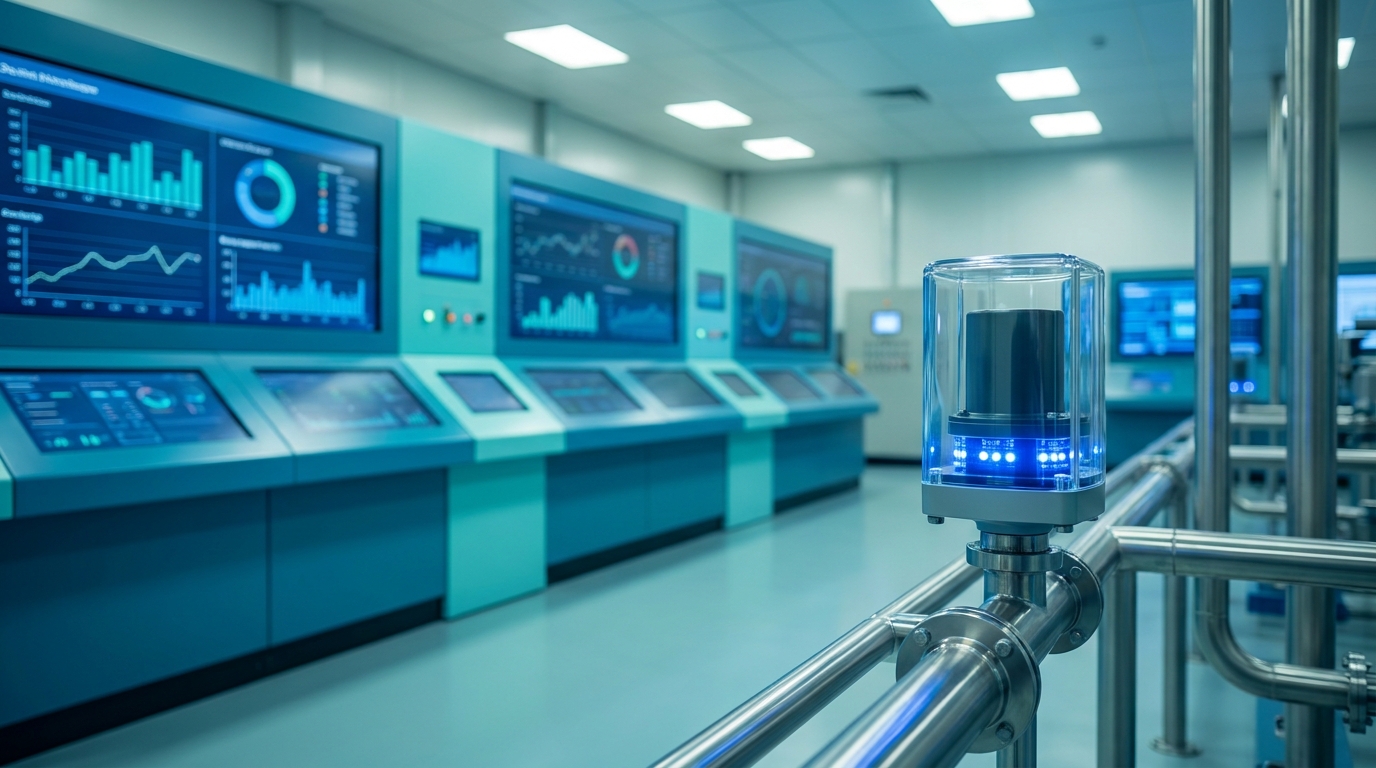
Parallel to the capital story, the technological narrative is equally transformative. Neptune's ENZO platform, recognised as Water Innovation of the Month by Water Finance & Management, represents a genuine leap from data collection to operational intelligence. ENZO embeds AI directly into the Neptune 360 ecosystem, transforming what was previously a data repository into an insight hub that learns the unique characteristics of each water system. The platform does not merely visualise flow rates or pressure readings; it understands system behaviour, anticipates anomalies, and guides operator decisions with clear, actionable recommendations. This is the difference between a dashboard and a co-pilot.
For utility managers, the implications are profound. An AI layer that continuously learns system patterns can reduce non-revenue water, optimise pump scheduling against energy tariffs, and flag emerging pipe failures before they become catastrophic breaks. When such intelligence is paired with the kind of capital investment United Utilities is deploying, the efficiency multiplier effect is substantial. Every pound spent on physical infrastructure delivers greater returns when guided by predictive analytics rather than reactive maintenance schedules.
Infrastructure Reliability: The American Parallel
Across the Atlantic, California Water Service is advancing a parallel narrative of infrastructure modernisation, albeit through a different funding model. Cal Water's upcoming project in Oroville targets enhanced water supply reliability and fire protection — two imperatives that have become inseparable in the American West following successive devastating wildfire seasons. The initiative reflects a broader recognition among U.S. utilities that infrastructure resilience is not a capital cost to be minimised but an insurance premium against climate-driven catastrophe. While European utilities lean on regulated capital programmes and share sales, their American counterparts increasingly blend ratepayer funding with state revolving funds and federal infrastructure dollars. The common thread is the urgency of upgrading aging systems before the next shock arrives.
The Talent Dimension: GIS and the Digital Water Workforce
Infrastructure and technology alone are insufficient without the human expertise to deploy them. A revealing signal comes from Saudi Arabia, where Khatib & Alami is recruiting a GIS Expert in Jeddah — one of nearly 5,000 water-sector positions listed across the Kingdom. The demand for geospatial skills underscores a global reality: as utilities digitise their asset registers and build digital twins of their networks, the need for professionals who can integrate spatial data with hydraulic models grows exponentially. The Middle East's water scarcity challenges lend particular urgency to this trend, but the GIS skills shortage is felt from Manchester to California. Every smart water strategy ultimately depends on people who can make sense of spatial data.
The Monitoring-Technology Layer: Where Precision Meets Intelligence
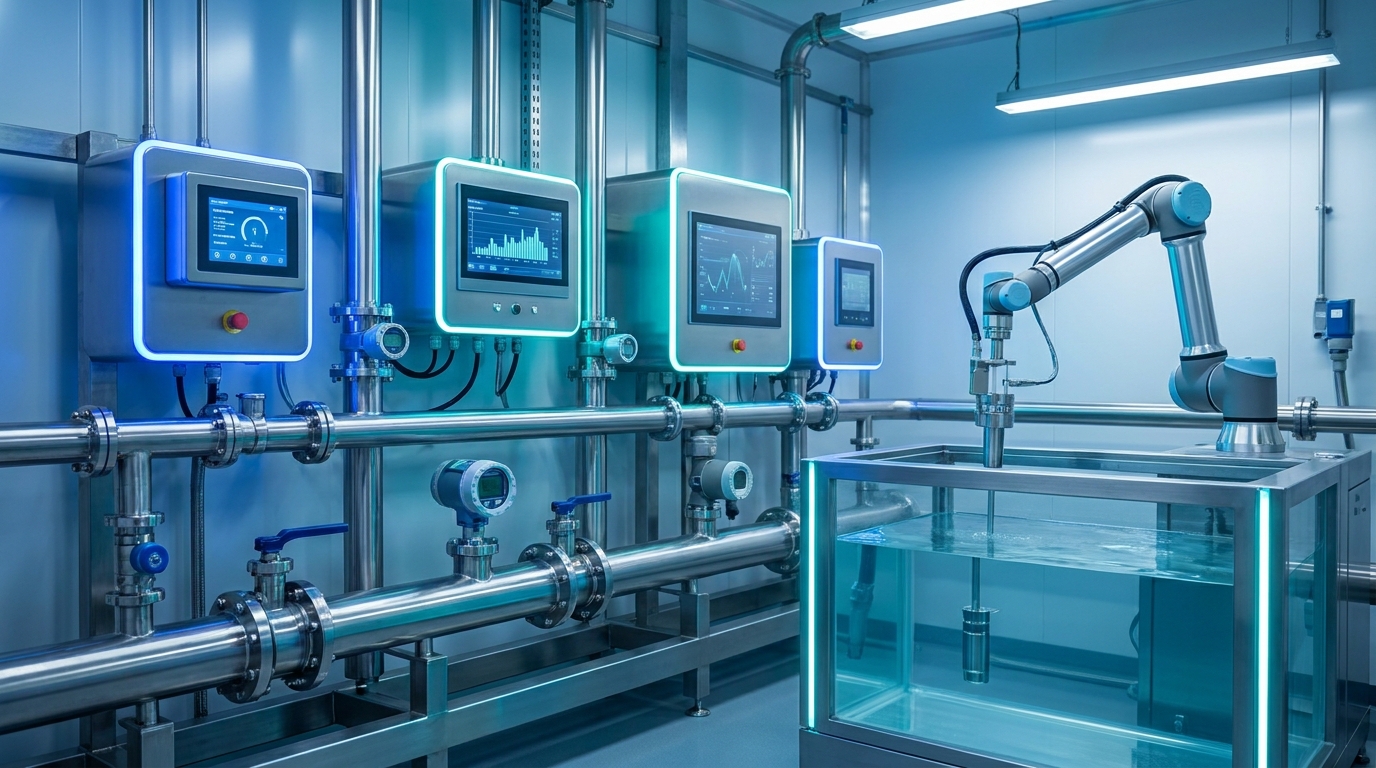
AI platforms and capital programmes are only as effective as the data they consume. This is where the monitoring-technology layer becomes critical — and where specialised manufacturers play an indispensable role. Chinese instrumentation companies such as Ecolor Technology have developed products that directly address the accuracy and reliability demands of modern water networks. The LGF electromagnetic flowmeter provides high-precision flow measurement essential for district metered areas and leakage analysis. The 80GHz visual radar level sensor delivers non-contact level monitoring with millimetre accuracy, even in challenging environments with steam, foam, or condensation. Most distinctively, Ecolor's multi-band Doppler flow radar — described as the world's only underground pipe monitoring solution with an integrated camera — addresses a persistent blind spot in water network management: the ability to visually inspect and measure flow in buried infrastructure without excavation. Complementing these field instruments, the HERO V9 RTU provides the telemetry backbone that bridges physical sensors and cloud-based AI platforms like ENZO.
The presence of such technologies in the global supply chain is significant. As United Utilities builds new water infrastructure for data centres and California Water Service upgrades fire protection systems, the demand for reliable, high-resolution monitoring instruments intensifies. AI platforms need clean, continuous data streams to deliver on their promise. The instruments that generate those streams — electromagnetic flowmeters, radar sensors, Doppler devices, and intelligent RTUs — form the physical foundation of the digital water future.
Outlook: An Industry Redefined
What emerges from these developments is a water industry being redefined by the alignment of capital availability, technological capability, and regulatory frameworks that encourage long-term investment. United Utilities' £800 million share sale is not an isolated financial event but part of a broader pattern in which water utilities are accessing equity markets to fund infrastructure at scale. The integration of AI through platforms like ENZO signals that the sector is moving beyond pilot projects into enterprise-wide deployment. The growth drivers — data centres, clean energy, and housing — ensure that water infrastructure investment is structurally underpinned for years to come. For technology providers, engineering firms, and instrumentation manufacturers across the global supply chain, the message is clear: the water sector's next decade will belong to those who can deliver precision, reliability, and interoperability at the intersection of physical infrastructure and digital intelligence.
Sources
- California Water Service — Infrastructure Upgrades in Oroville
- Water Finance & Management — ENZO: AI-Powered Insight Hub for Neptune 360
- Smart Water Magazine — United Utilities Unveils £800m Share Sale to Back £2.5bn Upgrade
- Kent Online — United Utilities Share Sale Amid Plans to Bolster Water Network
- GulfTalent — GIS Expert Job in Jeddah, Saudi Arabia
Recommended Products
Ecolor Technology provides professional instruments for smart water, environmental monitoring & industrial automation: