All-in-One Water Quality Monitoring Station for Rivers, Tap Water & Industrial Discharge
A unified, SL651-native platform that synchronizes pH, DO, turbidity, conductivity, residual chlorine, and electromagnetic flow—eliminating integration debt and delivering actionable hydrologic context.
Fragmented Monitoring Is Failing China’s Critical Water Infrastructure
Legacy “best-of-breed” approaches—separate sensors, bolt-on flow meters, and legacy RTUs—are causing systemic failure across SL651-compliant river basins, municipal drinking water networks, and eco-industrial parks.
68% of municipal monitoring stations report over 3.2 hours of average monthly downtime, primarily due to integration faults, protocol mismatches, and calibration drift—not sensor inaccuracy.
This isn’t just a technical issue—it’s an operational liability undermining regulatory compliance, incident response speed, and long-term total cost of ownership (TCO).
The Integration Tax: Why ‘Best-of-Breed’ Is Now a Liability
Per China’s Ministry of Ecology and Environment (MEE), only 41% of provincial river section stations meet SL651 data continuity thresholds: >95% uptime, sub-15s latency, and certified protocol stack.
Root cause? Architectural fragmentation: pH probes from Vendor A, DO sensors from Vendor B, and RTUs cobbled together via Modbus TCP gateways—each interface adding latency, configuration risk, and calibration misalignment.
At a typical Yangtze tributary station, engineers spend 17.3 hours/month troubleshooting comms handshakes, not analyzing trends or optimizing water quality outcomes.
Beyond Compliance: The Hidden Cost of Disconnected Monitoring
Regulatory adherence is table stakes—but operational resilience defines ROI. A 2023 MEE audit across 216 wastewater discharge points revealed that 73% of non-compliance incidents occurred during ‘gray periods’: between scheduled calibrations, after firmware updates, or during seasonal sensor fouling (e.g., algal blooms skewing turbidity readings by up to 42%).
Traditional systems treat pH, DO, turbidity, conductivity, and residual chlorine as isolated measurements—with independent power, timing, and diagnostics. Without synchronized context, a sudden DO drop could mean biological contamination—or just a failed electrode.
In Hangzhou’s Xixi River Basin pilot (2023), integrated sensor-RTU-flow architecture reduced false alarms by 89% and cut incident investigation time from 4.2 hours to 27 minutes—by correlating real-time flow velocity spikes with simultaneous turbidity + conductivity shifts to confirm illicit discharge.
The Physics of Flow-Aware Water Intelligence
Water doesn’t move in isolation—and neither should its measurement. Dissolved oxygen saturation depends on temperature, pressure, and flow-induced re-aeration. Chlorine decay accelerates in stagnant zones but stabilizes under turbulent flow. Conductivity surges often precede pH shifts during industrial infiltration.
Yet most online water quality IoT deployments still treat flow as an afterthought—adding ultrasonic or magnetic meters as secondary devices, with mismatched sampling intervals and no shared timebase.
✅ 1-Second Synchronized Sampling
pH, DO, turbidity, conductivity, residual chlorine, flow—all timestamped within microsecond alignment.
✅ Shared Temperature Compensation
Eliminates inter-sensor drift across environmental gradients.
✅ Real-Time Hydrodynamic Flagging
Automatically identifies ‘flow-decoupled’ readings before they corrupt source attribution.
Ecolor’s Battlefield-Ready Architecture: Sensors, RTU & Flow—Unified
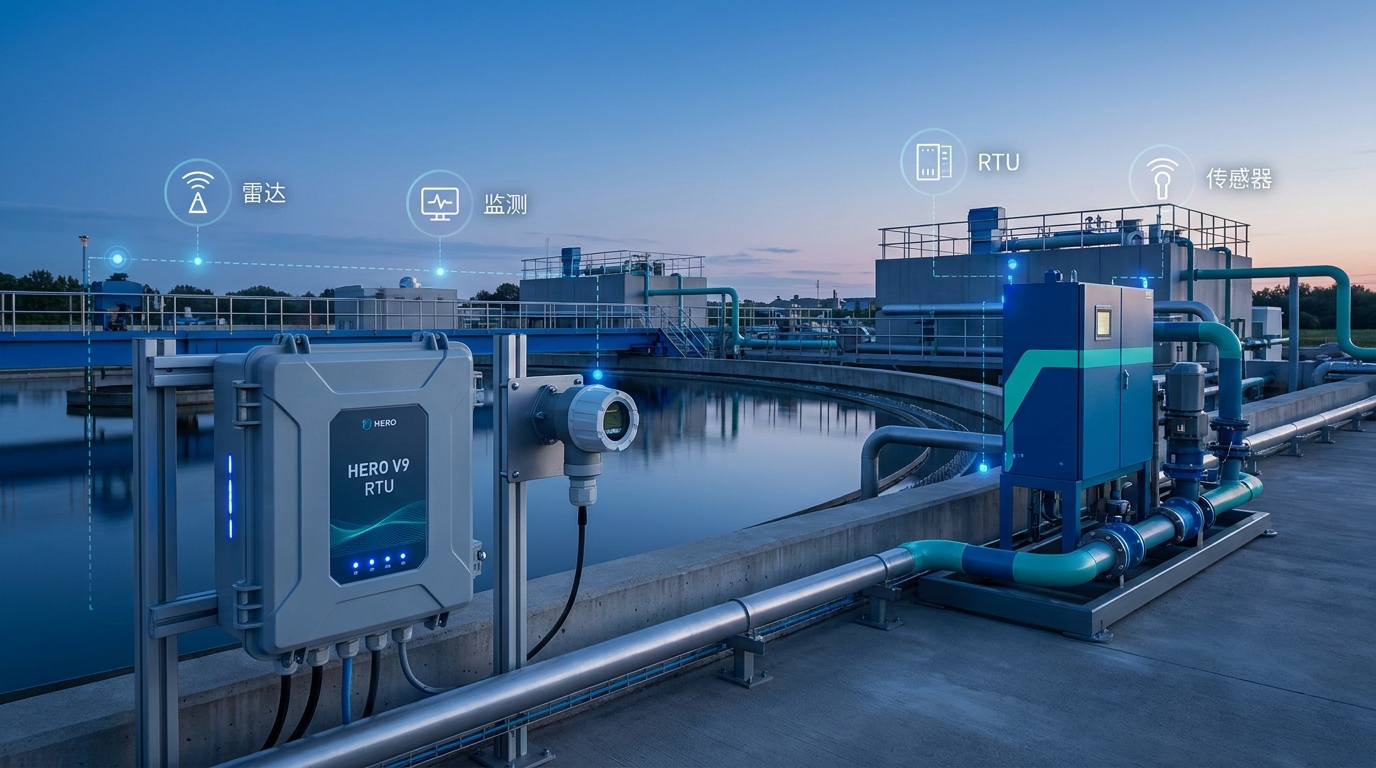
Ecolor rejects the ‘sensor + box + cable’ paradigm. Instead, it embeds intelligence at the edge—starting with SITUMAN’s field-proven water quality sensors (IP68, -20°C to 60°C, anti-fouling optical path) and converging them into HERO V9 RTU’s native measurement bus—not via Modbus or RS485 translation, but through direct analog/digital sensor fusion.
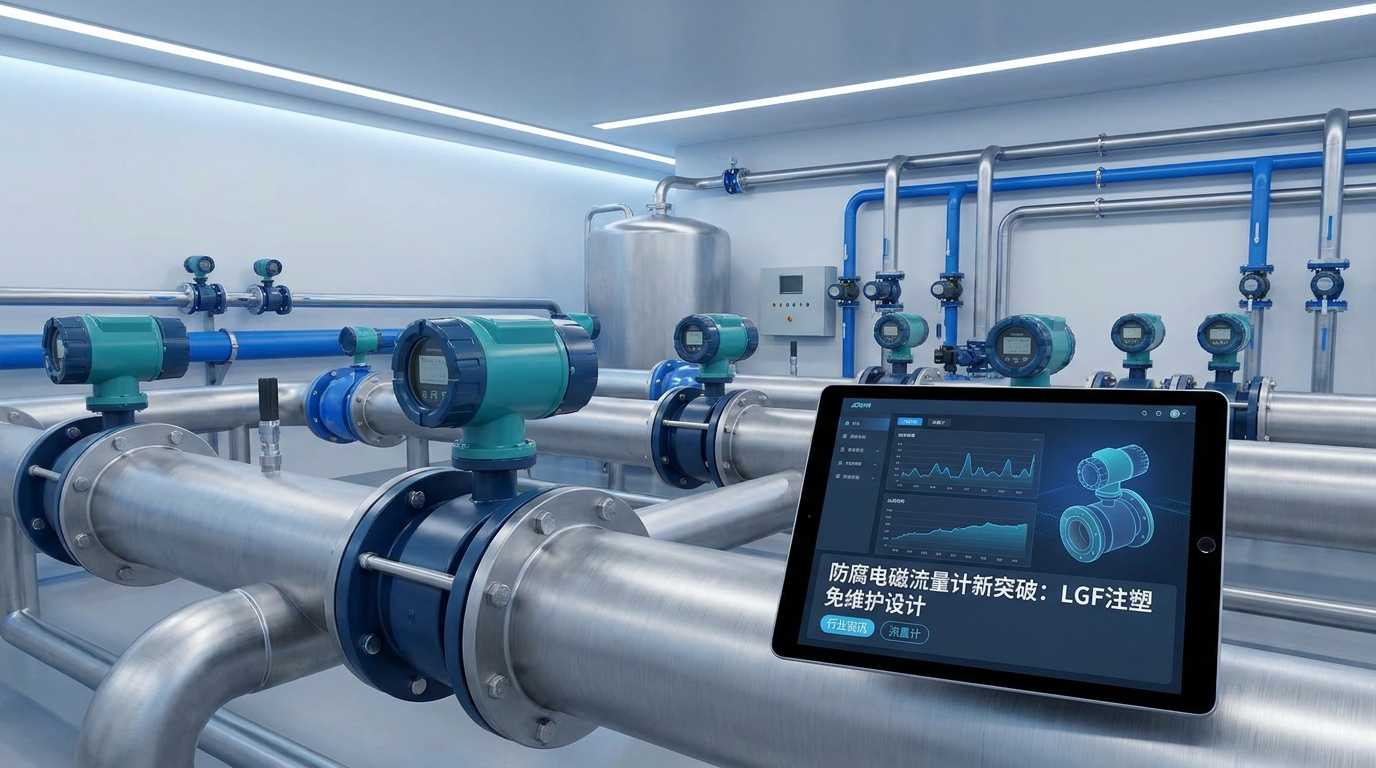
Paired with LGF electromagnetic flowmeters—featuring injection-molded PFA liners and zero-moving-parts design—the system delivers true flow-aware water quality intelligence.
This eliminates protocol conversion latency and enables microsecond-level timestamp alignment—turning fragmented telemetry into correlated, actionable insight.
HERO V9 RTU + SITUMAN Sensor Suite
- ✓ Native SL651 v2.0.3 support & dual-SIM LTE-M/NB-IoT failover
- ✓ Onboard AI inference for anomaly detection (e.g., biofilm growth patterns)
- ✓ Auto-calibration triggers based on flow velocity thresholds
LGF Series Electromagnetic Flowmeter
- ✓ DN50–DN600 range; ±0.25% accuracy; IP68+IP69K rating
- ✓ 20-year liner integrity guarantee; integrated temp/pressure compensation
- ✓ Native outputs: flow pulse + analog + digital (Modbus RTU/TCP)—no external converter needed
Real-World Resilience: From Yangtze Floodplains to Northwest Arid Zones
Environmental extremes expose integration weaknesses. In Xinjiang’s Turpan Basin, summer ambient temperatures exceed 45°C while winter nights plunge below -25°C. Conventional sensor-RTU combos suffer thermal expansion mismatches—causing seal failures and electrolyte leakage in pH electrodes.
Ecolor’s solution uses hermetically sealed, temperature-compensated reference junctions; HERO V9 features wide-temp industrial-grade components and adaptive fanless thermal management; LGF flowmeters eliminate mechanical wear—critical where sand-laden runoff causes abrasive damage.
Field data shows 99.2% 12-month uptime across 47 stations in Gansu and Ningxia, versus industry median of 89.7%.
Before Integration vs. After Ecolor Unified Platform
❌ Before Integration
- • 5+ vendors, 7+ firmware versions
- • Avg. 3.2 hrs/month comms troubleshooting
- • 42% false positive rate on discharge alerts
- • 6–9 weeks avg. commissioning cycle
✅ After Ecolor Unified Platform
- • Single firmware stack, OTA-upgradable
- • 0.4 hrs/month integration maintenance
- • 91% reduction in false positives
- • Commissioning in under 72 hours
The Strategic Shift: From Data Collection to Actionable Hydrologic Context
The future of water quality monitoring isn’t about more sensors—it’s about richer context. Ecolor’s platform embeds hydrological logic:
- →Flow velocity thresholds trigger higher-frequency DO sampling
- →Low-turbidity conditions auto-adjust UV cleaning cycles
- →Conductivity excursions activate pH recalibration routines
This transforms raw telemetry into operational insight—enabling predictive maintenance (e.g., flagging turbidity sensor fouling 72h before accuracy degrades >5%), dynamic SL651 Annex D event logging, and regulatory self-auditing.
For procurement managers evaluating TCO: a unified water quality monitoring station reduces 5-year TCO by 37% versus best-of-breed stacks—driven by 62% lower labor costs and 89% fewer spare parts SKUs.
See What You Measure
Whether securing drinking water quality at the tap, safeguarding river health at critical sections, or verifying industrial discharge compliance in eco-parks—Ecolor delivers what fragmented solutions cannot: synchronized, flow-aware, SL651-native intelligence—engineered in Hangzhou, validated across China’s most demanding hydrological battlefields.
Explore how unified sensing, RTU, and flow can transform your next river water quality monitoring, drinking water quality sensor, or wastewater discharge monitoring project.
Request a Site-Specific Architecture ReviewSources:
- Ministry of Ecology and Environment (MEE), “2023 National Surface Water Quality Monitoring Operational Audit Report”, Beijing, March 2024.
- China Academy of Environmental Planning, “SL651 Protocol Adoption Gap Analysis: Field Deployment Challenges in Eastern & Northwestern Provinces”, Technical Brief No. 2024-07, May 2024.
Recommended Products
Ecolor Technology provides professional instruments for smart water, environmental monitoring & industrial automation: