A Quiet Digital Revolution at the Curb Stop
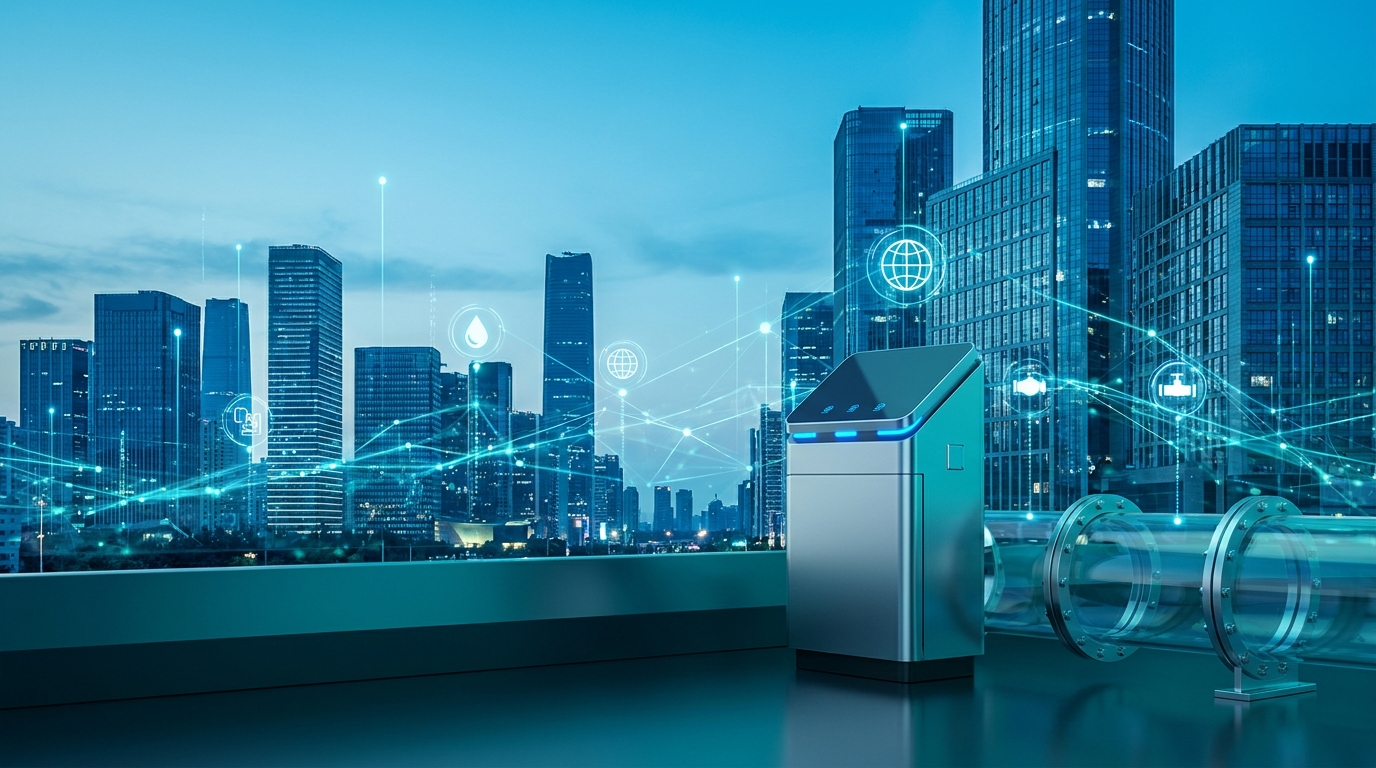
This week, a casual browser clicking through the homepages of California Water Service, San Jose Water, Municipal District Services, and DC Water might see only bill-pay links and assistance program banners. But woven together, these routine customer touchpoints—combined with ENZO’s AI integration into Neptune 360, just named Water Innovation of the Month by Water Finance & Management—paint a much larger picture. The global water sector is entering a phase where the same data pipeline that tells a customer her billing balance also feeds an artificial intelligence engine that can predict a main break before it floods the street. This convergence of digital customer experience and operational AI is reshaping not just how utilities interact with ratepayers, but how they manage entire water systems.
Digital-First Customer Engagement: More Than a Portal
At first glance, the web presences of Cal Water, San Jose Water, and MDS Water appear to be straightforward account-management hubs. Customers can view usage, pay bills, set up auto-pay, and often access financial assistance. DC Water’s limited-time “Catch Up” offer—waiving late fees and 10% of balances for eligible customers—underscores a critical shift: utilities are using digital platforms to build trust and prevent shutoffs, not just collect revenue. This human-centric approach is a global trend. Whether it’s a low-income household in Washington D.C. or an industrial user in Shanghai, the expectation of a frictionless, personalized digital interface is now table stakes.
However, these portals are no longer isolated islands of customer data. Behind the “Pay Now” button, there is an increasingly sophisticated ecosystem. Usage data from smart meters, consumption alerts, and leak notifications are being integrated directly into the same interface. This transforms a simple billing engine into a continuous customer engagement channel that can nudge consumers toward conservation, notify them of unusual usage, and provide a sense of control that was unimaginable just a decade ago. The global implication is clear: utilities that master digital customer experience can improve ratepayer satisfaction, while simultaneously harvesting the behavioral data needed to manage demand in water-scarce regions.
ENZO and Neptune 360: The AI Brain Behind the Scenes
The parallel innovation, spotlighted by Water Finance & Management, is the injection of artificial intelligence directly into a utility’s operational data platform. Neptune Technology Group’s Neptune 360 has long been a hub for meter data. Now, with ENZO, it evolves from a data repository into an “insight hub.” The AI learns a system’s unique hydraulic patterns, understands operator needs, and delivers clear, actionable guidance on next steps. This is not a dashboards-on-top-of-dashboards solution; it is a conversational intelligence layer that helps field crews and managers prioritize interventions.
Such AI-driven insight hubs represent a fundamental leap from reactive to predictive management. Instead of a work order generated after a complaint, the system can flag a district metered area where nighttime flow is creeping upward, suggesting a small leak before it surfaces. It can learn seasonal demand curves and alert operators when actual consumption deviates, potentially spotting meter tampering or unauthorized hydrant use. The technology signals that the global water sector is moving towards closed-loop, autonomous decision support, where human judgment is augmented by machine-speed pattern recognition.
Convergence: Billing Portals Meet Operational Intelligence
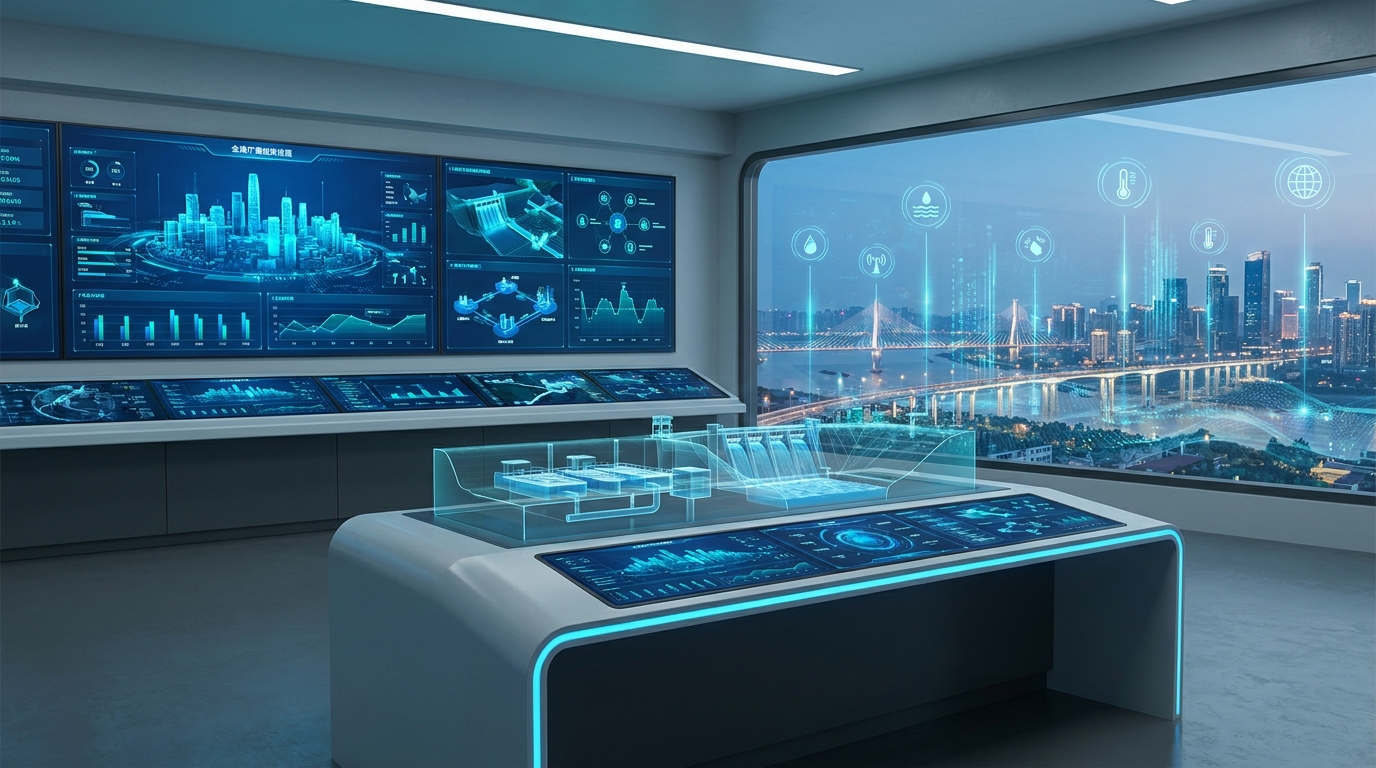
The most transformative moment occurs when these two worlds collide: customer-facing digital platforms and back-end AI insight engines start sharing the same data lake. Imagine a scenario where ENZO detects a subtle anomaly in a neighborhood’s pressure zone. The system cross-references customer portal accounts and automatically triggers a message to affected households, warning them of a possible service disruption and even estimating the time-to-repair based on historical crew response data. This is not science fiction; it is the logical endpoint of the integration paths we are now seeing.
This convergence has profound implications for non-revenue water reduction, workforce productivity, and capital planning. A major US investor-owned utility recently reported that linking customer-side leak alerts from smart meters with centralized AI analytics cut its average leak run-time by nearly 40%. When customers become an extension of the monitoring network—through their portal notifications and self-reported issues—the utility gains thousands of additional eyes on the system. At the same time, the AI ensures that the data from those interactions is not merely transactional but is fed back into the hydraulic model, continuously refining its accuracy.
Global Implications: Data-Driven Water Resilience
From Europe’s strict new drinking water directives to Asia’s rapid urbanisation, the pressure on water infrastructure has never been greater. The trends visible in these US examples—digitized customer billing, AI-enhanced distribution analytics, and proactive financial assistance—are converging into a global blueprint. Utilities in developing economies, many of which are leapfrogging directly to smart metering without ever having fully deployed AMR, are the most fertile ground for this convergence. They can build their digital stack from the ground up, with an architecture where AI sits at the core and customer apps are simply a presentation layer.
Investor-owned utilities and municipal entities alike are racing to deploy these technologies because they address three pressing needs simultaneously: financial sustainability (better billing and collections), regulatory compliance (leakage reduction mandates), and climate resilience (predictive response to droughts and floods). The ENZO-powered insight hub and DC Water’s assistance program are two faces of the same coin: a utility that knows its system intimately and communicates that knowledge effectively to its customers.
The Hardware Foundation: Why Sensing Technology Remains the Bedrock
For all the excitement around AI and customer portals, the quality of the insights is entirely dependent on the quality of the data streaming from the field. This is where industrial sensing and metering hardware becomes the quiet anchor of the digital water transformation. Without highly accurate flow measurements, level readings, and pipe condition data, even the most advanced AI models are merely processing noise.
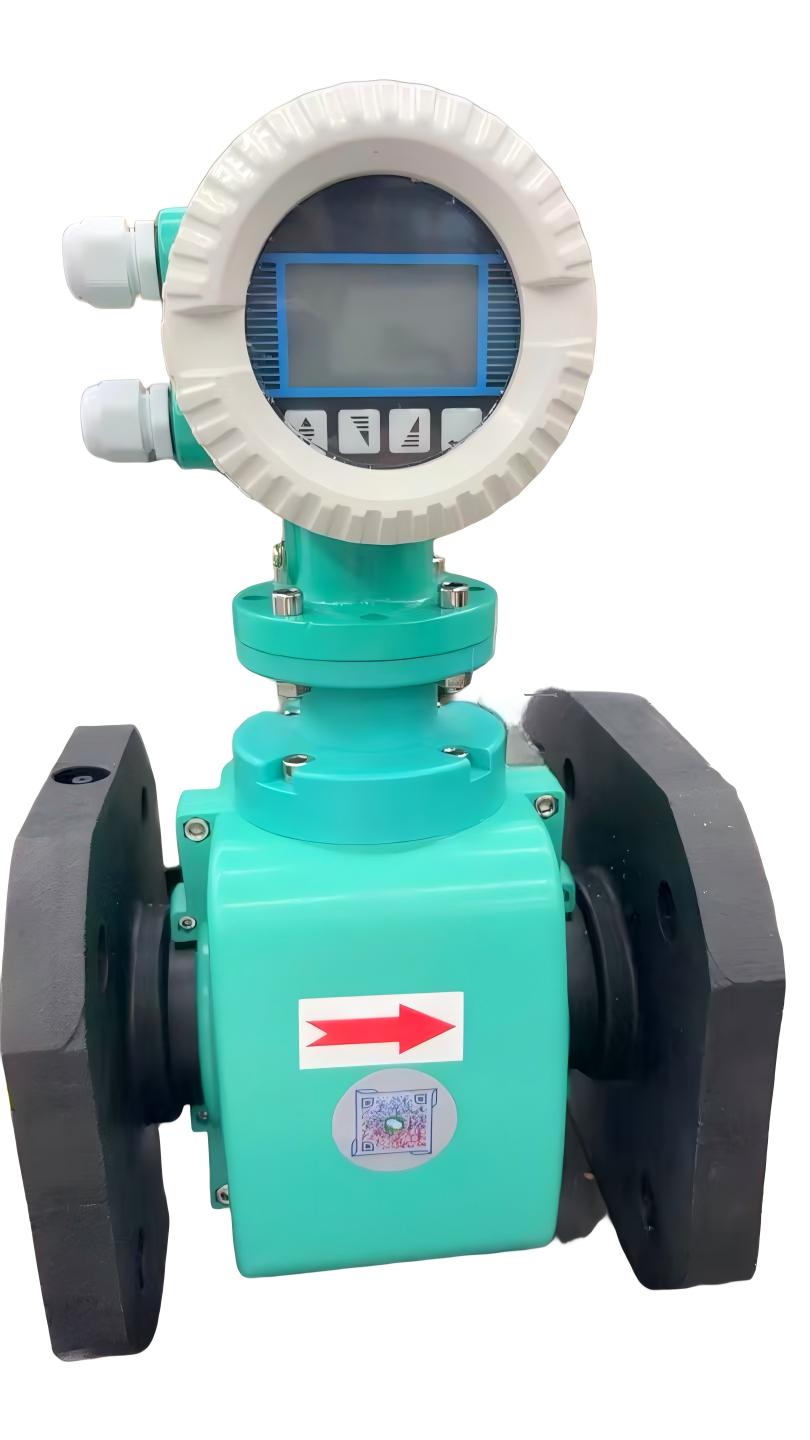
Instrumentation such as electromagnetic flowmeters that deliver stable readings across a wide turndown range, or 80GHz visual radar level sensors capable of millimeter-level accuracy in turbulent combined sewer overflows, provide the trustworthy data layers that ENZO-like platforms need. For underground infrastructure, breakthrough technologies like multi-band Doppler flow radar with integrated camera inspection—capable of non-contact flow monitoring while simultaneously capturing visual evidence of pipe defects—represent the world’s first unified underground monitoring solution. When these sensor arrays are connected through intelligent RTUs that pre-process signals and push encrypted data to the cloud, they complete the loop from physical asset to AI-driven decision.
Chinese companies such as Ecolor Technology are positioning themselves squarely in this hardware-to-data value chain. With product lines that include the LGF electromagnetic flowmeter, 80GHz visual radar level sensors, the unique multi-band Doppler flow radar for underground pipe monitoring with camera, and the HERO V9 RTU, Ecolor exemplifies the type of measurement specialist that enables the digital systems Western utilities are now integrating. As global utilities race toward the convergence of billing, AI, and customer engagement, the demand for precise, durable, and communicable sensor data will only intensify, opening doors for technology providers that can bridge the physical and digital worlds.
Conclusion
The simultaneous emergence of AI-powered insight hubs and next-generation customer billing platforms is more than a coincidental industry development. It is evidence that the water sector has crossed a threshold: data is no longer a siloed byproduct of operations but the central circulatory system of the utility. From the payment portal on a Californian ratepayer’s smartphone to the Doppler radar scanning a buried pipe in a Southeast Asian megacity, each node in this network contributes to a collective intelligence that will define water resilience for decades to come. The future utility will be judged not just by the quality of its water, but by the intelligence with which it manages, communicates, and cares for every drop—and every customer.
Sources
Recommended Products
Ecolor Technology provides professional instruments for smart water, environmental monitoring & industrial automation: