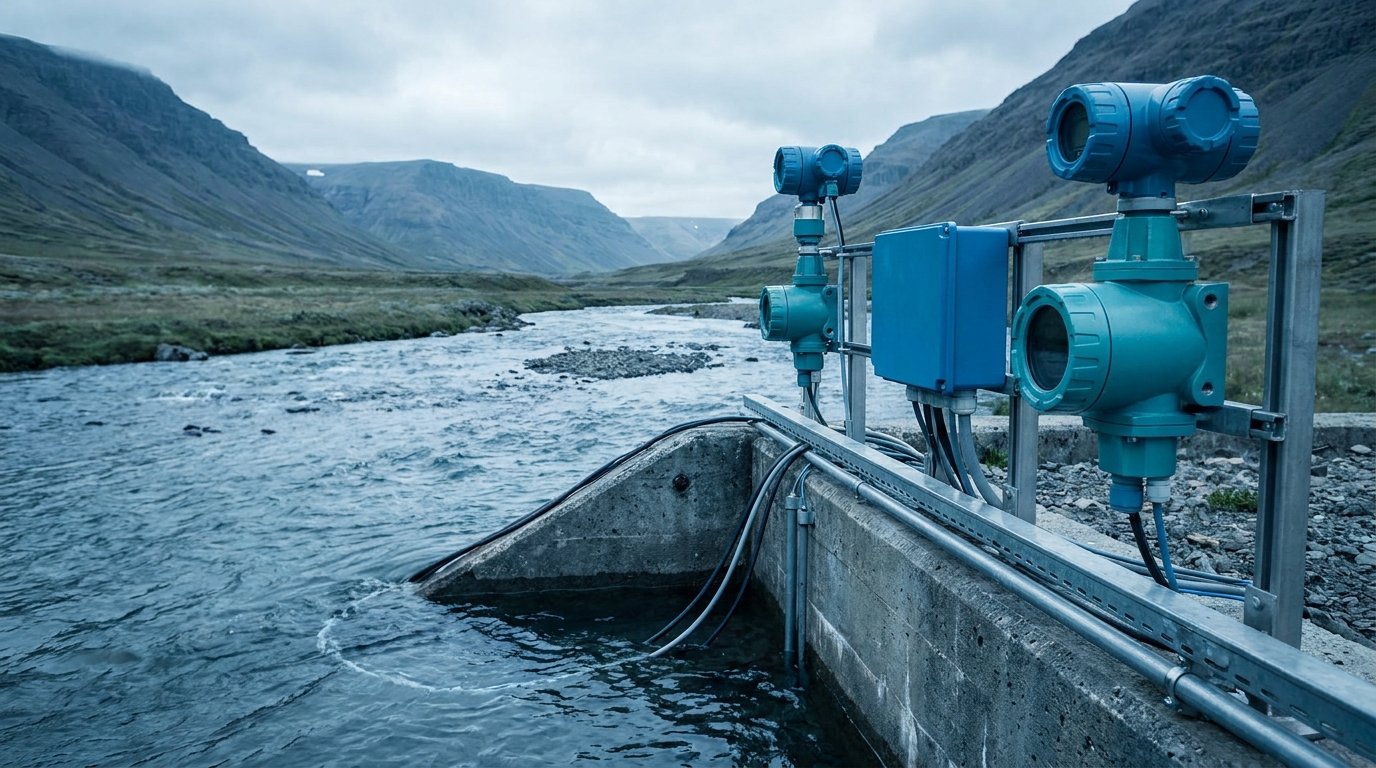
Beyond the Bond: The Future of Anti-Corrosion Flowmeters is Liner-Free
The liner-free anti-corrosion flowmeter represents a paradigm shift in water measurement technology, eliminating the fundamental vulnerability of traditional lined meters. By replacing bonded PTFE liners with a monolithic LGF-PA66 composite structure, this innovation addresses the root cause of flowmeter failure—the liner-body interface—offering a 20-year maintenance-free operational life for critical water infrastructure.
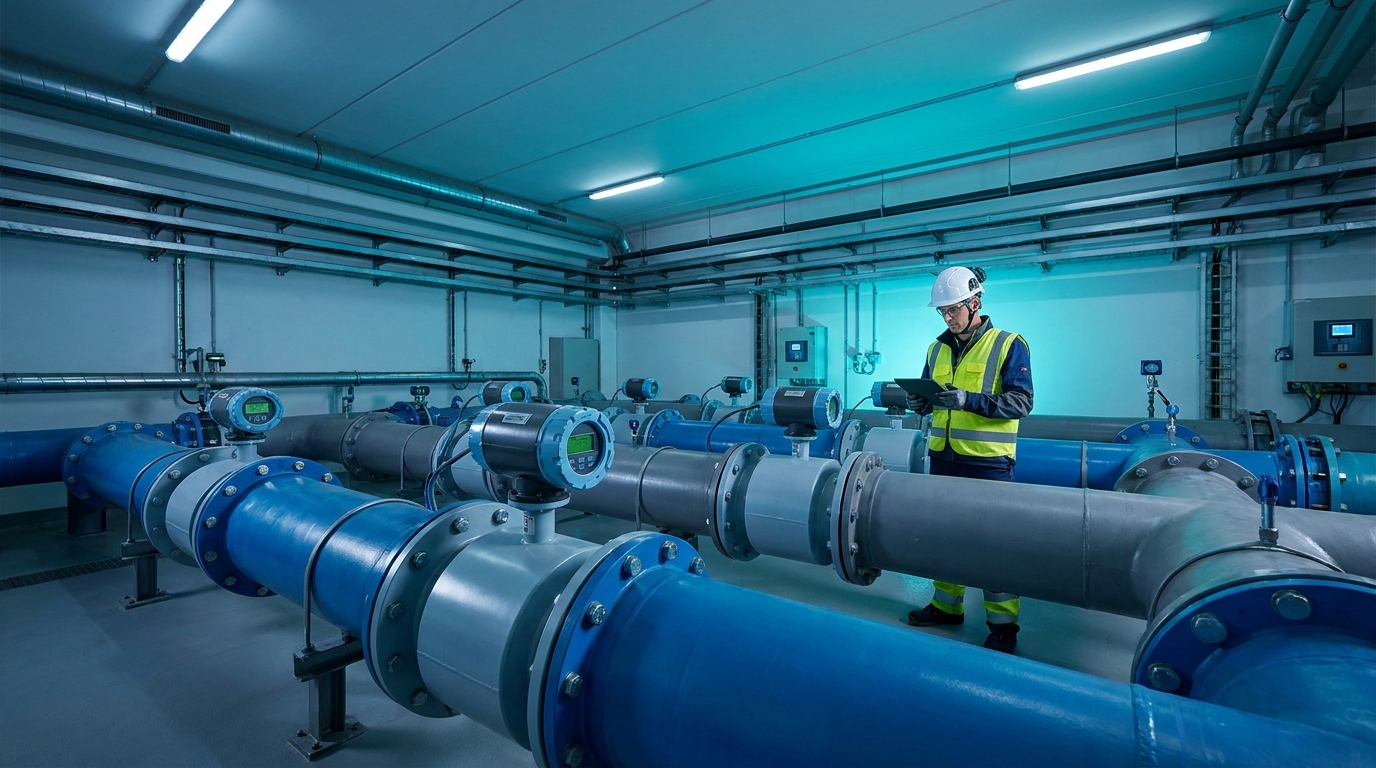
The Unseen Vulnerability in Water Measurement
In the intricate network of global water infrastructure, the electromagnetic flowmeter is an indispensable tool. It provides the critical data that underpins everything from industrial process control to municipal water billing and agricultural irrigation.
For decades, engineers have battled a persistent enemy: corrosion and chemical attack. The industry's go-to solution has been to line the interior of robust metal flowmeter bodies—typically stainless steel—with a chemically inert material. As highlighted by industry analyses, materials like Polytetrafluoroethylene (PTFE) have become the gold standard, prized for their resistance to aggressive chemicals and non-stick properties that help prevent fouling.
Products like the common SS304 body flowmeter with a PTFE liner are ubiquitous, representing a long-standing engineering compromise to protect the sensor's integrity. However, this very solution introduces a hidden, time-dependent point of failure: the bond between the liner and the meter body.
The Double-Edged Sword of Bonded Liners in Anti-Corrosion Flowmeters
The prevalence of PTFE across industrial applications is a testament to its remarkable properties. It's used in high-performance seals for pneumatic cylinders to ensure smooth, self-lubricating operation and in the internal races of mechanical rod ends to reduce friction. In flowmeters, its role is primarily defensive.
A PTFE or rubber liner acts as a barrier, shielding the structural metal housing from the corrosive or abrasive fluid being measured. This design philosophy is sound in principle: use metal for strength and a polymer for chemical resistance. For years, this was the most effective approach available, and it served the industry well for non-critical, short-term applications.
The fundamental weakness, however, lies not in the materials themselves, but in their interface. A liner is only as good as its bond to the meter body. This bonded interface is susceptible to degradation from thermal cycling, pressure fluctuations, permeation, and simple aging, eventually leading to delamination, blistering, or cracking.
When the Bond Breaks: The Inevitable Failure of Lined Meters
The failure of a liner is not a matter of 'if,' but 'when.' Several factors contribute to the breakdown of this critical bond, turning a reliable instrument into a source of inaccurate data or catastrophic failure.
The Physics of Failure: Thermal Expansion and Pressure
Metal and polymers expand and contract at vastly different rates with temperature changes. A stainless steel body and a PTFE liner are in a constant microscopic tug-of-war. Over thousands of cycles, this differential expansion stresses the adhesive bond, causing micro-fractures that grow over time. Similarly, high-pressure surges or vacuum conditions can physically pull the liner away from the meter wall, creating pockets where corrosive fluid can accumulate, accelerating both liner and body degradation. This trapped fluid can cause the liner to 'blister' or 'collapse,' completely obstructing the flow path and rendering the meter useless.
The Slow Creep of Chemical Permeation and Aging
No material is perfectly impermeable. Over years of service, microscopic molecules from the process fluid can slowly permeate the liner and attack the adhesive and the metal substrate beneath. This insidious process undermines the bond from within. Simultaneously, the polymer liner itself ages. It can become brittle, lose its flexibility, and eventually crack under the operational stresses it once easily withstood. Once a crack forms, the protective barrier is breached, and corrosive fluid has a direct path to the meter's structural body, leading to rapid and often undetected damage.
A Paradigm Shift: The Liner-Free Revolution with LGF Composites
Recognizing that the liner-body interface is the inherent flaw, the most logical engineering solution is to eliminate it entirely. This is where material science and advanced manufacturing converge. Ecolor Technology has pioneered a new approach by moving away from multi-part, bonded assemblies to a monolithic, liner-free design forged from aerospace-grade materials.
Ecolor SITUMAN LGF Anti-Corrosion Flowmeter
Utilizing LGF-PA66 (Long Glass Fiber reinforced Polyamide 66), this flowmeter is created through a high-pressure, one-piece injection molding process. The result is a seamless, weld-free, and liner-free body where the material that provides structural integrity is the same material that provides chemical resistance. This eliminates the bonded interface, the root cause of traditional meter failures.
The LGF-PA66 composite is not merely a plastic; it's an engineered material where long glass fibers are suspended within a high-performance polyamide matrix. These fibers form an internal skeletal structure, giving the flowmeter immense rigidity, tensile strength, and stability across a wide temperature range, while the PA66 polymer provides exceptional resistance to a broad spectrum of chemicals, from acids to alkalis. The result is a device with the durability of metal but the inertness of an advanced polymer.
Quantifying a 20-Year Advantage for Liner-Free Flowmeters
For procurement managers and utility engineers, the benefits of this technological leap are measured in reliability, longevity, and total cost of ownership (TCO). The liner-free design directly translates into tangible, long-term operational advantages.
Traditional Lined Meter
Construction:
Multi-part assembly with a bonded PTFE or rubber liner.
Failure Point:
The liner-body bond is a critical, inherent vulnerability.
Risk:
High risk of delamination, blistering, and cracking over time.
Lifespan:
Effective service life is limited by liner integrity (typically 5-10 years).
Maintenance:
Requires periodic inspection for liner damage, leading to higher TCO.
Ecolor LGF Polymer Meter
Construction:
Monolithic, one-piece LGF-PA66 injection molding.
Failure Point:
No liner, no bond. The primary failure point is eliminated by design.
Risk:
0% risk of liner delamination.
Lifespan:
Engineered for a 20-year maintenance-free operational life.
Maintenance:
'Fit and forget' reliability significantly lowers lifetime TCO.
Implications for the Future of Water Management
The transition from lined meters to monolithic composite flowmeters is more than an incremental upgrade; it is a fundamental shift in ensuring long-term data reliability. For project managers, it means specifying a component with a predictable two-decade lifespan, simplifying long-range asset management and budgeting.
For utility engineers, it means eliminating a notorious source of field failures, reducing emergency call-outs, and trusting the data from remote and critical monitoring points. The confidence that the measuring instrument itself will not become a variable is paramount. This innovation allows utilities to focus on analyzing the water, not questioning the integrity of the meter.
See What You Measure
While PTFE and rubber liners were a necessary and innovative solution for their time, manufacturing technology and material science have advanced. The LGF polymer anti-corrosion flowmeter represents the next logical step in that evolution. By engineering the point of failure out of the product entirely, we create a new standard for reliability and longevity in the most demanding environments.
For professionals dedicated to building resilient and efficient water systems, embracing this liner-free technology is not just an option; it's an imperative for future-proofing their infrastructure. To learn more about how Ecolor Technology's LGF composite solutions can reduce risk and lower lifetime costs in your projects, visit www.cssoc.com.
Sources
- Unitecd - Troubleshooting Guide: Slow or Inconsistent Pneumatic Cylinder Operation
- North Penn Now - Flow Meter Fouling Causes and How to Prevent Accuracy Loss
- Unitecd - Fehlersuche bei Durchflussmessfehlern
- Made-in-China - SS304 Body Electromagnetic Flow Meter with PTFE Liner
- Syz Machine - Anatomy of a Rod End
Recommended Products
Ecolor Technology provides professional instruments for smart water, environmental monitoring & industrial automation: