The Unseen Battlefield: Why Extreme Environment Reliability is Non-Negotiable in Water Monitoring
In the world of water management, data is the new currency. But what happens when the very environment you're trying to measure becomes your greatest adversary? For every remote river gauging station, urban drainage manhole, or agricultural canal, there is a constant battle against the elements. A flash flood can submerge equipment, a heatwave can push electronics past their limits, and the slow, insidious creep of corrosion can silently sabotage critical components. The failure of a single sensor or remote terminal unit (RTU) isn't just an inconvenience; it can lead to significant financial liability, regulatory penalties, and a complete loss of situational awareness. As industry analysis highlights, failure to adequately validate sealing integrity can precipitate cascading field failures, from short circuits to complete functional degradation, ultimately damaging a utility's reputation.
This is the unseen battlefield where instrumentation reliability is paramount. It’s not enough for a device to be 'water-resistant'; it must be engineered for survival in a complex sequence of environmental stresses. This requires a design philosophy that goes beyond a single specification, embracing a holistic approach to resilience. For unattended, often solar-powered water stations, this is the difference between actionable intelligence and a costly, data-dark blind spot.
Deconstructing Durability: More Than Just an IP Rating
When engineers and procurement managers look for rugged equipment, the IP (Ingress Protection) rating is often the first specification they check. An IP68 rating signifies the highest level of protection against dust and water, indicating the device can withstand continuous immersion in water under conditions specified by the manufacturer. But this rating is just the beginning of the story.
1. The Challenge of Water Ingress and Thermal Stress:
Achieving a robust IP68 rating is a feat of meticulous engineering and rigorous testing. It involves placing a device within a specialized chamber, such as a corrosion-resistant immersion tank, to verify its resilience against a sustained column of water. This standardized methodology provides the objective data needed to certify a product for field deployment. However, real-world conditions are rarely so static. As testing standards experts point out, water ingress is often coupled with thermal cycling. A solar-powered RTU in a desert might experience surface temperatures of +85°C during the day and plunge below freezing at night. This constant expansion and contraction of materials can induce seal fatigue, creating microscopic vulnerabilities that a simple, static immersion test would never reveal. A truly reliable IP68 water sensor or RTU must be designed not just to be waterproof, but to remain waterproof across its entire operational temperature range, like the -40°C to +85°C spectrum offered by Ecolor Technology's product line. This ensures that a seal that holds firm in a lab at 20°C doesn't fail during a winter freeze or summer heatwave.
2. The Corrosive Threat in Unseen Places:
In applications like urban sewer networks or industrial discharge monitoring, the atmosphere itself is an aggressor. Gases like hydrogen sulfide (H2S) create a highly corrosive environment that can degrade metal components, connectors, and sensor housings. Even in less aggressive environments, high acidity or alkalinity in water accelerates corrosion. Continuous pH monitoring, with sensors capable of detecting shifts as small as 0.01 in resolution, is crucial for managing this threat, as it directly impacts corrosion rates in infrastructure. This is where the choice of sensor technology becomes critical. Traditional contact-based sensors are inherently vulnerable. In contrast, non-contact radar technology offers a significant advantage. By measuring from above the water's surface, the sensor avoids direct, prolonged contact with corrosive liquids and abrasive sediments, dramatically extending its operational lifespan and maintaining measurement accuracy.
Engineered for Autonomy: The Ecolor Technology Approach
At Ecolor Technology, our slogan is "See What You Measure." This philosophy drives us to engineer solutions that provide clear, reliable data from the world's most challenging environments. Our approach combines rugged hardware with intelligent design to create truly autonomous monitoring stations.
The Rugged Core: The IP68 RTU
The RTU is the brain and heart of any remote monitoring station. It must survive whatever the environment throws at it. Ecolor's IP68-rated RTUs are designed as the ultimate survivalists. With a -40°C to +85°C operating temperature, robust lightning protection, and ultra-low power consumption perfect for solar powered water station deployments, they form the unshakable foundation of a reliable network. Furthermore, their versatility allows for the integration of various external sensors, enabling a single station to become a comprehensive monitoring point for flow, level, and water quality parameters like pH and turbidity, providing the high-resolution data needed to manage everything from disinfection effectiveness to infrastructure integrity.
The Visionary Sensor: The SITUMAN Multi-Band Doppler Radar Flowmeter
While the RTU is the core, the sensor is the star. For the most demanding applications, Ecolor's SITUMAN brand offers a revolutionary solution: a 3-in-1 radar that integrates a level meter, a flow meter, and a camera into a single, IP68-protected unit. This device directly addresses the core challenges of extreme environment monitoring.
- Globally Unique Manhole Monitoring: Its key innovation is the ability to perform non-contact measurement from within a city drainage manhole without requiring personnel to enter the confined space. Installed safely from the surface using a pole and expansion bolts, it eliminates significant safety risks and dramatically reduces installation and maintenance costs.
- Intelligent Adaptation: Radar sensors are powerful, but can be prone to false echoes from internal structures or debris. The SITUMAN radar solves this with a built-in motor that allows operators to remotely adjust the radar's angle. If sediment builds up or floating debris interferes with the signal, a technician can fine-tune the beam's position from the control center, ensuring continuous, accurate data flow without a costly site visit.
- Visual Verification with "See What You Measure": The integrated camera is a game-changer for remote diagnostics. If a reading seems anomalous, an engineer can instantly view a live image of the site to verify conditions. Is there a blockage? Is the water level unusually high due to a downstream obstruction? This visual context transforms raw data into verified intelligence, embodying our slogan and saving countless hours of fieldwork.
A System Greater Than Its Parts
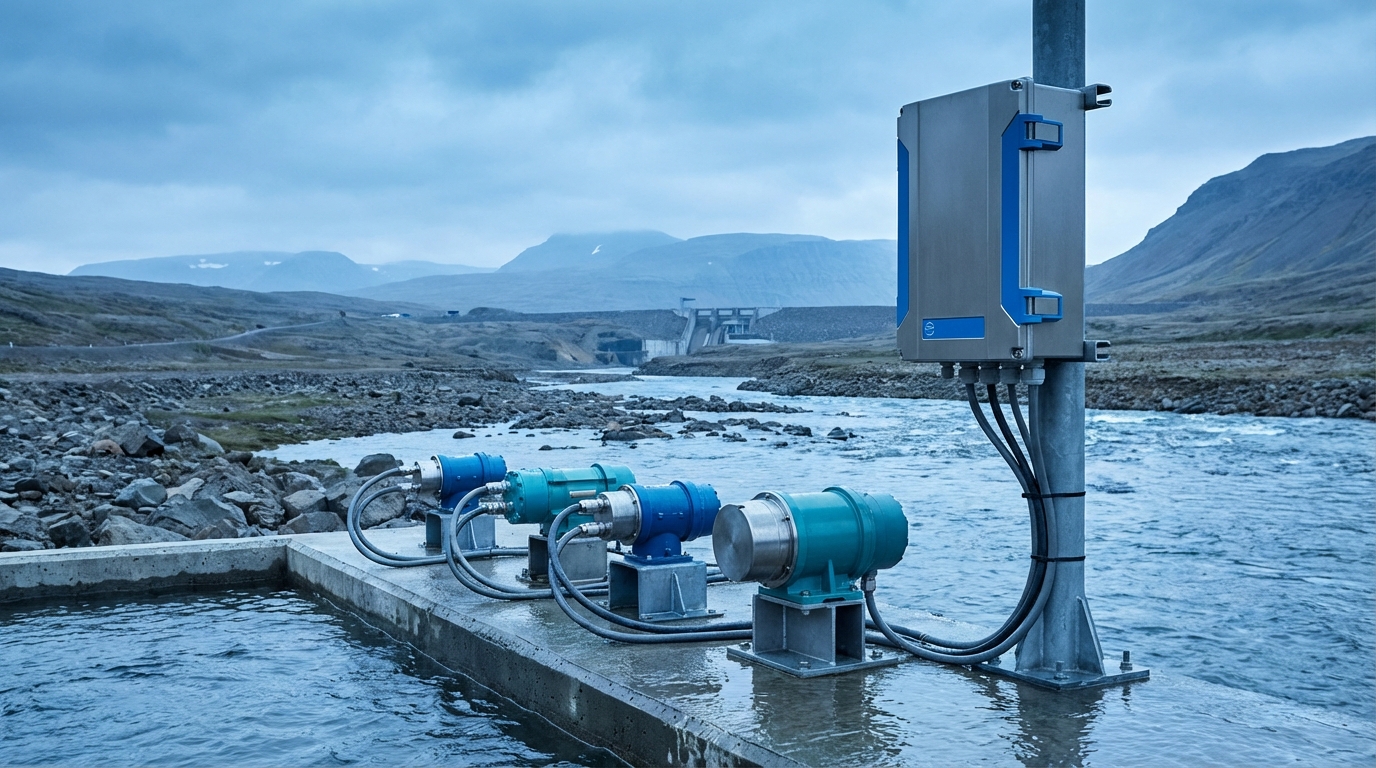
True reliability emerges when these components work in synergy. Imagine an ecological flow monitoring site below a hydropower dam. The station is remote and exposed. An Ecolor solar powered water station, with its IP68 RTU and SITUMAN radar, operates autonomously. It withstands winter ice and summer heat. The non-contact radar accurately measures the turbulent discharge flow, while the RTU reliably transmits this critical data back to the utility to ensure regulatory compliance. The integrated camera allows for periodic visual checks of the channel, all without deploying a field crew.
Or consider a smart city's sewer overflow prevention program. SITUMAN radar units are deployed in key manholes. They survive complete submersion during heavy rainfall events, resist corrosion from sewer gases, and provide accurate, non-contact flow data. Paired with external pH sensors connected to the RTU, the system not only predicts overflows but also monitors conditions that could accelerate pipe degradation, providing a holistic view of the network's health.
Investing in instrumentation designed for extreme environments is not an expense; it is an investment in data integrity, operational safety, and long-term peace of mind. By choosing solutions engineered for the full spectrum of environmental stresses, water managers can build monitoring networks that are not just smart, but resilient. To build water monitoring stations that withstand the test of time and nature, exploring solutions designed for the world's harshest conditions is the first step. Learn more about Ecolor Technology's approach to extreme environment reliability at www.cssoc.com.
Sources
Recommended Products
Ecolor Technology provides professional instruments for smart water, environmental monitoring & industrial automation: