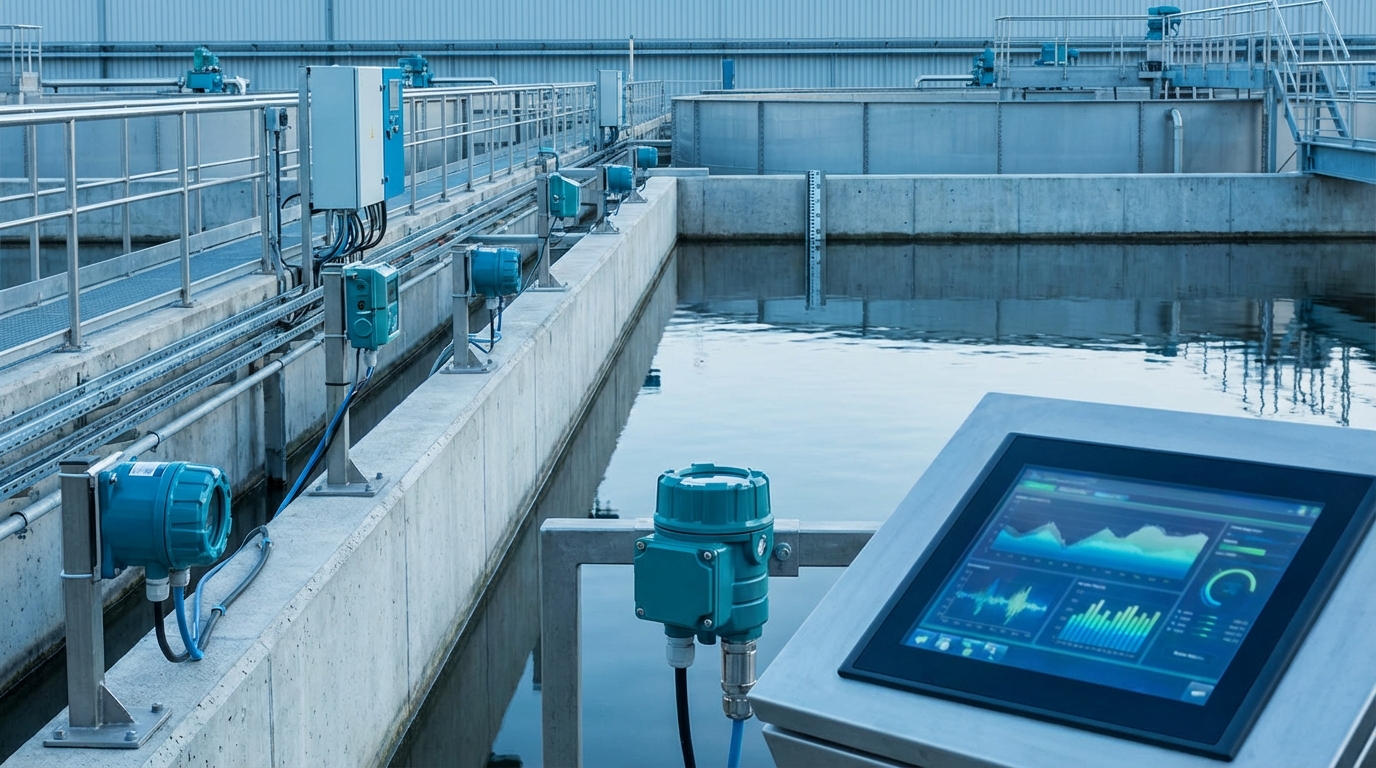
Beyond Data Points: The Dawn of Contextual Intelligence in Water Management
For decades, the history of smart water technology has been a chronicle of accumulation. More sensors, more data points, more information flowing from distant assets to the central cloud. While this digital deluge is invaluable, it has brought us to a new inflection point. The industry is now asking a deeper question: How do we transform this ocean of data into actionable, contextually relevant intelligence? The frontier of water digital transformation is no longer merely about measuring a value, but about understanding its meaning, context, and implications in real-time. This paradigm shift—from passive data collection to active intelligent interpretation—is driven by two powerful and intertwined forces representing the industry's most exciting "black tech": advanced sensor fusion and edge artificial intelligence.
These innovations are moving water management from reactive problem-solving to proactive predictive stewardship. Water utilities are no longer just receiving a high-water alarm; they can understand the "why" behind the event—whether it's debris blockage, a sudden inflow surge, or equipment failure—and automatically trigger an immediate, intelligent response. This is the future of water security and efficiency, and it is happening at the very edge of the network.
The Power of Fusion: When One Plus One Equals Three
A single sensor, no matter how precise, can only provide one dimension of a multi-dimensional reality. An 80GHz radar sensor can offer millimeter-level water level accuracy, but it cannot tell you if that level is caused by clear water, thick foam, or a layer of ice. A camera can provide visual documentation, but it is limited in precise measurement and is susceptible to rain, fog, or darkness. The true breakthrough comes from sensor fusion—the intelligent combination of data from multiple, diverse sensing technologies to create a single, unified understanding that is far more robust and reliable than the sum of its parts.
This approach directly addresses the inherent limitations of individual sensors. By fusing complementary data streams, we can validate measurements, eliminate false alarms, and add critical context. This is the core philosophy behind the brand promise of Yike Lan Technology: "See What You Measure." It represents a commitment to moving beyond abstract numbers to a verifiable, contextualized view of reality.
Case Study: The Visual Fusion Radar Revolution
A typical example of this concept in practice is the new generation of integrated monitoring instruments. Yike Lan's Visual Fusion Radar Water Level Gauge embodies this trend. It seamlessly combines the unparalleled water level accuracy of high-frequency 80GHz radar with an integrated high-definition camera. The device does not simply report "Water Level: 3.45 meters"; it cross-references this reading with a real-time video stream. Its internal logic can determine if the radar signal is affected by floating debris or if an anomalous peak corresponds to a visible surge wave. For procurement managers or water engineers, this means a significant reduction in false alarms and unnecessary field inspections. This is the essential difference between a panicked, ambiguous alarm and a well-informed, verified incident report.
Conquering a Persistent Challenge: Complex Urban Drainage Monitoring
The power of sensor fusion is most evident in notoriously harsh environments. Consider the challenge of monitoring flow in urban underground drainage and sewer networks. These manholes are dark, corrosive, and subject to rapidly changing conditions, from a trickle to a surging full pipe. Traditional methods are often inaccurate or highly prone to damage. In this domain, Yike Lan has pioneered a globally unique solution: the Visual Doppler Flow Radar. This instrument fuses non-contact Doppler radar for surface velocity measurement with a wide-angle camera. The radar provides core flow data, while the camera performs several critical functions:
- Visual Verification: Engineers can remotely view the actual conditions affecting flow measurement, such as blockages, surcharging, or sediment buildup.
- AI-Driven Insights: Onboard algorithms analyze the video stream to identify anomalies that radar alone would miss.
- Enhanced Modeling: The fused data provides a richer dataset for calibrating and validating complex urban drainage models.
This fusion of vision and measurement transforms a challenging monitoring point from a "black box" into a fully observable asset, enabling proactive maintenance and significantly improving flood prediction capabilities.
The Shift to the Edge: Bringing Intelligence to the Source
Running parallel to the sensor fusion revolution is the migration of computing power from the centralized cloud to the "edge" of the network—the sensor itself. The traditional water IoT model involves collecting raw data, transmitting it all to a server, and then performing analysis. This approach is becoming increasingly inefficient, especially with the high bandwidth demands of video data.
Edge computing, or Edge AI, completely overturns this model. It embeds processing power directly within the sensor or a local Remote Terminal Unit. This local intelligence allows for on-site data analysis, filtering, and decision-making. This offers transformative benefits for water utilities:
- Reduced Data Costs: Instead of streaming video 24/7, an edge device can analyze video locally and transmit only small data packets or short video clips when an anomaly (like a blockage) is detected.
- Lower Latency: Critical alerts are generated instantly on-site, without the delay of a round trip to the cloud, enabling faster responses to events like pipe bursts or overflows.
- Higher Reliability: Remote sites can continue to operate, log data, and even control local equipment (like gates or pumps) even if the connection to the central server is temporarily lost.
- Enhanced Security: Processing sensitive data locally reduces the amount of information transmitted over the network, minimizing the attack surface for cyber threats.
Yike Lan Technology's ecosystem is built for this new edge-centric paradigm. Our visual sensors inherently contain the processing power to perform onboard analysis. This intelligence is managed and coordinated by devices like the HERO V9 RTU. This is not a simple data logger, but a powerful edge computing gateway. Compliant with key regional standards like the SL651 protocol, the HERO V9 can manage high-power sensors, execute complex logic, and act as the resilient "brain" of a remote monitoring station, ensuring data integrity and operational continuity.
The Unshakable Foundation: Data Integrity Begins with the Sensor
While sensor fusion and edge AI represent the sophisticated "brain" of a modern water system, their effectiveness is entirely dependent on the quality of the foundational data they receive. The principle of "garbage in, garbage out" has never been more pertinent. If the primary sensor provides inaccurate, drifting, or unreliable data, any advanced analytics built upon it will be flawed. This is why the physical integrity and long-term stability of core instruments remain paramount.
Flow measurement is a perfect example. It is the "cash register" for water utilities, critical for billing, water balance calculations, leak detection, and network modeling. A flow meter whose performance degrades over time introduces compound errors throughout the entire digital ecosystem. This is where Yike Lan's manufacturing entity, SITUMAN, focuses on fundamental innovation. The LGF Series Electromagnetic Flowmeter addresses the most common single point of failure in traditional electromagnetic flowmeters: liner delamination. Instead of using adhesives to bond a rubber liner, the LGF employs a proprietary PFA injection molding process. This creates a seamless, mechanically locked liner that fundamentally prevents peeling, blistering, or delamination. The result is a flowmeter with unparalleled long-term stability and accuracy that is virtually maintenance-free. It provides the trustworthy, foundational "ground truth" upon which water utilities can confidently build their entire water digital transformation strategy.
A Holistic Vision for the Future of Water
The true power of these technological frontiers is realized when they are integrated into a single, holistic system. Imagine a future where an LGF flowmeter provides ultra-precise baseline flow data for a network model. Downstream, a Visual Doppler Flow Radar detects a sudden drop in velocity and simultaneously captures video of a newly forming blockage. This fused data is processed at the edge by the HERO V9 RTU, which immediately triggers an alert, sends a concise event package (data + video clip) to the central platform, and may even command a nearby automated gate to divert flow. This is the future promised by a fully integrated, intelligent system—a system that can "see, think, and act."
As water utilities and project managers navigate their path through water digital transformation, partnering with a technology provider that understands this complete picture is crucial. The journey requires both cutting-edge innovation in AI and sensor fusion, and an unwavering commitment to the foundational principles of robust, reliable instrumentation. Yike Lan Technology is dedicated to this holistic vision, developing a synergistic ecosystem of products designed to deliver not just data, but truly actionable intelligence.
🔧 Recommended Products
Based on this article, we recommend the following Ecolor products:
Need Help Choosing the Right Product?
Our engineering team is ready to provide free technical consultation and quotes

