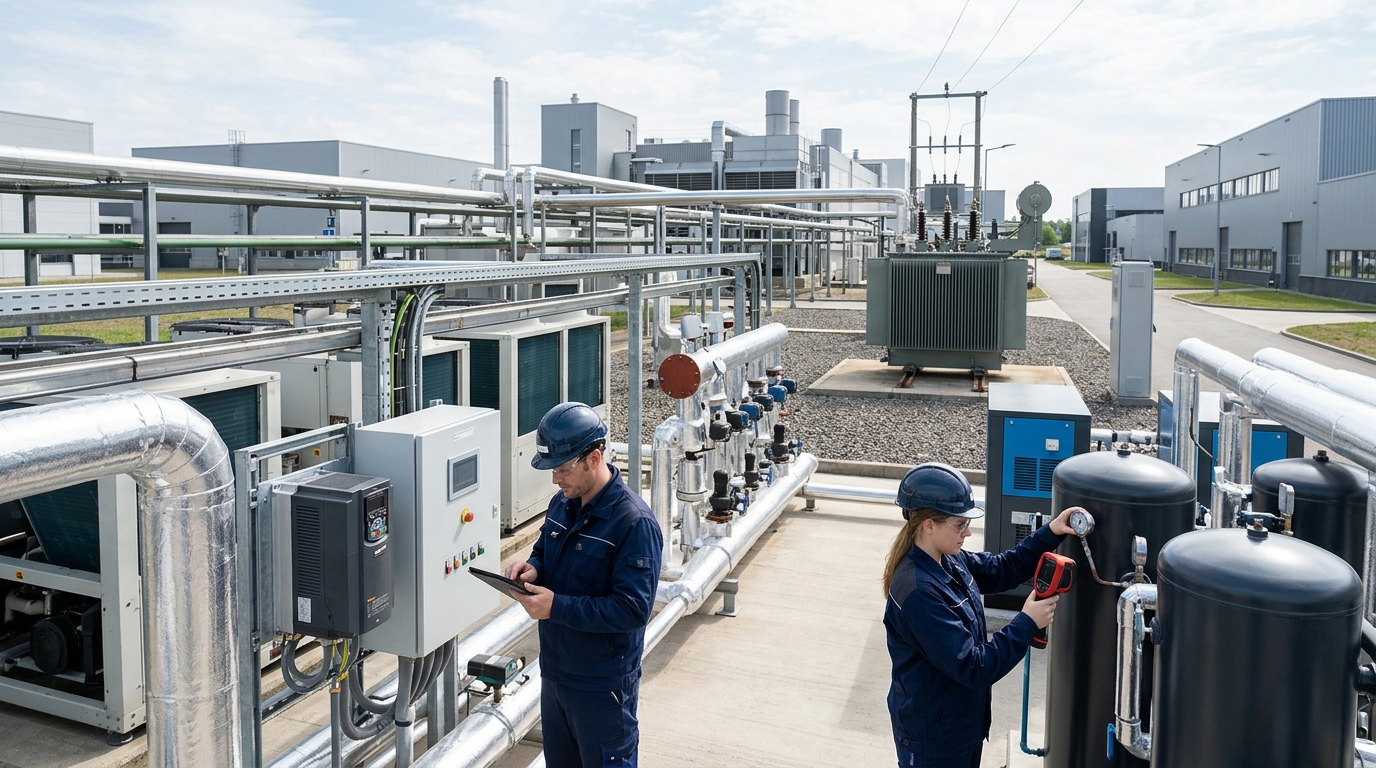
Carbon Accounting vs. Carbon Footprint: A Selection Guide for Low-Carbon Industrial Parks
Navigating the shift from statistical reporting to granular, real-time verification in the era of dual carbon goals.
Carbon emission monitoring is shifting from "statistical accounting" towards "granular, real-time, and verifiable" practices. Driven by dual carbon goals, supply chain disclosure requirements, and greenhouse gas control mandates, enterprises are no longer satisfied with annual reports alone. They require a clearer understanding of emission sources, intensities, and management risks during the production process.
Current mainstream technical routes include the emission factor method, material balance, Continuous Emission Monitoring Systems (CEMS), remote sensing and UAV monitoring, IoT sensors with data platforms, and Life Cycle Assessment (LCA) tools tailored for product carbon footprints. These routes vary significantly in accuracy, cost, applicability, and data utility.
Foundation The Baseline: Emission Factors & Material Balance
The emission factor method and material balance remain the most widely used fundamental methods for carbon accounting. Their core logic involves calculating emissions by multiplying activity data by emission factors or estimating emissions based on material flows between raw materials, fuels, and products.
- Advantages: Mature standards, low implementation costs, and ease of horizontal comparison across enterprises.
- Best For: Compiling organization-level GHG inventories, annual carbon reports, and industry benchmark analysis.
- Limitations: Emission factors often reflect regional or industry averages, failing to capture actual operational fluctuations. Data quality drops significantly if measuring instruments are insufficient or records are incomplete.
This method is best suited for enterprises with dispersed emission sources, low single-point emission intensity, and a primary focus on management accounting rather than precise process control.
Real-Time Continuous Emission Monitoring (CEMS)
Continuous Emission Monitoring Systems (CEMS) involve installing gas analyzers, flow meters, and temperature/pressure sensors directly on chimneys or key emission points. This allows for the direct measurement of greenhouse gases like CO₂, methane, and nitrous oxide, as well as flue gas parameters.
Key Advantages
Strong real-time capability and high data granularity. It reflects combustion loads, process fluctuations, and the operational status of abatement facilities effectively.
Challenges
High equipment investment and strict O&M requirements. Instrument calibration and data quality control are critical for result credibility.
Applicability: Ideal for high-emission, continuous-emission scenarios such as power generation, steel, cement, chemical industries, and waste incineration. It offers greater value for enterprises requiring process control, compliance reporting, or abnormal emission early warning.
Coverage Remote Sensing & UAV Monitoring
In recent years, remote sensing and UAV (drone) monitoring have gained traction for assessing fugitive emissions and regional-scale impacts.
- Satellite Remote Sensing: Used for large-scale methane hotspot identification, emission trend observation in industrial parks, and city-level GHG distribution analysis.
- UAVs: Equipped with infrared, laser, or gas sensing devices, they are suitable for investigating hard-to-reach sources like tank farms, pipelines, flares, and stockpiles.
While these technologies offer wide coverage and strong spatial identification capabilities—detecting leaks that traditional accounting misses—they are generally more suitable as screening, verification, and supplementary means. Temporal continuity, meteorological conditions, and retrieval models can affect their standalone accuracy.
Digitalization IoT Sensors & Data Platforms
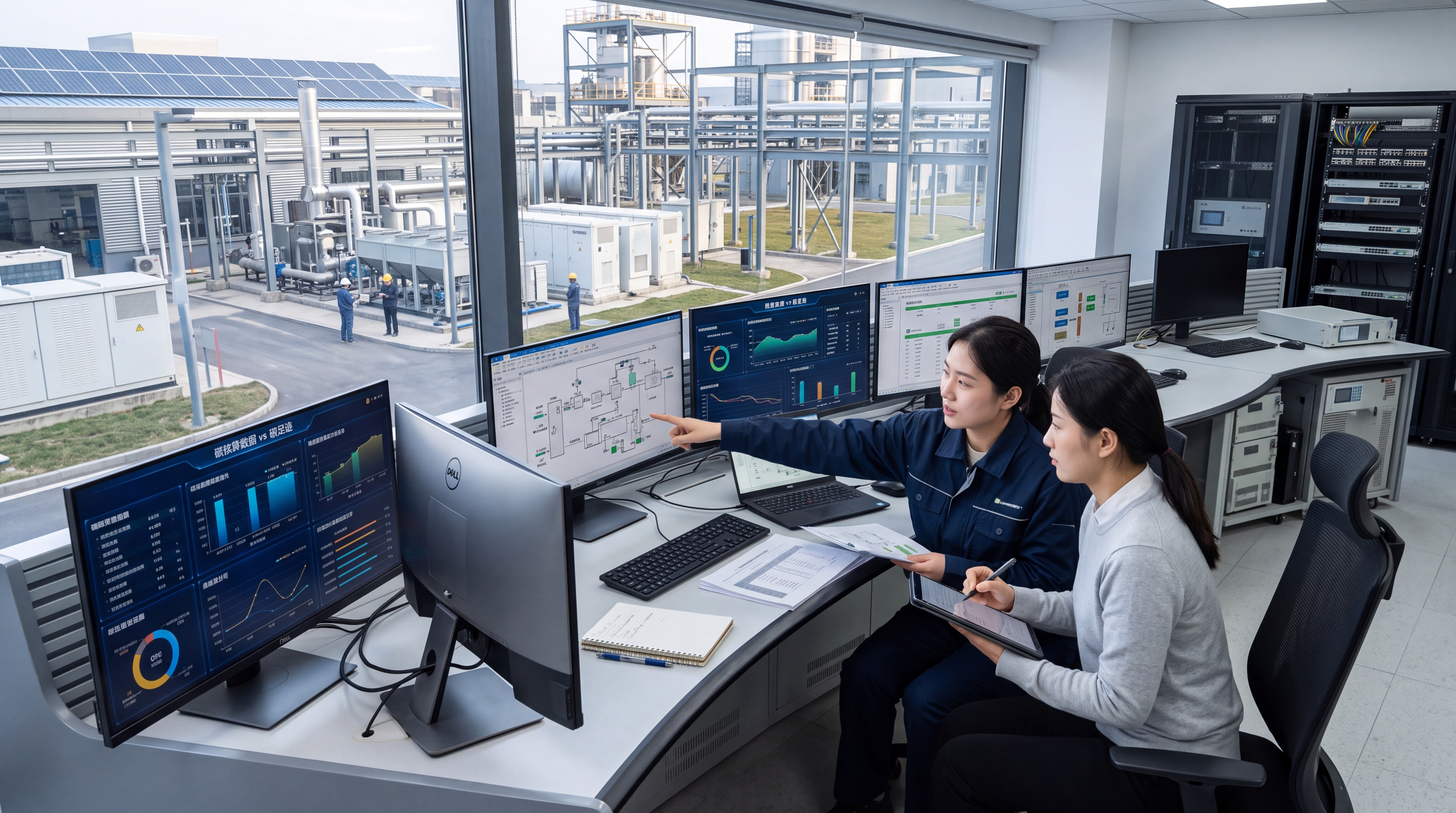
The integration of IoT sensors and carbon management data platforms represents the digitalization direction of carbon monitoring. By deploying sensors on electricity meters, gas meters, steam systems, and production equipment, energy consumption and emission data are integrated into a unified platform.
This enables process-oriented management from data collection to trend analysis. Such solutions are particularly suitable for group enterprises with multiple plants and production lines, facilitating internal carbon assessment, energy-saving diagnosis, and supply chain collaboration. However, the platform's value depends entirely on the integrity of underlying metering and data interface specifications; garbage in, garbage out applies strictly here.
Market Product Carbon Footprint & LCA
Unlike organizational carbon emissions, the carbon footprint focuses on the greenhouse gas impact of a product throughout its entire life cycle—from raw material extraction and manufacturing to transportation, use, and recycling.
Target Industries: Export-oriented or brand-driven sectors such as electronics, automotive, batteries, textiles, packaging, and building materials.
Use Cases: Environmental Product Declarations (EPDs), customer factory audits, green procurement, and low-carbon product design. The main challenge lies in acquiring upstream data and defining clear system boundaries, functional units, and data quality ratings to ensure comparability.
Strategic Selection Framework
Enterprises should not simply pursue the "most advanced technology" but combine approaches based on emission characteristics, management objectives, and cost constraints.
For Compliance & Annual Inventory
Priority should be given to improving energy metering, material ledgers, and emission factor databases to establish a verifiable baseline.
For High-Emission Continuous Sources
Deploy CEMS at key emission points and link it with production operation data to achieve abnormal emission identification and process optimization.
For Fugitive Emissions
Introduce remote sensing, UAVs, or portable detection for periodic screening and leak detection.
For Exports & Green Finance
Strengthen product carbon footprint modeling and supply chain data governance capabilities to meet international standards.
Conclusion: An Integrated System
Overall, carbon emission monitoring is forming an integrated system characterized by "accounting methods as the foundation, continuous monitoring for reinforcement, remote sensing for supplementary screening, data platforms for collaboration, and carbon footprints for extension."
As greenhouse gas regulations tighten and the carbon market expands, a single data source will no longer suffice. Enterprises must establish a unified data governance framework—clearly defining metering boundaries, data frequency, responsible departments, and audit processes. This ensures that carbon emission data serves both compliance reporting and strategic decision-making for energy conservation and carbon reduction.